Deutsch
 Türkçe
 Italiano
 Nederlands
 Français
 Español
 Polski
 Čeština
 Svenska
 Português PT
 Русский
 اللغة العربية
 中文
 日本語
 Tiếng Việt
 ภาษาไทย
 Română
 ελληνικά
 Magyar
 Dansk
 Suomi
 Hrvatski
 български език
 Eesti keel
 Latviešu valoda
 Slovenčina
 Slovenščina
 Bosanski
 עברית
 हिन्दी
 Bahasa melayu
 Kiswahili
 Bahasa Indonesia
 Papiamento
 Bokmål
 Lietuvių kalba
 Українська
 српски
 Shqip


 ›
 ›
 ›
 ›
 ›
 ›
 ›
 ›
 ›
 ›
 ›
 ›
 ›
 ›
 ›
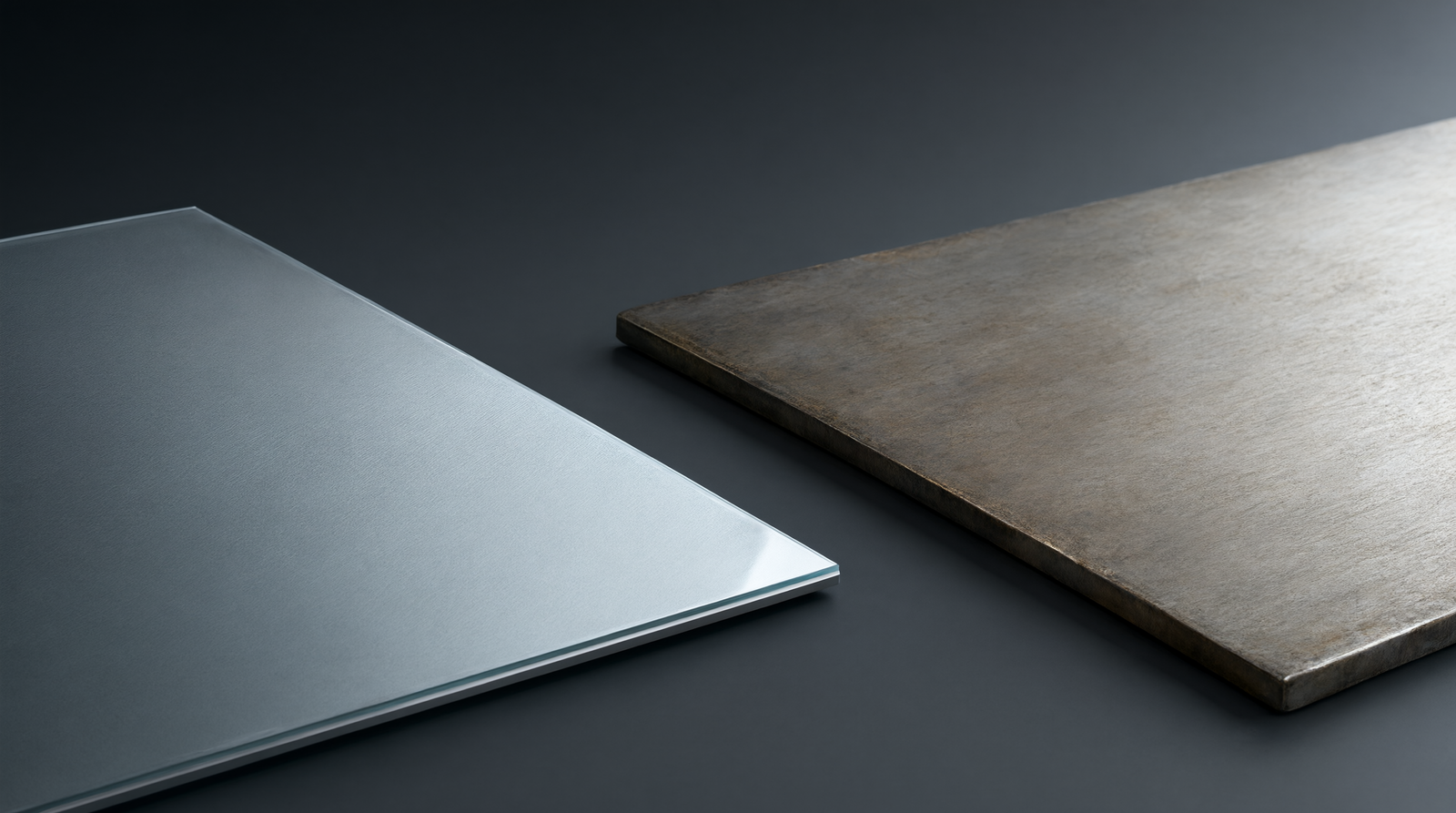
In short: When comparing contact grill vs. griddle, the key point is this: a contact grill cooks panini, sandwiches and thin grilled items from above and below at the same time, which makes it fast and even. A traditional griddle usually heats only from below, but it accommodates food of any thickness and a wider range of cooking methods. Which solution suits you better depends on your menu, space and kitchen workflow.
Contact Grill and Griddle: The Main Differences at a Glance
In Italian cooking, the two appliance types are called Piastre a Contatto (contact plates) and Piastre Tradizionali (traditional plates). They are indispensable for panini, sandwiches, grilled vegetables, meat and fish, but they work in fundamentally different ways.
The following table summarizes the most important differences. All details are typical guideline values and vary by appliance.
| Feature | Contact Grill (Piastre a Contatto) | Traditional Griddle (Piastre Tradizionali) |
|---|---|---|
| Heating | From above and below simultaneously | Usually from below only |
| Cooking time | Shorter, no turning required | Longer, food must be turned |
| Thickness of food | Best for thin to medium | Any thickness possible |
| Typical dishes | Panini, sandwiches, thin meat, vegetables | Steaks, fish, vegetables, eggs, a wide range of cooking methods |
| Material | Cast iron or coated plates, usually electric | Cast iron, stainless steel, chrome or aluminum; electric, gas or on the stovetop |
| Cleaning | Easier with removable plates and a drip tray | Smooth surfaces are simple to clean, cast iron needs targeted care |
| Space requirements | Compact, ideal for small kitchens | Larger depending on model |
| Purchase cost | Often somewhat higher due to more complex technology | Often less expensive, sometimes usable on existing stovetop burners |
What Is a Contact Grill (Piastre a Contatto)?
A contact grill has two heated plates that heat the food from above and below at the same time. The upper plate is pressed onto the food. This cooks it evenly and in a short time.
Typical applications include panini, sandwiches, meat, fish and vegetables. The pressure creates the characteristic grill marks. Excess fat can often drain into a drip tray. Common commercial models are often in the output range of about 1.3 to 2.5 kW. An overview is available in our contact grills for commercial kitchens.
Advantages of the Contact Grill
- Fast preparation: Grilling from above and below at the same time significantly shortens cooking time.
- Even heat distribution: Food is cooked evenly from both sides.
- Less fat on the food: Fat can drip off and run into the drip tray.
- Space-saving: Many units are compact and fit even in small kitchens or on a counter.
- Versatile: Suitable for many different types of food.
Disadvantages of the Contact Grill
- Limited food thickness: Very thick foods are difficult to grill.
- Cleaning: Models without removable plates are more time-consuming to clean.
- Purchase price: High-quality contact grills can be more expensive than simple griddles.
What Is a Traditional Griddle (Piastre Tradizionali)?
Traditional griddles are classic cooking surfaces that are usually heated from one side only. The food lies on the plate and is turned after the first side has cooked. They are made of cast iron, stainless steel, chrome or aluminum and operate as standalone units or on the stovetop.
In professional use, they are usually designed as countertop units with a gas or electric connection, for example as a commercial griddle with a smooth surface for electric connection. For gas operation, there is, for example, a half-grooved gas griddle that combines a smooth and a grooved zone.
Advantages of the Traditional Griddle
- Flexibility: Food of any thickness can be grilled and turned as needed.
- Versatility: Ideal for many cooking techniques, not just grilling.
- Variety of materials: Different materials offer different grilling results and thermal conductivity.
- Price: Often less expensive than contact grills.
- Easy cleaning: Removable plates or smooth surfaces make maintenance easier.
Disadvantages of the Traditional Griddle
- Longer cooking time: Since only one side is heated, food must be turned.
- Uneven heat: Depending on the stove and plate, heat distribution can vary.
- Space requirements: Some models are larger and need more floor or counter space.
Materials and Construction
Contact grills are usually electric and have two heated plates, made either of cast iron or with a non-stick coating. The coating makes cleaning easier and prevents food from sticking.
Traditional griddles are also available as electric units, as gas appliances, or for use on a stovetop. Heavy cast iron conducts and stores heat very well. Stainless steel is particularly durable and easy to maintain.
Cleaning and Maintenance
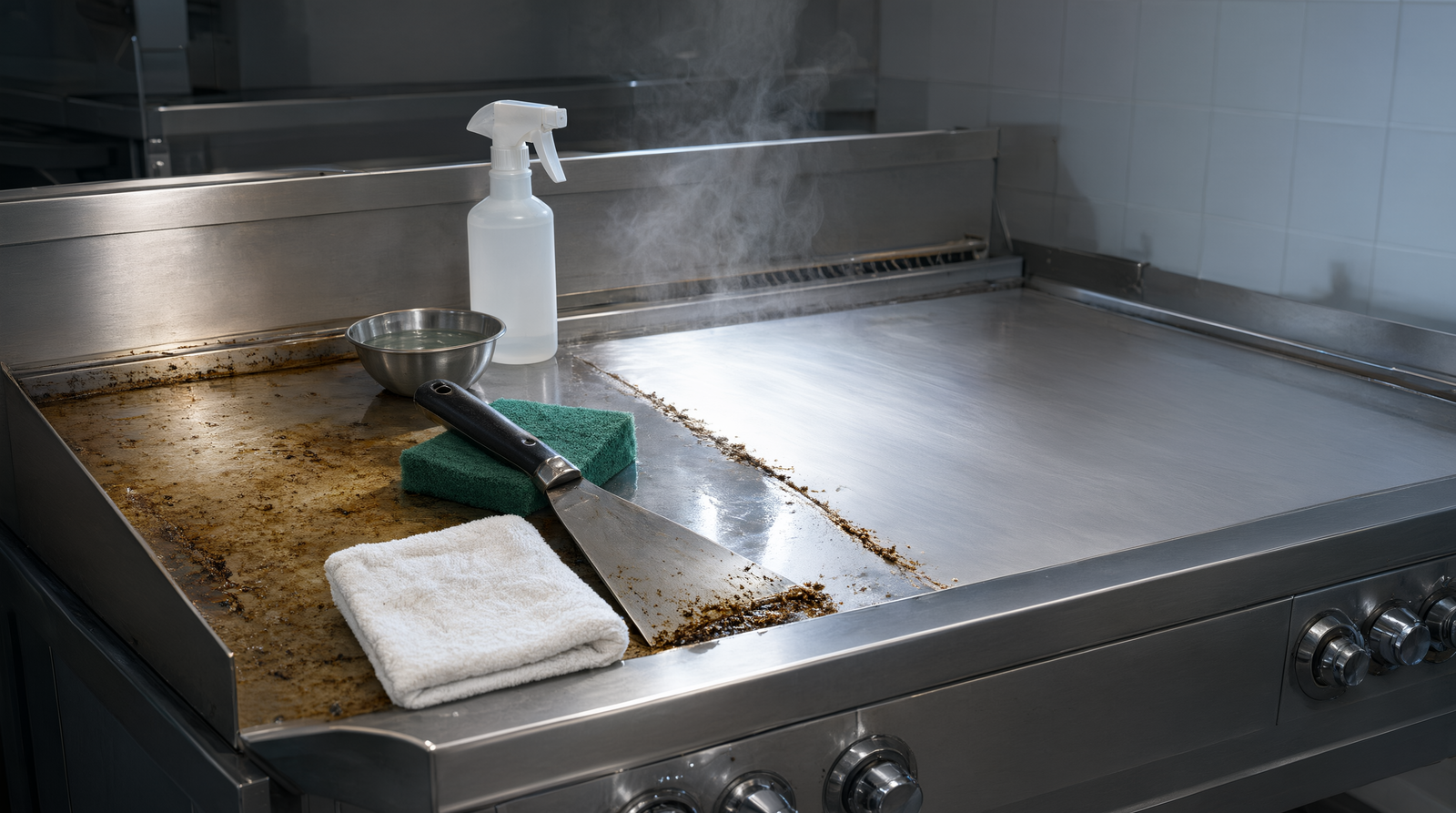
Cleaning differs depending on the appliance type and should play a role in your purchasing decision. In daily kitchen operations, it often determines how quickly you are ready for the next service.
Cleaning a Contact Grill
Contact grills with removable plates are easier to clean, in some cases even in the dishwasher, provided the manufacturer allows it. Models without removable plates should be cleaned carefully with a damp cloth and a mild cleaning agent. The drip tray should be emptied regularly.
Caring for a Cast Iron Griddle
Cast iron plates should be seasoned regularly. This creates a natural non-stick layer that also protects against rust. After use, they are usually cleaned without detergent, dried thoroughly and lightly oiled.
Stainless Steel and Chrome Plates
Stainless steel plates are easier to maintain but can discolor if cleaned improperly. Avoid aggressive or abrasive cleaners. The care instructions for the specific appliance always take priority.
Which Solution Suits Your Business?
The choice depends on your menu, space and workflow. These considerations can help with the decision:
- Panini, sandwiches, thin meat slices: A contact grill saves time and delivers consistent results.
- Thicker cuts of meat and varied ingredients: A traditional griddle offers more control over the grilling process.
- Small kitchen or limited storage: The compact contact grill is often the better choice.
- Traditional grilling method and authentic flavor: A cast iron griddle is the right choice here.
- High peak load during service: Many businesses combine both appliances, for example a contact grill for panini and a griddle for à la carte dishes.
For selection and kitchen layout, the free personal consultation from iGastroNomic can help.
Value for Money and Operating Costs
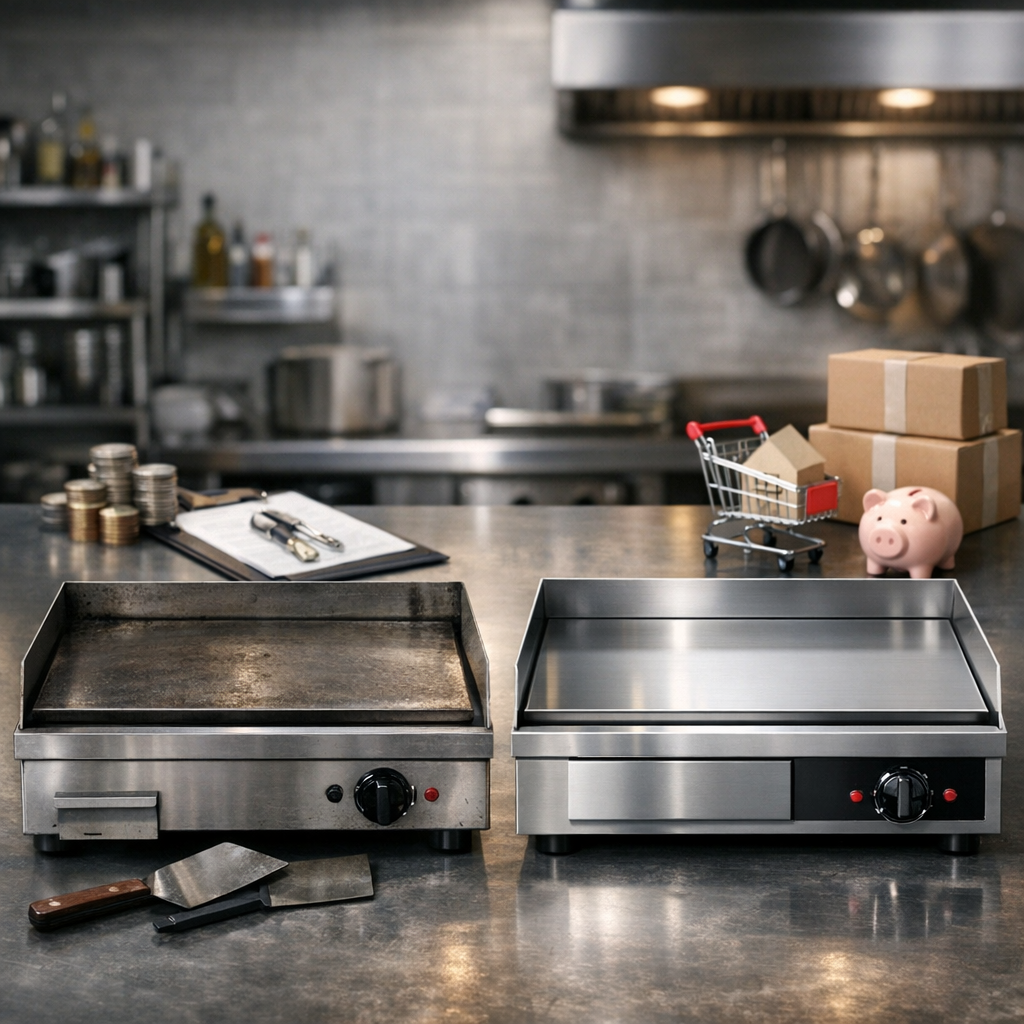
Contact grills are usually somewhat more expensive because they have more complex technology and are often equipped with temperature controls, non-stick coating and a drip tray. Traditional griddles are often less expensive and sometimes can be used on existing stovetop burners.
Besides the purchase price, energy consumption and service life matter. High-quality materials and clean workmanship pay off with regular use. You can estimate your appliances' consumption with the energy cost calculator for commercial appliances.
Conclusion
Contact grills and traditional griddles are both good cooking appliances, but they differ in how they work, how they are handled and where they are used. The contact grill delivers fast, even results and is particularly well suited to thin foods and everyday commercial kitchen work. The griddle stands out for its flexibility, variety of materials and an authentic grilling experience.
The deciding factors are your menu, the available space, your budget and your culinary preferences. Both options enable delicious grilled dishes and add a versatile appliance to your kitchen.
FAQ – Frequently Asked Questions
Can I grill thick steaks on a contact grill?
In principle yes, provided the upper plate can be adjusted in height or the steak is not pressed too firmly. However, very thick cuts are often compressed by the pressure of the upper plate and cook unevenly. For thick steaks, where you want to control doneness and turning time yourself, a traditional griddle is usually the better choice.
How do I clean a cast iron griddle properly?
Clean the plate while it is still warm after use with hot water and a brush, usually without detergent, so that the seasoned protective layer is preserved. Then dry it thoroughly and rub a thin layer of heat-resistant oil onto it to prevent rust. Always follow the care instructions from the manufacturer of your appliance.
Are contact grills energy efficient?
Often yes, because food is heated from both sides at the same time and cooking time is shorter. Actual consumption, however, depends on power rating, utilization, preheating time and how the unit is operated. A contact grill that runs only when needed often uses less energy than a large plate that is kept hot permanently. An energy cost calculator can help you estimate consumption for your business.
Are both appliances suitable for vegetarian dishes?
Yes, both types work well for vegetables, tofu, halloumi, panini with vegetarian fillings and other meat-free dishes. If you prepare both meat and vegetarian dishes, keep cooking surfaces separate or clean thoroughly between batches to avoid flavor transfer. This applies especially to grooved surfaces.
How long do contact grills and griddles last?
This depends heavily on material quality, use and maintenance. Solid cast iron or stainless steel griddles can last for decades with good care. Contact grills also contain heating elements, thermostats and hinges, which can wear faster under continuous operation. Regular cleaning and proper use extend the service life of both types.