Heated Display Cabinets and Food Warmers for Commercial Kitchens and Catering
Food warmers keep fully cooked dishes, plates and side dishes at serving temperature until they are dispensed. For restaurants, hotels, canteens and caterers, they are a central part of hot-holding equipment. Our range includes 45 food warmers for commercial use, from the classic hot holding cabinet to the mobile banquet trolley. This helps you find the right unit for your operational workflow, the space available and your portioning of dishes.
Applications in Foodservice and Catering
A food warmer for foodservice performs different tasks depending on the business:
Restaurants and hotels: keeping main courses warm during service
Canteens and staff restaurants: consistent holding temperatures on serving lines with high throughput
Caterers and event services: mobile solutions for banquets, corporate events and off-site functions
Snack bars and quick-service restaurants: holding pre-portioned food ready for sale
Types at a Glance: Food Warmer, Plate Warmer and Banquet Trolley
The selection falls into three main types. Standard food warmers are designed for storing and holding food containers in the kitchen or serving area. Models with a pass-through connect the kitchen and the service area, while versions with a revolving door suit tight spaces. Plate warmers are specifically designed for crockery, with one or two doors depending on the service layout. The banquet trolley is a mobile hot-holding system for events and buffets that accepts GN-format food containers.
What Professionals Look for When Buying
Fit with your operation matters more than individual product features. Key criteria include:
Capacity: number and format of food containers or plates used during a service day
Door concept: accessibility for loading and unloading during service
Mobility: fixed installation in the kitchen or a mobile solution for changing locations
Design: versions with a raised edge provide additional surface space on top of the unit
Operation: clearly readable temperature settings and simple handling during peak periods
Cleaning, Maintenance and Safe Operation
A regularly cleaned food warmer ensures hygiene and energy efficiency. Clean the interior, door seals and shelves daily with suitable cleaning agents. Keep ventilation openings clear so that heat is distributed evenly. Check door seals and hinges regularly for wear. How long food may be held warm is determined by your operational hygiene concept. Only hold food warm for short periods and check the temperature at fixed intervals.
Why Commercial Customers Buy from iGastroNomic
iGastroNomic is a wholesaler and manufacturer of foodservice and commercial kitchen equipment. Business customers benefit from:
B2B net pricing for commercial buyers
a wide selection of food warmers and hot-holding equipment
personal advice by phone and WhatsApp
delivery across Europe
in-house manufacturing and professional wholesale from a single source
Frequently asked questions
How long can food be kept warm in a food warmer?
The permissible duration depends on the food, its starting temperature and the unit. Binding requirements are set by your operational hygiene concept. Only hold food warm for short periods where possible and check the temperature regularly.
What is the difference between a food warmer and a plate warmer?
A standard food warmer is designed for food containers and general hot holding. A plate warmer is specifically designed for crockery and heats plates evenly before food is plated. The choice depends on whether you mainly need to hold food or tableware warm.
Are food warmers suitable for banquets and caterers?
Yes, mobile banquet trolleys are particularly suitable for off-site use. They can be deployed flexibly at different event locations. Check in advance how many containers you need to transport and hold warm.
Can commercial customers buy food warmers for foodservice from iGastroNomic?
Yes, our range is aimed at business customers such as restaurants, hotels, canteens and caterers. Commercial customers receive B2B net pricing. We are happy to advise you personally by phone or WhatsApp to help you find the right selection.
How do I clean a food warmer properly?
Switch the unit off and let it cool down before cleaning. Clean the interior, shelves, door seals and external surfaces with suitable, food-safe cleaning agents. Dry all surfaces thoroughly and keep the ventilation openings clear.
Heated Cabinets for Catering & Hotels
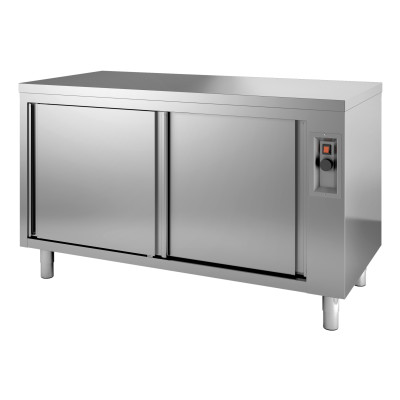
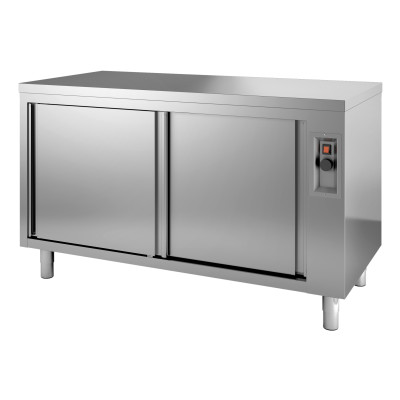
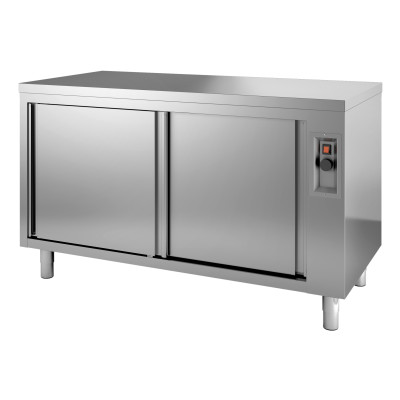
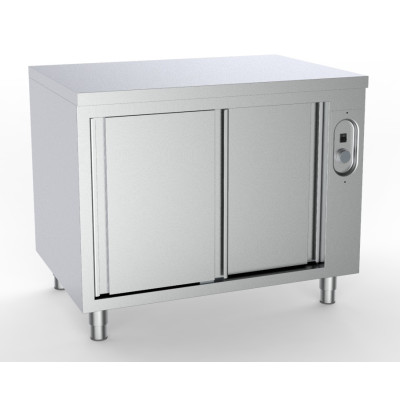
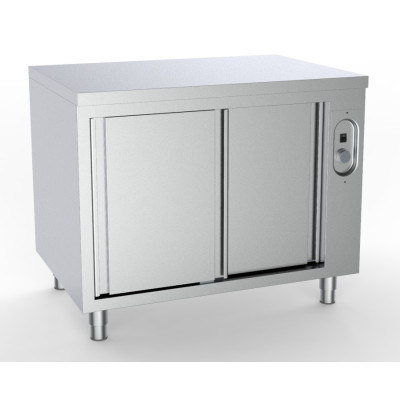
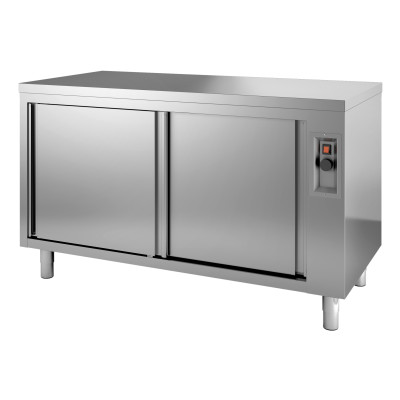
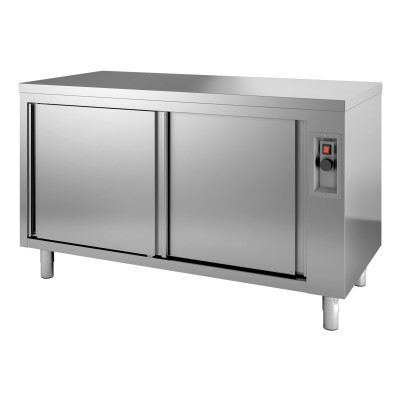
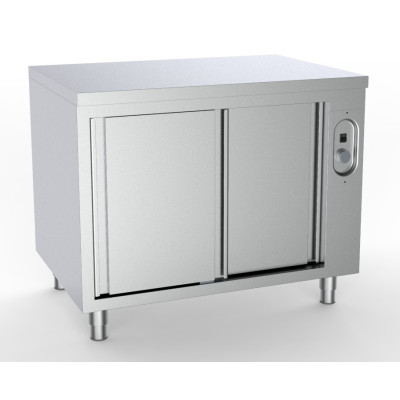
A heated cabinet is a heated stainless steel unit that keeps food, bowls and plates at serving temperature in the commercial kitchen. It is designed for restaurants, hotels, canteens, caterers and snack bars. When buying, the key factors are length, design (standard, with upstand or as a pass-through), connected load and build quality.
Commercial heated cabinets: typical applications
A commercial heated cabinet ensures that food does not cool down during service. In a restaurant kitchen it stands near the pass and the prep counter. There it holds prepared dishes until service collects them. Plate warming is also one of the most common tasks, because warm crockery keeps food hot for longer.
In hotels with breakfast buffets and banqueting, in canteens or in catering, the stainless steel heated cabinet is used wherever large quantities are served at staggered times. It is also suitable for snack bars and fast-food restaurants where sides and ready components need to be on hand for peak periods. Anyone planning their catering equipment for the serving area will usually include the heated cabinet as a fixed part of the kitchen line.
Variants: standard, with upstand or pass-through
The range includes three designs. The heated cabinet in standard version is a closed base unit with a flat worktop. The heated cabinet with upstand has an additional raised edge at the back. It protects the wall from splashes of water and grease and is suited to installation directly against a wall. The heated cabinet as a pass-through is accessible from two sides. Kitchen staff can load it from one side while service removes items from the other.
All three designs are available in lengths 1200, 1400, 1600 and 1800. The 600 and 700 series are also available. The series number usually indicates the unit depth in millimetres. The comparison table shows the differences at a glance.
Design
Typical use
Special feature
Heated cabinet (standard)
Keeping plates and food warm on the kitchen line
Closed base unit with flat work surface
Heated cabinet with upstand
Wall installation in kitchen or serving area
Raised edge protects the wall
Heated cabinet as pass-through
Transfer between kitchen and service
Accessible from both sides
Lengths 1200 to 1800
Adjustment to available space and plate volume
Four length options in the 700 series
600 series
Compact kitchens with limited depth
Available in lengths 1400 and 1600
Buying advice: choosing the right size, depth and connection
The first step is the available floor space. Measure the length and depth of the intended position and consider the routes between work stations. The length depends on the volume of plates and food. The more place settings need to be ready at the same time during service, the longer the commercial heated cabinet should be. The 600 series suits narrower kitchens, while the 700 series offers more floor space.
Also check the power supply at the installation site. Heated cabinets are electrically operated, so voltage and fuse rating must match the connected load of the unit. Also decide whether a pass-through makes sense. It is worthwhile if kitchen and service are spatially separated and staff should not have to pass each other. If the cabinet stands against a wall, the upstand version reduces cleaning effort.
Material and hygiene: why stainless steel wins
In professional operations stainless steel is the standard because it is robust, heat-resistant and easy to clean. Smooth surfaces and clean edges give dirt and bacteria little hold, which supports the requirements of kitchen hygiene under HACCP. The flat top can also be used as a work or storage surface, as long as the unit is not overloaded.
A sturdy body is important for continuous daily use. Doors and shelves are opened and loaded frequently, and heat and moisture constantly affect the material. High-quality construction therefore pays off over many years.
Cleaning and maintenance in daily use
Switch off the heated cabinet before cleaning, unplug it and let the unit cool down. Wipe the interior and exterior surfaces with a damp cloth and a mild cleaner, preferably in the grain direction of the stainless steel. Avoid abrasive pads and chlorine-based products, as they can damage the surface.
Check door seals, hinges and the power cable regularly. An intact seal keeps heat inside the unit and reduces energy consumption. Replace damaged parts promptly so that the heated cabinet continues to work reliably.
Delivery across Germany, Austria, Switzerland and Europe
At iGastroNomic you order catering equipment with fast delivery throughout Germany, to Austria, to Switzerland and to other European countries. Large units such as a heated cabinet with an 1800 length are also packed securely and delivered reliably. Whether for a new opening, a refit or a replacement, you will find the right equipment for restaurants, hotels, canteens and commercial kitchens here, without going through several suppliers. If you want to complete your catering supplies range for holding and buffet service, you will find further suitable equipment in the main category.

 Deutsch
 Türkçe
 Italiano
 Nederlands
 Français
 Español
 Polski
 Čeština
 Svenska
 Português PT
 Русский
 اللغة العربية
 中文
 日本語
 Tiếng Việt
 ภาษาไทย
 Română
 ελληνικά
 Magyar
 Dansk
 Suomi
 Hrvatski
 български език
 Eesti keel
 Latviešu valoda
 Slovenčina
 Slovenščina
 Bosanski
 עברית
 हिन्दी
 Bahasa melayu
 Kiswahili
 Bahasa Indonesia
 Papiamento
 Bokmål
 Lietuvių kalba
 Українська
 српски
 Shqip









 ›
 ›
 ›
 ›
 ›
 ›
 ›
 ›
 ›
 ›
 ›
 ›
 ›
 ›
 ›