Preparation eats up most of the time in every kitchen. Professional food preparation machines take over the manual work: they cut vegetables in seconds, knead 50 kg of dough, mince meat, whip creams and vacuum pack goods for longer shelf life. Unlike household appliances, commercial kitchen machines are built for continuous operation, large quantities and daily cleaning – with powerful motors, stainless steel and spare parts supply.
The main product groups
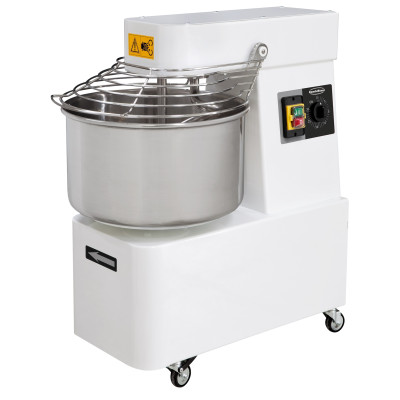
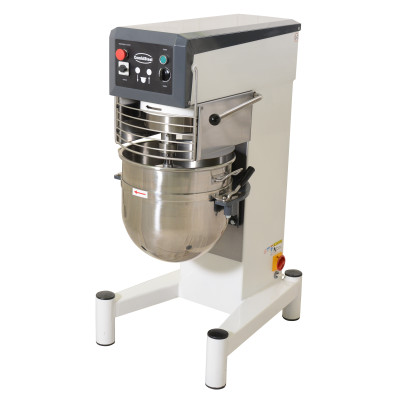
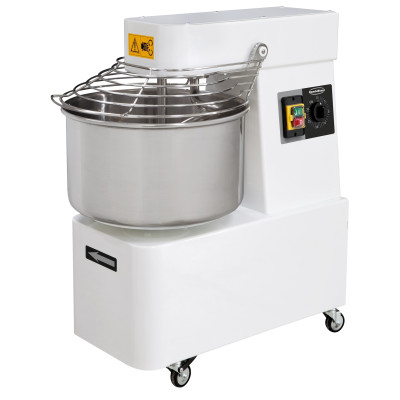
Dough mixers (spiral mixers) for pizza, bread and yeast dough, and planetary mixers for creams, batters and light doughs.
Output is usually stated in kg per hour, bowl volume or dough quantity – plan reserves for peak times. Look for stainless steel on all food contact surfaces, parts that can be dismantled without tools for cleaning, safety switches and guards, and the right connection: small machines run on 230 V, high-output dough mixers, mincers and cutters on 400 V.
Hygiene
Dismantle and clean all food contact parts daily; store blades and mincing plates dry. Machines with smooth surfaces and rounded edges are easy to maintain in line with HACCP.
Checklist
Quantity per hour or per batch
230 V or 400 V
Ease of dismantling and cleaning
Accessories: discs, hooks, whisks, mincing plates
Matching accessories for kitchen machines and kitchen utensils are also available in the shop. iGastroNomic delivers at trade prices throughout Europe and advises you personally by phone and WhatsApp.
Frequently asked questions
Which kitchen machines does a restaurant need?
Almost always a vegetable cutter or cutter, a stick blender and a vacuum packer. Depending on the concept, a dough mixer, meat mincer, slicer, planetary mixer or potato peeler is added.
Do I need 400 V for kitchen machines?
Small machines run on 230 V. Powerful dough mixers, meat mincers and cutters often need 400 V. The details are given with each product.
What is the difference between a spiral mixer and a planetary mixer?
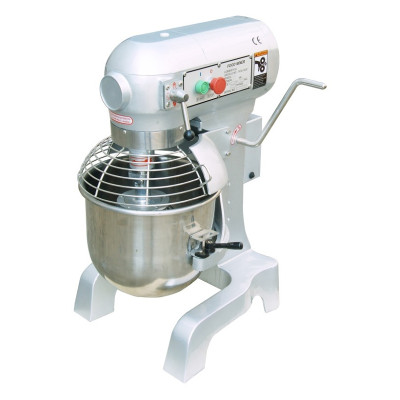
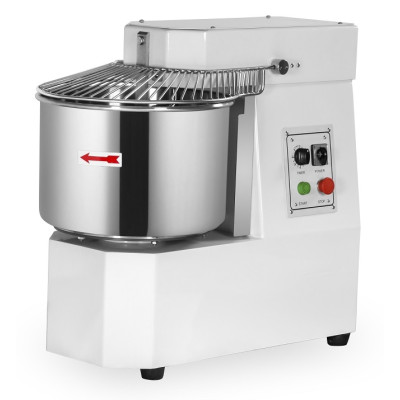
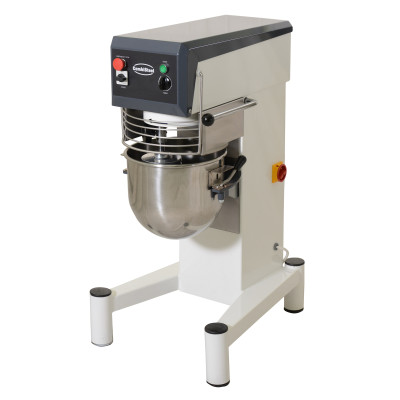
The spiral mixer specialises in firm doughs such as pizza and bread dough. The planetary mixer is more versatile: with hook, whisk and beater it handles doughs, creams, whipped cream and batters.
How do I clean commercial kitchen machines correctly?
After use, disconnect the power, dismantle and wash all removable parts and wipe the housing with a damp cloth. Store blades and discs dry and maintain moving parts according to the manufacturer's instructions.
Commercial Kitchen Equipment for the Foodservice Industry
Professional kitchen equipment refers to electric machines for grinding, cutting, mixing, kneading and packaging large quantities in restaurants, hotels, butcher shops, bakeries and canteens. The range extends from the meat mincer through the planetary mixer to the vacuum sealer. When buying, the key factors are output, capacity, power supply and a material that can be cleaned hygienically.
Commercial Kitchen Equipment for Foodservice, Butchers and Bakeries
In a professional kitchen, the machine equipment determines how much output your team can achieve in a day. Whether kitchen equipment for the foodservice industry, for the butcher's shop or for the bakery: these machines take over monotonous manual work from your staff and deliver consistent results. This applies to hotel kitchens and snack bars as well as large kitchens, catering companies and canteens. If you are planning foodservice equipment purchases, first determine which work steps take up the most time.
Typical applications include preparing minced meat and sausage meat, cutting vegetables, bread and cold cuts, making dough and vacuum packing for shelf life. For each of these tasks there are specialised commercial kitchen machines designed for continuous operation.
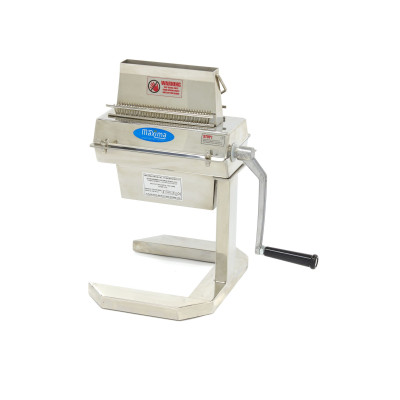
For meat processing, the range offers a complete chain of machines. The meat mincer grinds meat for minced meat, meatballs and sausage meat, while the meat mixer distributes seasonings and ingredients evenly through the mass. A bowl cutter chops and emulsifies meat, vegetables or fillings very finely. The sausage filler fills the finished mass into casings in portions. Additionally, there are bone saws for cutting bones and frozen products, as well as meat tenderisers for evenly thin schnitzels and steaks.
A meat slicer is suitable for cold cuts, ham, sausage and cheese in uniform slices. If you calculate portions in a butcher's shop or hotel buffet, you benefit from reproducible slice thickness.
Dough and Baked Goods: Dough Mixer, Planetary Mixer and Dough Sheeter
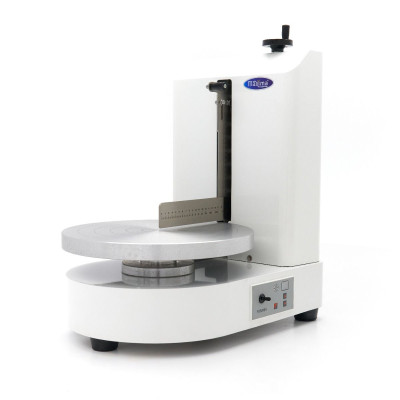
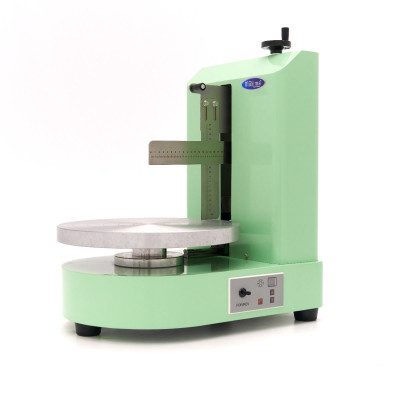
In bakeries, pizzerias and confectioneries, dough mixers are indispensable. They knead heavy doughs evenly and relieve your team when working with large quantities. The planetary mixer is more versatile: with different tools it whips, stirs and kneads cream, mixtures, creams and light doughs. A dough sheeter rolls out dough to an even thickness and speeds up production of pizza, flammkuchen or shortcrust bases. Confectioneries also have a cake decorating machine available.
The following overview compares the most important equipment types:
Equipment type
Typical use
Feature
Meat mincer
Minced meat, sausage meat
Grinding through perforated plates
Bowl cutter
Fine mixtures, forcemeat, fillings
Chopping and emulsifying
Meat mixer
Seasoning and mixing minced meat
Even distribution of ingredients
Dough mixer
Bread, pizza and yeast dough
For heavy doughs in large quantities
Planetary mixer
Creams, mixtures, whipped cream, light doughs
Interchangeable tools
Bread slicer
Bread and baked goods
Even slices
Vegetables, Potatoes, Bread and Shelf Life
The vegetable cutter quickly processes vegetables, salad and fruit for salad bars, side dishes and soups into slices, strips or cubes. A potato peeler and potato cutter save many working hours in large kitchens and snack operations. With a bread slicer, bakeries and hotels cut bread and rolls cleanly and evenly. A hand blender purées soups, sauces and dips directly in the pot.
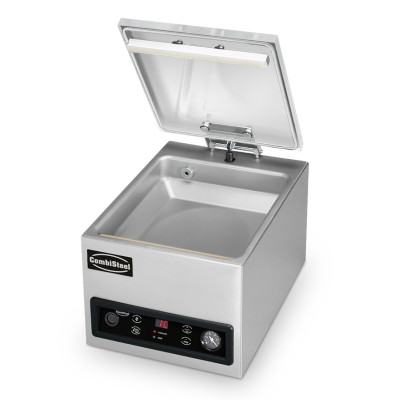
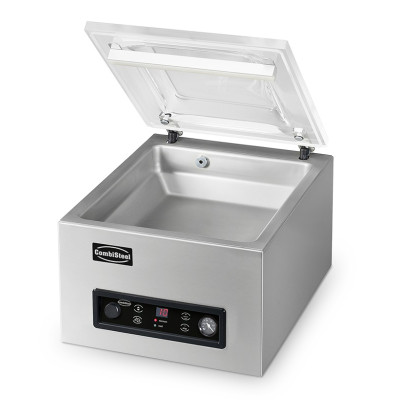
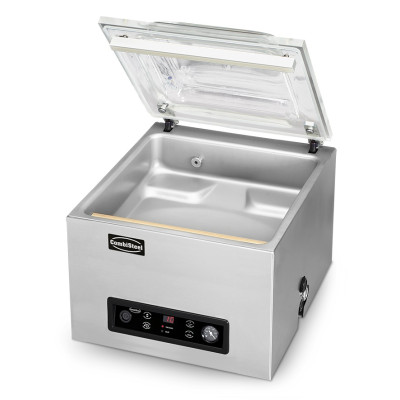
For storage and shelf life, vacuum sealers and tray sealers are the solution. Vacuum-packed goods stay fresh longer, and tray sealers hygienically seal menu trays and ready meals for catering, delivery services and canteens.
Buying Advice: Output, Capacity and Power Connection
Before buying, first check the daily quantity you need to process. This determines the capacity, motor output and size. For the meat mincer, the throughput rate matters; for the dough mixer, the maximum dough weight; for the planetary mixer, the bowl volume. Also pay attention to the power connection: smaller appliances usually run on a household socket, while high-performance machines often require three-phase power.
Continuous operation: commercial appliances are designed for frequent use.
Footprint: countertop or floor-standing unit, depending on the space in your kitchen.
Accessories: perforated plates, cutting blades or dough hooks depending on the application.
Safety: protective devices and stable feet protect your staff.
Material, Hygiene and Care
For stainless steel kitchen equipment, all parts that come into contact with food are smooth, rustproof and easy to clean. This makes it easier to comply with hygiene requirements in commercial kitchens (HACCP). Disassemble removable parts after use and clean them thoroughly before storing them dry. Use suitable care products for cutting tools and perforated plates to preserve cutting performance and service life. Clean the housings only with a damp cloth, never with high-pressure water.
Regular maintenance, such as checking seals, blades and drive, extends service life. With suitable kitchen equipment accessories, you keep your machines ready for use and remain flexible for other work steps.
Delivery in Germany, Austria, Switzerland and Europe
iGastroNomic delivers kitchen equipment quickly and reliably throughout Germany, to Austria, to Switzerland and to other countries in Europe. Whether a single unit for the snack bar or complete equipment for the large kitchen: your professional catering supplies arrive safely packed. This allows you to plan new machines and expand or modernise your business without long downtime.

 Deutsch
 Türkçe
 Italiano
 Nederlands
 Français
 Español
 Polski
 Čeština
 Svenska
 Português PT
 Русский
 اللغة العربية
 中文
 日本語
 Tiếng Việt
 ภาษาไทย
 Română
 ελληνικά
 Magyar
 Dansk
 Suomi
 Hrvatski
 български език
 Eesti keel
 Latviešu valoda
 Slovenčina
 Slovenščina
 Bosanski
 עברית
 हिन्दी
 Bahasa melayu
 Kiswahili
 Bahasa Indonesia
 Papiamento
 Bokmål
 Lietuvių kalba
 Українська
 српски
 Shqip









 ›
 ›
 ›
 ›
 ›
 ›
 ›
 ›
 ›
 ›
 ›
 ›
 ›
 ›
 ›