Cutting boards are the work surface of every professional kitchen. Whether you are chopping vegetables, portioning meat or slicing bread, commercial operations need cutting boards that are durable, easy to clean and suited to the specific task. At iGastroNomic you will find 48 items in this category for restaurants, snack bars, hotels, canteens, bakeries and caterers, from wooden cutting board and GN cutting board to the cutting board set.
Applications in Foodservice
Cutting boards are used in food preparation, cold kitchen, dispatch and bakery areas. The number of boards you need per station depends on your workflow. For cutting boards for the foodservice industry, it is better to use several boards than to process different foods on the same surface.
Types and Materials
The range is mainly organised by material and format:
Wooden cutting boards: gentle on knife edges, ideal for bread, cheese and vegetables. They require more care and must dry completely after cleaning.
Plastic cutting boards (polyethylene): durable, easy to clean and disinfect, and often lower in maintenance.
GN cutting boards: in the standard foodservice GN 1/1 format, matching common worktops and container systems.
Compact sizes: for small workstations, serving stations and counters.
What Professionals Look for When Buying
Material suited to the task and the level of knife use
Format: GN dimensions for container systems, otherwise consider the width of your work surface
Thickness: thicker boards are more stable, thinner boards are easier to handle
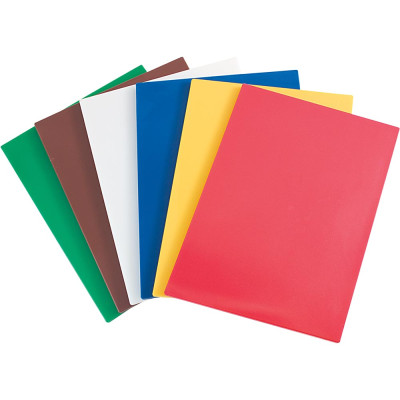
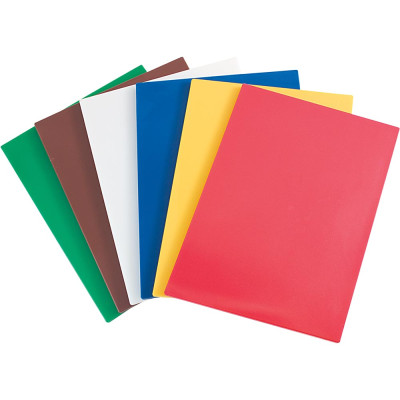
HACCP colour-coding system: coloured boards help keep food groups separate during preparation. A common assignment is red for meat, blue for fish, green for vegetables, yellow for poultry and white for dairy products. Your company's hygiene concept always takes precedence.
Single board or cutting board set: sets are useful when several food groups are prepared in parallel
Cleaning, Care and Operation
Clean cutting boards after every use and whenever you switch food types. Clean plastic boards with hot water and a suitable detergent, and disinfect them regularly. Wooden boards must not lie in water for long periods; dry them thoroughly after washing and treat them occasionally with food-safe oil. Replace boards as soon as deep grooves or heavy discolouration appear, as bacteria can accumulate in recesses.
Why Buy from iGastroNomic?
iGastroNomic is both manufacturer and wholesaler. Trade customers benefit from B2B net prices, a wide selection of cutting boards for commercial use and personal advice by phone and WhatsApp. We deliver across Europe. You can quickly find the right board or set for your business and buy cutting boards that perform reliably in everyday operation.
Frequently asked questions
Which cutting board should I use for meat and which for vegetables?
Meat and fish are usually prepared on separate, colour-coded boards, with vegetables and fruit on their own boards. A common assignment is red for meat, blue for fish and green for vegetables. Your company's hygiene concept sets the binding rules.
Are wooden or plastic cutting boards better for foodservice?
Wood is gentle on knife edges and suits bread, cheese and vegetables, but it requires more care. Plastic (polyethylene) is durable and easy to clean and disinfect, which is why many kitchens use it for meat and fish. The right choice depends on the task and the maintenance effort your business can manage.
How do I clean cutting boards properly in a large commercial kitchen?
Clean boards after every use and whenever you switch food types, using hot water and detergent. Plastic boards should be disinfected regularly. Wooden boards must dry completely after washing and must not lie in water for long periods.
When should a cutting board be replaced?
Replace a cutting board once deep knife grooves, discolouration or odours can no longer be removed. Bacteria can settle in these recesses and are difficult to eliminate, even with thorough cleaning.
Are cutting board sets available for commercial use?
Yes, iGastroNomic offers cutting board sets, including in the GN format, which are suited to preparing several food groups in parallel. Trade customers receive B2B net prices and personal advice by phone or WhatsApp.
HACCP Cutting Boards & Butcher Blocks for Commercial Kitchens
Cutting boards are the work surface for slicing, portioning and breaking down in restaurants, hotel kitchens, butcher shops and canteens. Commercial polyethylene cutting boards are knife-friendly, hygienic and dishwasher-safe. When buying, size, thickness, slip resistance and HACCP-compliant colour coding matter.
Cutting Boards for Restaurants, Hotels and Large Kitchens
In a professional kitchen a commercial cutting board is under heavy daily use. It has to withstand knife cuts, must not slide and must be thoroughly cleanable after every use. That is why restaurants, hotels, snack bars, caterers and canteens rely on food-safe plastic boards rather than wood. The range runs from a handy board for the salad station to a solid block for meat processing.
If you plan your catering supplies, it is best to allow several boards per workstation. This keeps food groups separate, and no bottleneck arises during cleaning. Our cutting boards come in many sizes that match work surfaces, dish racks and gastronorm containers.
HACCP Cutting Boards: Using Colour Coding Correctly
The HACCP concept requires that raw and ready-to-eat foods be processed separately. HACCP cutting boards make this easier with a colour system. Common is red for raw meat, blue for fish, yellow for poultry, green for vegetables and salad, brown for cooked meat and white for dairy products or baked goods. A HACCP cutting board set in GN 1/2 format with six pieces covers all these areas completely. In addition, individual red cutting boards with 12 mm thickness are available if you only want to upgrade one area.
The colours also help during inspections, because staff and inspectors recognise the separation immediately. Hang a short colour chart in the kitchen so the assignment is consistently followed in daily work.
Cutting Boards at a Glance: Types and Use
The following overview shows the main designs in this category and their typical use.
Type
Format / Thickness
Typical Use
Polyethylene cutting board, 2 cm thick
from 30x20 cm to 53x32,5 cm
General preparation in restaurant and hotel kitchen
Non-slip cutting board, black
270x190x9 mm and 350x250x10 mm
Bar, counter, small workstations, cutting fruit and bread
Cutting board set GN 1/2, smooth
Gastronorm format, polyethylene
Mise en place, workstations with GN containers
HACCP set GN 1/2
6 pieces in signal colours
Colour-separated processing according to HACCP
HACCP single board, red
GN 1/2, 12 mm
Raw meat
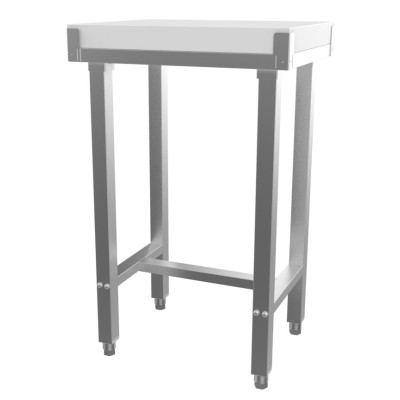
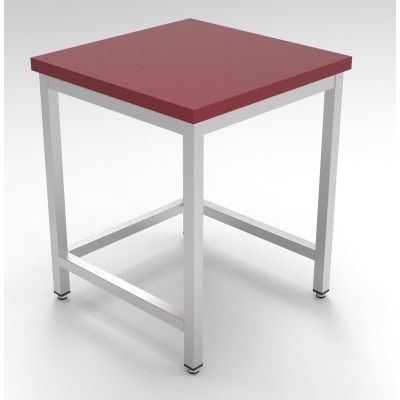
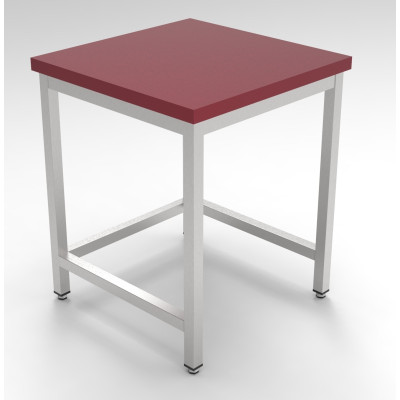
Butcher block polyethylene
50 mm and 80 mm thick, 400x400 and 500x600 mm
Butcher shop, breaking down, chopping, heavy work
Butcher Block from Polyethylene for Butcher Shops and Large Kitchens
A polyethylene butcher block is considerably thicker than a standard cutting board and withstands heavy blows from a cleaver or chopping knife. We stock butcher blocks in 50 mm and 80 mm thickness and in the formats 400x400 mm and 500x600 mm. This makes them suitable for butcher shops, meat breaking down and large kitchens, where a standard board would quickly be cut through. The material is moisture-resistant and does not splinter.
Heavily used blocks develop cut marks over time. Watch deep grooves, as they are harder to clean. Then it is time to replace the block or, depending on the design, to resurface the top.
Sizes and Formats: From 30x20 cm to GN 1/2
For cutting boards with 2 cm thickness, the range goes from 30x20 cm through 30x40 cm and 30x50 cm up to 32,5x26,5 cm and 53x32,5 cm. Small formats fit the salad station, large boards are used for roasts, bread loaves or larger quantities of vegetables. The 53x32,5 cm format corresponds to GN 1/1 and thus covers the full width of a gastronorm rail.
The GN 1/2 cutting board format is practical if you provide ingredients in gastronorm containers. The board can be placed precisely next to the containers and makes organisation easier. Choose the size according to work surface and washing capacity, as the board must fit into the dish rack or dishwasher.
Non-Slip Cutting Boards and the Right Thickness
A non-slip cutting board stays securely in place even on smooth stainless steel surfaces and reduces the risk of accidents. The black models with 270x190x9 mm and 350x250x10 mm are particularly suitable for counter, bar and smaller kitchen stations. Thickness affects stability and service life. Thinner boards are light and save space, thicker boards with 2 cm and more lie more steadily and warp less often.
For fine cutting work choose a smooth surface. For work with a lot of juice, such as meat, a board with a juice groove can make sense. Also check which knives you use, as softer plastic protects the blades.
Material, Hygiene and Care
The polyethylene cutting boards are food-safe, absorb hardly any liquid and can be cleaned with hot water. The smooth surface keeps odours and discolouration low. Most models are dishwasher-safe, but still observe the manufacturer's temperature specifications. Clean each board thoroughly after use and let it dry completely, ideally standing upright so air reaches all sides.
Replace boards when the surface is deeply cut or heavily discoloured. Always use separate boards for meat and fish, even if you only work briefly. This keeps kitchen hygiene traceable during inspections.
Delivery across Germany, Austria, Switzerland and Europe
We deliver your cutting boards quickly and reliably across Germany, Austria, Switzerland and Europe. For restaurateurs, hoteliers, butchers, bakers and canteen operators our range is a reliable catering supply from one source. Whether a single board for reordering or several HACCP sets for a new kitchen: iGastroNomic supports you with selection and ordering.

 Deutsch
 Türkçe
 Italiano
 Nederlands
 Français
 Español
 Polski
 Čeština
 Svenska
 Português PT
 Русский
 اللغة العربية
 中文
 日本語
 Tiếng Việt
 ภาษาไทย
 Română
 ελληνικά
 Magyar
 Dansk
 Suomi
 Hrvatski
 български език
 Eesti keel
 Latviešu valoda
 Slovenčina
 Slovenščina
 Bosanski
 עברית
 हिन्दी
 Bahasa melayu
 Kiswahili
 Bahasa Indonesia
 Papiamento
 Bokmål
 Lietuvių kalba
 Українська
 српски
 Shqip









 ›
 ›
 ›
 ›
 ›
 ›
 ›
 ›
 ›
 ›
 ›
 ›
 ›
 ›
 ›