Water Softeners for Commercial Kitchens: Buy B2B from iGastroNomic
A water softener protects espresso machines, hot water units, dishwashers and steam combi ovens from limescale build-up. Whether you work in a restaurant, hotel, staff canteen or café, you benefit from consistent water quality, less cleaning effort and a longer service life for your equipment. In this category you will find commercial water softeners in various designs, along with matching accessories such as pre-filters.
Applications in Foodservice
Hard water causes limescale, which strains heating elements, pipes and valves and increases energy consumption. Typical applications include:
Espresso machines and bean-to-cup coffee machines, where limescale affects taste and brewing temperature
Commercial dishwashers, where limescale spots on glasses and cutlery are avoided
Hot water units and steam combi ovens in professional kitchens and canteens
Ice machines and refrigeration technology with a water connection
Automatic or Semi-Automatic: Types and Tank Sizes
An automatic water softener regenerates itself as soon as the ion exchange resin is saturated. This keeps the water supply consistent even at high consumption, without manual intervention. Digital displays show the operating status. With a semi-automatic water softener, you trigger regeneration manually, which suits smaller businesses with predictable water demand.
The range includes several tank sizes. Base your choice on your establishment's water consumption and the number of connected appliances. A water softener for espresso machines serving a single machine usually requires a different configuration than a system supplying an entire kitchen.
What Professionals Look For When Buying
Water hardness: Have the hardness of your mains water measured before selecting a softener.
Water consumption: Consider peak periods, not just the daily average.
Operating mode: Automatic for continuous operation, semi-automatic for manageable volumes.
Pre-filter: Suspended particles and sand should be filtered out before the softener so the resin does not become fouled prematurely.
Connection and space requirements: Check the water connection, drainage and floor space before ordering.
Operation, Maintenance and Regeneration
Regeneration is carried out with regeneration salt. Make sure salt supplies are sufficient and check the display regularly. A pre-filter must be cleaned or replaced at fixed intervals, otherwise the flow rate will drop. Have the water hardness re-tested at longer intervals, as supply conditions can change. A proper installation and documented maintenance make operations easier in a commercial environment.
Why Buy from iGastroNomic
iGastroNomic is a manufacturer and wholesaler of foodservice and commercial kitchen equipment, headquartered in Nackenheim. Trade customers receive B2B net prices and benefit from a wide selection of softeners and accessories. Our team advises you personally by phone or WhatsApp on choosing the right size and operating mode. We deliver across Europe. This way you can quickly find a supplier for water softeners that combines equipment and expert advice in one place.
Frequently asked questions
What does a water softener do in a commercial kitchen?
A water softener removes the limescale-forming calcium and magnesium ions from the water. This results in less limescale build-up in espresso machines, dishwashers and hot water units. The equipment works more efficiently and needs descaling less often.
What is the difference between an automatic and a semi-automatic water softener?
An automatic water softener regenerates itself as soon as the resin is saturated and is suitable for continuous operation. With a semi-automatic model, you trigger regeneration manually. This version suits businesses with predictable and lower water demand.
Do I need a pre-filter before the water softener?
A pre-filter is recommended to hold back suspended particles, sand and rust from the mains water. This protects the ion exchange resin and extends its service life. The pre-filter should be serviced regularly.
Is a water softener worth it for espresso machines?
For espresso machines with hard water, a softener is worthwhile in most cases. Limescale affects brewing temperature, taste and the service life of the heating systems. A softener significantly reduces descaling effort and helps avoid repair costs.
Can I buy water softeners from iGastroNomic as a trade customer?
Yes, iGastroNomic supplies trade customers in the B2B sector at net prices. Personal advice is available by phone or WhatsApp, and we deliver across Europe. This way you get the softener that suits your business.
Water Softeners for Catering – Buy Online
A water softener removes limescale from tap water and protects dishwashers, coffee machines, combi steamers and ice machines from scale build-up. It is designed for catering, hotels, bakeries and canteens. When buying, the most important factors are the resin volume in litres, the design, and whether regeneration runs automatically or semi-automatically.
Water Softeners for Catering and Commercial Use: Applications
Hard water leaves limescale rings on glasses, dull cutlery and deposits on heating elements. For kitchens with high water consumption, a water softener for catering is therefore not a matter of comfort but part of equipment protection. This applies to restaurants, hotels, snack bars, cafés, butcher shops and large kitchens.
Softening is especially important wherever water is heated: in commercial dishwashers, glass washers, steamers and coffee and espresso machines. Less limescale means shorter cleaning intervals, more stable performance and a longer service life for the equipment. In daily operation you save maintenance costs and avoid breakdowns.
Automatic or Semi-Automatic Water Softener?
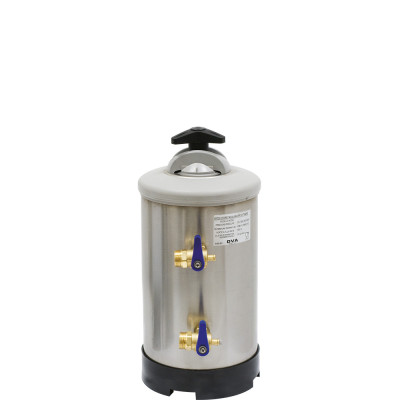
An automatic water softener starts the regeneration of the ion exchange resin on its own. This is practical when nobody can monitor the unit during daily business. Models with a digital display show the operating status at a glance; with 5 or 8 litres of resin they are suitable for small to medium-sized businesses.
A semi-automatic water softener has a simpler design, and regeneration is partly triggered manually. It suits businesses with fixed routines and trained staff who value straightforward equipment. The table shows the main variants compared:
Variant
Typical Use
Feature
Automatic softener with digital display (5 and 8 litres of resin)
Dishwasher, coffee machine, small to medium kitchens
Automatic regeneration, status display
Semi-automatic softener
Businesses with fixed routines and trained staff
Regeneration partly manually controlled
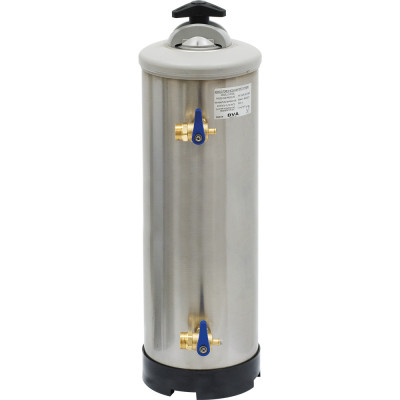
Softener with 8, 12 and 16 litres
Rising water consumption, larger kitchens and hotels
Larger resin volume for longer intervals
Espresso water softener (8 litres)
Coffee machines in cafés and catering
Protects the machine, consistent taste
Pre-filter
Installed upstream of the softener
Keeps suspended particles away from the resin
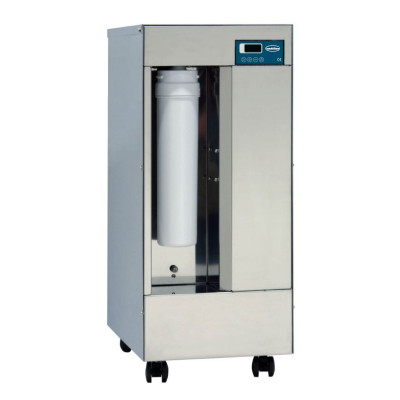
Reverse osmosis system
Glass washing, coffee, ice production
Reduces dissolved salts in the water
Choosing the Right Size and Capacity
The capacity depends on two factors: the local water hardness (in °dH) and the daily water demand. The more resin in the tank, the more water can be softened before the next regeneration. For individual appliances, 8 litres is often sufficient; for several consumers or high throughput, 12 or 16 litres make sense.
Also check the dimensions. The semi-automatic softener measuring 180 x 420 x 500 mm (WxDxH) and the automatic model measuring 200 x 360 x 510 mm (WxDxH) are compact and fit under sinks or in technical cabinets. Allow some space around the unit for refilling salt and servicing.
Pre-Filter and Reverse Osmosis as Add-Ons
A pre-filter is connected upstream of the water softener and traps sand, rust and suspended particles. This keeps the resin efficient for longer and the system runs more reliably. This combination is especially worthwhile with older pipes or fluctuating water quality.
If glasses must dry spot-free or coffee quality must stay consistent, a reverse osmosis system is an option. It removes dissolved substances more thoroughly than a pure ion exchanger. For bars, cafés and hotels with high demands on washing results, this is a sensible solution.
Material, Hygiene and Maintenance
Water softeners work with ion exchange resin, which is refreshed at regular intervals with regeneration salt. Look for a stable tank, reliable connections and a clearly readable display. For operation, use only suitable food-grade regeneration salt intended for water softening systems.
Check the salt supply regularly, test the residual hardness with a test strip, and have connections and filters inspected at fixed intervals. This safeguards water quality and prevents limescale damage. Anyone choosing catering equipment with operational reliability in mind should plan softening and maintenance right from the start.
Delivery to Germany, Austria, Switzerland and Europe
iGastroNomic delivers water softeners, pre-filters and reverse osmosis systems quickly and reliably throughout Germany, to Austria, Switzerland and many other European countries. Whether a single unit for the café or equipment for several sites: our range offers suitable catering supplies for professional water treatment at fair terms.

 Deutsch
 Türkçe
 Italiano
 Nederlands
 Français
 Español
 Polski
 Čeština
 Svenska
 Português PT
 Русский
 اللغة العربية
 中文
 日本語
 Tiếng Việt
 ภาษาไทย
 Română
 ελληνικά
 Magyar
 Dansk
 Suomi
 Hrvatski
 български език
 Eesti keel
 Latviešu valoda
 Slovenčina
 Slovenščina
 Bosanski
 עברית
 हिन्दी
 Bahasa melayu
 Kiswahili
 Bahasa Indonesia
 Papiamento
 Bokmål
 Lietuvių kalba
 Українська
 српски
 Shqip









 ›
 ›
 ›
 ›
 ›
 ›
 ›
 ›
 ›
 ›
 ›
 ›
 ›
 ›
 ›