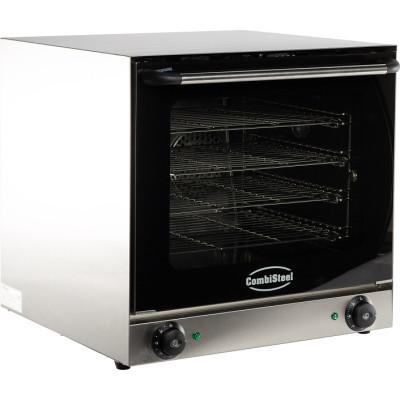
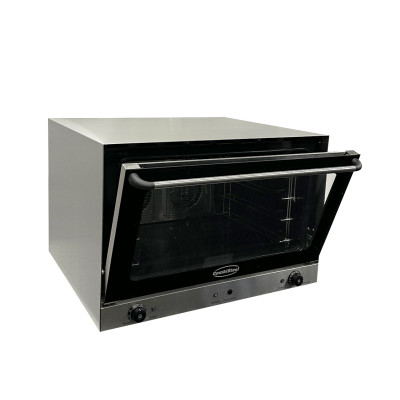
Convection ovens are the workhorses of modern commercial kitchens. They roast, bake, regenerate and gratinate with even heat and often much shorter cooking times than conventional ranges. At iGastroNomic, restaurants, bakeries, caterers and canteens will find a wide selection of convection ovens and forced-air convection ovens built for demanding everyday professional use, from a single unit to the equipment of entire production kitchens.
Applications in Restaurants and Commercial Kitchens
A commercial convection oven replaces many work steps that would otherwise require several appliances. Typical applications include:
Roasting and cooking large quantities of meat and poultry
Baking bread, rolls, pastries and sheet cakes
Regenerating pre-cooked dishes in cook-and-chill operations
Gratinating, browning and holding side dishes
Cooking vegetables, fish and ready meals
Types: Convection Oven, Steam Oven and Combi Steamer
This category includes several designs. A convection oven uses forced hot air and is particularly suited to baked goods and roasts. A steam oven adds steam to the hot air, which is used to achieve crisp bread crusts and gently cooked dishes. A combi steamer combines both methods and is classified in the trade as a combi oven. Appliances also differ by heating type (electric or gas), design (countertop, freestanding, base unit) and loading with Gastronorm containers (such as GN 1/1 or GN 2/3) or baking trays.
What Professionals Look for When Buying
Base the capacity on your daily requirements: how many trays or GN containers fit in one batch, and how many batches are needed during service? Equally important are the available power or gas connections, the ventilation situation, the installation space, and whether a base unit or stand is required. Also check:
Operating modes: pure hot air, steam or combination
Operation: manual controls or programme memory
Accessories such as racks, rack trolleys or core temperature probes
Build quality and suitability for continuous operation
Cleaning, Maintenance and Safe Operation
Regular cleaning extends service life and ensures consistent cooking results. Remove fat and protein residues after every use, clean fans, seals and the cooking chamber, and descale steam-generating appliances at regular intervals, especially where water is hard. Keep ventilation openings clear and ensure adequate ventilation around the installation area. Train your staff in the operating modes so that cooking programmes remain reproducible.
Why Buy from iGastroNomic
iGastroNomic is both manufacturer and wholesaler. Business customers benefit from B2B net prices, a broad range of convection ovens and personal advice by phone and WhatsApp on capacity, connections or equipment. Delivery is available throughout Europe, and the company is headquartered in Nackenheim.
Frequently asked questions
What is the difference between a convection oven and a combi steamer?
A convection oven uses forced hot air. A combi steamer can additionally cook with steam and is therefore classified as a combi oven. For pure baking and roasting, a convection oven is often sufficient. For cooking methods that require moisture, a combi steamer is the better choice.
Which convection oven is suitable for a bakery?
For bakeries, appliances with even hot-air distribution and, depending on the types of bread, a steam function are advisable. It is also important to consider the tray loading and the capacity in relation to daily production. iGastroNomic's personal advice can help you with this selection.
Which operating modes does a commercial convection oven have?
Common modes are pure hot air, steam and combined modes. Many units also offer programme memory for recurring dishes. The right mode depends on whether you want to bake, roast, regenerate or steam.
How do I clean a commercial convection oven properly?
Remove fat and food residues after every use, and clean the cooking chamber, fan and seals regularly. For steam-generating appliances, the steam generator should be descaled at fixed intervals, especially where water is hard. Follow the manufacturer's cleaning instructions in your operating manual.
Can I buy convection ovens from iGastroNomic as a business customer at net prices?
Yes, iGastroNomic offers B2B net prices to business customers. Advisors are available by phone and WhatsApp to help you place an order and choose the right appliance. Delivery is available throughout Europe.
Buy Convection Ovens for Commercial Kitchens
Convection ovens (also called hot air ovens) are commercial ovens in which a fan distributes the hot air evenly throughout the cooking chamber. They are suitable for restaurants, hotels, bakeries, snack bars, canteens and catering businesses. When buying, the key factors are the tray system (GN or EN 40 x 60), the number of shelves, the controls (digital or manual), optional steam and grill functions and the power connection.
Applications of Convection Ovens in Catering and Commercial Kitchens
A convection oven for catering bakes, roasts, gratinates and regenerates food in a single appliance. Typical uses include bread rolls and croissants, casseroles, roasts, vegetables, fish and frozen products. In the bakery, models for EN baking trays in the 40 x 60 format ensure even browning. In restaurant and hotel kitchens, units in GN format handle à la carte preparation and breakfast production.
Snack bars, canteens and catering businesses also benefit from convection ovens, as several levels can be loaded at once. As part of your catering equipment, they often replace several individual appliances and save kitchen space. They belong to the same family as combi steamers, but are usually simpler in design and less expensive to purchase.
Size and Tray System: Choosing GN or EN 40 x 60
The most important question when buying is: which trays and containers do you use? If you work with Gastronorm containers, choose an oven for 4x GN 1/1 or, for high throughput, for 10x GN 2/1. Bakeries and patisseries, on the other hand, rely on EN 40 x 60 with 4 or 6 shelves. Compact units with 5 shelves in 2/3 GN format are also available, for example for small kitchens and counters.
Plan your capacity around your peak times, not the average. A convection oven with 4 shelves is sufficient for many restaurants and cafés. For canteens, hotel kitchens and bakeries with high piece numbers, a larger oven with 6 or 10 shelves pays off, as it replaces several batches.
Variant
Typical Use
Feature
4x GN 1/1, digital or manual
Restaurant, café, snack bar
Standard format for Gastronorm containers
4x or 6x EN 40 x 60
Bakery, patisserie, bake shop
For trays in bakery format
10x GN 2/1
Commercial kitchen, canteen, catering
High capacity per batch
Convection oven with steam or steam injection
Bread, bread rolls, juicy roasts
Moisture in the cooking chamber controllable
Convection oven with grill
Gratinating, browning, finishing
Grill function in addition to hot air
Digital or Manual: Which Control Suits Your Business?
A digital convection oven offers precise temperature setting and accurate timing. This is ideal when several staff members work on the appliance and results need to be reproducible. A manual convection oven with rotary knobs, on the other hand, is simple to operate, robust and particularly suitable for smaller businesses and snack bars.
Many commercial convection ovens have a built-in timer and reach temperatures of up to 300 °C. This is sufficient for baked goods, meat, vegetables and ready meals. The timer relieves staff, as the oven signals the end of the cooking time automatically.
Steam, Steam Injection and Grill: Comparing Functions
A convection oven with steam or steam injection releases moisture into the cooking chamber. Bread and bread rolls thus gain more volume, a glossy crust and a crisp surface. Meat and vegetables stay juicier, and food does not dry out when regenerated. Models with a spray function indicate via a control light when steam injection is active.
A convection oven with grill adds strong top heat to the hot air. This lets you gratinate casseroles, melt cheese on top and brown meat thoroughly. Combi units with grill and steam are the most versatile solution if you want to prepare baked goods, roasts and gratins in the same appliance. When choosing steam models, check the connection: some units require 400 V three-phase current, others run on a standard socket. Check your kitchen's electrical installation before purchasing.
Material, Hygiene and Care in Everyday Kitchen Use
Professional stainless steel convection ovens are durable, heat-resistant and easy to clean. The cooking chamber should have smooth surfaces with rounded corners so that no food residue can build up. The shelf rails can be removed on many models, which simplifies cleaning. A well-sealing door with double glazing keeps heat in the cooking chamber and protects against burns.
Clean the cooking chamber after every working day, once it has cooled down, with a mild cleaner and a soft cloth. For appliances with steam or steam injection, descale regularly so that nozzles and water supply work reliably. Also check the door seal regularly, as it affects energy consumption and baking results.
Delivery of Convection Ovens across Germany and Europe
Whether you are equipping a new restaurant with your catering supplies or replacing a faulty oven: iGastroNomic delivers convection ovens quickly and reliably across Germany, Austria, Switzerland and Europe. Bulky appliances are securely packed and shipped by freight forwarder. This way your new convection oven is delivered at short notice and can go into operation immediately.

 Deutsch
 Türkçe
 Italiano
 Nederlands
 Français
 Español
 Polski
 Čeština
 Svenska
 Português PT
 Русский
 اللغة العربية
 中文
 日本語
 Tiếng Việt
 ภาษาไทย
 Română
 ελληνικά
 Magyar
 Dansk
 Suomi
 Hrvatski
 български език
 Eesti keel
 Latviešu valoda
 Slovenčina
 Slovenščina
 Bosanski
 עברית
 हिन्दी
 Bahasa melayu
 Kiswahili
 Bahasa Indonesia
 Papiamento
 Bokmål
 Lietuvių kalba
 Українська
 српски
 Shqip









 ›
 ›
 ›
 ›
 ›
 ›
 ›
 ›
 ›
 ›
 ›
 ›
 ›
 ›
 ›