A meat mixer blends minced meat, sausage meat and seasoning mixes evenly, without the mixture having to be worked by hand. In butcher shops, snack bars, restaurants, canteens and catering businesses, it ensures consistent quality for fillings, marinades and forcemeats and noticeably saves labour time. At iGastroNomic you will find a wide range of commercial meat mixers for professional use, from compact models for small batches to units for larger batches.
Applications in Foodservice
Typical applications include mixing minced meat for burgers, meatballs and patties, incorporating spices and curing salt into sausage and meat products, and marinating large quantities of meat for grilled and braised dishes. Caterers and central kitchens also benefit when larger quantities need to be prepared consistently every day. A meat mixer for foodservice relieves staff and delivers consistent results.
Variants: Manual or Electric, Tilting Bowl, Single or Double Shaft
The range differs mainly by capacity, drive and mixing system. When choosing, pay attention to the following features:
Manual or electric: Manual units are suitable for manageable quantities, while electric models make continuous operation with larger batches easier.
Tilting bowl: The mixing bowl can be tilted for emptying, which simplifies transferring the mixture into containers or further processing equipment.
Single shaft: A mixing tool of simple design, suitable for smaller batches.
Double shaft: Two mixing shafts, typically chosen for larger quantities of meat and even mixing.
What Professionals Look for When Buying
The key factor is first the mixing material: how much meat is processed per batch, whether you mix minced meat, sausage meat or marinated pieces, and how often the unit runs each day. Do not size the bowl too tightly, so that peak quantities can also be processed safely. Food-safe, easy-to-clean materials, a sturdy construction and simple operation in everyday work are also important.
Cleaning, Care and Safe Operation
Meat should be processed chilled to maintain the cold chain. After every use, the bowl, mixing tools and shafts must be cleaned thoroughly, as meat residues and spices otherwise lodge in seams and joints. Before commissioning, check that all parts are seated securely, and allow electric units to be operated only by trained personnel.
Why Buy from iGastroNomic?
iGastroNomic is a manufacturer and wholesaler in one and delivers throughout Europe. Trade customers receive B2B net prices and benefit from a wide selection of meat mixers. If you are unsure which commercial meat mixer suits your needs, we will be happy to advise you personally by phone or WhatsApp, so that capacity and equipment match your business.
Frequently asked questions
What is a meat mixer used for in foodservice?
A meat mixer blends minced meat, sausage meat, spices and marinades evenly, relieving staff in the process. Typical users are butcher shops, snack bars, restaurants, canteens and caterers. It is particularly suitable when large quantities need to be prepared consistently on a regular basis.
What is the difference between a single shaft and a double shaft meat mixer?
A single shaft meat mixer uses one mixing tool, which gives a simple design for smaller batches. A double shaft version has two mixing shafts and is often chosen for larger quantities of meat. The right variant depends on your typical batch size.
What advantage does a tilting bowl offer on a meat mixer?
The tilting bowl can be tipped for emptying, so the finished mixture can be transferred precisely into containers or into further processing. This reduces losses and makes working with large quantities easier. Make sure the bowl tilts safely and moves smoothly.
Is a manual meat mixer sufficient, or is an electric one worthwhile?
Manual meat mixers are often sufficient for manageable quantities and lower daily volumes. Electric models significantly relieve staff with frequent use and large batches. The decisive factors are your mixing material, the number of batches per day and the available labour.
How do I clean a meat mixer properly?
The bowl, mixing tools and shafts should be cleaned thoroughly after every use so that no meat residues lodge in seams. Work with chilled meat where possible and maintain the cold chain. For electric units, always disconnect the power supply before cleaning.
Meat Mixers for Foodservice and Butchers
A meat mixer blends minced meat, sausage meat, spices and ingredients evenly and without lumps. It is designed for butcher's shops, restaurants, hotel kitchens, canteens and commercial kitchens. When buying, the key factors are the capacity (10 to 60 litres), the design (single shaft, twin shaft or tilting bowl) and the stainless steel construction.
Meat Mixers for Foodservice, Butcher's Shops and Commercial Kitchens
A meat mixer for foodservice replaces mixing by hand in a tub. It ensures that spices, salt, onions or inclusions are evenly distributed throughout the minced meat. The result is consistent quality in meatballs, rissoles, burger patties, bratwurst mix, mince and stuffings. This also applies when several cooks or staff members prepare the mixture.
Butcher's shop and meat counter: sausage meat, minced meat blends and marinades in larger batches
Restaurant and hotel: burger mix, meat patties, stuffings for roasts and rouladen
Canteen and commercial kitchen: meat mixtures for many portions in one operation
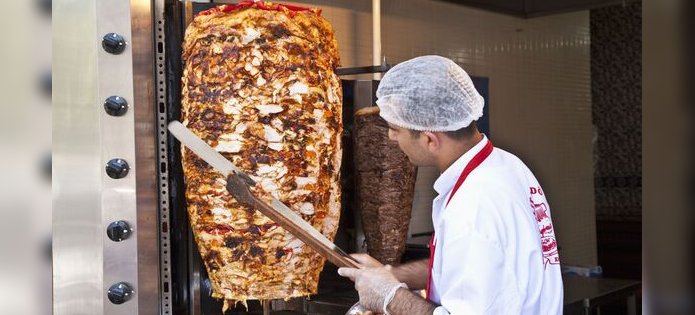
Snack bar and catering: döner, kebab and grill skewer mixes, minced meat seasoning blends
All machines in this category are manually operated. They therefore do not require a three-phase power connection and can be placed flexibly wherever space is available. This makes them practical helpers in professional catering supplies.
Meat Mixer Size: Choosing 10 to 60 Litres Correctly
The most important specification is the mixing bowl capacity. Models range from 10 litres (approx. 7.5 kg of meat) through 20 litres (16 kg), 30 litres (25 kg) and 40 litres (35 kg) up to 50 litres (43 kg) and 60 litres (55 kg). In addition, there is a compact meat mixer for approx. 6.5 to 7 kg of meat. The quantities stated are the practical filling volumes. They are below the nominal capacity so that the mix has room to circulate.
As a rule of thumb, choose the size according to your largest typical daily batch, not the maximum demand on peak days. A small meat mixer with 10 or 20 litres is sufficient for restaurants, hotels and smaller snack bars. Butcher's shops and canteens are better served with 30 to 60 litres. Also check floor space and working height so that you can fill and empty the machine comfortably.
Single Shaft, Twin Shaft or Tilting Bowl: The Designs
With the single-shaft design, one mixing shaft works in the bowl. This design is available from 10 to 30 litres. It is suitable for light, evenly textured mixtures and small to medium quantities. The twin-shaft design works with two mixing shafts. It is available from 30 to 60 litres and mixes larger, tougher batches more thoroughly.
The tilting bowl is available from 10 to 60 litres. The bowl can be tilted for emptying, so the mixture can be transferred directly into a tub, onto a trolley or into the sausage filling machine without scooping it out by hand. This saves time and protects your back, especially with large quantities.
Design
Available Sizes
Features and Use
Single shaft
10, 20 and 30 litres
Simple design for small to medium batches in restaurants, hotels and snack bars
Twin shaft
30, 40, 50 and 60 litres
Two mixing shafts for thorough mixing of large quantities in butcher's shops and canteens
Tilting bowl
10, 20, 30, 40, 50 and 60 litres
Bowl tilts for emptying, back-friendly, fast further processing
Compact model
for approx. 6.5–7 kg meat
Space-saving solution for small kitchens and occasional use
Meat Mixer, Mincer and Meat Tenderiser Working Together
Many businesses are also looking for a catering meat mincer, a meat mincer with cooling or a commercial meat tenderiser. Each machine performs its own task: the mincer grinds the meat, the meat tenderiser flattens schnitzels and steaks into shape. The meat mixer then blends the minced meat with spices and ingredients. Chilled processing is essential at every step, because only chilled meat stays firm and hygienically safe.
A meat mixer does not replace a mincer, but it complements one ideally in a continuous processing line. Our range of catering supplies includes suitable kitchen equipment for every step.
Material and Hygiene: Food-Grade Stainless Steel
Mixing bowls and mixing tools are made of stainless steel. The material is food-safe, corrosion-resistant and does not absorb odours or flavours. Smooth surfaces without gaps make cleaning to HACCP requirements easier. This is especially important with raw meat, since residues in hard-to-reach corners are a hygiene risk. Check for clean welded seams and mixing shafts that can be easily reached for cleaning.
Care and Maintenance in Daily Use
Clean the meat mixer thoroughly after every use. Rinse off meat residues with cold water, then clean with warm water and a suitable detergent approved for food areas. Do not use abrasive cleaners or steel wool, so the stainless steel surface stays smooth. Then dry the bowl and regularly check bearings and mixing shafts for wear. With manually operated machines, maintenance is comparatively simple, as there are no electrical components to consider.
Delivery throughout Germany, Austria, Switzerland and Europe
iGastroNomic delivers meat mixers quickly and reliably throughout Germany, to Austria, Switzerland and other countries in Europe. Especially with large machines of 40 to 60 litres, secure packaging and planned delivery to your business are essential. If you want to bundle your catering supplies purchases, you will also find other kitchen equipment from one source with us.

 Deutsch
 Türkçe
 Italiano
 Nederlands
 Français
 Español
 Polski
 Čeština
 Svenska
 Português PT
 Русский
 اللغة العربية
 中文
 日本語
 Tiếng Việt
 ภาษาไทย
 Română
 ελληνικά
 Magyar
 Dansk
 Suomi
 Hrvatski
 български език
 Eesti keel
 Latviešu valoda
 Slovenčina
 Slovenščina
 Bosanski
 עברית
 हिन्दी
 Bahasa melayu
 Kiswahili
 Bahasa Indonesia
 Papiamento
 Bokmål
 Lietuvių kalba
 Українська
 српски
 Shqip









 ›
 ›
 ›
 ›
 ›
 ›
 ›
 ›
 ›
 ›
 ›
 ›
 ›
 ›
 ›


