Commercial Cooking Line: Professional Cooking Equipment at a Glance
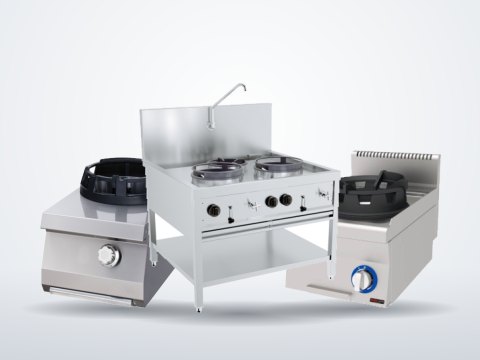
A commercial cooking line forms the heart of every professional kitchen. Gas ranges, multi-function tilting braising pans, tilting kettles and grill systems are subject to continuous operation and must be reliable, hygienic and easy to clean. At iGastroNomic, you will find commercial cooking equipment in the Kochbereich 700, Kochbereich 900 and Kochlinien ranges, complemented by matching work cabinets and specialist equipment.
Applications for Commercial Cooking Lines
The requirements for a commercial kitchen vary considerably depending on the type of operation. Typical applications include:
Restaurants and hotel kitchens with changing menus and high utilisation
Snack bars and quick-service restaurants with short cooking times and high throughput
Canteens and caterers preparing large quantities at the same time
Bakeries with a sales kitchen and hot-holding area
Types and Variants: Cooking Range, Cooking Line and Specialist Equipment
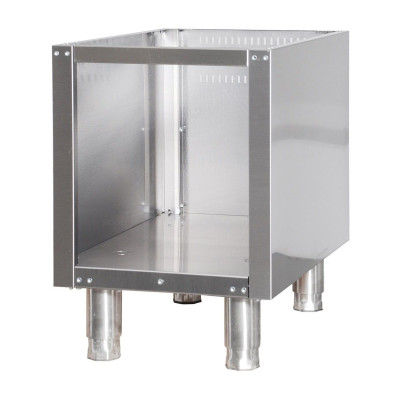
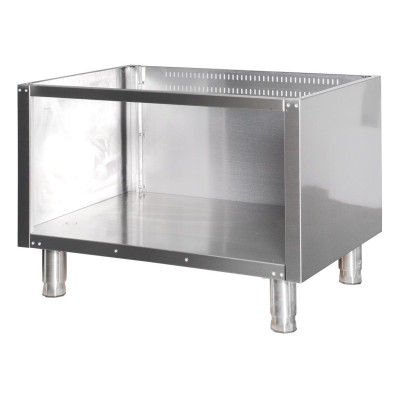
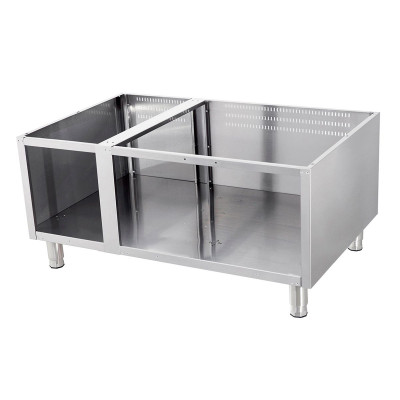
You can purchase a cooking range as a single appliance or as a coordinated combination. Gas ranges are suitable for flexible pots and pans with direct flame and fast temperature control. Electric multi-function braising pans provide even heat across a large surface, for example for braised dishes or larger batches of meat and vegetables. The tilting kettle for commercial kitchens is ideal for soups, sauces and stews in large volumes, as it can be tilted for easy emptying. Charcoal grills with one or more zones allow grilled dishes with different heat levels. Work cabinets, open or with doors, provide storage directly alongside the line.
What Professionals Consider When Buying
Fuel and connection: Check before purchase whether gas or three-phase power (400 V) is available at your site.
Space requirements and installation: Plan working routes, extraction and clearances to walls and neighbouring equipment.
Output and number of zones: Match the equipment to your menu range and peak load.
Material quality: Stainless steel is the standard in commercial kitchens, as it is robust and hygienic.
Modular expandability: A cooking line made of coordinated modules can be extended as demand grows.
Cleaning, Maintenance and Safe Operation
Regular cleaning extends service life and ensures hygiene. Clean surfaces, burners and drip trays after every operating day and remove grease residues consistently. Have gas connections, seals and controls inspected by qualified personnel at fixed intervals. Train your team in safe operation, particularly with tilting mechanisms and open flames.
Why Buy Your Cooking Line from iGastroNomic
iGastroNomic is a manufacturer and wholesaler of commercial catering and kitchen equipment, headquartered in Nackenheim. Trade customers benefit from B2B net prices, a wide range and personal advice by telephone and WhatsApp. We deliver throughout Europe and also support you in planning complex cooking lines. Contact us for an individual recommendation for your business.
Frequently asked questions
What belongs to a commercial cooking line?
A commercial cooking line comprises the central heating appliances of a kitchen, such as gas ranges, electric multi-function braising pans, tilting kettles and, where applicable, grill systems. It is complemented by work cabinets that provide storage and worktop space. The configuration depends on the menu range, utilisation and available space.
Gas or electric: which is suitable for my kitchen?
Gas ranges offer direct flame and rapid temperature changes, but require a gas connection. Electric appliances provide even heat and are often easier to install, although they need a suitable power supply. The deciding factors are the existing infrastructure and the type of dishes you prepare.
What is a tilting kettle used for in commercial kitchens?
A tilting kettle is suitable for cooking large quantities such as soups, sauces, stews or vegetables. Thanks to its tilting function, the contents can be emptied quickly and in a controlled way. It saves time and reduces the need to transfer hot liquids.
How do I clean a commercial cooking line properly?
Clean surfaces, burners and drip trays after every operating day and remove grease promptly. Use cleaning agents suitable for stainless steel and avoid abrasive tools. Have gas connections and controls checked regularly by qualified personnel.
How do the Kochbereich 700 and 900 series differ?
The series differ in equipment, configuration and main area of use. Which variant suits your kitchen depends on space, connections and power requirements. Our team will be happy to advise you personally by telephone or WhatsApp on the right choice.
Commercial Cooking Line for Catering & Large Kitchens
A cooking line is a modular system of commercial cooking equipment that can be combined into a continuous cooking station in restaurants, hotels, canteens or large kitchens. It is designed for businesses that want to arrange tilting kettles, grill modules, braising pans and work cabinets in a space-saving, hygienic way that suits their kitchen workflow. When buying, the key factors are depth, energy type (gas or 400 V electric), capacity and how well the modules can be combined.
Cooking Line for Foodservice: Areas of Use
A commercial cooking line forms the heart of every professional kitchen. In foodservice and hotel kitchens, chefs work along a line where cooking, grilling, frying and preparation flow seamlessly into one another. Canteens, catering businesses, butcher shops with a lunch counter and large kitchens in care facilities or staff restaurants also rely on modular systems, because the line can be expanded step by step.
The advantage over individual freestanding appliances: all modules share a uniform depth and a flush working height. This saves steps, makes cleaning easier and creates a clearly structured workflow. Anyone equipping a new kitchen with catering equipment therefore usually plans the cooking line first.
Which Modules Belong to the Cooking Line?
Our range includes tilting kettles for soups, sauces, stews and side dishes, grill modules with one, three or eight zones, an electric multi-braising pan as well as work cabinets as single, double or triple units. The work cabinets with 90 cm depth are available open or with doors. They serve as a base unit, storage for pots and pans, or as a connecting element between the cooking modules.
The tilting kettles feature indirect heating. The kettle is heated via a heating jacket, so food cooks gently and is less likely to scorch. This is particularly useful for dishes containing starch or milk.
Module
Typical Use
Feature
Tilting kettle 120 l to 220 l
Soups, sauces, stews in restaurants and canteens
Indirect heating, gas or electric 400 V
Tilting kettle 550 l
Large kitchens, catering, mass catering
Large capacity, gas operation
Grill module 1, 3 or 8 zones
Steaks, vegetables, grilled dishes à la carte
Zones can be used separately, gas version
Electric multi-braising pan
Roasting, braising, cooking in one appliance
Electric operation, versatile use
Work cabinet single, double, triple unit
Base unit and storage within the line
90 cm depth, open or with doors
Buying Advice: Size, Energy Type and Depth
Start by asking how many portions your kitchen serves at peak times. This determines whether a tilting kettle with 120 l or 160 l is sufficient or whether you need a 550 l kettle for large volumes. Between these sizes sits the 220 l kettle in an electric version, suited to medium to large businesses.
The energy type is also important: gas appliances respond quickly and are popular for high continuous loads, while electric appliances with 400 V three-phase do not require a gas connection and are easier to integrate into existing kitchens. Before ordering, check the available connection and the extraction situation. Also make sure that all modules have the same depth of 90 cm so that the line finishes flush.
Grill Modules: Using Zones Effectively
Gas grill modules are available with one zone, three zones and eight zones. One zone suits small menus or as a supplement, three zones are ideal for classic restaurant operation, and eight zones suit businesses with a high share of grilled food. Separate zones allow different cooking levels and foods to be prepared at the same time without flavours or temperatures mixing.
Material and Hygiene: Stainless Steel in the Professional Kitchen
All modules are made of stainless steel. The material is robust, corrosion-resistant, food-safe and easy to clean thoroughly. Smooth surfaces and continuous fronts help meet HACCP requirements. Work cabinets with doors protect utensils from splashing water and dust, while the open versions give quick access to frequently used pots and pans.
Care and Maintenance of the Cooking Line
Clean kettles and work surfaces after every use with warm water and a mild detergent, preferably in the grain direction of the stainless steel. Avoid steel wool and chlorine-based cleaners, as they attack the surface. For gas appliances, burners, flame failure devices and connections should be checked regularly by a qualified technician; for electric appliances, heating elements and power cables. Anyone who maintains their catering equipment carefully will significantly extend its service life.
Delivery Across Germany, Austria, Switzerland and Europe
We deliver your cooking line quickly and reliably throughout Germany, to Austria, to Switzerland and to other European countries. The heavy stainless steel modules are packed securely and delivered by freight carrier. When planning an individual line made up of cooking kettles, grill modules and work cabinets, the iGastroNomic team will be happy to advise you.

 Deutsch
 Türkçe
 Italiano
 Nederlands
 Français
 Español
 Polski
 Čeština
 Svenska
 Português PT
 Русский
 اللغة العربية
 中文
 日本語
 Tiếng Việt
 ภาษาไทย
 Română
 ελληνικά
 Magyar
 Dansk
 Suomi
 Hrvatski
 български език
 Eesti keel
 Latviešu valoda
 Slovenčina
 Slovenščina
 Bosanski
 עברית
 हिन्दी
 Bahasa melayu
 Kiswahili
 Bahasa Indonesia
 Papiamento
 Bokmål
 Lietuvių kalba
 Українська
 српски
 Shqip









 ›
 ›
 ›
 ›
 ›
 ›
 ›
 ›
 ›
 ›
 ›
 ›
 ›
 ›
 ›