Deutsch
 Türkçe
 Italiano
 Nederlands
 Français
 Español
 Polski
 Čeština
 Svenska
 Português PT
 Русский
 اللغة العربية
 中文
 日本語
 Tiếng Việt
 ภาษาไทย
 Română
 ελληνικά
 Magyar
 Dansk
 Suomi
 Hrvatski
 български език
 Eesti keel
 Latviešu valoda
 Slovenčina
 Slovenščina
 Bosanski
 עברית
 हिन्दी
 Bahasa melayu
 Kiswahili
 Bahasa Indonesia
 Papiamento
 Bokmål
 Lietuvių kalba
 Українська
 српски
 Shqip


 ›
 ›
 ›
 ›
 ›
 ›
 ›
 ›
 ›
 ›
 ›
 ›
 ›
 ›
 ›
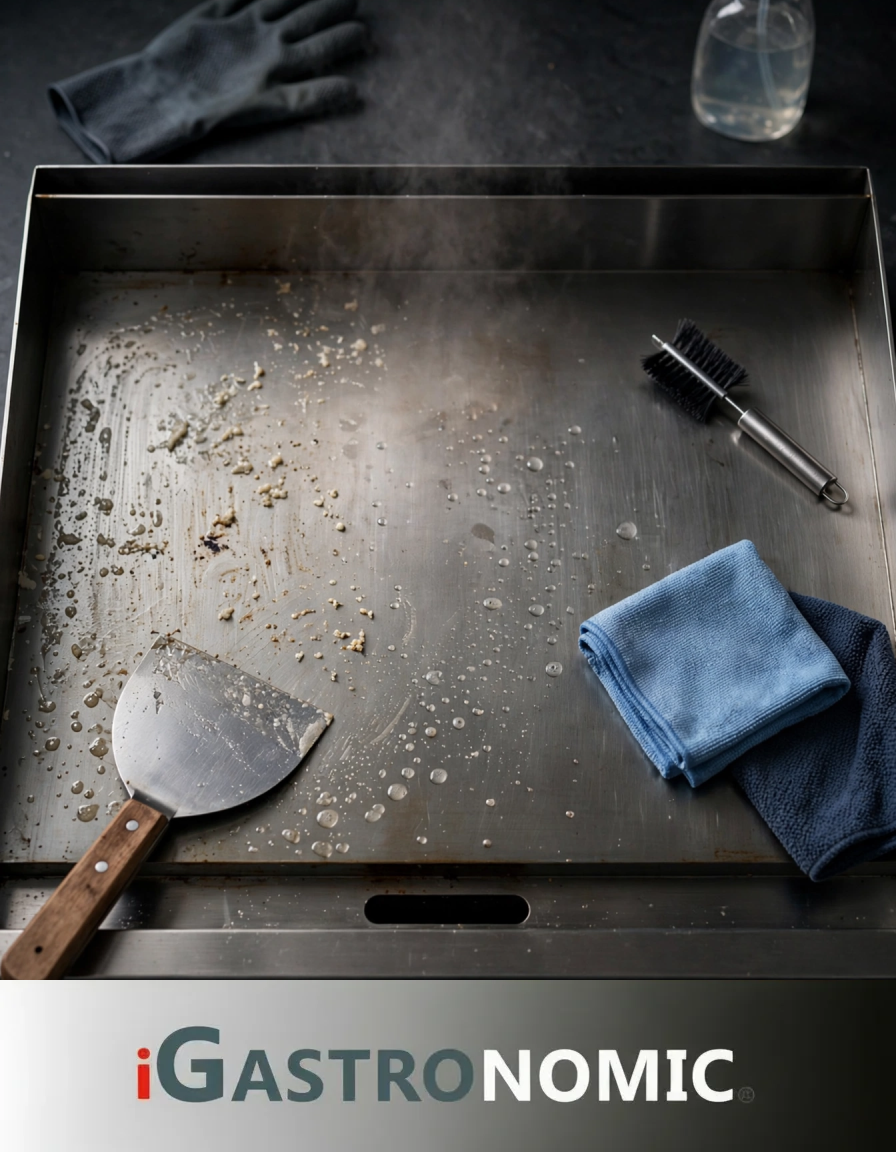
In short: Annual fry top maintenance includes thorough cleaning, checking for damage, re-oiling the plate, inspecting the gas and electrical components, and cleaning the extraction system. This preserves heat conduction, safety and hygiene. Gas and electrical work should be left to a qualified specialist company.
What is a fry top?
A fry top is a large, flat cooking plate, usually made of steel, stainless steel or cast iron, heated by gas or electricity. The even surface allows several foods to be fried, grilled or kept warm at the same time. This is why it is very common in restaurants, snack bars, canteens and hotel kitchens.
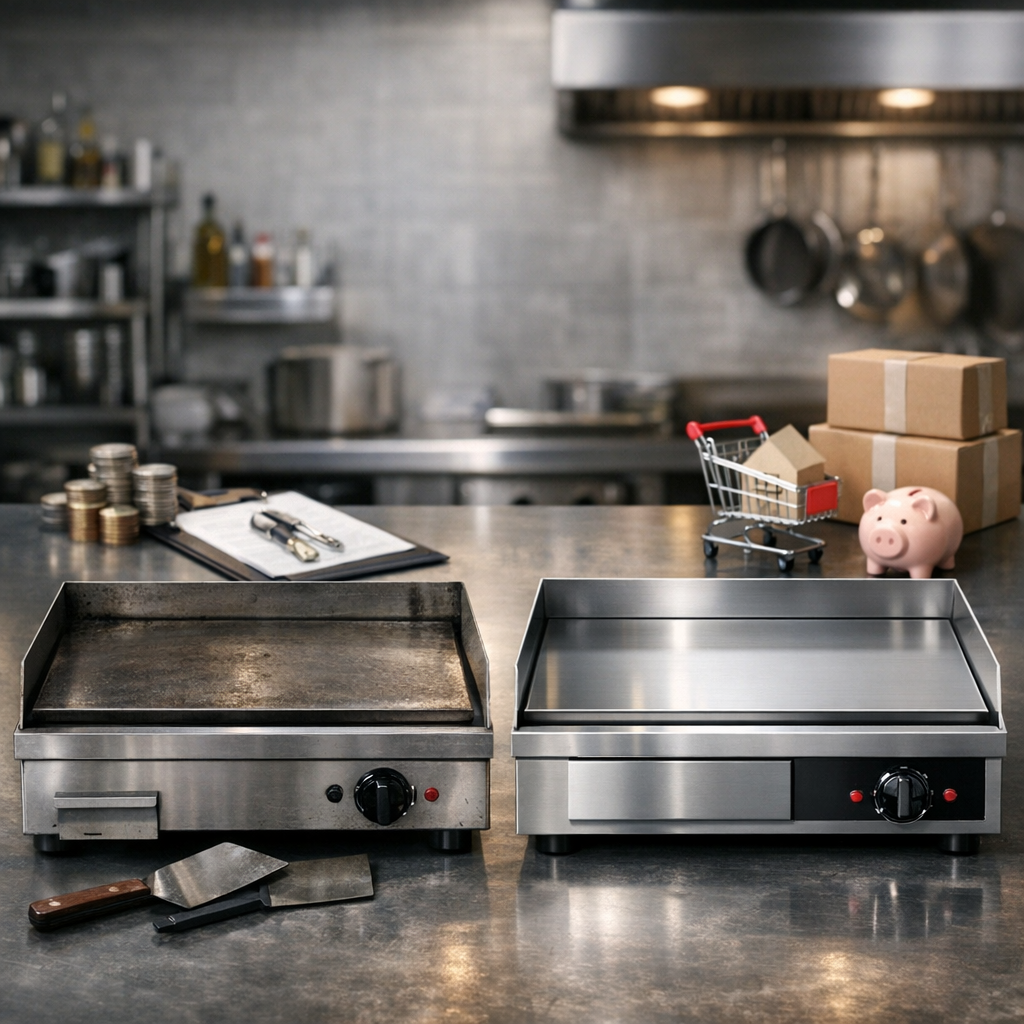
If you are planning a new appliance, you will find suitable griddle plates for commercial kitchens in our range. To ensure every unit works reliably for a long time, it needs a fixed maintenance routine.
Why is annual maintenance important?
In continuous operation, grease, food residues and, depending on water quality, limescale build up. Annual maintenance therefore goes beyond daily cleaning. It has four goals:
- Maintaining performance: Deposits can impair heat conduction and lead to uneven cooking results.
- Ensuring longevity: Regular care protects against corrosion, rust and material wear.
- Ensuring safety: A well-maintained appliance minimizes the risk of malfunctions and accidents.
- Ensuring hygiene: Residues can cause bacteria and unpleasant odours.
Preparing for maintenance
Good preparation saves time and protects you and the appliance. Before you start, pay attention to the following points:
- Switch off the appliance: The fry top must be completely switched off, disconnected from the gas or power supply, and cooled down. Deviating manufacturer instructions on cleaning while warm take precedence.
- Clear the work area: Remove all cooking utensils and food from the cooking surface.
- Wear protective clothing: Gloves and, if necessary, safety goggles protect against cleaning agents and dirt.
- Prepare materials: You will need cleaning agents, sponges, a scraper or spatula, cooking oil for maintenance, cloths and possibly spare parts.
Step-by-step guide to annual maintenance
Clean the cooking surface thoroughly
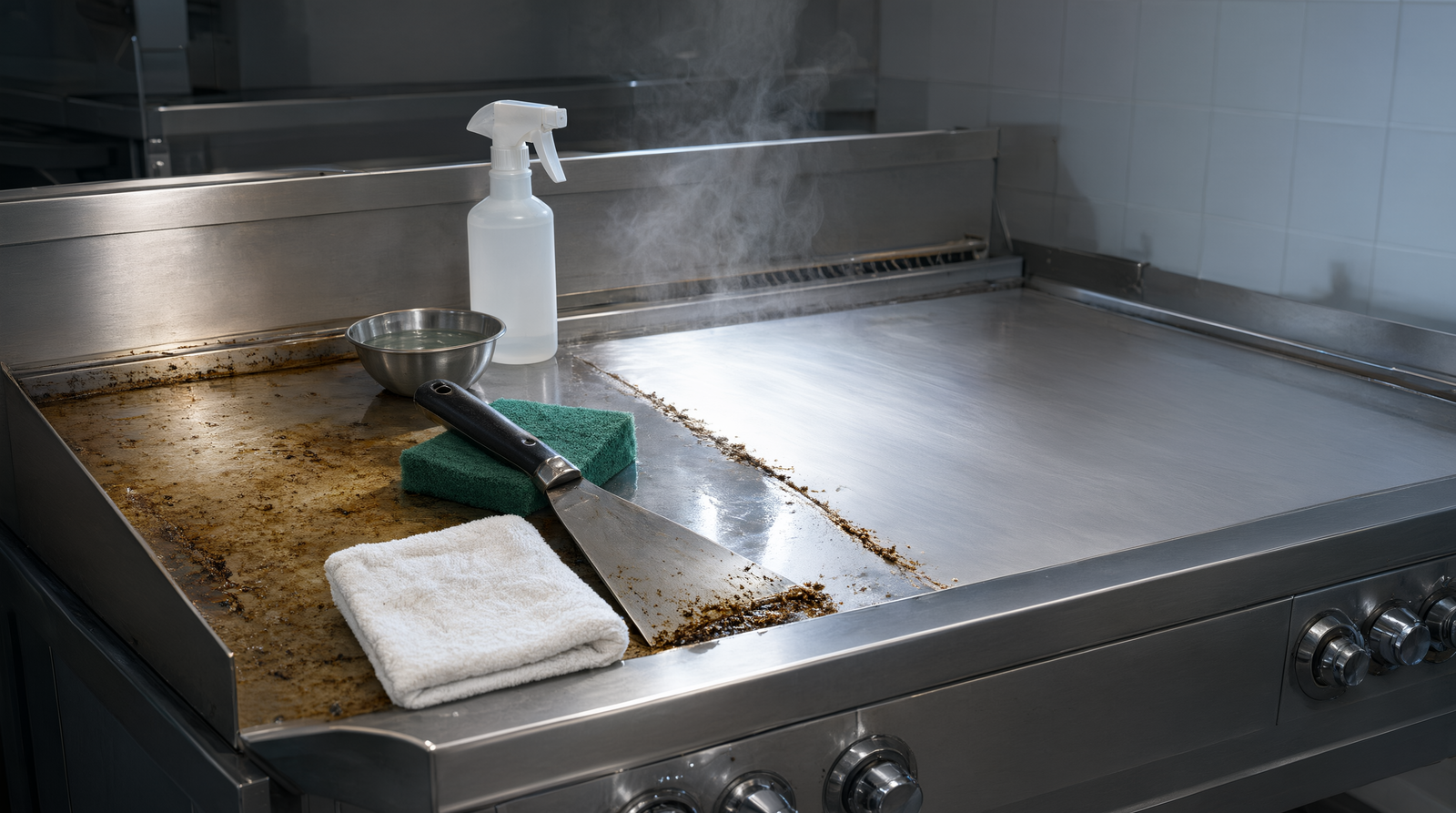
Cleaning is the core of maintenance. The aim is to remove all residues that have built up over the year.
- Remove coarse dirt: Carefully lift off burnt-on residues with a spatula or scraper blade.
- Use a suitable cleaning agent: Use a degreasing cleaner suitable for fry tops that does not contain aggressive chemicals. You will find suitable cleaning agents and hygiene products in our shop.
- Soak: For stubborn dirt, place a cloth soaked in cleaner on the surface and let it work for a few minutes.
- Wipe and rinse: Then rinse with warm water and dry completely with a clean cloth.
Check for damage and wear
After cleaning, inspect the surface and all mechanical parts carefully:
- Check the surface: Look for cracks, dents or discolouration, which may indicate material damage.
- Seals and screws: Check that all screws are tight and the seals are intact.
- Gas connection and burners (for gas appliances): Check connections and burners for dirt and abnormalities. The leak test itself must be carried out by a specialist.
Re-oil and season the surface
On uncoated steel and cast iron plates, re-oiling protects against rust and maintains the non-stick patina. Here too, follow the manufacturer's care instructions.
- Use a suitable oil: Use a heat-resistant oil, ideally a special fry top care oil. Linseed oil is also sometimes used, but it should be applied very thinly.
- Apply thinly: Spread a thin layer onto the clean, dry plate using a soft cloth or brush.
- Season: Then heat the fry top at medium temperature until the oil has baked in and forms a protective layer.
Check electrical and gas components
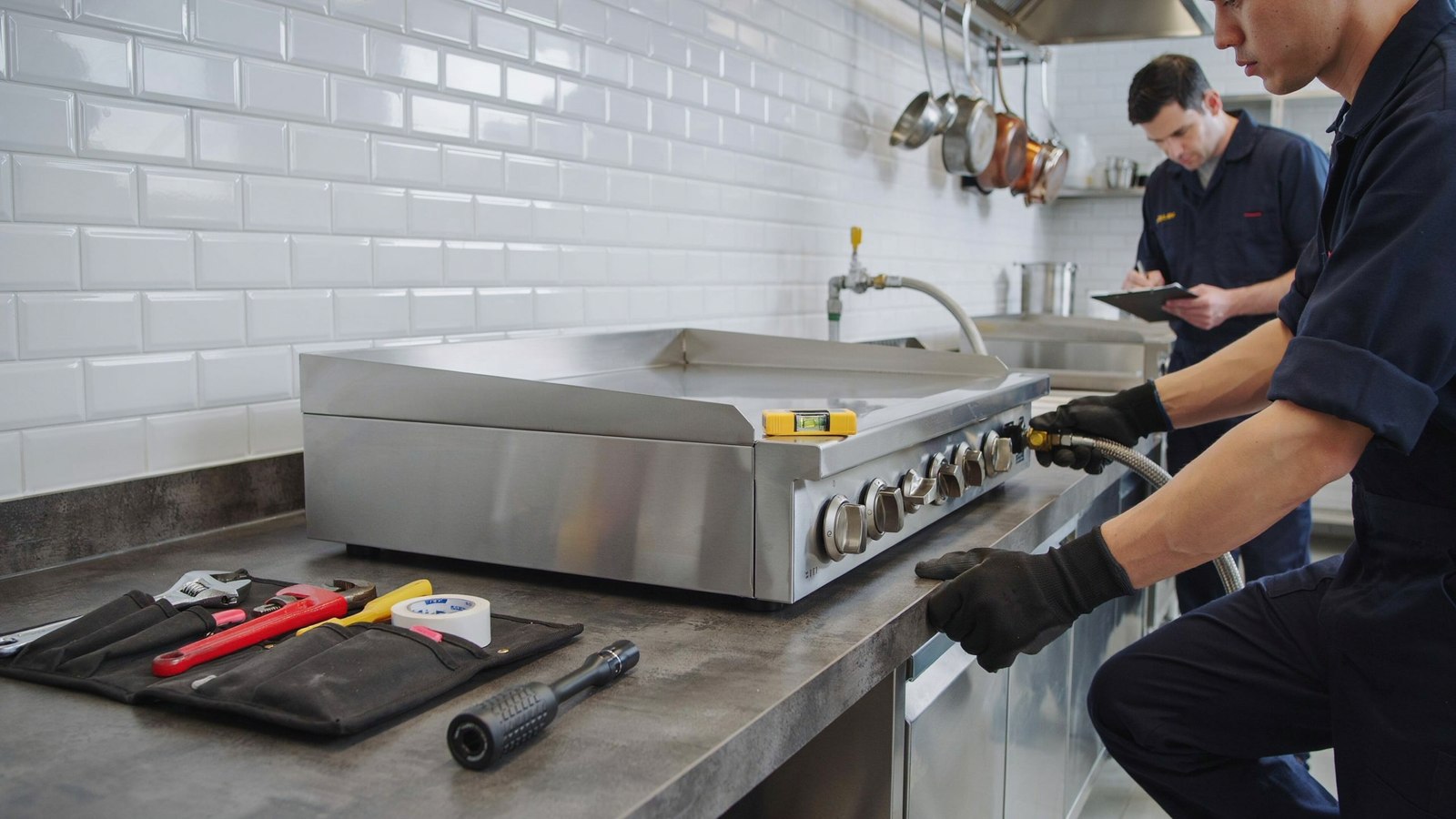
Depending on the appliance type, the technical components should be inspected once a year, ideally by a specialist company:
- Electrical connections: No cables may be damaged, and all connections must be secure.
- Gas lines: They must be checked for leaks and, if necessary, cleared of dirt.
- Thermostats and controls: A functional test ensures precise temperature control.
Clean the extractor hood and ventilation
Extraction is often neglected during maintenance. However, grease and dirt can obstruct air circulation and, in extreme cases, pose a fire risk.
- Clean or replace filters: Depending on the model, grease filters should be cleaned or replaced regularly.
- Clean the interior: Remove grease deposits with suitable cleaning agents.
- Check vents and ducts: There must be no blockages. When replacing parts, suitable ventilation pipes and fittings can help.
Document maintenance
Keep a maintenance log with the date, the measures carried out and any defects found. This helps you keep track and react more quickly to problems. In commercial kitchens, clean documentation is also helpful during inspections.
Maintenance intervals at a glance
Annual maintenance only works if day-to-day care is right. The following table shows typical guideline values:
| Interval | Measures | Benefit |
|---|---|---|
| Daily | Scrape the plate after use, wipe down, remove grease | Prevents baked-on residues |
| Monthly | Deep cleaning with a suitable cleaner, visual inspection | Maintains heat conduction and hygiene |
| Annually | Complete cleaning, damage check, re-oiling, technical and extraction check | Ensures function, safety and service life |
Tips for daily and monthly care
- Daily cleaning: Wipe the surface after each use to remove food residues and grease.
- Monthly deep cleaning: Once a month, carry out a more thorough cleaning with suitable products.
- Avoid scratches: Do not use sharp metal tools, as they can damage the surface.
- Avoid temperature fluctuations: Extreme changes, such as cold water on a hot plate, put strain on the material.
Common mistakes in fry top maintenance
- Overly aggressive cleaning agents: They can attack the surface and destroy the protective layer.
- Insufficient re-oiling: Without adequate protection, the plate can rust.
- Neglected technical components: Problems with gas or electrics can lead to safety risks.
- No regular inspections: Small damage can worsen unnoticed.
When should a specialist be called in?
Many maintenance steps can be carried out yourself. In the following cases, you should commission a specialist company:
- in case of problems with the gas supply or electrical components,
- in case of cracks or serious damage to the surface,
- for the annual inspection and safety check.
It is best to clarify with the specialist company and the responsible authorities which inspection obligations apply to your business. If you have questions about appliances and spare parts, our personal consultation is available to help.
Conclusion
Annual maintenance is essential for the performance, safety and longevity of your fry top. Thorough cleaning, damage checks, re-oiling, technical inspection and clean extraction ensure the appliance keeps working reliably for years. Consistent day-to-day care is also needed.
With the right tools, some time and care, you can carry out most steps yourself. For gas, electrics or any uncertainty, it is always better to ask a specialist once more. iGastroNomic is happy to support you in selecting and planning new commercial kitchen equipment.
FAQ – Frequently Asked Questions
How often should a fry top be serviced?
In commercial use, a fry top should be cleaned daily, deep-cleaned roughly monthly, and given a comprehensive service at least once a year. For continuous operation or high utilisation, shorter intervals may make sense. The manufacturer's instructions and your business's requirements always apply.
Which oil is suitable for oiling a fry top?
Heat-resistant oils are suitable, ideally a special fry top care oil following the manufacturer's instructions. Always apply the oil thinly to the clean, dry plate and season it at medium temperature. A layer that is too thick can become sticky and affect cooking results.
How do you clean a fry top properly?
Remove coarse dirt with a spatula or scraper, then use a degreasing cleaner suitable for fry tops. For stubborn residues, a soaked cloth placed on the surface helps. Then rinse with warm water and dry thoroughly. Avoid aggressive agents and sharp metal tools.
Can I carry out fry top maintenance myself?
As a rule, you can handle cleaning, visual inspection, re-oiling and care of the extraction filters yourself. Work on gas lines, burners, electrical connections and thermostats should, however, be carried out by a specialist company. They can also perform the safety inspection and properly rectify any defects.
How do I know my fry top needs maintenance?
Typical signs include uneven heat, rust spots, sticky or burnt-on residues that barely come off, discolouration or cracks in the plate, and unusual odours. You should also take seriously temperature control that fluctuates or a dirty extraction system, and have them checked promptly.