Deutsch
 Türkçe
 Italiano
 Nederlands
 Français
 Español
 Polski
 Čeština
 Svenska
 Português PT
 Русский
 اللغة العربية
 中文
 日本語
 Tiếng Việt
 ภาษาไทย
 Română
 ελληνικά
 Magyar
 Dansk
 Suomi
 Hrvatski
 български език
 Eesti keel
 Latviešu valoda
 Slovenčina
 Slovenščina
 Bosanski
 עברית
 हिन्दी
 Bahasa melayu
 Kiswahili
 Bahasa Indonesia
 Papiamento
 Bokmål
 Lietuvių kalba
 Українська
 српски
 Shqip


 ›
 ›
 ›
 ›
 ›
 ›
 ›
 ›
 ›
 ›
 ›
 ›
 ›
 ›
 ›
In short: To avoid scratches on the fry top, use only plate-safe tools, clean the plate regularly with soft materials, and avoid steel wool and abrasive scouring pads. Do not slide pans across the surface and never cut directly on the plate. A thin layer of cooking oil and following the manufacturer's instructions provide additional protection for the surface.
Why scratches on a fry top are a problem
An electric fry top ensures fast, even cooking and is easy to clean when properly maintained. However, the plate is not indestructible. Improper use causes scratches that affect not only the appearance.
Fine grooves trap grease and food residue, making cleaning more time-consuming. In addition, scratches can negatively affect the function of the surface and the durability of the appliance. Prevention is therefore more worthwhile than repair.
Why do scratches occur on an electric fry top?
Depending on the model, fry top plates are made of stainless steel, steel or cast iron, and some are coated. Despite the robust materials, the surface can still be damaged. Scratches are usually caused by:
- sharp or metal kitchen tools used incorrectly
- improper cleaning with abrasive sponges or scouring cleaning agents
- sliding or dragging pans and other objects across the surface
- burnt-on food residue that hardens during heating and can damage the plate
Proper preparation before use
Even before heating up, you lay the foundation for a scratch-free plate. These three steps have proven effective:
- Clean the surface thoroughly: Remove all residue from the previous use. It hardens during heating and can scratch the plate.
- Choose suitable cookware: Use pans and vessels with smooth bases, for example made of stainless steel or cast iron. Avoid rough or damaged bases.
- Oil lightly: A thin film of heat-resistant cooking oil prevents food from sticking. This protects the surface when scraping.
Which kitchen tools are suitable for the fry top plate?
Choosing the right tools is crucial. The tool must match the plate material. When in doubt, the appliance's operating manual applies.
| Tool | Suitability | Note |
|---|---|---|
| Wooden spatula | Good, also for coated plates | Soft and gentle; check regularly for splinters |
| Silicone spatula | Good, also for coated plates | Use only heat-resistant grades |
| Heat-resistant plastic tool | Good | Do not use if it softens under heat |
| Griddle scraper for steel or chrome plates | Conditional, only on uncoated plates | Guide flat, without pressure peaks; do not angle the edges |
| Knives and sharp-edged metal spatulas | Unsuitable | Easily cause scratches; never cut directly on the plate |
Tips for proper handling during use
Even during operation, you can avoid scratches:
- Lift pans instead of sliding them: When moving cookware, lift it. Sliding or dragging across the plate leaves fine marks.
- Do not cut on the plate: Always cut food on a cutting board.
- Remove food residue regularly: Scrape or wipe off residue in between, before it burns on.
Cleaning and care after cooking
Proper cleaning protects the surface in the long term. Switch off the appliance and make sure no moisture gets into electrical components.
Let it cool down and clean gently
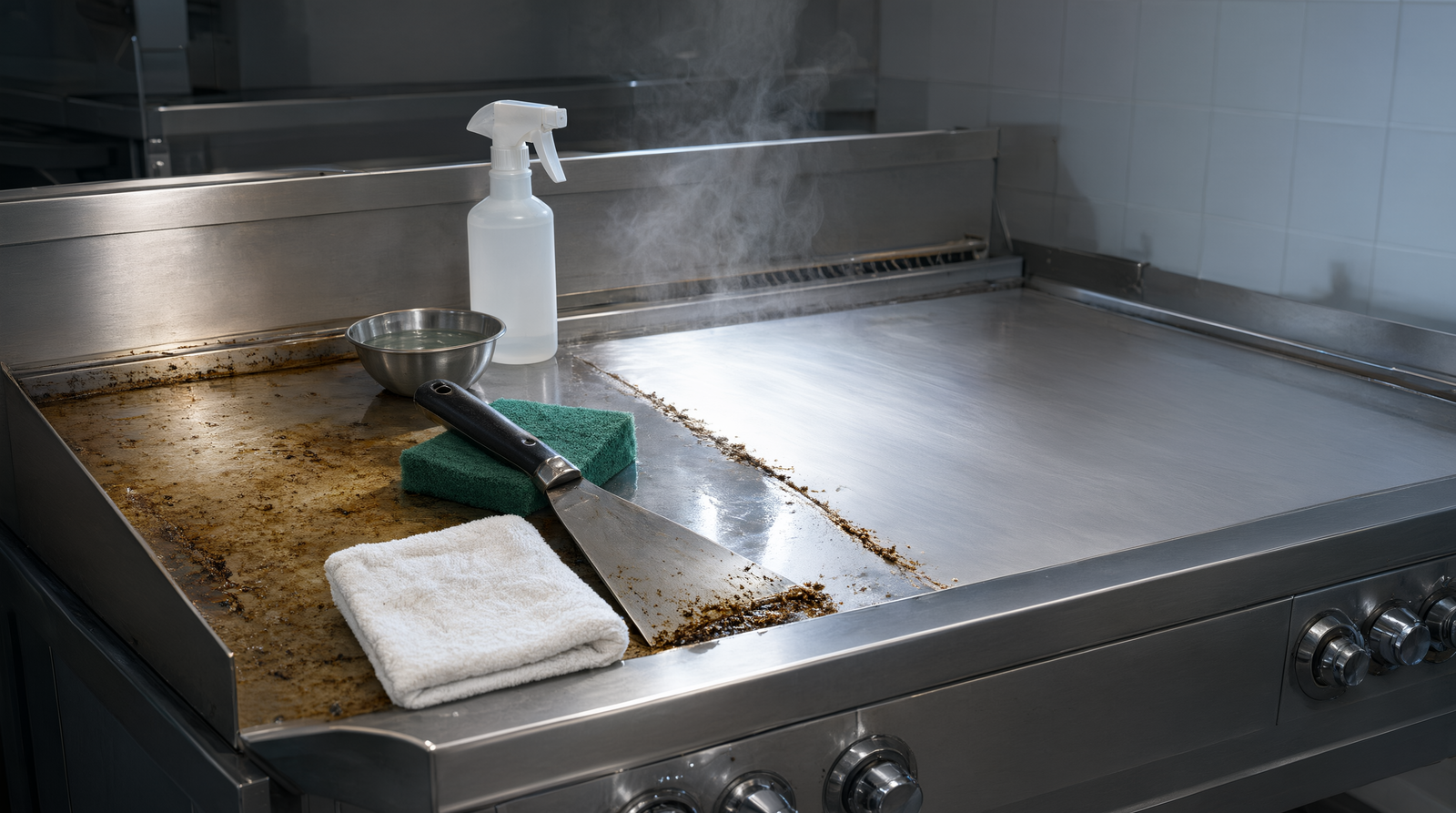
Let the plate cool down slightly before cleaning to avoid burns. Use soft sponges or cloths and mild cleaners. Avoid steel wool and scouring pads.
Suitable cleaners and care products
For stainless steel surfaces, there are special cleaners that clean gently and also care for the material. You will find suitable cleaning agents and hygiene products for foodservice in our range. Make sure the cleaner is approved for your plate material.
Oil after cleaning
Wipe off cleaner residue thoroughly with a damp cloth and dry the surface. Afterwards, a thin layer of cooking oil can be applied to uncoated plates. It protects the surface from moisture.
What to do about existing scratches?
If your plate already has scratches, you can often minimize them:
- Polishing: Special polishing agents for stainless steel or cast iron can reduce superficial scratches.
- Professional restoration: For deep scratches, professional repair may be advisable.
- Prevention: After restoration, pay особенно attention to use and care so that no new scratches occur.
Additional tips for the longevity of your fry top
In addition to scratch protection, other measures extend the service life of your electric fry top:
- Regular maintenance: Check the electrical components regularly and clean the appliance thoroughly.
- Avoid overheating: Do not set unnecessarily high temperatures. This protects the material and reduces power consumption. With the energy cost calculator for commercial appliances, you can estimate consumption.
- Use a protective cover: During longer periods of inactivity, a cover protects the plate from dust and scratches.
Conclusion
With proper care, an electric fry top remains functional and visually appealing for a long time. Scratches can be reliably avoided through suitable tools, gentle handling and regular, careful cleaning. Always observe the specifications of the appliance manufacturer.
Are you planning a new kitchen or looking for the right appliance? iGastroNomic offers a personal consultation for this.
Note: This article is for informational purposes only and does not replace professional advice or repair.
FAQ – Frequently Asked Questions
Which tools are suitable for an electric fry top?
For coated plates, wooden, silicone and heat-resistant plastic tools are the safe choice. On uncoated steel or chrome plates, professionals use a special griddle scraper, which they guide flat and without pressure peaks. Knives and sharp-edged metal spatulas do not belong on the plate. Which tools are permitted is stated in your appliance's operating manual.
How do I clean a fry top without scratching it?
Clean the plate while it is still warm but not hot, using a scraper made of suitable material, a soft sponge or cloth, and a mild cleaner suitable for commercial appliances. Steel wool and scouring pads leave fine scratches in which residue can settle. Wipe off cleaner residue with a damp cloth and dry the surface before applying a thin layer of oil.
Can scratches on a fry top be removed?
Superficial scratches can often be reduced with a suitable polishing agent for stainless steel or cast iron, depending on the material. Deep grooves in which food residue collects should be assessed by a specialist workshop. On coated plates, polishing is usually not possible because the coating itself is damaged. If in doubt, ask the manufacturer or dealer for the appropriate solution.
Do I need to oil a fry top after cleaning?
For uncoated plates made of steel or cast iron, a thin film of heat-resistant cooking oil after cleaning is common practice. It protects against moisture and improves the sliding behaviour of food. For coated plates, the manufacturer's specification applies. Always apply the oil sparingly so that it does not polymerise or form sticky residue.
How often should a fry top be cleaned?
It is best to clean the plate thoroughly after every operating day. With high guest volumes, scrape off food residue and excess grease in between so that nothing burns on. How intensively and how often cleaning is required also depends on your HACCP concept and the manufacturer's specifications.