Deutsch
 Türkçe
 Italiano
 Nederlands
 Français
 Español
 Polski
 Čeština
 Svenska
 Português PT
 Русский
 اللغة العربية
 中文
 日本語
 Tiếng Việt
 ภาษาไทย
 Română
 ελληνικά
 Magyar
 Dansk
 Suomi
 Hrvatski
 български език
 Eesti keel
 Latviešu valoda
 Slovenčina
 Slovenščina
 Bosanski
 עברית
 हिन्दी
 Bahasa melayu
 Kiswahili
 Bahasa Indonesia
 Papiamento
 Bokmål
 Lietuvių kalba
 Українська
 српски
 Shqip


 ›
 ›
 ›
 ›
 ›
 ›
 ›
 ›
 ›
 ›
 ›
 ›
 ›
 ›
 ›
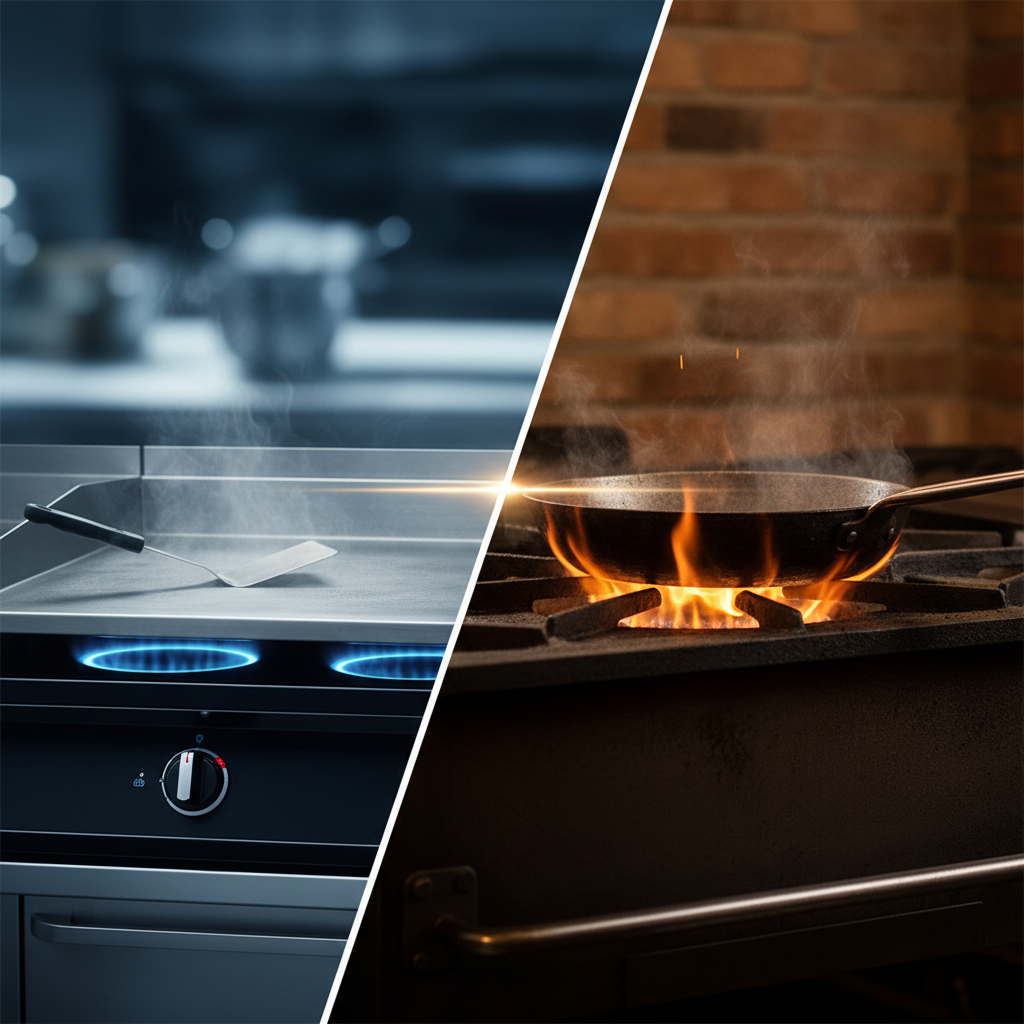
In short: An induction fry top is not the same as a standard fry top: with induction, an electromagnetic field generates heat directly in the steel plate, while classic models heat the plate from below using gas burners or electric heating elements. Induction responds faster, typically operates more energy-efficiently and releases less waste heat, but it usually costs more to purchase. Gas and electric fry tops remain a robust choice for simple applications and tight budgets.
What is a fry top?
A fry top is a flat plate, usually made of steel or cast iron, used for frying, grilling and keeping food warm. In professional foodservice it is standard equipment, while in private kitchens it is rare due to the space it requires. The large, evenly heated surface can be used to prepare meat, vegetables, fish, burger patties and eggs.
Classic heating with gas or electricity
In a classic fry top, the plate is heated by gas flames or electric heating elements. The heat reaches the plate from below and spreads across the surface. Depending on the design, there are often several separately controlled heating zones, so hotter and cooler areas can be set.
What does induction fry top mean?
An induction fry top is a version in which heat is generated by induction. Beneath the plate, coils produce an alternating electromagnetic field that creates heat in the magnetizable steel plate. The heat is therefore generated directly within the cooking surface material and does not first have to be transferred from a flame or a heating wire.
For context: even with induction, the plate itself becomes hot, because it is the cooking surface. The housing and the area around the plate typically stay cooler, since heat is only generated where the plate sits.
Two variants that are often confused
- Fry top with integrated induction heating: The plate is part of the unit and you cook directly on it. Special cookware is not required.
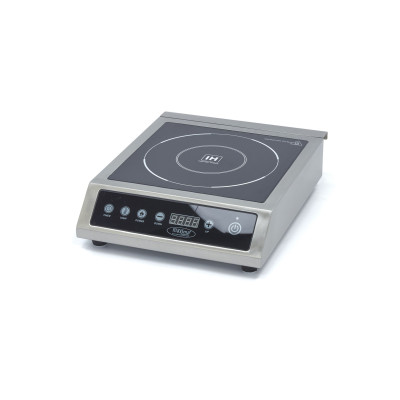
- Induction hob with a placed griddle plate: Here the hob heats an induction-compatible griddle or pan. The base must be magnetizable. Suitable induction equipment for commercial kitchens is well suited to such flexible solutions.
Differences at a glance
| Criterion | Classic fry top (gas/electric) | Induction fry top |
|---|---|---|
| Heat generation | Gas burners or heating elements under the plate | Magnetic field generates heat directly in the steel plate |
| Response time | Usually slower when raising and lowering temperature | Fast heating and rapid adjustment |
| Energy efficiency | Greater heat loss to the surroundings | Generally lower losses |
| Waste heat in the room | Typically higher | Typically lower |
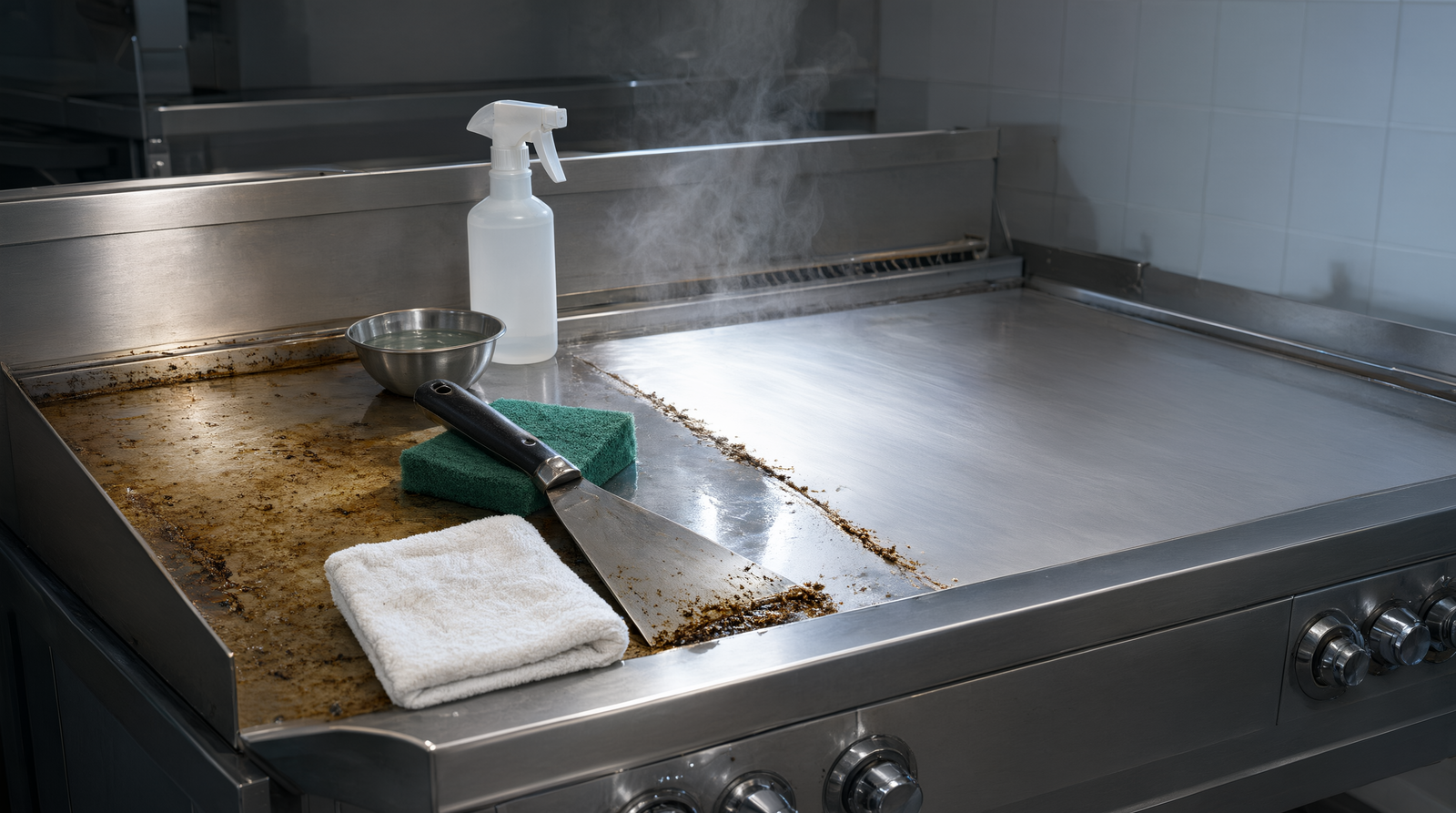
| Cleaning | Edges and burner or heating areas can be more labor-intensive | Often smooth, closed surfaces, easier to maintain |
| Safety | Open flame (gas), hot housing parts | No open flame, cooler surroundings, residual heat from the plate remains |
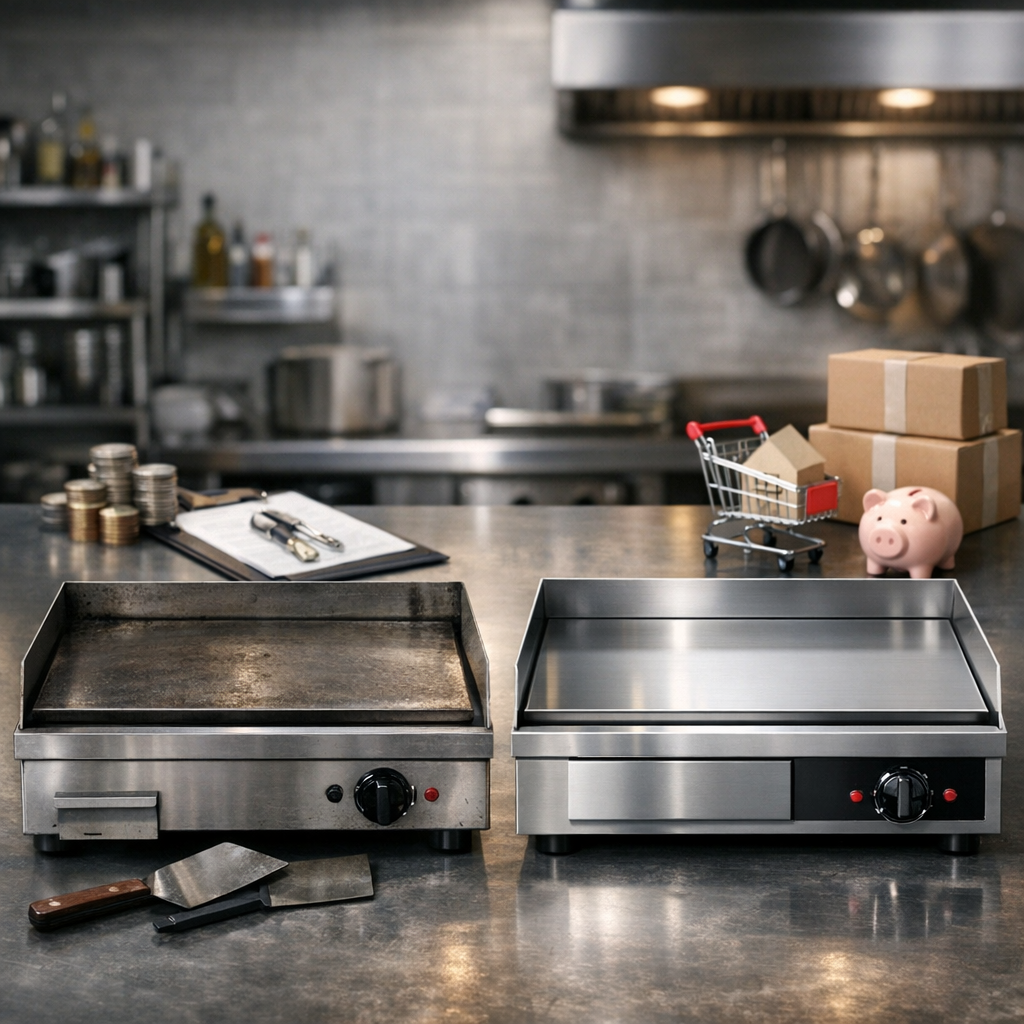
| Purchase price | Usually lower | Usually higher |
| Technology and repair | Simple construction, robust | More electronics, repairs can be more complex |
Heating technology
The biggest difference lies in heat transfer. In a standard fry top, gas flames or heating coils heat the plate from below. In an induction fry top, heat is generated directly in the plate by electromagnetic fields.
Energy efficiency
Induction units are generally more energy-efficient because less heat is released unused into the surroundings. Classic fry tops lose more energy through radiation and exhaust gases. How large the difference is in actual operation depends on the model, plate size and operating hours. The energy cost calculator for commercial equipment can help you estimate your operating costs.
Temperature control
Induction offers fast and precise control. The temperature can be raised or lowered quickly, which helps with delicate dishes. With classic fry tops, adjustment often takes longer, because the plate must first absorb or release heat.
Cleaning and hygiene
Induction fry tops often have smooth, closed surfaces that are easier to clean. With classic units that have cast iron or steel plates, food residues can more easily settle at edges and transitions. Build quality and construction of the individual unit are what matter most.
Safety
Induction is considered safer because there is no open flame and the area around the plate heats up less. However, the plate itself gets hot and still releases residual heat after being switched off. The risk of burns is therefore reduced, but not eliminated.
Purchase costs and maintenance
Units with induction technology are usually more expensive to buy because the technology is more complex. In addition, more power electronics are built into the unit, which can make repairs more involved. Classic fry tops have a simpler construction and are considered robust.
Advantages of an induction fry top
- Fast, precise temperature control: Ideal for dishes that require exact heat.
- Energy efficiency: Lower heat loss can reduce operating costs.
- Easier cleaning: Smooth surfaces are more hygienic and easier to maintain.
- Safer operation: No open flame, cooler surroundings.
- More comfortable kitchen climate: Less waste heat burdens staff and ventilation.
Disadvantages of an induction fry top
- Higher purchase costs: The investment is usually above that of a conventional unit.
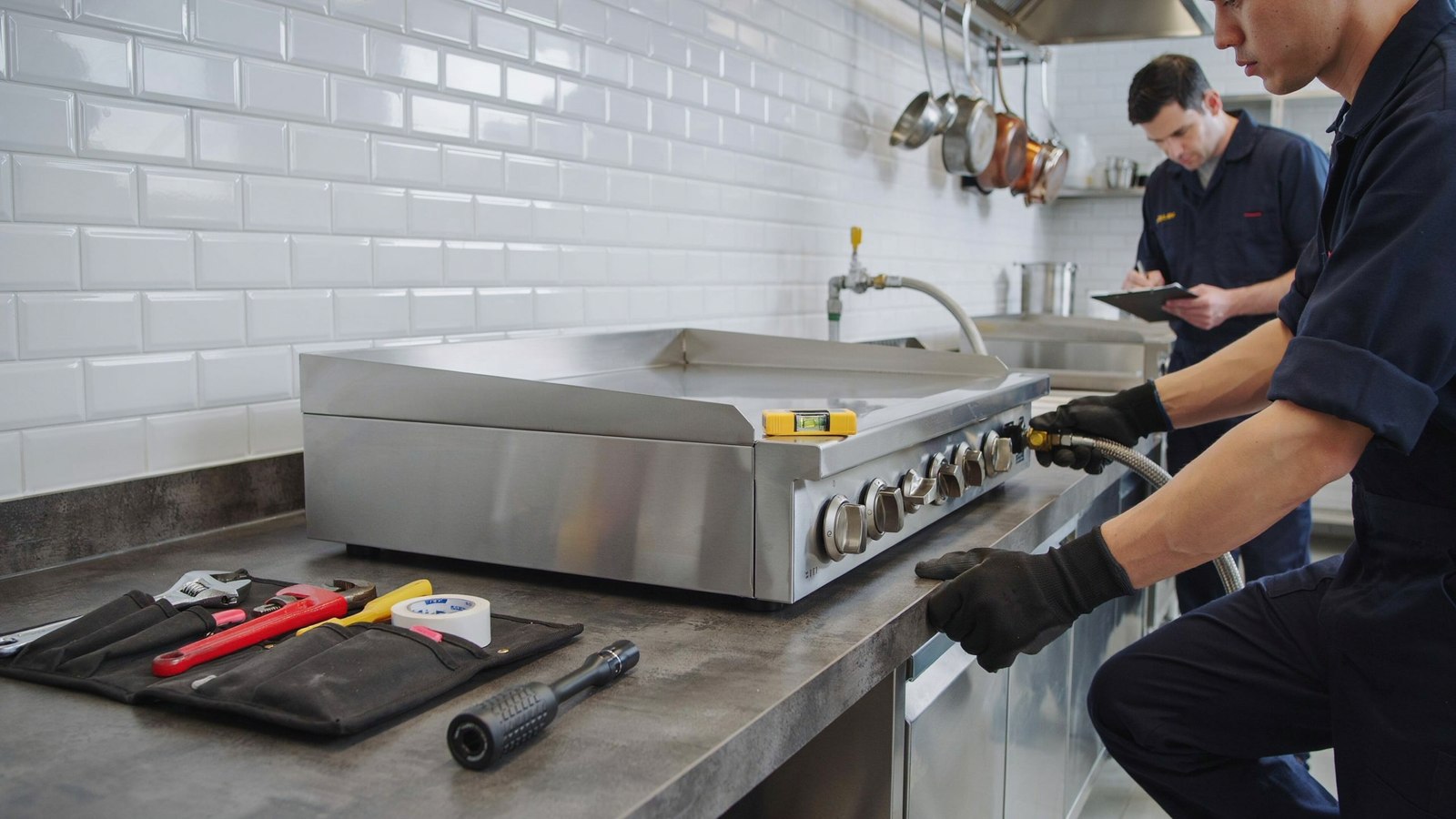
- Electrical connection: High-output induction units require an adequately sized electrical installation.
- Suitable cooking surface required: For solutions with a placed plate or pan, the material must be induction-compatible.
- Technical complexity: Repairs can be more complex and more expensive.
When is an induction fry top worth it?
An induction fry top is especially worthwhile for kitchens with long operating hours, fluctuating utilization and high demands for reproducible results. Even if waste heat and energy costs play a role, the higher investment can pay off.
If you work with a limited budget or need a simple, robust plate for occasional use, a classic gas or electric fry top is a good choice.
Practical applications
In foodservice, the induction fry top is becoming increasingly popular because it supports fast workflows. In restaurants that prepare many different dishes in parallel, precise temperature control is a clear advantage. Burger concepts, snack bars and live cooking stations also benefit from short response times.
In private kitchens, fry tops are rare, as they take up a lot of space and are usually designed for large commercial kitchens. Ambitious home cooks tend to opt for an induction hob with a griddle plate instead.
Tips for buying a fry top
- Analyze your needs: How often, how long and for which dishes will the unit be used?
- Check the available space: Fry tops require sufficient floor space and clearance from neighboring equipment.
- Clarify the energy source: Gas, electricity or induction, depending on connections and operating concept. Check connection ratings and circuit protection in advance.
- Consider material and build quality: Plate thickness and surface affect heat distribution and durability.
- Plan the kitchen in advance: With the free 3D kitchen planner you can see whether the unit fits into your workflow.
Conclusion
Induction fry tops and standard fry tops serve the same purpose but differ fundamentally in heating technology and the characteristics that follow from it. The induction fry top is more modern, responds faster, generally operates more efficiently and produces less waste heat. The classic fry top is usually less expensive and robust.
Which variant suits you better depends on the intended use, budget and infrastructure. The iGastroNomic team offers free advice on this by phone at +49 (0) 6135 7040 450 or through personal consultation.
FAQ – Frequently Asked Questions
Is an induction fry top the same as a standard fry top?
No. Both units fry and grill on a smooth surface, but they differ in heating technology: the classic fry top is heated by gas burners or electric heating elements, while the induction fry top generates heat through a magnetic field directly in the steel plate. This leads to differences in response time, energy consumption, waste heat, cleaning and purchase costs.
Does an induction fry top save energy?
Generally yes, because heat is generated directly in the plate and less energy is lost as waste heat into the room. The unit also heats up quickly and can be turned down when idle. How large the savings actually are depends on the model, plate size and usage, and can only be roughly estimated in advance.
Does an induction fry top require special cookware?
Not with a fry top that has integrated induction heating: the magnetizable steel plate is itself the cooking surface, and you cook directly on it. Cookware made of magnetizable material is only needed if you use an induction hob with a placed griddle plate or pan instead of a fry top. In that case, the base must be induction-compatible.
Is an induction fry top safer than a gas fry top?
It has advantages: there is no open flame, and the area around the plate typically heats up less. However, the steel plate itself also becomes hot with induction, and residual heat remains. The risk of burns is therefore reduced rather than eliminated. Always observe the operating instructions and your workplace safety requirements.
Which kitchens are suited to an induction fry top?
Mainly businesses with long operating hours, varying utilization and high demands for reproducible results, such as restaurants, snack bars, burger concepts or breakfast buffets with live cooking. If waste heat in the room is a problem or energy costs are a priority, the higher investment can pay off. For occasional use and a tight budget, a gas or electric fry top is often sufficient.