Deutsch
 Türkçe
 Italiano
 Nederlands
 Français
 Español
 Polski
 Čeština
 Svenska
 Português PT
 Русский
 اللغة العربية
 中文
 日本語
 Tiếng Việt
 ภาษาไทย
 Română
 ελληνικά
 Magyar
 Dansk
 Suomi
 Hrvatski
 български език
 Eesti keel
 Latviešu valoda
 Slovenčina
 Slovenščina
 Bosanski
 עברית
 हिन्दी
 Bahasa melayu
 Kiswahili
 Bahasa Indonesia
 Papiamento
 Bokmål
 Lietuvių kalba
 Українська
 српски
 Shqip


 ›
 ›
 ›
 ›
 ›
 ›
 ›
 ›
 ›
 ›
 ›
 ›
 ›
 ›
 ›
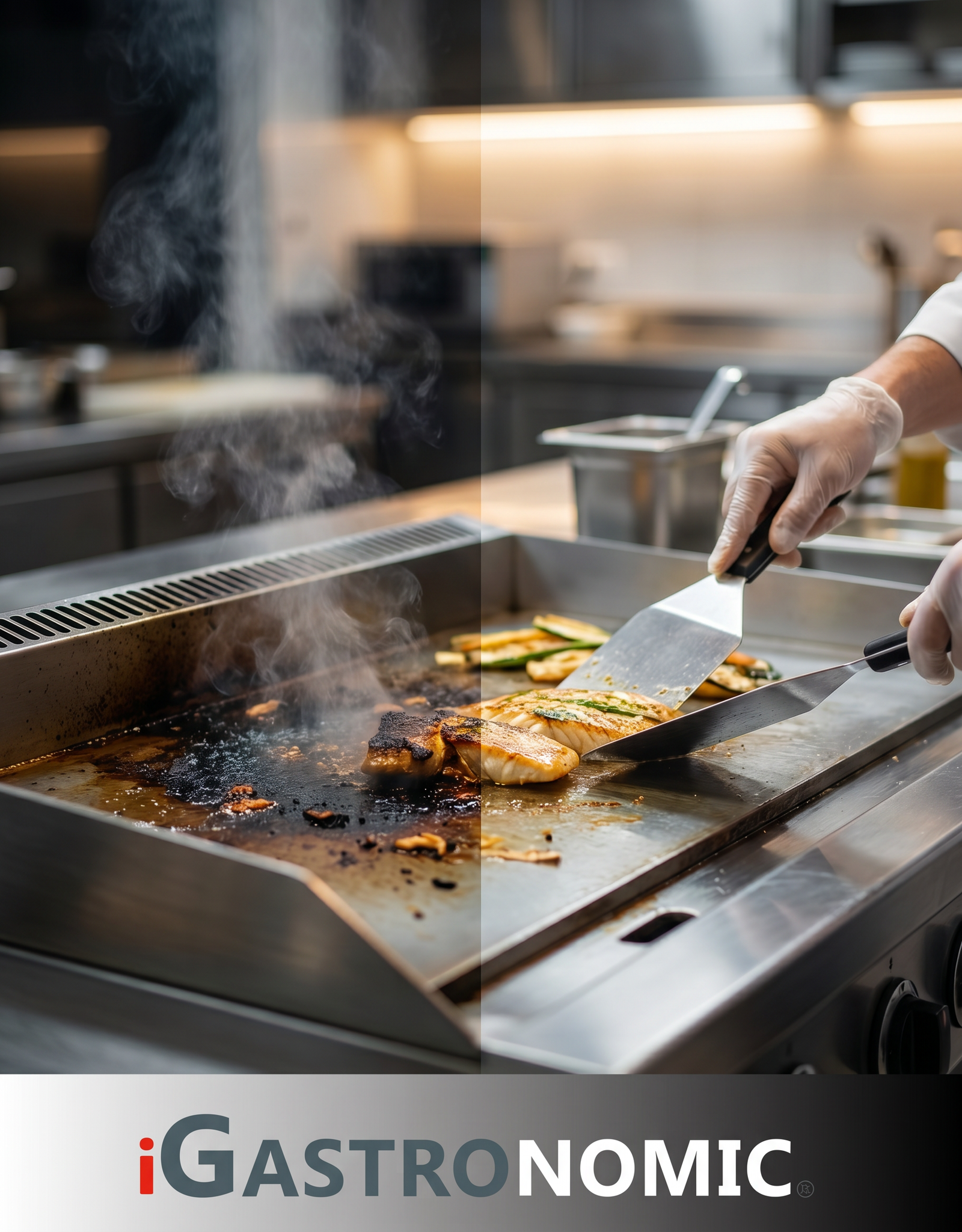
In short: You can use a contact grill (fry top a contatto) safely by wearing heat-resistant gloves, setting the temperature to suit the food and cleaning the plates regularly. Dry running, preheating for too long and baked-on grease residue are the most common causes of overheating. Never put water on the hot plate.
What is a contact grill (fry top a contatto)?
The term “fry top a contatto” comes from Italian and roughly means “flat-top with contact.” In everyday German usage, it usually refers to a contact grill. It cooks food between a lower and an upper heating plate, so both sides receive heat at the same time.
The plates are often made of cast iron or steel, either smooth or ribbed depending on the model. Commercial contact grills are usually electrically heated. They are suitable for panini, sandwiches, burgers, meat, fish and vegetables.
The intense contact heat creates a crispy crust and a juicy interior. At the same time, the surface gets extremely hot, which can quickly lead to burns if handled improperly. The following advice applies to professional kitchens and, in principle, to home use as well.
Why do burns and overheating occur?
Burns usually result from direct contact with the hot plate, the upper part or the handle. Splashes of hot fat and oil as well as hot steam are also common causes.
Overheating occurs when the appliance runs at high temperature for a long time without food on the plate. An incorrectly set temperature control or dirty plates can also contribute. Another factor is improper handling, such as touching the plate with bare hands or using unsuitable utensils.
Typical risks at a glance
| Risk | Typical cause | Prevention |
|---|---|---|
| Burn on plate or upper part | Touching the hot surface or handle | Heat-resistant gloves, tongs and spatulas with long handles |
| Fat splatter | Too much fat or moist food | Use fat sparingly, pat food dry, wear an apron |
| Overheating | Long preheating or running empty | Adjust the temperature, take breaks, do not run dry |
| Smoke and burnt smell | Baked-on residue or oil with a low smoke point | Clean regularly, use heat-stable oil |
Tips for avoiding burns
Use suitable protective equipment and tools
Always wear heat-resistant gloves or oven mitts when working with the contact grill. They protect your hands from the hot surface, especially when lifting the upper part.
Use cooking tools made of wood, silicone or metal with insulated handles. On coated plates, avoid sharp-edged metal tools so the coating is not damaged.
Wear the right clothing
Wear close-fitting clothing and avoid loose sleeves that can catch on the hot plate or catch fire. An apron provides additional protection against fat splatter.
Keep unauthorized persons, children and pets away
The plates get very hot and stay hot for a long time even after being switched off. Keep children, pets and unauthorized persons away from the appliance. In open kitchens or during showcooking, also make sure guests keep a sufficient distance.
Keep an eye on the temperature
Many contact grills have a temperature display or thermostat. Use them to keep the heat within the intended range. Alternatively, an external surface thermometer can help you monitor the temperature.
Plan regular breaks
If you are grilling over a longer period, switch the appliance off during breaks or reduce the temperature. This prevents unnecessary overheating and saves energy.
Tips for avoiding overheating
Preheat with care
Preheat the plates only as long as necessary for the food. Preheating for too long can overheat the surface and, in the worst case, damage the material.
Set the temperature control appropriately
Set the temperature to suit each dish. For delicate foods, medium heat is often sufficient. As a typical guideline, contact grills often operate in the range of about 180 to 250 °C. However, the manufacturer's specifications always apply.
Do not run dry
Never operate the plates at high temperature for an extended period without food or fat on them. Running empty can lead to overheating and, in the worst case, to deformation.
Use heat-stable oils
Oils with a low smoke point burn quickly and place additional strain on the plate. Use heat-stable oils such as refined rapeseed oil or avocado oil, and apply them sparingly.
Clean regularly
Grease and food residue collect on the plates and burn when reheated. This causes odors and smoke and can damage the surface. Clean the contact grill regularly and thoroughly.
Safety rules during operation
In addition to the tips above, a few basic rules help:
- No water on the hot plate: Water evaporates instantly and can cause burns from hot steam.
- Do not use damaged appliances: Cracks, deformation or defective cables affect heat distribution and pose a safety risk.
- Stable, heat-resistant surface: Place the appliance so it cannot tip over or slide. Keep sufficient distance from flammable materials.
- Empty the grease tray regularly: Full trays can overflow and let fat drip onto hot surfaces.
- Follow the manufacturer's instructions: Every appliance has its own requirements for temperature, care and installation. Read the operating manual carefully.
Cleaning and care for a long service life
Regular and proper cleaning ensures hygienic conditions. It also prevents overheating caused by baked-on residue.
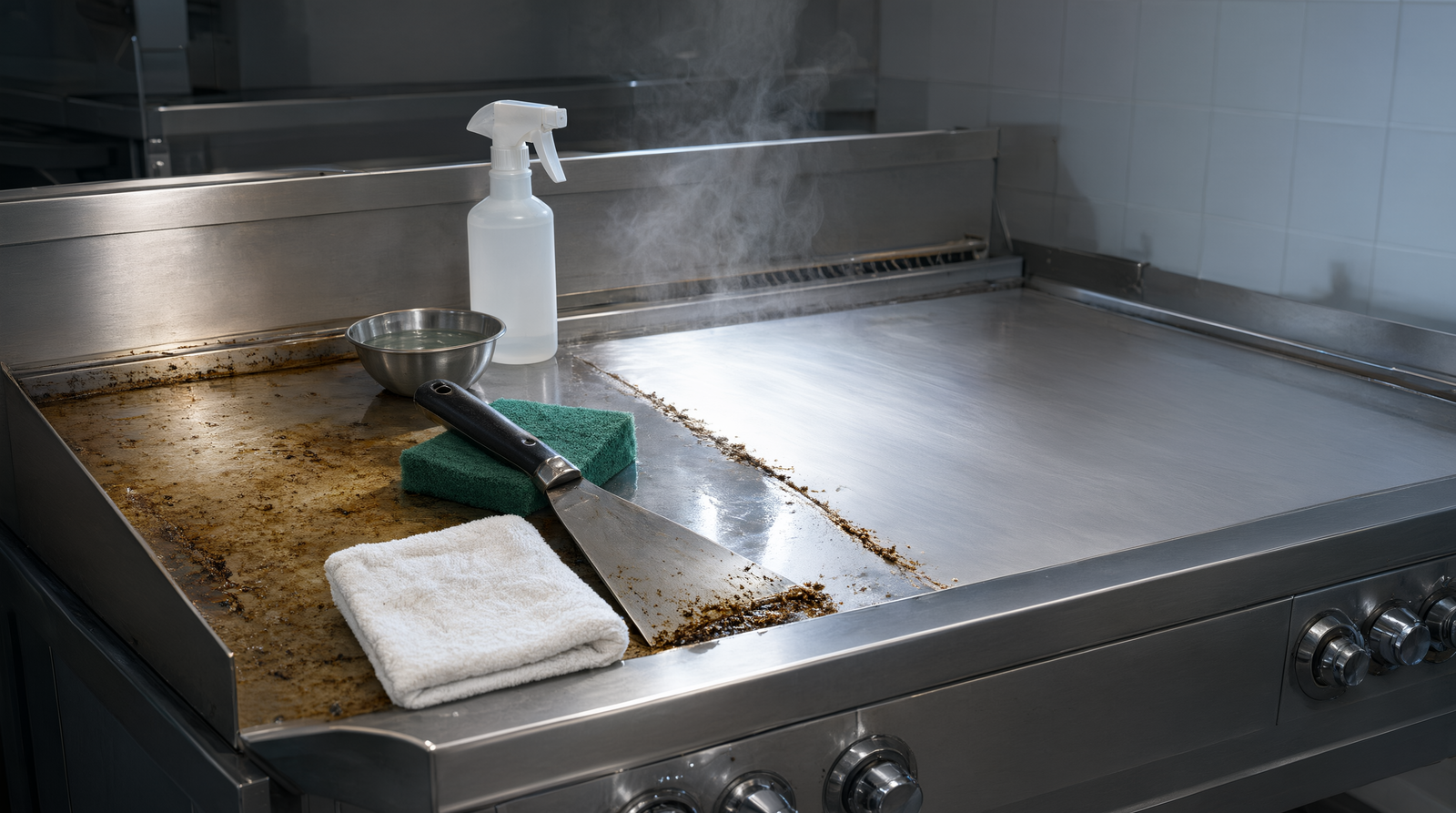
How to clean the contact grill step by step
- Switch off the appliance, unplug it and let the plates cool down completely.
- Remove coarse residue with a suitable scraper or spatula.
- Empty and clean the grease tray.
- Wipe the plates with a damp sponge or a special grill cleaner. Do not use harsh or abrasive agents that could damage the surface.
- Let the plates dry thoroughly to prevent rust (especially on steel and cast iron plates).
- Lightly oil the surface from time to time to prevent rust and maintain the non-stick properties.
Contact grill or flat-top griddle: what suits your business?
Depending on your menu, a smooth flat-top griddle may also make sense. The safety rules on heat, fat and cleaning apply here as well. The following comparison shows the main differences.
| Feature | Contact grill | Smooth flat-top griddle (fry top) |
|---|---|---|
| Heating | Lower and upper plate | Lower plate only |
| Cooking method | Both sides at the same time | Food is turned |
| Typical dishes | Panini, sandwiches, burgers, vegetables | Eggs, pancakes, meat, fish, vegetables |
| Special feature | Ribbed or smooth plates, fast cooking times | Large, open surface for many portions |
You can find suitable appliances in our category Contact grills for commercial kitchens, for example a contact grill with 1.3 kW for smaller businesses. If you prefer a larger cooking surface, you will find electric and gas flat-top griddles in the shop.
Conclusion
The contact grill is a powerful appliance for fast and flavorful cooking. With proper handling, burns and overheating can be reliably avoided. Wear heat-resistant protective equipment, monitor the temperature, do not let the appliance run dry and clean the plates consistently.
If you are unsure which appliance suits your business and kitchen, iGastroNomic offers free advice. Use the personal consultation for this purpose.
FAQ – Frequently Asked Questions
How hot does a contact grill get in a commercial kitchen?
Depending on the appliance, contact grills typically operate in the range of about 180 to 250 °C, and some models reach higher temperatures. The exact maximum temperature is stated in the manufacturer's specifications. Important: the plates stay hot for a long time after being switched off, so only clean or touch them once they have fully cooled down.
Can I deglaze the hot plate with water?
No. Water on a hot plate evaporates instantly and can cause burns from steam and fat splatter. In addition, the thermal shock stresses the material and can lead to deformation. Let the plate cool down first, then clean it with a damp sponge or a suitable grill cleaner.
How often should I clean a contact grill?
In commercial kitchens, it is advisable to scrape off coarse residue after each use and to clean the plates thoroughly at the end of the operating day. Empty the grease tray regularly. This prevents baked-on residue, smoke and unpleasant odors. Your operational hygiene concept may specify different intervals.
What does fry top a contatto mean?
The term comes from Italian and refers to a flat-top with contact. In everyday German usage, it usually means a contact grill that cooks food between a lower and an upper heating plate. Both sides are cooked at the same time, typical for panini, burgers, sandwiches or vegetables.
Which oil is suitable for a contact grill?
Use heat-stable oils with a high smoke point, for example refined rapeseed oil or avocado oil. Oils with a low smoke point burn quickly, smoke and leave residue on the plate. Apply oil sparingly and follow the frying instructions on the packaging.