Deutsch
 Türkçe
 Italiano
 Nederlands
 Français
 Español
 Polski
 Čeština
 Svenska
 Português PT
 Русский
 اللغة العربية
 中文
 日本語
 Tiếng Việt
 ภาษาไทย
 Română
 ελληνικά
 Magyar
 Dansk
 Suomi
 Hrvatski
 български език
 Eesti keel
 Latviešu valoda
 Slovenčina
 Slovenščina
 Bosanski
 עברית
 हिन्दी
 Bahasa melayu
 Kiswahili
 Bahasa Indonesia
 Papiamento
 Bokmål
 Lietuvių kalba
 Українська
 српски
 Shqip


 ›
 ›
 ›
 ›
 ›
 ›
 ›
 ›
 ›
 ›
 ›
 ›
 ›
 ›
 ›
In short: The energy consumption of a fry top depends mainly on power rating, plate size, temperature and operating time. An electric unit rated at 2000 watts uses 2 kWh per hour at full load. Short preheating, the right temperature, full use of the surface and a clean plate can noticeably reduce consumption in a commercial kitchen.
What is a fry top?
A fry top is a large, flat griddle plate, usually made of cast iron or stainless steel. The heated surface distributes heat evenly and is suitable for frying, grilling and keeping food warm.
Fry tops are popular in restaurants, snack bars and canteens because many dishes can be prepared at the same time. Typical foods include meat, fish, vegetables, eggs, stir-fried dishes, crêpes and pancakes. In private households, they are also increasingly used as an alternative to a frying pan or grill plate.
How much energy does a fry top use?
Consumption depends on several factors:
- Type of energy: electric or gas
- Size and power rating: the larger and more powerful the unit, the more energy it needs
- Operating time: how long the unit is in use
- Temperature: higher temperatures mean higher consumption
As a rough guide, electric fry tops often have a power rating of 1,500 to 3,000 watts, while large commercial units can be considerably higher. A 2,000-watt unit that heats continuously for one hour uses 2 kWh. During operation, the thermostat switches the heating on and off cyclically, so actual consumption is usually below the maximum value.
Gas fry tops vary in consumption depending on the type of gas and burner size. Compared with a stove and frying pan, a fry top often needs more energy because of its large surface and constant heat, especially with long operating times. However, it allows large quantities to be prepared at once.
Electric or gas: the comparison
| Criterion | Electric fry top | Gas fry top |
|---|---|---|
| Energy conversion | Electricity is converted almost entirely into heat | Gas generates heat directly, part of it is lost through the exhaust gases |
| Operating costs | depend on the electricity tariff | often cheaper per kWh, depending on the gas tariff |
| Temperature control | usually very precise via thermostat | via burner settings, depending on the design |
| Maintenance | low | check burner and ignition regularly |
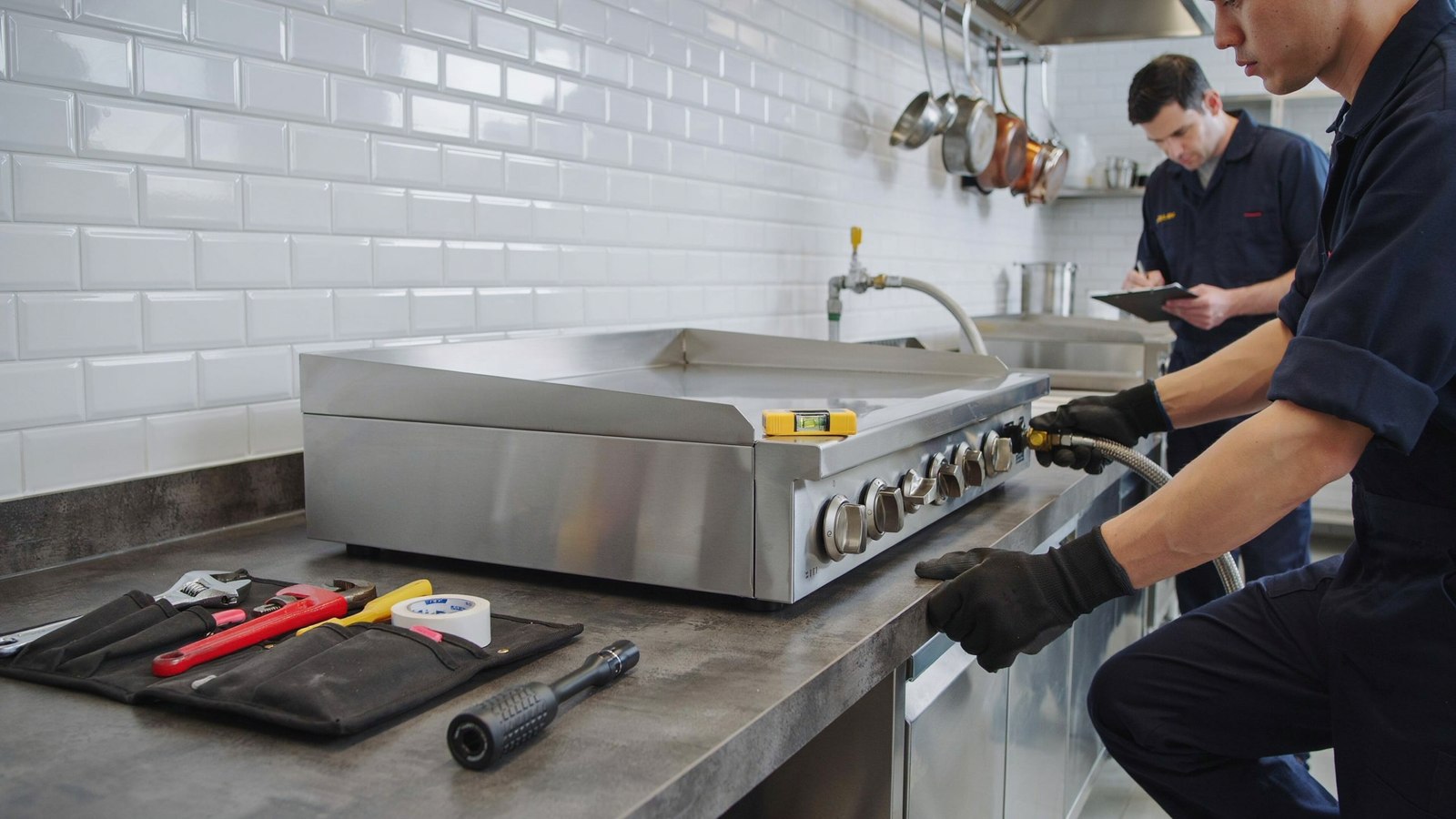
| Installation | power socket or three-phase connection, depending on output | gas connection and extraction required |
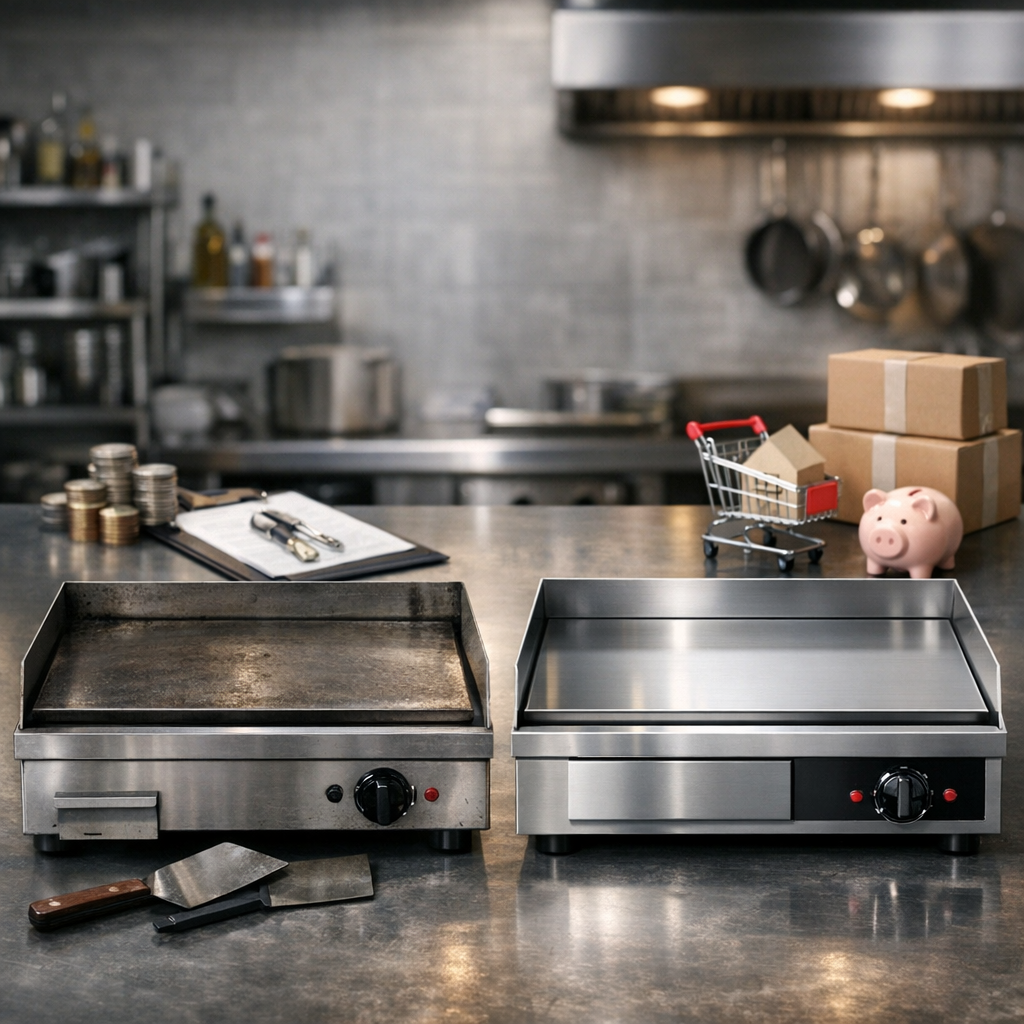
Which option is more economical depends on energy prices, operating hours and local conditions. With an energy cost calculator for commercial equipment, you can estimate the running costs for your business.
Factors that influence energy consumption
Plate size and material
A larger plate needs more energy to reach and maintain temperature. Cast iron stores heat very well but takes longer to heat up. Stainless steel heats up faster but also cools down faster.
Temperature control
A precise thermostat keeps the temperature constant and prevents overheating. A setting that is too high leads to unnecessary consumption.
Insulation and covers
Some fry tops have insulation or a cover that reduces heat loss and therefore lowers consumption.
Operating time and cooking habits
The longer the unit runs, the more energy it uses. Preheating too early or switching it on without using it also increases consumption.
Energy-saving tips for the fry top
Even though a fry top can require more energy than other cooking methods, consumption can be optimised with simple measures.
Preheat only as long as necessary
Follow the manufacturer's recommended preheating time. Switch the unit on shortly before service, and during breaks switch it to a lower setting or turn it off.
Set the temperature correctly
Avoid unnecessarily high temperatures. Medium heat is sufficient for many dishes, requires less energy and cooks food more gently.
Use the entire surface
Prepare several dishes at the same time wherever possible. This avoids repeated cooking cycles and makes better use of the heat.
Cleaning and maintenance
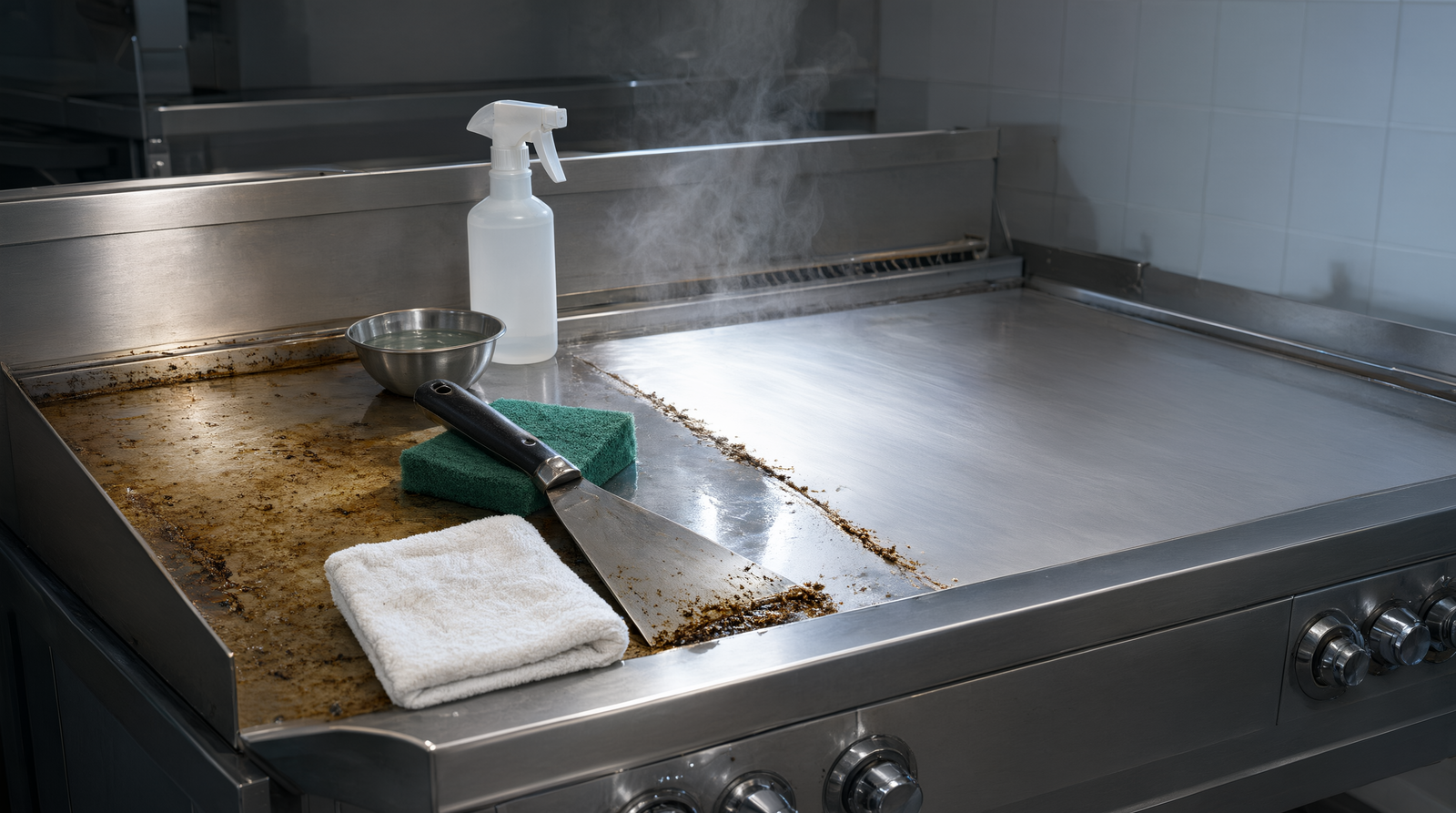
A clean plate conducts heat better. Remove food residues and grease build-up regularly.
Use a cover
Where possible, a cover keeps heat on the plate and reduces energy demand.
Choose energy-efficient models
When buying, pay attention to insulation, equipment features and precise temperature control. Modern units save energy over the long term in continuous use. You can find a selection in our category Cooking equipment for commercial kitchens. Our personal consultation can also help you choose.
Use gas fry tops efficiently
For gas units, make sure the flame height is correct and service the burners regularly to keep gas consumption low. You can find wear parts in our spare parts for cooking equipment.
Fry top compared with other cooking methods
Compared with frying pans on a stove, a fry top can use more energy because of its large surface and constant heat. However, it allows larger quantities to be cooked at once, which can save time and energy overall.
Gas units are often more economical to run because gas is cheaper per kilowatt-hour on many tariffs and the heat is generated directly. What matters most is that the output matches the actual demand of the kitchen.
Conclusion
A fry top can use a lot of energy, especially with a large plate and long operation at high temperatures. On the other hand, it prepares large quantities quickly and is versatile.
With short preheating, the right temperature, full use of the surface, a clean plate and an energy-efficient model, consumption can be significantly reduced. This helps you operate more economically and sustainably.
FAQ – Frequently Asked Questions
How much electricity does a fry top use per hour?
This depends on the connected load. A 2000-watt unit running at full power for one hour uses 2 kWh. Commercial fry tops often have higher ratings, but during continuous operation the thermostat switches on and off cyclically, so actual consumption is usually below the maximum value. Precise figures can be obtained by measuring during operation.
How long should a fry top be preheated?
Preheating time usually ranges from 5 to 10 minutes depending on the model, and large cast iron plates may take longer. The key is to switch the unit on only shortly before service and to follow the manufacturer's instructions. During breaks, switch it to a lower setting or turn it off rather than leaving it on maximum.
Is a gas fry top cheaper to run than an electric one?
Gas is often cheaper per kilowatt-hour depending on the tariff, but some of the heat is lost through the exhaust gases. Electric fry tops convert almost all energy into heat and are easier to control. Which option is more economical depends on energy prices, usage and available connections.
How can I measure the electricity consumption of my fry top?
An energy monitor plugged in between the socket and the appliance makes it easy to determine electricity consumption. For units with a three-phase connection, a qualified electrician should carry out the measurement, for example with a sub-meter. For gas units, record readings from the gas meter before and after an operating period and compare them.
Can I also use the fry top to keep food warm?
Yes, many fry tops can be used at a low temperature to keep food warm, which uses significantly less energy than frying at high heat. Observe the hygiene regulations and the holding temperatures applicable to your business, and for longer waiting times, it is better to use a dedicated holding unit.