Deutsch
 Türkçe
 Italiano
 Nederlands
 Français
 Español
 Polski
 Čeština
 Svenska
 Português PT
 Русский
 اللغة العربية
 中文
 日本語
 Tiếng Việt
 ภาษาไทย
 Română
 ελληνικά
 Magyar
 Dansk
 Suomi
 Hrvatski
 български език
 Eesti keel
 Latviešu valoda
 Slovenčina
 Slovenščina
 Bosanski
 עברית
 हिन्दी
 Bahasa melayu
 Kiswahili
 Bahasa Indonesia
 Papiamento
 Bokmål
 Lietuvių kalba
 Українська
 српски
 Shqip


 ›
 ›
 ›
 ›
 ›
 ›
 ›
 ›
 ›
 ›
 ›
 ›
 ›
 ›
 ›
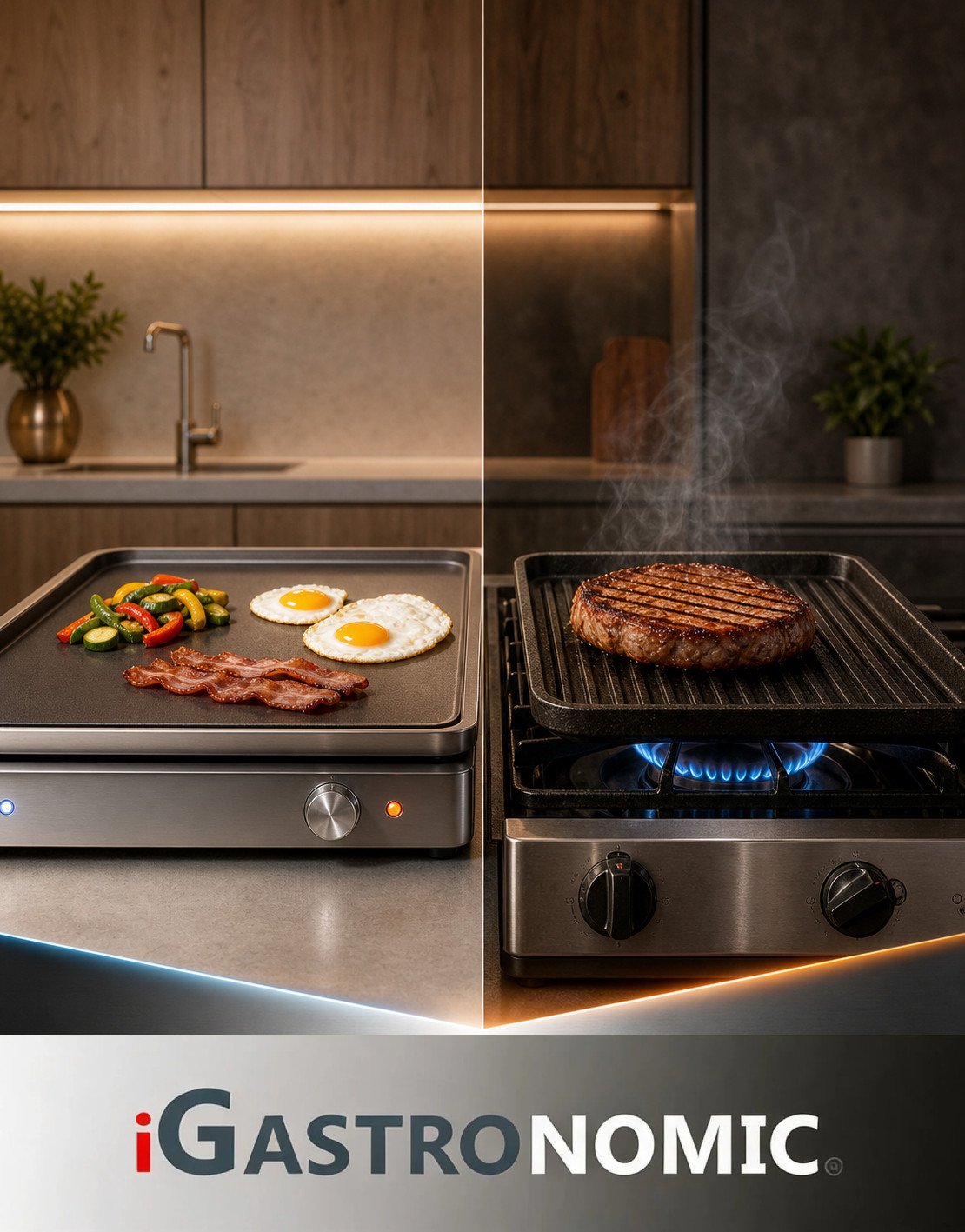
In short: Electric or gas flat top? The electric model stands out for simple installation, precise temperature control and clean operation without an open flame, but it often heats up more slowly and depends on the power supply. Gas flat tops reach high temperatures quickly and work independently of the electricity grid, but they require a gas connection, extraction and regular maintenance. Which option suits you depends on your connections, operating costs and how your kitchen is used.
What is a flat top?
A flat top is a smooth cooking surface, usually made of steel or cast iron, for frying, grilling and searing. Unlike pans or grates, it offers a large, even surface on which several foods can be prepared at the same time.
In commercial kitchens, the flat top is very popular, for example for burgers, steaks, vegetables, egg dishes and breakfast items. It is also increasingly used in home kitchens. Depending on the model, there are smooth or grooved plates, as well as countertop units or units built into a cooking line. If you also want to compare other electric cooking surfaces, you will find the electric hot plates category in our shop.
Electric flat top vs. gas at a glance
The two common variants differ mainly in their energy source: electric flat tops run on electricity, gas flat tops run on gas flames. The table summarizes the most important differences.
| Criterion | Electric flat top | Gas flat top |
|---|---|---|
| Connection | Electrical connection, often three-phase power for professional units | Gas connection (natural gas or LPG) by a qualified technician |
| Heat-up time | often somewhat slower | fast, high temperatures reached quickly |
| Temperature control | usually very precise | immediate and stepless via the flame |
| Heat distribution | even, through heating elements under the plate | depends on the design, hot spots possible |
| Operation during a power outage | not usable | often possible, depending on ignition and controls |
| Maintenance | usually lower | regular cleaning of burners and safety inspection |
| Exhaust and ventilation | no combustion gases | combustion gases, adequate ventilation required |
Advantages and disadvantages in detail
Advantages of the electric flat top
- Simple installation: A suitable power connection is all that is needed. No gas connection is required, which makes installation easier in many spaces.
- Clean operation: There is no open flame and no combustion gases. The risk of gas leaks does not apply.
- Precise temperature control: The temperature can often be set very accurately. This makes cooking easier and reduces the risk of burning.
- Even heat distribution: Heating elements under the plate release heat evenly across the surface, ensuring consistent cooking results.
- Low maintenance: There are no burners and no gas lines, so maintenance effort is usually lower than with gas appliances.
- Safe operation: Without an open flame, the fire risk is reduced. This is also a plus for households with children.
Disadvantages of the electric flat top
- Longer heat-up time: It often takes longer to reach the target temperature than with gas.
- Dependence on electricity: The appliance cannot be used during a power outage.
- Power consumption: With frequent use, energy costs can be higher, depending on electricity prices and operating hours.
- Heat loss: Some units release heat to the surroundings more quickly, which can reduce efficiency.
Advantages of the gas flat top
- Fast heat-up time: High temperatures are reached quickly, ideal for fast searing.
- Direct temperature control: The flame allows immediate and stepless adjustment of the heat.
- Independence from electricity: Depending on ignition and controls, gas appliances can keep working during a power outage.
- Possible cost advantages: In many regions, gas is cheaper per kilowatt-hour than electricity, which can reduce running costs.
- Authentic cooking experience: Many chefs value the open flame and the direct, hands-on way of working with gas.
Disadvantages of the gas flat top
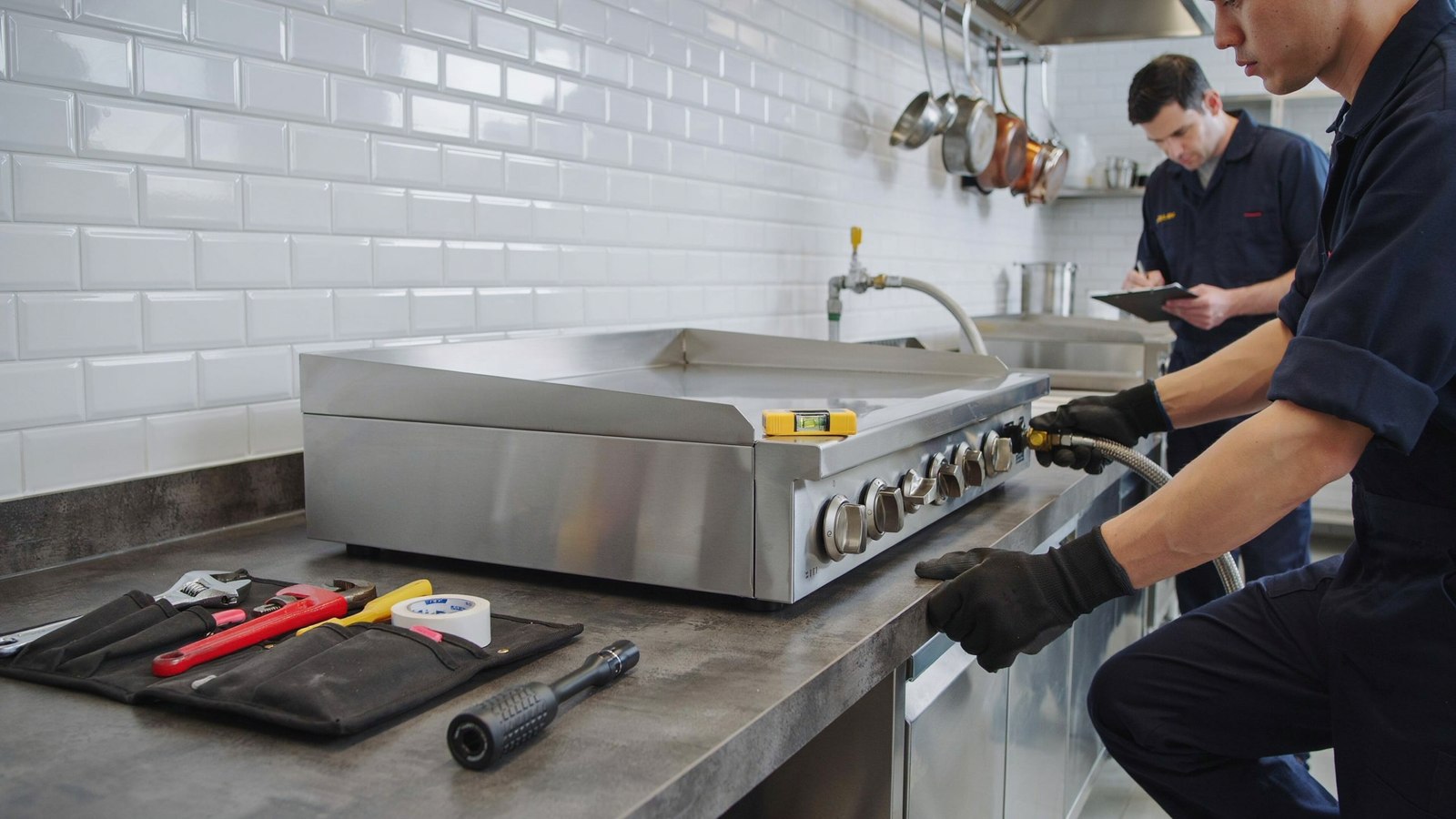
- Installation and safety: A gas connection requires professional installation and regular safety checks to prevent gas leaks and accidents.
- Exhaust and odors: Combustion produces exhaust gases and sometimes odors, so good ventilation is important.
- Uneven heat distribution: The heat comes directly from the flame. If the design is not optimal, hot spots can form on the plate.
- Higher fire risk: Open flames carry a greater risk of fire and burns.
- Maintenance effort: Burners must be cleaned and serviced regularly so the appliance works safely and efficiently.
Technical differences and their effects
Electric flat tops use heating elements under the cooking plate. They heat the plate evenly, which is especially beneficial for delicate foods.
Gas flat tops heat the plate with flames directly beneath the surface. This allows fast and intense heat, but it can lead to uneven heat distribution if the plate is not optimally designed.
For both variants, the plate material and plate thickness affect how well heat is stored and distributed. A thicker plate usually compensates better for temperature drops when cold food is placed on it.
Which variant suits whom?
The decision depends on your requirements, kitchen equipment and cooking habits. With the free 3D kitchen planner, you can check in advance how the appliance will fit into your kitchen.
Who is an electric flat top suitable for?
- Businesses and households without a gas connection or with limited access to gas.
- Users who value simple installation and operation.
- Cooks who prefer precise temperature control and even heat.
- Operators who want operation without combustion gases.
- Households with children or safety concerns about open flames.
Who is a gas flat top suitable for?
- Professional chefs and ambitious home cooks who prefer fast heat and direct flames.
- Kitchens with an existing gas connection and suitable infrastructure.
- Businesses that want to remain independent during power outages.
- Those who want to save on operating costs and work in a region with favorable gas prices.
- Cooks who value the authentic cooking experience with an open flame.
Care and maintenance
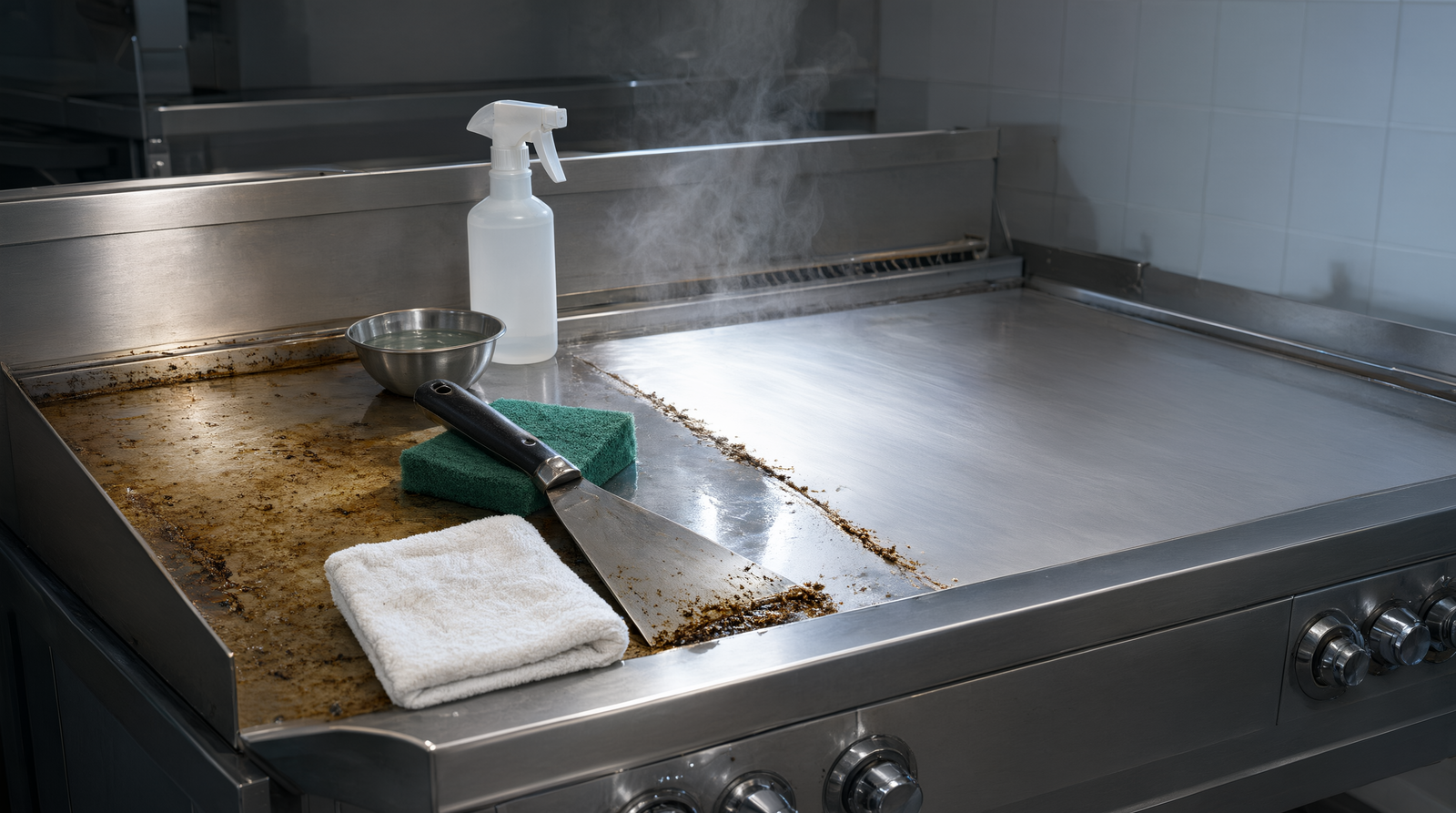
Proper care is essential for both variants to ensure durability and consistent performance. Electric flat tops are usually easier to clean because they have no burners or gas lines. The smooth surface is maintained with suitable cleaning agents and a soft cloth or scraper.
Gas flat tops additionally require regular cleaning of the burners and gas lines to prevent clogging and malfunctions. Gas connections should be checked regularly by a professional to rule out safety risks.
Costs: purchase and operation
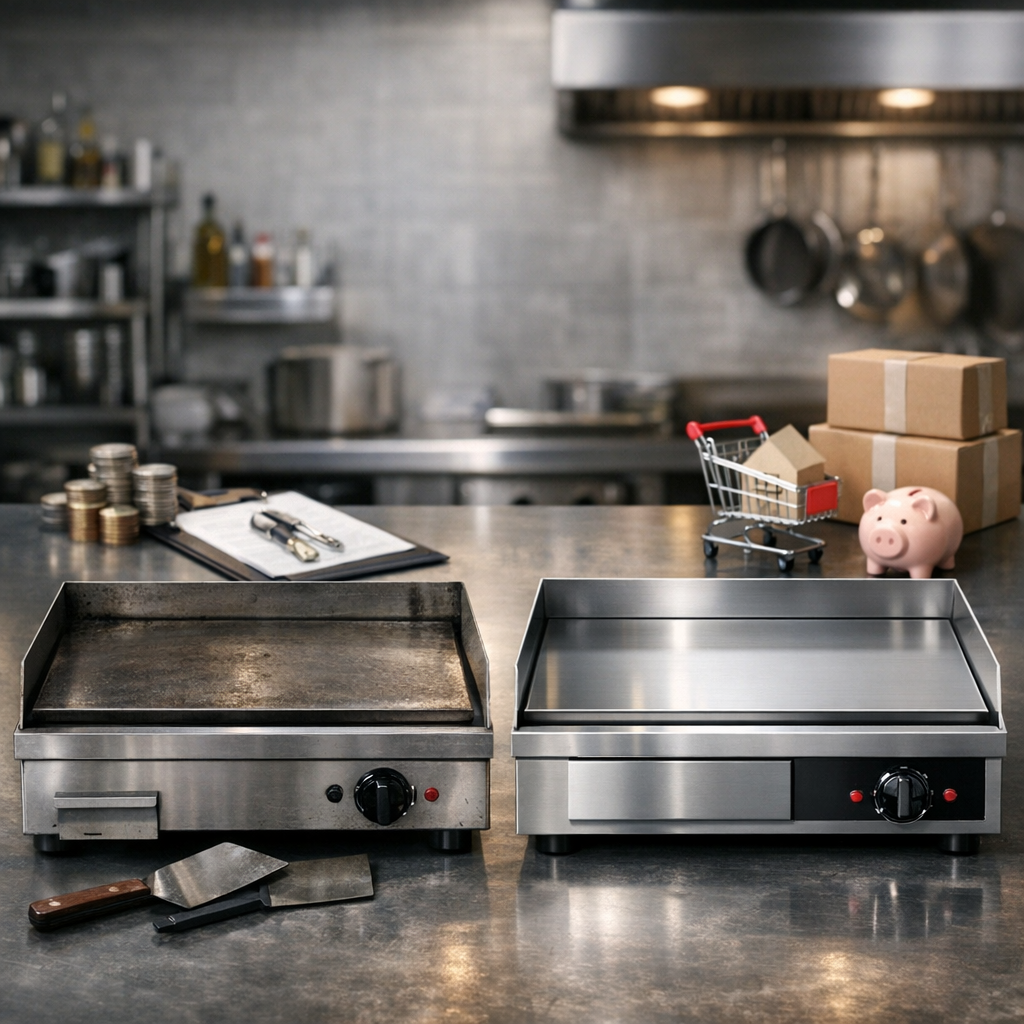
The purchase costs of electric flat tops are often higher than those of gas appliances, because the technology can be more complex. Gas appliances, on the other hand, involve costs for the gas connection, installation and ventilation, which you should include in your calculation.
Operating costs depend on regional electricity and gas prices, operating hours and the efficiency of the appliance. In some regions gas is cheaper, in others electricity. You can use the energy cost calculator for commercial equipment to work through your own situation with your own tariffs.
Conclusion
The choice between an electric and a gas flat top depends on the existing infrastructure, operating costs and the requirements of your kitchen. Electric flat tops convince with easy handling, safety and precise temperature control. Gas flat tops score with fast heat-up, independence from electricity and an authentic cooking experience.
If you are looking for a clean, safe and low-maintenance solution, an electric flat top is a good choice. If you value fast heat and traditional cooking methods, a gas flat top is often the better option. Analyze your requirements carefully and weigh up the pros and cons. The personal consultation from iGastroNomic can help you make the right decision.
FAQ – Frequently Asked Questions
Is an electric or a gas flat top better for commercial kitchens?
It depends on your kitchen. Gas is suitable for high throughput when fast heat is needed and a gas connection with proper ventilation is available. Electric is the better choice without a gas connection, or if you want precise temperature control and easy cleaning. Check connections, energy prices and intended use before you decide.
How long does an electric flat top take to heat up?
This depends on power output, plate thickness and target temperature. Electric flat tops usually need several minutes until the plate is heated evenly, and they are often slower than gas appliances. Thicker plates store heat longer and compensate better for temperature drops when food is placed on them. Preheat in good time before service starts.
Does a gas flat top require special installation?
Yes. A gas appliance must be connected to a suitable gas supply (natural gas or LPG), which should be carried out by a licensed professional. Adequate ventilation and regular safety inspections are also important. Clarify the requirements that apply to your premises in advance with the qualified technician and the responsible authority.
Which flat top is cheaper to operate?
This cannot be answered in general terms, as it depends on your regional electricity and gas prices, operating hours and the efficiency of the appliance. Gas is cheaper per kilowatt-hour in many regions, but appliance efficiency also plays a role. It is best to calculate your own case using your own tariffs.