The food processing equipment you choose determines speed, portion accuracy and hygiene in the kitchen, bakery and butcher shop. Whether you are mixing dough, mincing meat, cutting vegetables or portioning bread, the right food processing machines save staff time and reduce manual work. The range at iGastroNomic brings together commercial kitchen equipment for restaurants, snack bars, hotels, canteens and caterers that must perform reliably in continuous daily operation.
Applications in Restaurants and Commercial Kitchens
Requirements differ considerably depending on the type of business. A bakery needs different capabilities than a canteen that prepares large quantities of vegetables every day.
Dough preparation for bread, rolls, pizza and fine pastry
Meat processing for minced meat, bratwurst and fillings
Vegetable and potato preparation for side dishes, salads and soups
Slicing bread, French fries and vegetables into uniform pieces
Decorating cakes and desserts for patisseries and cafés
Machine Types at a Glance: From Mixers to Slicers
The range includes planetary mixers for doughs and creams, dough mixers and dough kneaders for heavy-duty doughs, and dough sheeters for even dough sheets. For meat processing, there are meat grinders and sausage clippers. For vegetable and potato processing, potato peelers, french fry cutters and vegetable and tomato slicers are available. Bread slicers and cake decorating machines complete the offering for bakeries and patisseries.
What Professionals Look for When Buying
Capacity matched to actual daily demand, not peak load
Food-safe materials that are easy to clean
Availability of spare parts and accessories
Operation and safety for changing staff
Space requirements and connection conditions in your existing kitchen
A planetary mixer for foodservice should be equipped with tools for different tasks, for example. When cutting, sharp, replaceable blades are essential.
Cleaning, Maintenance and Safe Operation
Hygiene is mandatory in commercial use. Cutting units, bowls and worm screw parts should be disassembled, cleaned and fully dried after every use. Grease and starch residues settle in crevices and promote bacterial growth. Follow the care instructions for each device and regularly check blades, seals and drive components for wear. Train staff in safe handling, especially for cutting and grinding equipment.
Why Buy from iGastroNomic
iGastroNomic is both manufacturer and wholesaler. Trade customers receive B2B net prices and benefit from a wide selection of food processing equipment. Personal advice is available by phone and WhatsApp, so you can select equipment that suits your business. We deliver across Europe and support you in choosing commercial kitchen machines that fit your daily operations.
Frequently asked questions
What is the difference between a planetary mixer and a dough kneader?
A planetary mixer rotates its mixing tool around its own axis and around the bowl at the same time, which makes it versatile for doughs, creams and batters. Dough kneaders are designed for firmer, heavier doughs such as bread or yeast dough. For businesses that mainly work with bread dough, a kneader is usually the better choice, while a planetary mixer suits a mixed product range.
What should I consider when buying a commercial bread slicer?
Look for a sharp, easily replaceable blade and a stable guide so that slices come out even. The slice thickness should match your breads and your portioning. Simple cleaning and easily accessible components make daily operation easier.
How do I clean food processing machines correctly?
Disconnect the machine from the power supply before cleaning and disassemble all removable parts. Remove food residues immediately, as they dry on and become difficult to remove. Always follow the manufacturer's care instructions and dry all parts thoroughly before reassembling the machine.
Is a meat grinder suitable for continuous use in a butcher shop?
Commercial meat grinders are built for repeated use and larger quantities, unlike household appliances. The key factors are the capacity in relation to your daily requirements and the quality of the cutting units. We recommend personal advice when making your selection to avoid buying the wrong model.
Can trade customers order food processing machines from iGastroNomic at net prices?
Yes, iGastroNomic offers B2B net prices to trade customers. You receive a wide selection of equipment for restaurants, bakeries and commercial kitchens, along with personal advice by phone or WhatsApp. We deliver across Europe.
Food Processing Equipment for Catering
Food processing covers all commercial machines used to chop, knead, slice or portion dough, meat, vegetables, bread and potatoes in restaurants, bakeries, butcher's shops and large kitchens. They are made for businesses that must process larger quantities reliably and with consistent quality every day. When buying, the key factors are capacity, motor power, material and easy cleaning.
Areas of use: Where food processing machines are indispensable
In catering, processing machines save many working hours every day. A dough mixer prepares pizza, bread and bread roll dough in one go, a meat mincer produces minced meat and sausage mix, and a potato peeler relieves the kitchen when handling large quantities. Typical users are restaurants, hotels, takeaways, pizzerias, canteens and catering companies.
These machines are also standard equipment in the food trade. Bakeries rely on planetary mixers, dough sheeters and cake decorating machines, butchers on meat mincers and sausage clippers. If you are looking for solid catering equipment for production, you will find machines here for small businesses as well as for continuous use in large kitchens.
The most important machines at a glance
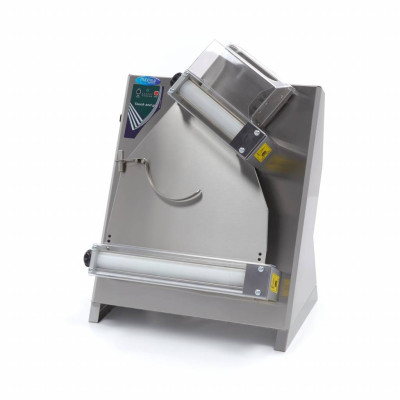
The category is divided into specialised machines. Planetary mixers are suitable for mixing, whisking and kneading mixtures, dough mixers mainly for heavy bread and pizza doughs. The dough sheeter rolls out dough evenly, the cake decorating machine supports decorating in the confectionery. For vegetable preparation there are chip cutters as well as vegetable and tomato slicers.
The bread slicer cuts bread into even slices, for example with a slice thickness of 11 mm. A manual sausage clipper closes sausage casings with U-clips, which are ordered separately. The dough mixer with an 8 l bowl capacity processes up to 4.5 kg of dough per batch according to the product description.
Machine
Typical use
Special feature
Dough mixer / dough kneader
Pizza, bread and bread roll dough
Bowl capacity determines the amount of dough per batch
Planetary mixer
Mixing, whisking, kneading in bakery and confectionery
Various mixing tools for different mixtures
Meat mincer
Minced meat, sausage mix in butcher's shop and kitchen
Hole plates determine the grind size
Bread slicer
Bread slices in bakery, hotel and canteen
Electric, fixed or adjustable slice thickness
Chip cutter
Potato sticks for takeaway and restaurant
Even cuts, cutting grids depending on thickness
Sausage clipper
Closing sausage casings in the butcher's shop
Manual, U-clips not included
Buying advice: Choosing the right size, power and operation
At the start is the question of daily processing volume. A dough mixer should be sized so that your largest standard batch fits comfortably without overloading the motor. For meat mincers and slicers, motor power and throughput determine whether the machine is suitable for occasional use or continuous operation. Also check the power supply, as many machines run on 230 V, while high-performance machines sometimes require three-phase power.
Also pay attention to the footprint and working height. Countertop units save space and are flexible, floor-standing units offer more capacity. If you frequently cut different products, interchangeable accessories such as blades, hole plates or cutting grids are a benefit. Clear operation with easy-to-read switches reduces training time and operating errors. For the right choice in catering supplies, the rule is: plan one size larger if your business is growing.
Material and hygiene in processing machines
For all equipment that comes into contact with food, stainless steel is the preferred material. It is robust, corrosion-resistant, odour-neutral and easy to clean thoroughly. Dough bowls, cutting blades, meat mincer inserts and collection trays should be food-safe. Painted housings, for example on dough mixers, protect the body and are easy to wipe clean.
In everyday commercial use, a hygienic design without hard-to-reach gaps also matters. Removable parts, smooth surfaces and protective covers make cleaning to HACCP requirements easier. In butcher's shops and bakeries, a clear separation of raw materials also prevents the transfer of flavours and germs.
Care, maintenance and safety
Clean machines after every use, before residues dry on. Removable blades, bowls and cutting grids can be cleaned with warm water and mild detergent; the motor unit is only wiped down with a damp cloth. For the meat mincer and slicing machines, sharp blades and hole plates ensure clean results and protect the motor.
Observe the safety features: protective guards, switches and emergency stop should never be bypassed. Moving parts occasionally receive food-safe grease, and regular checks of cables and plugs prevent failures. This keeps food processing in your business reliable and safe.
Delivery across Germany, Austria, Switzerland and Europe
iGastroNomic delivers food processing machines quickly and reliably throughout Germany, to Austria, Switzerland and other European countries. Whether a hotel on the coast, a bakery in the Alpine region or a canteen in the city centre: your equipment reaches you securely packed and in time for your next production start. Business customers who want to equip several machines at once also get a broad range from one source here.

 Deutsch
 Türkçe
 Italiano
 Nederlands
 Français
 Español
 Polski
 Čeština
 Svenska
 Português PT
 Русский
 اللغة العربية
 中文
 日本語
 Tiếng Việt
 ภาษาไทย
 Română
 ελληνικά
 Magyar
 Dansk
 Suomi
 Hrvatski
 български език
 Eesti keel
 Latviešu valoda
 Slovenčina
 Slovenščina
 Bosanski
 עברית
 हिन्दी
 Bahasa melayu
 Kiswahili
 Bahasa Indonesia
 Papiamento
 Bokmål
 Lietuvių kalba
 Українська
 српски
 Shqip









 ›
 ›
 ›
 ›
 ›
 ›
 ›
 ›
 ›
 ›
 ›
 ›
 ›
 ›
 ›