Meat Mallets for Foodservice and Commercial Kitchens
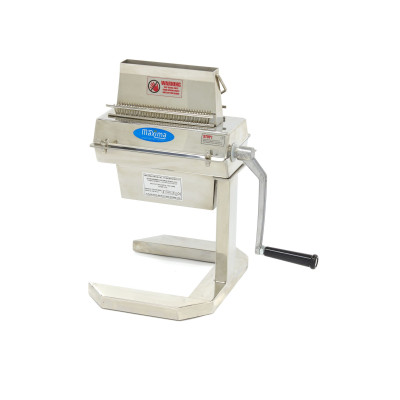
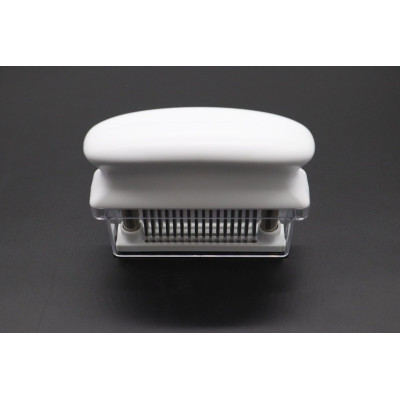
A meat mallet belongs in every kitchen where meat is regularly portioned and prepared. It loosens the meat fibres, evens out the thickness of schnitzels and roulades, and ensures even cooking. Businesses processing larger volumes rely on a meat tenderizer or commercial meat tenderizer that processes meat in a single pass. The iGastroNomic range includes meat mallets for foodservice in various designs for commercial use.
Applications in Restaurants, Snack Bars and Commercial Kitchens
In commercial use, the device is mainly needed for schnitzels, cordon bleu, roulades, sliced meat strips and medallions. Restaurants and hotels use it for daily portions with changing types of meat. Canteens and caterers benefit when large quantities must be prepared evenly in a short time. Snack bars rely on fast processing so that products reach the pan or fryer without delay.
Types: Manual Mallets, Meat Tenderizers and Schnitzel Presses
Manual meat mallets: flexible for individual portions. Double-sided models suit classic schnitzels, while three-sided models suit different meat thicknesses and tenderizing.
Meat tenderizers (roller models): two rollers with blades loosen the meat as it passes through. The feed width and the number of blades determine which cuts fit and how intensely the meat is processed.
Electric meat tenderizers: designed for continuous operation and high daily volumes, and they relieve staff.
Schnitzel presses: they complement meat tenderizers and press meat to a uniform thickness. This makes portioning clean and reproducible.
What Professionals Look for When Buying
Feed width and meat thickness: the device should suit the usual cuts in your operation.
Number and sharpness of blades or tenderizing surfaces: they determine the loosening and the result on the cut.
Material: stainless steel is the standard in commercial settings, as it is corrosion-resistant and easy to clean.
Ergonomics: weight and handle are decisive for manual models when many portions are processed daily.
Disassembly: removable parts make hygiene and checking for residue easier.
Cleaning, Maintenance and Safe Operation
Clean meat mallets and meat tenderizers after every use to avoid bacterial contamination and meat residue. Check blades and tenderizing surfaces regularly for damage or deposits. Electric devices must be disconnected from the power supply before cleaning. Safety guards must not be bypassed, and the manufacturer's instructions on disassembly and cleaning are binding.
Why Buy from iGastroNomic
iGastroNomic is a manufacturer and wholesaler of foodservice and commercial kitchen equipment, based in Nackenheim. Trade customers receive B2B net prices and a broad selection of meat mallets, meat tenderizers and accessories. Personal advice is available by phone and WhatsApp, so you can quickly find the right device for your business. We deliver across Europe and combine our own manufacturing with professional wholesale.
Frequently asked questions
What is the difference between a meat mallet and a meat tenderizer?
A meat mallet works the meat with tenderizing surfaces or a flat striking face and is particularly suited to individual portions. A meat tenderizer passes the meat through two rollers fitted with blades, so it processes larger quantities faster. For commercial use with high throughput, the meat tenderizer is usually the more efficient choice.
Which meat mallet is suitable for schnitzels in foodservice?
In foodservice, manual meat mallets with double-sided striking faces are commonly used for schnitzels. They achieve an even thickness and are flexible when portions vary. For high daily volumes, a schnitzel press or a meat tenderizer is also recommended.
What is a commercial meat tenderizer used for?
A commercial meat tenderizer loosens the muscle fibres with blades or tenderizing rollers so that the meat becomes more tender during cooking. It is mainly used for steaks, schnitzel meat and firmer cuts. The result depends on the design and the quality of the meat.
How do I clean a commercial meat mallet hygienically?
Clean the device thoroughly after every use, ideally in disassembled condition, and remove meat residue from all gaps. Use common cleaning agents approved for food contact and dry all parts completely. Also check blades and tenderizing surfaces regularly for damage.
Does iGastroNomic also deliver meat mallets abroad?
Yes, iGastroNomic delivers meat mallets and other foodservice accessories across Europe. Trade customers receive B2B net prices and personal advice by phone or WhatsApp. To choose the right model, you can contact our team directly.
Buy Commercial Meat Tenderizers for Professionals
A commercial meat tenderizer flattens schnitzels, cutlets and steaks evenly and tenderizes the meat fibers. It is available as a manual hand tool and as an electric meat tenderizer for larger quantities. It is suitable for restaurants, hotels, snack bars, butcher shops and commercial kitchens. When buying, the key factors are design, weight or power, feed width, number of blades or piercing attachments, and hygienic stainless steel construction.
Meat Pounders and Meat Tenderizers: Applications in Catering
In the restaurant kitchen, schnitzels, cordon bleu, rouladen and cutlet portions are brought to an even thickness before frying or roasting. The meat cooks evenly and stays juicy. Butcher shops and party catering services process larger quantities with it. Canteens, hotel kitchens and snack bars use meat pounders and meat tenderizers to make even firmer cuts tender and easy to cut.
If you process fresh meat regularly, you often complement the tenderizer with additional equipment. This includes, for example, a commercial meat mincer or, for heavy use, a meat mincer with cooling. The meat is then processed hygienically and efficiently from preparation to portioning. For catering supplies of this kind, the rule is: the equipment should match the quantity processed per shift.
Manual Meat Tenderizer: Double-Sided, Three-Sided or with Piercing Blades
The manual meat tenderizer is the flexible solution for small and medium quantities. A double-sided meat tenderizer weighing approx. 0.4 kg is suitable for thin schnitzels and delicate pieces. A three-sided meat tenderizer weighing approx. 0.9 kg delivers more striking force. This saves effort with thicker cutlets and firm meat.
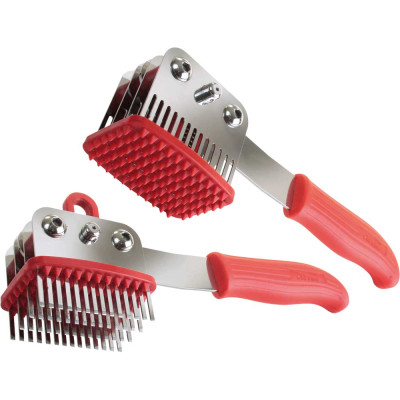
A meat tenderizer with piercing blades works differently: the tenderizer with red handle and 56 piercing blades pierces the fibers instead of merely flattening them. The meat becomes more tender, absorbs marinades better and shrinks less during cooking. This is helpful for steaks, stir-fry strips and roasts.
Electric Meat Tenderizer and Meat Tenderizer with Rollers
For high volumes, an electric meat tenderizer is the right choice. A unit with 300 W and 230 V runs on a standard wall socket and delivers consistent results without staff having to pound constantly. A meat tenderizer with rollers with two rollers and 27 or 37 blades pulls the meat through the feed opening and cuts the fibers evenly as it passes. The feed widths of 12.5 x 2.5 cm and 17.5 x 2.5 cm determine how large the meat pieces can be when fed in.
A schnitzel press as an accessory for the meat tenderizer shapes portions and makes them evenly thick. This gives you a uniform size even with many schnitzels, which is easy to calculate.
Variant
Typical Use
Special Feature
Meat tenderizer, double-sided (0.4 kg)
Thin schnitzels, small portions
Lightweight, easy to control
Meat tenderizer, three-sided (0.9 kg)
Cutlets, thicker pieces
More weight, less effort required
Meat tenderizer with 56 piercing blades
Steaks, marinating, tenderizing
Pierces the fibers
Electric meat tenderizer (300 W, 230 V)
Restaurant, butcher shop, canteen
Consistent results at high volume
Meat tenderizer with 2 rollers (27 or 37 blades)
Large quantities, commercial kitchen
Feed opening 12.5 x 2.5 cm or 17.5 x 2.5 cm
Buying Advice: Which Meat Tenderizer Suits Your Business?
First, consider the quantity per day. Small portions can easily be tenderized by hand. For many schnitzels per shift, an electric meat tenderizer saves time and protects your staff. Next comes the type of meat: for pork and veal schnitzels a hand tenderizer is often sufficient, while for tougher cuts piercing blades or rollers with blades are better.
Also check the space requirement. A countertop unit measuring 500 x 310 x 500 mm (W x D x H) must fit your work surface and should stand securely. For the electric models, a standard 230 V wall socket is sufficient. Also pay attention to the feed width so that your usual meat sizes fit in.
Material and Hygiene: Stainless Steel in Meat Processing
Hygiene is especially important when handling raw meat. Stainless steel is smooth, corrosion-resistant and does not absorb odors. That is why it is the standard material for meat tenderizers and meat pounders in the professional kitchen. For hand tenderizers, the handle and striking surface should be firmly connected. For electric units, removable parts make thorough cleaning easier, which is important for HACCP-compliant businesses.
Care and Cleaning
Clean every meat tenderizer immediately after use with warm water and dishwashing detergent. Stainless steel hand tools can be washed and dried well according to the manufacturer's instructions. With electric units, always unplug the power cord before cleaning. Remove blades and rollers according to the instructions and clean them thoroughly of meat residue. A unit with clean, sharp blades works more evenly and lasts longer.
Delivery throughout Germany, Austria, Switzerland and Europe
iGastroNomic delivers meat tenderizers, meat pounders and accessories quickly and reliably to all of Germany, Austria, Switzerland and Europe. Whether restaurant, hotel, butcher shop, snack bar or commercial kitchen: here you will find professional catering supplies for meat processing, whether as a hand tool or as an electric countertop unit.

 Deutsch
 Türkçe
 Italiano
 Nederlands
 Français
 Español
 Polski
 Čeština
 Svenska
 Português PT
 Русский
 اللغة العربية
 中文
 日本語
 Tiếng Việt
 ภาษาไทย
 Română
 ελληνικά
 Magyar
 Dansk
 Suomi
 Hrvatski
 български език
 Eesti keel
 Latviešu valoda
 Slovenčina
 Slovenščina
 Bosanski
 עברית
 हिन्दी
 Bahasa melayu
 Kiswahili
 Bahasa Indonesia
 Papiamento
 Bokmål
 Lietuvių kalba
 Українська
 српски
 Shqip









 ›
 ›
 ›
 ›
 ›
 ›
 ›
 ›
 ›
 ›
 ›
 ›
 ›
 ›
 ›