Dough Rollers for Commercial Kitchens: Types, Applications and Buying Advice
A dough roller is part of the basic equipment in almost every bakery, pastry shop and commercial kitchen where dough needs to be rolled out evenly. Whether puff pastry for pastries, pizza bases, pasta dough or fondant for cakes: the right roller saves time, ensures a consistent dough thickness and relieves the staff. At iGastroNomic, commercial customers find a wide selection of dough rollers for professional everyday use, from the manual wooden rolling pin to the automatic model.
Areas of Use in Restaurants and Bakeries
Dough rollers are used in bakeries, pastry shops, pizzerias, snack bars, hotel kitchens and by caterers. Typical applications include bread and bread roll dough, shortcrust and puff pastry, pizza and pasta dough, as well as fondant and sugar paste for cakes and decorations. The right type depends primarily on production volume: for a few portions a day, a manual roller is often sufficient, while high throughput makes a motorised solution worthwhile.
Types: Wooden, Stainless Steel, Fondant Rollers and Automatic Dough Rollers
Wooden dough rollers: classic rolling pin for manual work, flexible for bread and fine pastry. Models with ball bearings glide more easily over the dough.
Stainless steel dough rollers: hygienic and easy to clean, also available with a non-stick coating for sticky doughs.
Fondant rollers: single roller with adjustable thickness, allowing sugar paste and fondant to be rolled to the exact desired thickness.
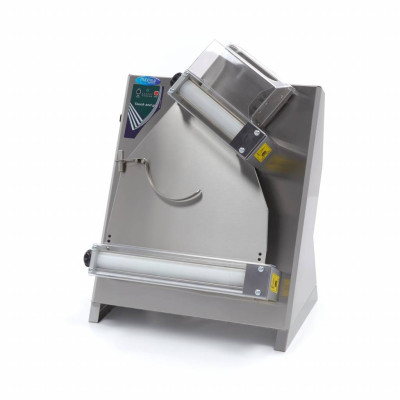
Double-roller dough rollers: both rollers run in opposite directions, pressing and rolling out the dough evenly.
Automatic dough rollers: for series production, some with a timer so that work steps can be repeated consistently.
What Professionals Look For When Buying
Key factors are the roller width and roller diameter in relation to the largest amount of dough you regularly process. Equally important are the material and surface of the roller (hygiene, cleaning, dough behaviour), the operation (manual or motorised) and whether you need a fixed dough thickness or an adjustable setting. Also check whether the commercial dough roller fits on your work surface and how often you need to clean it each day.
Cleaning, Care and Safe Operation
Wooden rollers should not be immersed in water. Wipe them dry or lightly damp and dry them thoroughly so the wood does not swell. Clean stainless steel and coated rollers after use with washing-up liquid; harsh abrasive cleaners can damage non-stick coatings. Clean motorised dough rollers only when they are switched off and disconnected from the mains, and keep safety guards intact. Regular visual checks prevent wear and dough residue in the mechanism.
Why Commercial Customers Buy from iGastroNomic
iGastroNomic is a wholesaler and manufacturer of catering and commercial kitchen equipment based in Nackenheim. Commercial customers receive B2B net prices, benefit from a wide selection and receive personal advice by phone or WhatsApp, for example when choosing between a single roller and a double roller. We deliver throughout Europe.
Frequently asked questions
Which dough roller is suitable for fondant?
Fondant rollers with a single roller and adjustable thickness are particularly suitable for fondant and sugar paste. They let you set the desired thickness precisely, which is important for evenly covered cakes.
What is the difference between a single roller and a double roller?
With a single roller, you roll out the dough with one roller. With a double roller, two rollers run in opposite directions and press the dough out evenly. The double roller is particularly suitable for larger amounts of dough, while the single roller offers more control for finer work.
Wood or stainless steel: which is better for the catering industry?
Wood is flexible and classic for bread and fine pastry, but it requires careful maintenance. Stainless steel is hygienic, easy to clean and well suited to sticky doughs, so both materials complement each other depending on the application.
How do I clean a dough roller properly?
Wooden rollers should not be immersed in water. Instead, wipe them dry or lightly damp and dry them thoroughly. Clean stainless steel and coated rollers with washing-up liquid and avoid harsh abrasive cleaners. Please also follow the manufacturer's instructions.
Is an automatic dough roller worthwhile for bakeries?
An automatic dough roller is especially worthwhile for regular series production, as work steps can be repeated consistently and staff are relieved. For small quantities, a manual dough roller is usually sufficient. Personal advice from iGastroNomic can help you find the right solution.
Dough Roller & Dough Sheeter for Commercial Kitchens
A dough roller is an electric dough sheeter or a professional rolling pin for evenly rolling out pizza, shortcrust, yeast and puff pastry. It is designed for pizzerias, bakeries, restaurants, hotel kitchens and confectioners. When buying, the most important factors are the roller diameter, the design (single or double roller), the operation and the material.
Commercial dough rollers: Applications in practice
If you process dough every day, a commercial dough roller saves a great deal of time and effort. Typical applications are pizzerias, bakeries, snack bars, catering businesses and large commercial kitchens that need consistent dough bases in high volumes. Confectioners and hotel kitchens also benefit, for example when rolling out shortcrust pastry for tarts or fondant for cakes. The machine delivers reproducible results, regardless of which member of staff is at the bench.
For smaller quantities, for reworking or for delicate doughs, the classic rolling pin remains indispensable. In professional foodservice equipment, both solutions complement each other: the machine handles the volume, the hand roller handles the fine work on the worktop.
Single roller or double roller: The differences
A dough sheeter with single roller flattens the dough in one pass and is suitable for pizza bases, flammkuchen and flatbread. It is available in diameters of Ø30 cm and Ø45 cm. The double roller works with two rollers and presses the dough from above and below. The result is a particularly even, well-worked dough sheet, available in Ø30 cm and Ø40 cm.
The choice depends on the dough type and the pace: if you need many bases of the same quality, a double roller is often the better choice. If space and budget are a priority, a single roller is perfectly adequate. The diameter determines the maximum dough sheet size and should match the largest pizza on your menu.
Comparison: Dough roller variants at a glance
Variant
Typical use
Special feature
Dough sheeter with single roller (Ø30 cm / Ø45 cm)
Pizza, flammkuchen, flatbread
Simple operation, compact design
Dough sheeter with double roller (Ø30 cm / Ø40 cm)
Pizzerias with high dough throughput
Dough is pressed from two sides
Automatic dough sheeter (Ø40 cm)
Consistent series production
Built-in timer
Fondant roller (Ø30 cm / Ø45 cm)
Confectionery, cake production
Adjustable thickness
Wooden rolling pin
Handwork, bakery, kitchen
Some models with ball bearings for smooth running
Stainless steel rolling pin
Heavily used workstations
Also available with non-stick coating
Automation, timer and adjustable thickness
With the automatic dough sheeter and built-in timer, you control the pressing time and achieve the same result with every dough ball. This is ideal when several members of staff work in shifts or when standards across a chain of outlets must be maintained. You no longer need to estimate how long the dough was pressed.
For confectioners, the fondant roller with adjustable thickness is of particular interest. It rolls out fondant, marzipan or thin dough sheets evenly, without cracks or thick spots. This makes smooth cake coatings and clean decorations considerably faster to achieve than by hand.
Wooden or stainless steel rolling pin: Material and hygiene
The wooden rolling pin is the classic choice in bakeries and kitchens. It is lightweight, grips the dough well and feels comfortable in the hand. It is available in various sizes, for example with Ø 85 mm and a length of 39.5 cm. Models with ball bearings (L. 460 mm, D. 70 mm) run particularly smoothly and protect the wrist during long periods of work.
The stainless steel rolling pin (L. 470 mm, D. 63 mm) is hygienic, does not absorb odours and is easy to clean. The non-stick coated version prevents sticky doughs from adhering. Stainless steel is particularly suitable for businesses with high hygiene requirements and frequent changes of dough types.
Selection criteria when buying a dough roller
Check the following points before you buy:
Roller diameter: It must match the largest dough sheet size.
Design: Single roller for simple workflows, double roller for higher quality and volume.
Operation: Automatic with timer for consistent results.
Dough type: Pizza, shortcrust or fondant require different functions.
Material: Wood for tradition, stainless steel for hygiene and durability.
Also make sure there is a stable installation position and a suitable power connection. For hand rolling pins, length, diameter and weight should match your way of working.
Care and cleaning
After use, machines should be disconnected from the mains, freed of flour and dough residue and wiped with a damp cloth. Stainless steel surfaces tolerate mild cleaning agents. Clean wooden rolling pins dry or with a slightly damp cloth and let them dry thoroughly so the wood does not swell or crack. For non-stick coated rollers, avoid abrasive agents to protect the coating.
Fast delivery in Germany, Austria, Switzerland and Europe
iGastroNomic reliably delivers dough rollers and rolling pins throughout Germany, to Austria, to Switzerland and to other European countries. Whether for a new pizzeria, a hotel kitchen or a bakery: our range of professional catering supplies offers the right solution for dough rolling, each with clear technical details on diameter, design and material.

 Deutsch
 Türkçe
 Italiano
 Nederlands
 Français
 Español
 Polski
 Čeština
 Svenska
 Português PT
 Русский
 اللغة العربية
 中文
 日本語
 Tiếng Việt
 ภาษาไทย
 Română
 ελληνικά
 Magyar
 Dansk
 Suomi
 Hrvatski
 български език
 Eesti keel
 Latviešu valoda
 Slovenčina
 Slovenščina
 Bosanski
 עברית
 हिन्दी
 Bahasa melayu
 Kiswahili
 Bahasa Indonesia
 Papiamento
 Bokmål
 Lietuvių kalba
 Українська
 српски
 Shqip









 ›
 ›
 ›
 ›
 ›
 ›
 ›
 ›
 ›
 ›
 ›
 ›
 ›
 ›
 ›