When you visit any website, it may store or retrieve information on your
browser, mostly in the form of 'cookies'. This information, which might be about you, your preferences,
or your internet device (computer, tablet or mobile), is mostly used to make the site work as you expect
it to.
More info
Preferences
Statistics
Marketing
Hide detailsShow details
Preferences
Preference cookies enable a website to remember information that
changes the way the website behaves or looks, like your preferred language or the region that you are in.
Name
Provider
What it does
Expiry
Allow
(Check all)
Currency Selection
PrestaShop
Cookie which makes possible to choose the currency you would like. If disabled the store default currency will be shown.Cookie which makes possible to choose the currency you would like. If disabled the store default currency will be shown.
30 days
Language Selector
PrestaShop
Cookie we use to offer you the possibility to switch the language of our contents. If cookie is disabled you'll see the site in the original language.Cookie we use to offer you the possibility to switch the language of our contents. If cookie is disabled you'll see the site in the original language.
30 days
Statistics
Statistic cookies help website owners to understand how visitors interact
with websites by collecting and reporting information anonymously.
Name
Provider
What it does
Expiry
Allow
(Check all)
Marketing
Marketing cookies are used to track visitors across websites.
The intention is to display ads that are relevant and engaging for the individual user and thereby more
valuable for publishers and third party advertisers.
Name
Provider
What it does
Expiry
Allow
(Check all)
ad_storage
Google
Enables storage, such as cookies (web) or device identifiers (apps), related to advertising.Enables storage, such as cookies (web) or device identifiers (apps), related to advertising.
30 days
ad_user_data
Google
Sets consent for sending user data to Google for advertising purposes.Sets consent for sending user data to Google for advertising purposes.
30 days
ad_personalization
Google
Sets consent for personalized advertising.Sets consent for personalized advertising.
30 days
analytics_storage
Google
Enables storage, such as cookies (web) or app identifiers (apps), related to analytics, e.g. visit duration.Enables storage, such as cookies (web) or app identifiers (apps), related to analytics, e.g. visit duration.
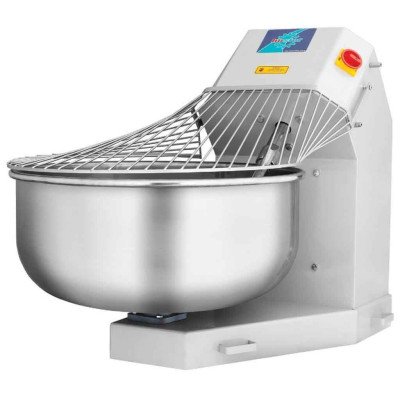
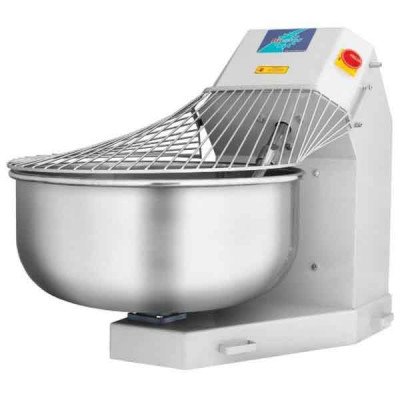
Key facts: 900 × 1300 × 1050 mm · dough capacity up to 130 kg · 40 rpm
Robust: sturdy metal frame for high-volume production
Versatile: suitable for dough, meat mixtures, butter, cream and sauces
Safe: machine switches off when the lid is opened, plus emergency stop
Operation: automatic or manual operation, easy to clean
Dough Mixers for Commercial Dough Preparation
Dough mixers are a central appliance in bakeries, pastry shops and large kitchens that regularly produce bread, rolls, pizza or pasta dough. They replace manual kneading, ensure consistent dough quality and relieve staff when handling large quantities. At iGastroNomic you will find commercial dough mixers for foodservice in several bowl sizes, from smaller businesses to large bakeries. As a manufacturer and wholesaler, we offer commercial dough mixers for sale directly at B2B net prices.
Applications in Foodservice and Bakery
Dough mixers are used wherever larger batches of dough are processed on a regular basis: in bakeries, pizzerias, hotel kitchens with in-house pastry, with caterers and in canteens. Yeast doughs, which require long kneading times and consistent gluten development, are where the machine shows its strengths. Shortcrust and sponge doughs can also be processed reliably, depending on the model.
Types and Designs at a Glance
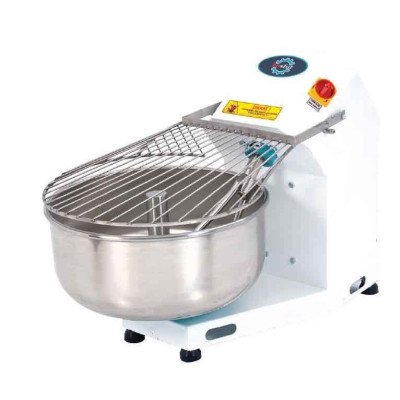
The kneading tool is the most important factor in your choice. Spiral mixers work with a spiral hook that kneads the dough intensively yet gently and are especially suitable for yeast and wheat doughs. Planetary mixers with dough hook or beater are intended for softer doughs, batters and creams. The model with a fixed bowl, as offered in various sizes in our range, is designed for continuous commercial operation with larger dough quantities.
What Professionals Look for When Buying
The key factor is first the required dough quantity per batch. Plan for peak times rather than averages and take dough yield and batch frequency into account. Equally important are:
Dough type: spiral or mixing tool suited to yeast, wheat or sponge dough
Bowl size in relation to daily production
Installation space, connection and accessibility for cleaning
Operation: speed settings and controls for reproducible results
Workmanship and material quality for daily heavy use
Cleaning, Maintenance and Safe Operation
Dough dries quickly on tools and bowl edges. Clean the kneading tool and bowl after every batch before residues harden. Disconnect the machine from the power supply before cleaning and maintenance work and observe the operating manual regarding safety devices. Regular visual checks of tools, seals and drive components help prevent breakdowns during operation.
Why Buy Dough Mixers from iGastroNomic
iGastroNomic is a manufacturer and wholesaler in one. Commercial customers benefit from B2B net prices, a broad selection and personal advice by phone and WhatsApp. We support you in sizing the machine to suit your business and deliver throughout Europe. This is how you find commercial dough mixers for professional use that match your dough program.
Frequently asked questions
Which dough mixer is suitable for yeast dough in a bakery?
For yeast dough, spiral mixers are generally recommended, as their spiral hook kneads the dough intensively and evenly. It is also important to choose a bowl size that matches your typical dough quantity per batch. If you are unsure, our team is happy to advise you personally.
What is the difference between a spiral mixer and a mixing tool?
A spiral mixer works the dough with a spiral-shaped hook, which is especially suitable for firm yeast and wheat doughs. Mixing tools with dough hooks or beaters are better suited to softer doughs, batters and creams. The choice therefore depends directly on your production program.
How do I determine the right size of a commercial dough mixer?
Base your decision on the largest dough quantity you need per batch and take the dough yield of your recipes into account. Additionally, allow for reserves during peak times. A machine that runs continuously at its limit will have a shorter service life.
How do I clean a dough mixer properly in a commercial operation?
Remove dough residues after every batch while they are still soft, and thoroughly clean the kneading tool and bowl. Disconnect the machine from the power supply before cleaning and follow the instructions in the operating manual. Regular visual checks help you detect wear early.
Can I buy commercial dough mixers from iGastroNomic?
Yes, iGastroNomic is a manufacturer and wholesaler and offers dough mixers for commercial customers at B2B net prices. You will receive personal advice by phone or WhatsApp, and we deliver throughout Europe. We are happy to help you find the right selection for your business.
Dough Mixers for Catering and Bakery
Dough mixers are electric kneading machines that process bread, pizza and shortcrust dough with consistent quality. They are designed for bakeries, pizzerias, restaurants, hotels and large commercial kitchens. When buying, the most important factors are the bowl capacity (20 to 160 liters), the maximum dough quantity in kilograms and the fixed-bowl design.
Dough Mixer 20 kg, 30 kg or 100 kg: Choosing the Right Size
The most important question when buying is: how much dough do you knead per batch? Our range extends from the compact dough mixer with 20 liter bowl capacity for 13 kg of dough to the large machine with 160 liters for up to 130 kg of dough. The kilogram figure refers to the maximum dough quantity, the liter figure to the bowl capacity. Therefore, do not plan your batch size too tightly.
Dough mixer 20 kg: The 30 liter model with 20 kg of dough covers small to medium daily quantities.
Dough mixer 30 kg: The 50 liter model with 30 kg of dough is suited to businesses with several batches per day.
Dough mixer 100 kg: For quantities of this size, the 130 liter (75 kg) and 160 liter (130 kg) models are suitable.
Choose the size so that your usual batch makes up approx. 70 to 90 percent of the maximum quantity. This leaves reserve capacity for peak days, and the dough is still kneaded evenly.
Applications in Catering and Baking
A dough mixer for catering works just as well in a pizzeria as in a hotel kitchen, a catering business or a staff canteen. Small bowls of 20 or 30 liters suit snack bars, restaurants and small bakeries where pizza dough, bread rolls or pasta dough is prepared fresh. Medium sizes of 50 and 80 liters are used by bakeries and butchers with a bakery counter. The large machines with 130 and 160 liters are designed for production facilities, large bakeries and community catering.
If you are expanding your catering equipment, plan the mixer as part of your bakery line. Dough dividers, sheeters and proofing cabinets must match the batch size.
Comparison of Sizes at a Glance
Bowl size
Maximum dough quantity
Typical use
20 liters
13 kg
Snack bar, small pizzeria, café
30 liters
20 kg
Restaurant, small bakery
50 liters
30 kg
Bakery, hotel kitchen, catering
80 liters
50 kg
Bakery with several batches, butcher with bakery shop
130 liters
75 kg
Large bakery, canteen, production
160 liters
130 kg
Industrial craft production, large kitchen
Design: Dough Mixer with Fixed Bowl
All models in this category are dough mixers with fixed bowl. The bowl is firmly connected to the housing and cannot be removed. This ensures a stable footing and a robust construction that runs smoothly even with heavy dough. With large batches you do not need to move the dough with the bowl; instead, you take it directly out of the machine. Therefore, plan a trolley or work surface within reach.
Before buying, check the power supply in the data sheet (single-phase or three-phase) and the connected load. Large bowls of 130 and 160 liters usually require a heavy-current connection, which your electrician should provide. Also make sure there is enough space at the installation site and at doors, as the machines are correspondingly heavy and bulky with larger bowl capacities.
Material and Hygiene
In professional use, stainless steel bowls and tools are particularly in demand. They are food-safe, scratch-resistant and can be cleaned quickly after production. Smooth surfaces without hard-to-reach corners make it easier to comply with HACCP requirements in catering and the food trades. A protective guard on the bowl prevents reaching into the running kneading tool and is one of the most important safety features.
Care and Maintenance
Clean bowl and kneading tool after every shift. Remove dough residue dry first, then rinse with warm water and dry all parts thoroughly. Wipe the motor housing only with a damp cloth; a water jet does not belong on the equipment. Check drive belts, bearings and the safety guard regularly. A machine kept dry and clean will run reliably for many years.
Delivery to Germany, Austria, Switzerland and Europe
iGastroNomic delivers dough mixers quickly and reliably throughout Germany, to Austria, Switzerland and other European countries. Freight is especially important for heavy machines with large bowls. Check the delivery route, door widths and installation site before ordering. As part of your catering supplies, you get commercial equipment for bakery, pizzeria, hotel and large kitchen from one source.

 Deutsch
 Türkçe
 Italiano
 Nederlands
 Français
 Español
 Polski
 Čeština
 Svenska
 Português PT
 Русский
 اللغة العربية
 中文
 日本語
 Tiếng Việt
 ภาษาไทย
 Română
 ελληνικά
 Magyar
 Dansk
 Suomi
 Hrvatski
 български език
 Eesti keel
 Latviešu valoda
 Slovenčina
 Slovenščina
 Bosanski
 עברית
 हिन्दी
 Bahasa melayu
 Kiswahili
 Bahasa Indonesia
 Papiamento
 Bokmål
 Lietuvių kalba
 Українська
 српски
 Shqip



 ›
 ›
 ›
 ›
 ›
 ›
 ›
 ›
 ›
 ›
 ›
 ›
 ›
 ›
 ›