Deutsch
 Türkçe
 Italiano
 Nederlands
 Français
 Español
 Polski
 Čeština
 Svenska
 Português PT
 Русский
 اللغة العربية
 中文
 日本語
 Tiếng Việt
 ภาษาไทย
 Română
 ελληνικά
 Magyar
 Dansk
 Suomi
 Hrvatski
 български език
 Eesti keel
 Latviešu valoda
 Slovenčina
 Slovenščina
 Bosanski
 עברית
 हिन्दी
 Bahasa melayu
 Kiswahili
 Bahasa Indonesia
 Papiamento
 Bokmål
 Lietuvių kalba
 Українська
 српски
 Shqip


 ›
 ›
 ›
 ›
 ›
 ›
 ›
 ›
 ›
 ›
 ›
 ›
 ›
 ›
 ›
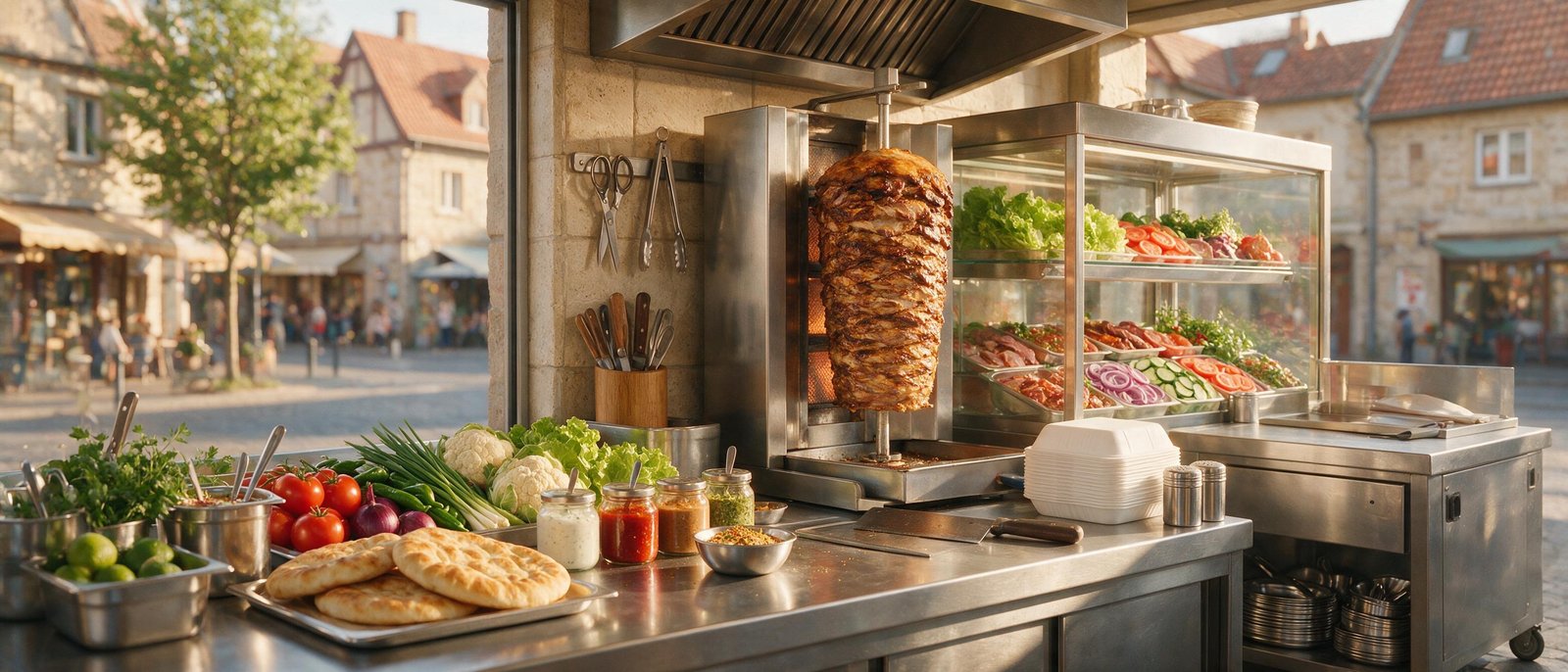
In short: Anyone who wants to open a doner kebab shop needs a viable concept, a location with high foot traffic, business registration including food safety documentation, and basic equipment consisting of a doner grill, slicing machine, refrigeration and stainless steel work surfaces. As a rough guide, plan for approximately 16,200 to 43,500 euros in starting capital for a stationary business. This guide shows step by step what matters in 2026.
Why open a doner kebab shop?
The doner kebab is a true classic in Germany and has been firmly established since the 1970s. Demand for fast, tasty and affordable food remains high. A doner kebab takeaway is therefore a solid business idea, but it requires careful planning.
- Popularity: Doner is one of the best-selling fast food dishes in Germany.
- Manageable entry barriers: Compared with a large restaurant, the investment is usually lower.
- Flexible business formats: Options include a stationary takeaway, a food truck or a delivery service.
- Opportunities through differentiation: With quality and creative offerings, such as vegetarian or vegan variations, you can stand out from the competition.
Proper planning – the first step
Before you sign a lease or equipment contracts, you should plan your project in detail. This includes the following points:
- Business concept: Stationary or mobile, with or without seating?
- Target group: Students, working professionals, families or passers-by?
- Location analysis: Where is there high pedestrian traffic, and what is nearby, such as offices or schools?
- Competitor analysis: Which takeaways already exist in the area, and how can you set yourself apart?
- Financial planning: Which costs will arise, and what revenues can you realistically expect?
The necessary equipment for a doner kebab shop
The right equipment determines smooth operations and the quality of your food. Here are the most important appliances at a glance.
Doner grill
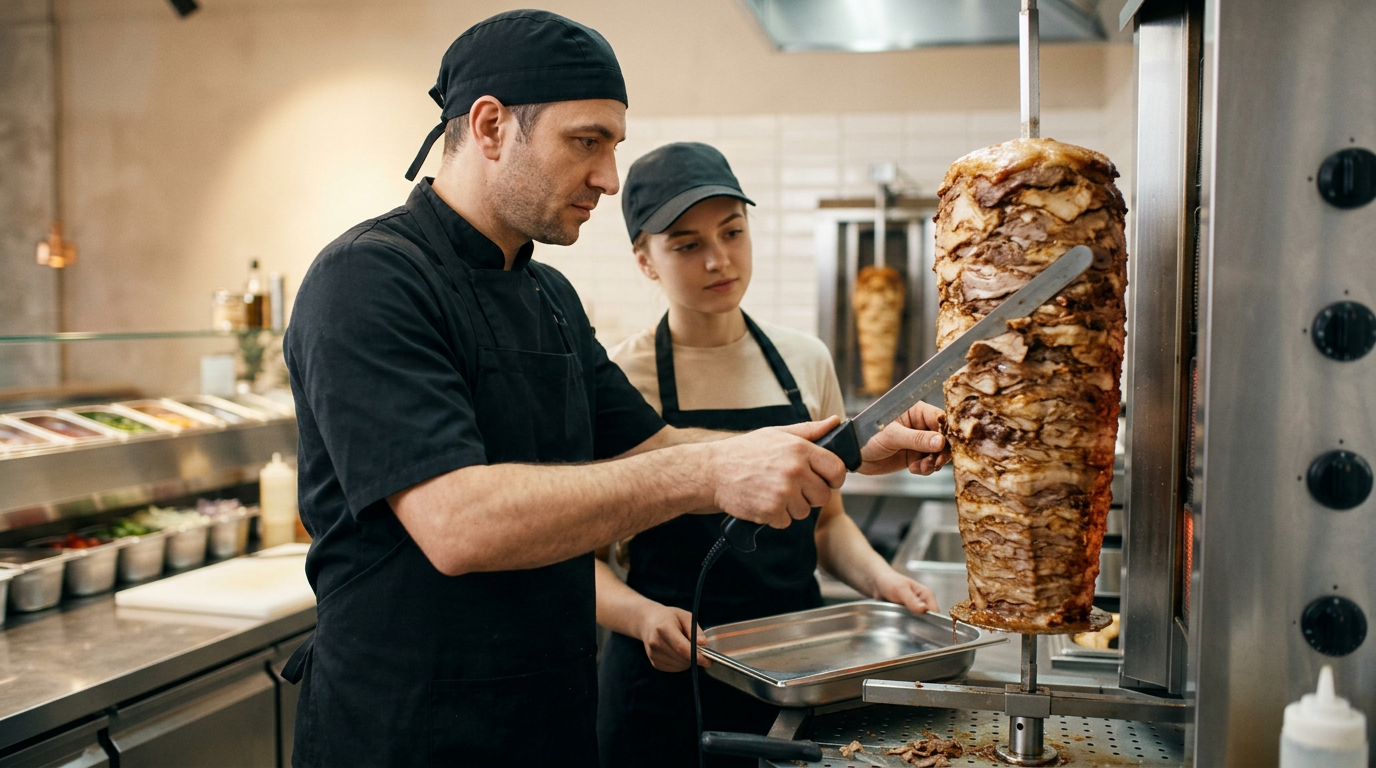
The heart of every takeaway is the doner grill. Models differ considerably depending on energy type and capacity.
| Criterion | Gas doner grill | Electric doner grill |
|---|---|---|
| Heating-up time | Fast, good temperature control | Somewhat slower, even heat |
| Operation | Requires a gas connection or bottled gas | Simple, cleaner operation |
| Requirements | Suitable extraction and gas installation | Appropriate power connection |
Choose the size according to the expected number of customers. A gas doner grill with 4 burners or an electric doner grill with 4 burners processes up to 60 kg of meat and is suitable for busy takeaways. Which energy type is more cost-effective in the long run for your tariffs is shown by the energy cost calculator for commercial kitchen equipment.
Slicing machine
A high-quality slicing machine cuts the meat evenly and quickly into thin slices. Pay attention to safety features and easy cleaning.
Refrigeration and storage
- Refrigerated display cabinets: For fresh vegetables, sauces and prepared ingredients.
- Refrigerators and freezers: For meat, drinks and other ingredients.
Work surfaces and sinks
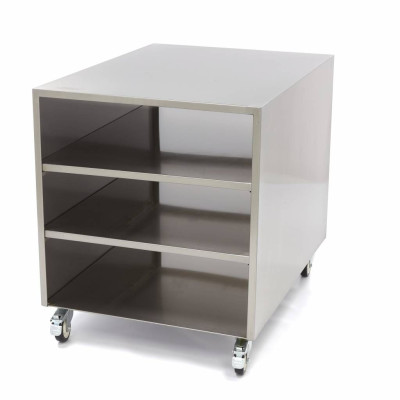
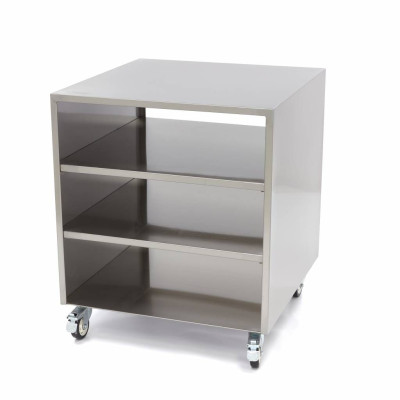
Sufficient hygienic work surfaces made of stainless steel are mandatory. You will also need sinks for cleaning utensils, as well as a separate hand washbasin.
Additional equipment
- Deep fryer for fries or other side dishes
- Toaster or oven for flatbread
- Containers for sauces and salads
- Cash register and order system
You can use the free 3D kitchen planner to test in advance how all of this equipment can be sensibly arranged in a confined space.
Permits and legal requirements
Opening a doner kebab shop in Germany is subject to several legal regulations. The requirements may vary depending on the federal state and municipality. Therefore, clarify them early with the responsible authorities.
Business registration
You register your business with the responsible regulatory or trade office. The procedure is generally straightforward and typically costs around 20 to 60 euros, depending on the city.
Food law requirements
Since you will be handling food, you must comply with food law. This includes:
- Hygiene regulations: Compliance with the EU hygiene regulation, regular cleaning and training of staff.
- Instruction under § 43 of the German Infection Protection Act: Anyone working with food must be instructed before starting work.
- HACCP concept: A concept for hazard analysis and critical control points is mandatory.
- Business registration with food authorities: Food businesses must be reported to the responsible food inspection authority.
Building permit and use permit
If you convert or alter a retail space, a building permit may be required. The use of the premises as a food service business must also be approved.
Restaurant license
For pure takeaway businesses without alcohol sales, a restaurant license is generally not required. If you want to serve alcohol, you usually need a corresponding permit. The rules are determined at federal state level.
Fire safety and occupational safety
Depending on the size of the takeaway, fire safety regulations apply, for example for extraction, grease separation and escape routes. Occupational safety measures for your staff are mandatory.
Waste disposal
Food leftovers and packaging waste must be disposed of properly. For this, you usually sign contracts with waste disposal companies.
Location selection and retail space
The location is one of the most important success factors. Keep these points in mind:
- High customer frequency: Proximity to schools, universities, office buildings or train stations.
- Good visibility: The takeaway should be easy to find.
- Parking and delivery options: Important for customers and suppliers.
- Competitive situation: Check how many takeaways are already nearby.
A retail space of about 30 to 50 square meters is usually sufficient to start. Pay attention to good ventilation and enough space for the kitchen and customer area.
Staff planning
Depending on the size of the takeaway, you will need staff for preparation and cooking, for customer service and cash handling, and for cleaning.
To start, a small team is often enough, which you can expand as demand grows. Plan training in hygiene and customer service from the very beginning.
Startup costs and financing
Costs vary depending on location, size and equipment. The following table lists typical rough estimates, not binding quotes.
| Item | Costs (approx.) |
|---|---|
| Doner grill | 2,000 – 5,000 EUR |
| Slicing machine | 500 – 1,500 EUR |
| Refrigeration and storage | 3,000 – 6,000 EUR |
| Work surfaces, sinks, miscellaneous | 2,000 – 4,000 EUR |
| Business registration and permits | 200 – 1,000 EUR |
| Conversion and fit-out of retail space | 5,000 – 15,000 EUR |
| Marketing and advertising (opening) | 500 – 2,000 EUR |
| Initial food stock | 1,000 – 3,000 EUR |
| Staff (first months) | 2,000 – 6,000 EUR |
| Total | 16,200 – 43,500 EUR |
For financing, you can use equity, bank loans or funding programs. A detailed business plan convinces banks and investors and helps you avoid liquidity shortages in the first months.
Marketing and customer acquisition
A good doner kebab shop thrives on regular customers and positive word of mouth. These measures have proven effective:
- Opening offers: Discounts or free side dishes at the opening.
- Online presence: Website, Google Business Profile and social media such as Instagram and Facebook.
- Flyers and local advertising: Distribution in the neighborhood and at nearby businesses.
- Quality and service: Satisfied customers come back and recommend you to others.
Tips for successful operation
- Quality over quantity: Fresh ingredients and clean preparation are crucial.
- Flexibility: Adapt your offering to customer preferences, for example with vegetarian or vegan doner variations.
- Efficient processes: Optimize workflows to shorten waiting times.
- Regular training: Keep your team up to date on hygiene and customer service.
- Collect customer feedback: Use feedback for continuous improvement.
Conclusion
With the right planning, opening a doner kebab shop in Germany can be a promising business idea. Careful location selection, suitable equipment, compliance with all legal requirements and a well-thought-out financing plan are decisive. With quality and good service, you can hold your own even in a competitive market.
iGastroNomic supports you with free consultation when selecting and planning your kitchen. Contact us for personal consultation.
FAQ – Frequently Asked Questions
How much does it cost to open a doner kebab shop?
As a rough guide for a stationary doner kebab shop, startup costs are approximately 16,200 to 43,500 euros. The largest share is usually made up of conversion and fit-out, refrigeration and storage technology, and the first staff costs. Actual costs depend heavily on location, condition of the retail space and equipment. A business plan with a buffer for the first months is therefore essential.
What permits are needed for a doner kebab shop?
Typically required are business registration, registration with the food inspection authority, instruction under § 43 of the German Infection Protection Act, a HACCP concept and a use permit for the premises. Depending on the conversion, a building permit and fire safety requirements may also apply. As requirements vary by region, check in advance with the local regulatory office and food inspection authority.
Gas or electric doner grill – which is better?
Gas doner grills heat up quickly and can be adjusted precisely, but they require a gas connection or bottled gas and suitable extraction. Electric models are easier to install and cleaner to operate, but their running costs differ depending on electricity prices. The decisive factors are location, existing connections and the expected amount of meat per day.
Do I need a restaurant license for a takeaway?
For a pure takeaway without alcohol sales, a restaurant license is generally not required. As soon as you serve alcoholic drinks, a permit is usually needed. The rules are determined at federal state level and vary. Clarify this with the responsible authority before signing the lease so there are no surprises.
How large should the retail space for a doner kebab shop be?
To start, 30 to 50 square meters is often sufficient, provided the kitchen, counter and customer area are sensibly divided. More important than the pure area are short distances, good ventilation and enough space for refrigeration and work surfaces. Early kitchen planning helps you check the layout before the conversion.