Deutsch
 Türkçe
 Italiano
 Nederlands
 Français
 Español
 Polski
 Čeština
 Svenska
 Português PT
 Русский
 اللغة العربية
 中文
 日本語
 Tiếng Việt
 ภาษาไทย
 Română
 ελληνικά
 Magyar
 Dansk
 Suomi
 Hrvatski
 български език
 Eesti keel
 Latviešu valoda
 Slovenčina
 Slovenščina
 Bosanski
 עברית
 हिन्दी
 Bahasa melayu
 Kiswahili
 Bahasa Indonesia
 Papiamento
 Bokmål
 Lietuvių kalba
 Українська
 српски
 Shqip


 ›
 ›
 ›
 ›
 ›
 ›
 ›
 ›
 ›
 ›
 ›
 ›
 ›
 ›
 ›
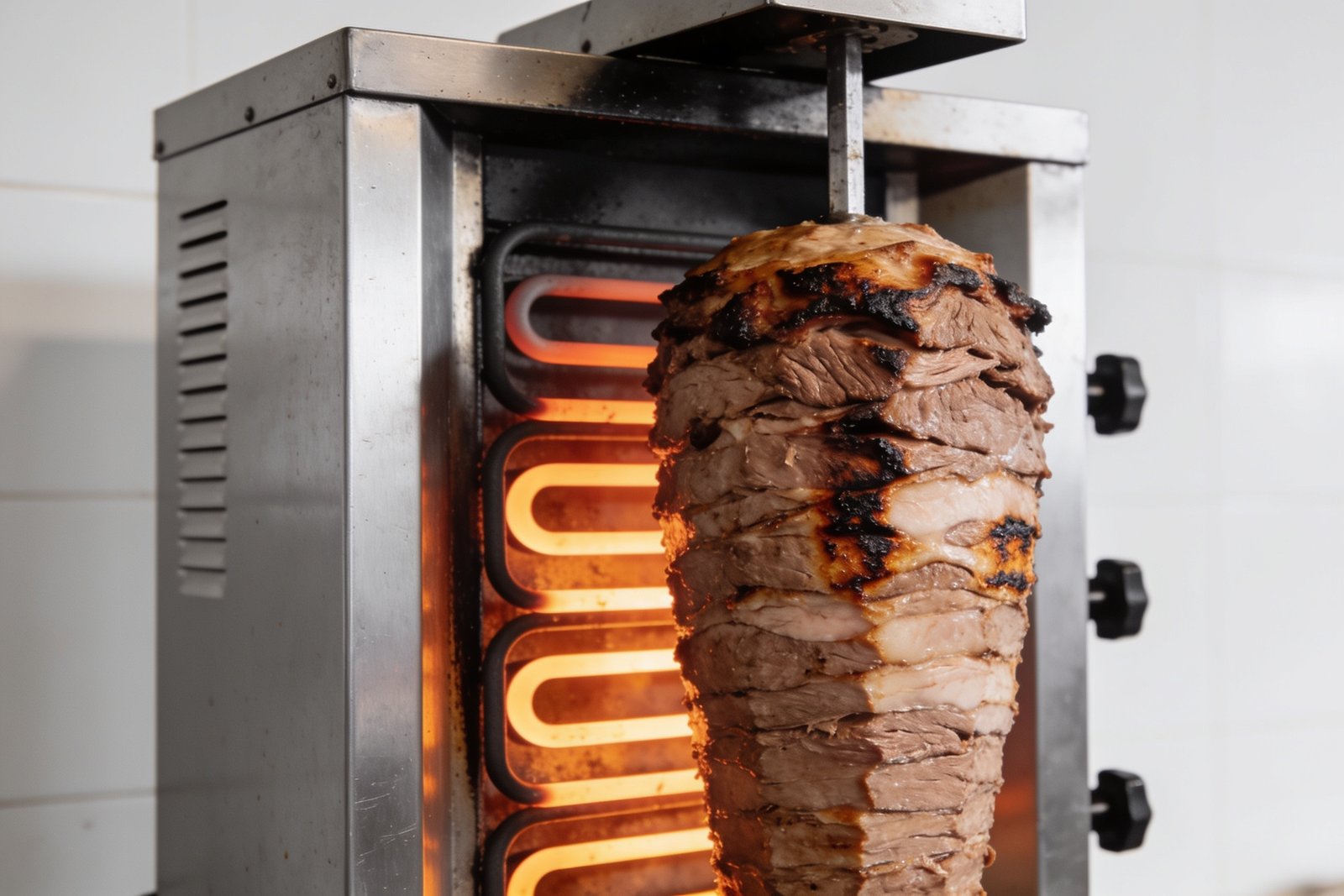
In short: If a doner grill heats unevenly, the cause is usually dirty or defective heating elements, a wobbling rotisserie spit, or problems with the gas or electricity supply. A visual inspection, checking the flame or glow pattern, testing the spit rotation and measuring the temperature will usually narrow down the fault. Work on gas and electrical systems should be left to qualified technicians.
A doner grill is the centerpiece of many takeaways and restaurants that serve doner kebab, gyros or other rotisserie dishes. When it suddenly heats unevenly, it is not only the food quality that suffers. Workflow slows down, and in the worst case the appliance fails completely.
In this guide you will learn which causes lie behind uneven heat, how to recognize typical problems and how to fix them properly.
Why even heat matters on a doner grill
Even heat distribution determines the result. Only when the meat cooks evenly all around does it develop a crispy outer layer while staying juicy inside.
With uneven heat, some spots burn while others barely cook through. This affects taste, can lead to unnecessary food costs and increases food waste.
Typical causes of uneven heat on a doner grill
Defective or dirty heating elements
The heating elements or burners generate the heat that cooks the meat. If they are damaged by cracks, corrosion or heavy soiling, the appliance no longer releases heat evenly.
Unevenly loaded or crooked spit
Sometimes the problem is not the grill but the way the meat is skewered. If the rotisserie spit is not centered or the meat is distributed unevenly, the heat does not reach all areas optimally.
Problems with the rotation mechanism
The rotisserie spit keeps the meat turning continuously so that it cooks evenly. If the motor or mechanism sticks or fails, one area stays exposed to the heat for too long.
Gas or power supply problems
Different fault patterns occur depending on the appliance type. On gas appliances, uneven flames or clogged nozzles are common. Electric appliances often suffer from defective thermostats, broken cables or faulty temperature sensors.
Dirt and grease buildup
Grease and dirt on the heating elements or inside the housing impair heat output. The result is hot spots or cold areas.
Overview: symptom, cause, first action
| Symptom | Possible cause | First action |
|---|---|---|
| One area glows weakly or not at all | Defective or dirty heating element | Visual inspection, clean, have the element replaced if necessary |
| Yellow or flickering flames | Clogged nozzles, dirt, air supply | Take the appliance out of operation, have a technician check it |
| Spit jerks or stops | Motor or mechanism defect, grease in the drive | Clean, check movement, service if necessary |
| Temperature fluctuates strongly | Faulty thermostat or temperature sensor | Call in an electrical technician |
| Meat cooks on one side only | Spit not centered, unevenly loaded | Re-mount and align the spit |
Step-by-step troubleshooting guide
Visual inspection of the doner grill
Start with a thorough visual inspection while the appliance is switched off and cooled down. Are the heating elements dirty, damaged or discolored? Is the rotisserie spit seated correctly? Also check the housing and connections for damage.
Checking the heating elements during operation
Switch on the grill and observe whether all heating elements glow evenly. On gas appliances, check the flame pattern. The flames should typically burn calmly and mainly blue. Yellow or flickering flames indicate a malfunction.
Checking the rotation mechanism
Start the rotisserie spit and watch for smooth rotation. Jerking, stalling or stopping points to a defect in the motor or mechanism.
Measuring the temperature
Use an infrared thermometer to measure the temperature at several points in front of the heating elements. This reveals hot spots and cold zones. The readings should be as close together as possible.
Cleaning and checking maintenance
Clean the grill thoroughly, especially the heating elements and the area around the rotisserie spit. Remove grease deposits that disrupt heat transfer, and follow the manufacturer's instructions.
Professional solutions for common problems
Replacing defective heating elements
Damaged heating elements should be replaced promptly. Use suitable spare parts from the manufacturer or parts that are proven to be compatible. On electric appliances, replacement is often straightforward, provided the appliance is safely disconnected from the power supply.
Placing and securing the meat correctly
Distribute the meat evenly and carefully center the rotisserie spit. This way the heat reaches all areas and the meat cooks evenly.
Repairing or replacing the rotation mechanism
For problems with the motor or mechanism, call in qualified technicians if you have no experience with electrical equipment. Cleaning and lubricating moving parts with suitable products is often enough. In unfavorable cases the motor must be replaced.
Servicing the gas supply
On gas appliances, nozzles and hoses should be checked regularly for blockages and damage. Defective parts must be replaced, and work on the gas system should only be carried out by qualified technicians. Afterwards the flame should burn stable and mainly blue.
Regular cleaning and care
Regular cleaning prevents grease buildup and dirt that impair heating performance. Use suitable cleaning agents and follow the operating manual.
Gas or electric: what suits your business?
Gas and electric appliances have different fault patterns. With gas, the focus is on nozzles, flame pattern and hoses; with electric, on heating elements, thermostat and wiring. When planning the purchase of a new appliance, compare connection options and the utilization of your business.
Examples from our range are a gas doner grill with four burners and an electric doner grill with four burners. You will find further variants in the category Gyros and doner grills.
Tips for preventing uneven heat
- Regular maintenance: Schedule fixed maintenance intervals to keep the grill in good condition.
- Evenly cut meat: Uniform meat pieces and a neatly built spit cook more evenly.
- Proper operation: Training helps staff avoid operating errors.
- Temperature control: Thermometers and temperature sensors keep an eye on the heat.
- Professional support: For larger problems or uncertainties, repairs belong in the hands of specialists.
When should you call in a professional?
If you cannot find a solution despite your own troubleshooting, or the doner grill keeps heating unevenly, contact a professional service. With electric and gas appliances, improper repairs can be dangerous.
A specialist diagnoses the cause quickly and fixes it properly. For questions about appliance selection or replacement, you can receive personal advice from us.
Conclusion
A doner grill that heats unevenly affects the quality of your food and complicates daily operations. The causes range from defective heating elements and problems with the rotation mechanism to dirt or disruptions in the gas supply.
With systematic troubleshooting, regular cleaning and maintenance, you can detect many problems early. Leave safety-relevant work on gas and electrical systems to qualified technicians. This keeps quality consistently high and extends the service life of the appliance.
FAQ – Frequently Asked Questions
Why is my doner grill heating unevenly?
Usually the causes are dirty or defective heating elements, a sticking rotation mechanism, a crooked or unevenly loaded spit, or problems with the energy supply, such as clogged gas nozzles or defective thermostats. Check the visual condition, the flame or glow pattern and the spit rotation before replacing any parts.
How can I tell whether the gas flame is burning correctly?
A properly adjusted gas flame usually burns calmly and mainly blue. Yellow, flickering or unevenly high flames indicate clogged nozzles, dirt or an incorrect air supply. Work on the gas system should only be carried out by qualified technicians; if you notice anything unusual, shut off the gas supply and have the appliance checked.
How do I find hot spots on a doner grill?
Use an infrared thermometer to measure the surface temperature at several points in front of the heating elements and compare the readings. Clear deviations indicate hot spots or cold zones. Looking at the glow or flame pattern and the cooking result on the meat also helps. Always measure under the same conditions, preferably when the appliance is fully heated.
Can I replace defective heating elements myself?
Replacing heating elements is often feasible on electric appliances if you have suitable spare parts and the appliance is safely disconnected from the power supply. However, work on electrics, thermostats or the gas supply should be left to qualified technicians. If in doubt, or for warranty and safety questions, contact the manufacturer or an authorized service.
How often should I clean and service a doner grill?
Clean heating elements, grease trays and the housing regularly, daily under heavy use, following the manufacturer's instructions and only when the appliance is cooled down and disconnected from the power or gas supply. A fixed maintenance plan that includes checking nozzles, cables, thermostat and rotation motor is also recommended. The exact interval depends on utilization and appliance type; the operating manual gives the binding specification.