Deutsch
 Türkçe
 Italiano
 Nederlands
 Français
 Español
 Polski
 Čeština
 Svenska
 Português PT
 Русский
 اللغة العربية
 中文
 日本語
 Tiếng Việt
 ภาษาไทย
 Română
 ελληνικά
 Magyar
 Dansk
 Suomi
 Hrvatski
 български език
 Eesti keel
 Latviešu valoda
 Slovenčina
 Slovenščina
 Bosanski
 עברית
 हिन्दी
 Bahasa melayu
 Kiswahili
 Bahasa Indonesia
 Papiamento
 Bokmål
 Lietuvių kalba
 Українська
 српски
 Shqip


 ›
 ›
 ›
 ›
 ›
 ›
 ›
 ›
 ›
 ›
 ›
 ›
 ›
 ›
 ›
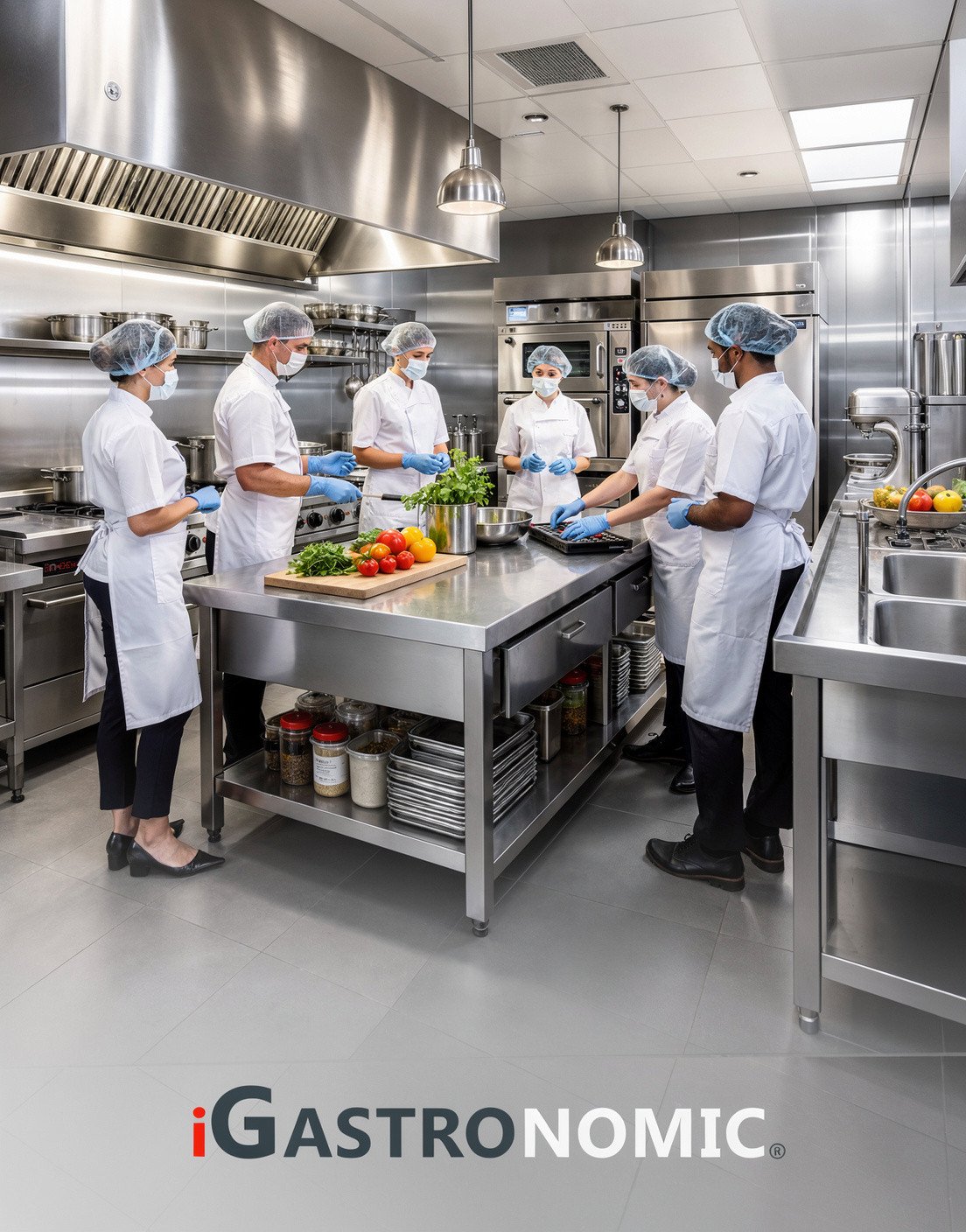
In short: Staff training on commercial kitchen equipment covers operation, safety rules, cleaning and maintenance, and thus reduces accident risk, operating errors and downtime. It applies to everyone who works with the equipment or maintains it, including new employees and temporary staff. A combination of brief theory and hands-on practice directly at the equipment, refreshed regularly, works best.
Why is training on commercial kitchen equipment so important?
In kitchens, bars and bakeries, professional equipment is indispensable in daily operations. It determines speed, quality and safety in the business. Yet even good technology only delivers the intended benefit when the team operates it correctly.
Without proper instruction, operating errors, accidents and equipment damage are likely. Well-founded training ensures that employees use equipment safely, efficiently and properly. It also reduces downtime and can extend the service life of the equipment.
Safety aspects in focus
Many commercial appliances operate with high temperatures, gas, electricity or moving parts, such as fryers, grills, slicers or gas cooktops. Incorrect handling can lead to serious injuries. Targeted training teaches employees to recognize hazards, follow protective measures and respond correctly in an emergency.
This protects not only the person at the equipment but also colleagues and the business from liability risks. This is especially important for gas appliances such as a gas crêpe maker, where ignition, flame control and cleaning of the hot plate must be mastered safely.
Greater efficiency and better quality
Well-trained staff use equipment optimally. Processes are carried out faster, more precisely and with fewer errors. This improves the quality of food and beverages and has a positive effect on guest satisfaction and competitiveness.
Proper maintenance and care can also reduce repair and spare parts costs. Hygiene benefits too: anyone who operates and cleans a commercial vacuum sealer or a refrigeration unit correctly works more cleanly and reduces product loss.
Which content belongs in equipment training?
The content depends on the type of equipment and the area of application. In principle, the following points should be covered:
- Technical basics: structure and operating principle of the equipment
- Operation: step-by-step instructions for correct handling
- Safety regulations: protective measures, personal protective equipment, emergency plans
- Maintenance and care: regular checks, cleaning, simple repairs
- Troubleshooting: identifying and resolving common problems
- Legal requirements: standards, certifications and statutory requirements
In foodservice, legal requirements typically include occupational safety and hygiene. Which instructions and records are specifically required in your business is best clarified with your occupational safety specialist or the responsible German statutory accident insurance association (Berufsgenossenschaft).
Methods and formats of staff training
Modern training combines theory and practice. Different learning methods help employees understand content better and retain it over the long term.
Classroom training
These are classic seminars or workshops held directly on site in the kitchen. The advantage is direct exchange with the trainer and the opportunity to operate equipment live. Group work and practical exercises support understanding.
Online training
Digital learning platforms enable flexible learning regardless of time and place. Videos, interactive modules and quizzes make training varied. Online formats are particularly attractive for companies with multiple locations or changing staff.
Blended learning
This method combines classroom and online learning. Theory is taught online, while practical exercises take place on site. Participants benefit from both worlds.
The formats compared
| Format | Strengths | Limitations | Suitable for |
|---|---|---|---|
| Classroom training | Direct exchange, operation on the actual equipment | Scheduling and organizational effort | New equipment, safety topics |
| Online training | Flexible, available at any time, easy to repeat | Does not replace practice at the equipment | Theory, hygiene, multiple locations |
| Blended learning | Theory and practice combined | Requires planning of both parts | Teams with turnover and temporary staff |
Who should take part in the training?
In principle, all employees who work with professional equipment or maintain it. This includes:
- Operating staff in kitchen, service and bar
- Technicians and maintenance personnel
- Managers and safety officers
- New employees and temporary staff
Regular refreshers are also important. They keep knowledge current and introduce new equipment or changed safety regulations.
Benefits of professional staff training for your business
Investing in employee training pays off in several ways:
- Fewer accidents and failures: fewer errors mean less downtime and lower costs.
- Higher productivity: well-trained employees work faster and more efficiently.
- Better product quality: errors are minimized, which increases guest satisfaction.
- Compliance with legal requirements: training is often mandatory and helps during inspections, audits and certifications.
- Motivation and staff retention: continuing education shows appreciation and promotes job satisfaction.
How to implement training successfully
For the training to be effective, you should observe the following steps:
- Carry out a needs analysis: determine which equipment needs training and what prior knowledge employees have.
- Use qualified trainers: experts with practical experience convey content authentically and clearly.
- Design it around practice: theory alone is not enough; hands-on exercises at the equipment are essential.
- Plan regularly: knowledge must be refreshed and adapted to new requirements.
- Collect feedback: participants share their experiences so that training continuously improves.
Consider training already in the planning stage
Safe operation starts with kitchen planning: clear work paths, sufficient distance from hot equipment and easily reachable controls make daily work easier. With the free 3D kitchen planner, you can test your kitchen layout in advance. When selecting suitable commercial kitchen equipment, our personal consultation is also available to support you.
Conclusion
Staff training on commercial kitchen equipment is an indispensable part of modern business management. It ensures safety, efficiency and quality, and protects both employees and investments. Businesses that train in a targeted way benefit in the long term from lower costs, higher productivity and satisfied guests.
Decisive factors are an introduction before the first use, hands-on exercises and regular refreshers. Well-trained employees are the key to the success of your kitchen.
FAQ – Frequently asked questions
How often should employees be trained on commercial equipment?
New employees and temporary staff should be instructed before their first use of a piece of equipment. In practice, a refresher at least once a year is recommended, plus additional instruction whenever new equipment is introduced or procedures change. How often instructions are legally required depends on your business; clarify this with your occupational safety specialist.
What should be included in equipment training for foodservice?
Good equipment training covers structure and function, step-by-step operation, safety rules, cleaning and care, simple troubleshooting, and behavior in an emergency. For gas appliances, fryers or slicers, equipment-specific hazards also apply. It is important that employees operate the equipment themselves rather than just watching, ideally followed by a short check.
Who carries out the instruction on new equipment?
Instruction can be given by the owner or an experienced manager, supplemented by manufacturer documentation and operating manuals. For safety-related topics, many businesses involve the occupational safety specialist or external trainers. If you have questions about operating our equipment, our team is happy to help you personally.
Is online training sufficient for foodservice teams?
Online modules are well suited for theory such as safety rules, hygiene and equipment basics, especially with multiple locations or changing temporary staff. They do not replace hands-on operation at the equipment. Blended learning has therefore proven effective: theory online, practice directly in the kitchen with an experienced person.