Deutsch
 Türkçe
 Italiano
 Nederlands
 Français
 Español
 Polski
 Čeština
 Svenska
 Português PT
 Русский
 اللغة العربية
 中文
 日本語
 Tiếng Việt
 ภาษาไทย
 Română
 ελληνικά
 Magyar
 Dansk
 Suomi
 Hrvatski
 български език
 Eesti keel
 Latviešu valoda
 Slovenčina
 Slovenščina
 Bosanski
 עברית
 हिन्दी
 Bahasa melayu
 Kiswahili
 Bahasa Indonesia
 Papiamento
 Bokmål
 Lietuvių kalba
 Українська
 српски
 Shqip


 ›
 ›
 ›
 ›
 ›
 ›
 ›
 ›
 ›
 ›
 ›
 ›
 ›
 ›
 ›
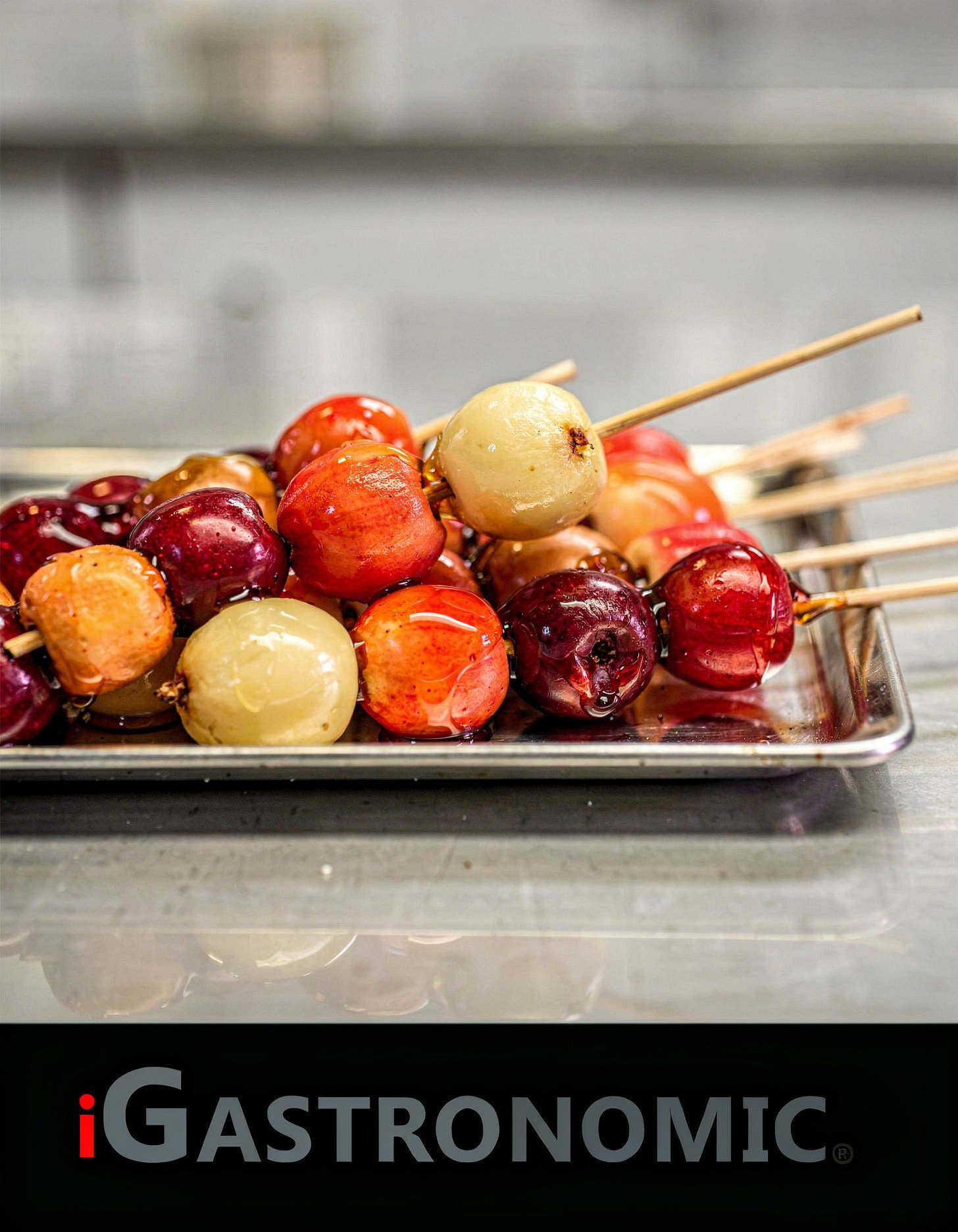
In short: The best tanghulu recipe uses fresh, completely dry fruit on wooden skewers, which are dipped into a sugar syrup (250 g sugar, 100 ml water) heated to about 150 °C. As it cools, the syrup forms a glossy, crisp sugar coating. With a candy thermometer and quick work, this Chinese dessert is also easy to make at home.
What is Tanghulu?
Tanghulu (糖葫芦) is a traditional Chinese dessert made of fruit threaded onto a skewer and coated with a thin layer of hard sugar glaze. It is sold mainly on street markets in northern China.
Originally, tanghulu was made with hawthorn berries, which are native to northern China. Today there are many variations with strawberries, grapes, kiwis or cherries.
Preparation is fairly simple but requires some skill in handling hot sugar. The result is convincing both visually and in taste: glossy, crunchy and sweet-fruity.
The History of Tanghulu
Its origins go back several centuries. According to legend, tanghulu was created during the Song Dynasty (960–1279). The fruit was coated with sugar to make it last longer and at the same time to create a tasty dessert.
Tanghulu was especially popular in the cold season. Today it is a fixed part of Chinese street markets and festivals and is also a popular photo subject on social networks.
Why Make Tanghulu Yourself?
Tanghulu can be found in some Asian supermarkets and at street markets. Anyone who makes it at home can choose the fruit freely, adjust the sweetness and know exactly which ingredients are included – no artificial additives are needed.
Preparing it is also a nice shared activity. Children can help with threading the fruit, but adults should handle the hot syrup.
The Best Fruit for Tanghulu
Hawthorn berries are traditional but hard to find outside China. These alternatives work well:
| Fruit | Suitability and Note |
|---|---|
| Strawberries | Juicy and sweet, a classic for tanghulu |
| Grapes | Seedless varieties work particularly well |
| Kiwis | For an exotic note |
| Cherries | Small and aromatic |
| Mandarin segments | A fresh citrus variant |
| Blueberries | Small but very aromatic |
Important: The fruit must be fresh and dry so that the sugar adheres well.
Ingredients for the Best Tanghulu Recipe
- 500 g fresh fruit (e.g. strawberries or grapes)
- 250 g sugar (white granulated sugar)
- 100 ml water
- 1 tsp lemon juice (optional, for better shine and flavor)
- Wooden skewers
Step-by-Step Guide: How to Make Tanghulu
Preparing the Fruit
Wash the fruit thoroughly and pat it dry with a kitchen towel. If necessary, remove stems and pits.
The fruit must be completely dry, as moisture prevents the sugar from adhering properly.
Threading the Fruit
Carefully push the fruit onto the wooden skewers. Depending on size, about 3 to 5 pieces fit on one skewer.
The fruit should sit firmly so that it does not fall off when dipped into the sugar.
Cooking the Sugar Syrup
Put the sugar, water and lemon juice into a pot and heat the mixture over medium heat. Stir occasionally until the sugar has completely dissolved.
Then let the syrup simmer without stirring until it turns golden and reaches about 150 °C (hard crack stage). A candy thermometer is very helpful here.
Without a thermometer, drop a little syrup into cold water: when it becomes hard and brittle, the syrup is ready.
Dipping the Fruit
Hold the skewer firmly and quickly dip the fruit into the hot syrup so that it is fully coated. Lift it out and let excess sugar drip off briefly.
Cooling and Hardening
Insert the skewers into a block of styrofoam or lay them on a baking sheet lined with parchment paper. As they cool, the sugar coating becomes hard and crisp.
Tips for Perfect Tanghulu
- Dry fruit: If the fruit is wet, the sugar will not adhere.
- Use a candy thermometer: This helps you reach the caramel stage without burning the sugar.
- Work quickly: The syrup hardens rapidly, so dip the fruit without delay.
- Try variations: Besides fruit, small marshmallows or nuts also work well.
- Be careful with hot sugar: The syrup is extremely hot and can cause serious burns.
Variations and Creative Ideas
- Sprinkled with sesame: Scatter toasted sesame seeds onto the still sticky sugar right after dipping.
- Chocolate tanghulu: Additionally dip the candied fruit in melted chocolate.
- With spices: A pinch of cinnamon or ginger in the sugar syrup adds a spicy note.
- Exotic fruit: Try mango, pineapple or dragon fruit.
Serving Tanghulu in Cafés, Restaurants and Dessert Bars
In foodservice too, tanghulu is an eye-catching trend snack for the dessert menu, buffet or events. It is important to prepare it à la minute, because the sugar coating absorbs moisture over time and becomes soft.
For presentation, a rectangular bone china platter is suitable, offering space for several skewers side by side. Single portions look particularly appealing on flat plates for foodservice, for example with parchment paper or a small garnish.
When equipping your dessert station, our personal consultation is happy to help. In any case, observe the hygiene and allergen labeling requirements that apply to your business.
Conclusion
Tanghulu is a simple but impressive sweet: with fresh, dry fruit, a sugar syrup made from sugar and water, and a bit of practice, this Chinese specialty can also be made at home.
The key factors are the right caramel stage at about 150 °C, working quickly and care with hot sugar. Whether for family, friends or the dessert menu – give the recipe a try. Enjoy making it and bon appétit!
FAQ – Frequently Asked Questions
How long does tanghulu keep?
Tanghulu tastes best fresh, ideally within a few hours of preparation. The sugar coating absorbs moisture over time and becomes sticky. In the refrigerator, tanghulu keeps for up to 2 days, but it loses some of its crispness. Bring the skewers to room temperature before eating.
Can you make tanghulu without a candy thermometer?
Yes, with some experience it works. Drop a little syrup into cold water: if it immediately becomes hard and brittle, the hard crack stage has been reached and the syrup is ready. A candy thermometer set to about 150 °C is more reliable, however, and prevents the sugar from becoming too dark or burning.
Which fruits are not suitable for tanghulu?
Very watery fruits such as watermelon or cucumber are hardly suitable for tanghulu. They release juice, hold the sugar poorly and turn mushy. Firm, dry fruits such as grapes, strawberries, cherries or mandarin segments work better. It is always important that the fruit is completely dry before dipping.
How can tanghulu be served in foodservice?
Tanghulu should be prepared fresh à la minute and served promptly, before the sugar coating softens. Presentation on a flat platter or plate works well, ideally with parchment paper or a garnish. Plan small portions and observe the applicable hygiene and allergen labeling requirements.