Deutsch
 Türkçe
 Italiano
 Nederlands
 Français
 Español
 Polski
 Čeština
 Svenska
 Português PT
 Русский
 اللغة العربية
 中文
 日本語
 Tiếng Việt
 ภาษาไทย
 Română
 ελληνικά
 Magyar
 Dansk
 Suomi
 Hrvatski
 български език
 Eesti keel
 Latviešu valoda
 Slovenčina
 Slovenščina
 Bosanski
 עברית
 हिन्दी
 Bahasa melayu
 Kiswahili
 Bahasa Indonesia
 Papiamento
 Bokmål
 Lietuvių kalba
 Українська
 српски
 Shqip


 ›
 ›
 ›
 ›
 ›
 ›
 ›
 ›
 ›
 ›
 ›
 ›
 ›
 ›
 ›
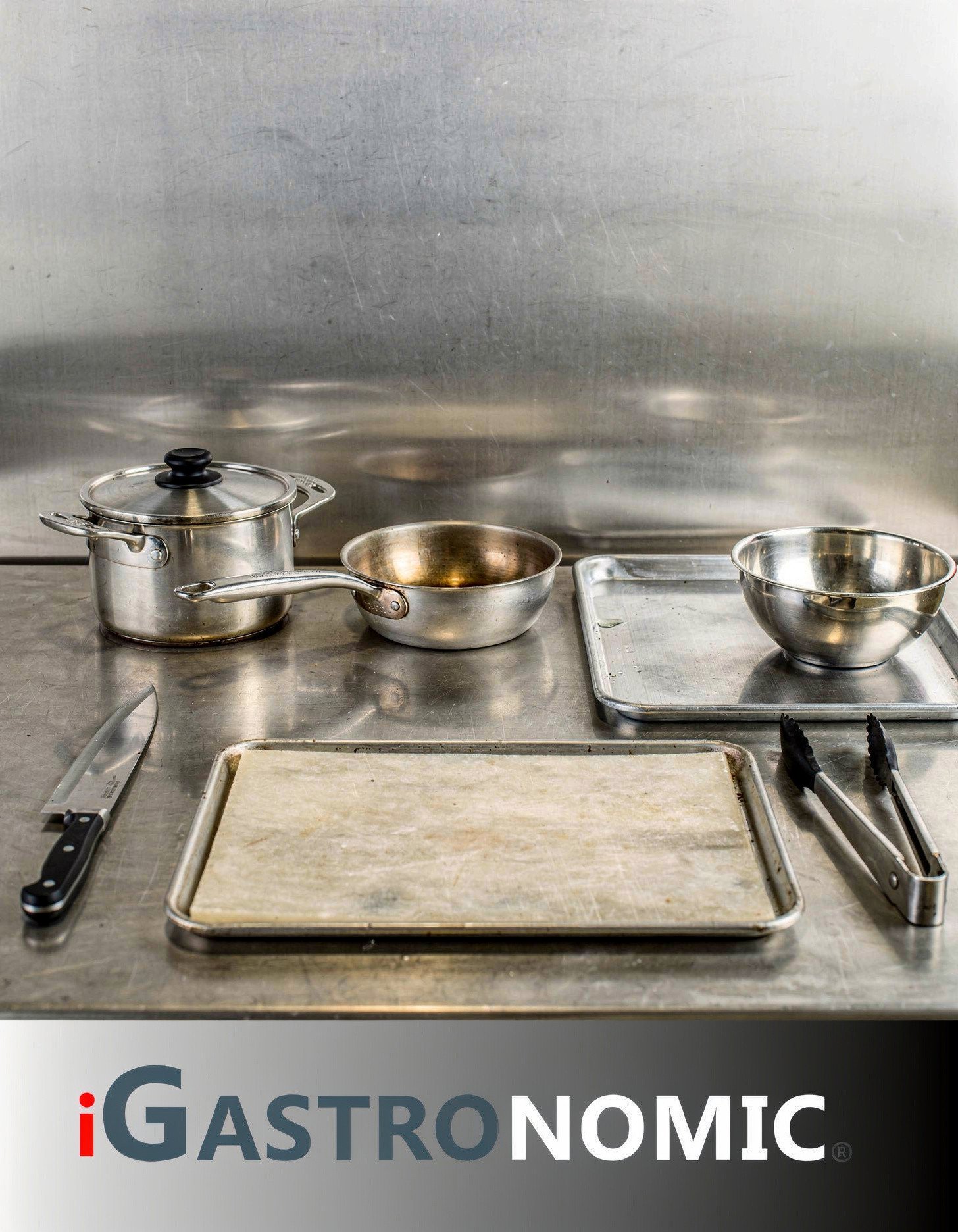
In short: Anyone equipping a restaurant kitchen needs seven essentials: a cooktop and oven, refrigerators and freezers, work surfaces with cutting boards, knives and utensils, a dishwashing station, storage shelving, and safety equipment. How large and powerful the appliances need to be depends on the menu, the number of guests and the kitchen layout.
Equipping a restaurant kitchen: why proper planning matters
Opening a restaurant is exciting but demanding. Alongside the menu and ambience, kitchen equipment is a decisive success factor. A well-equipped kitchen allows efficient work and keeps the quality of the food consistently high.
The following seven essentials cover both functionality and cost-effectiveness. They form the foundation to which you can add specialized equipment depending on your concept.
Cooktop and oven: the heart of the kitchen
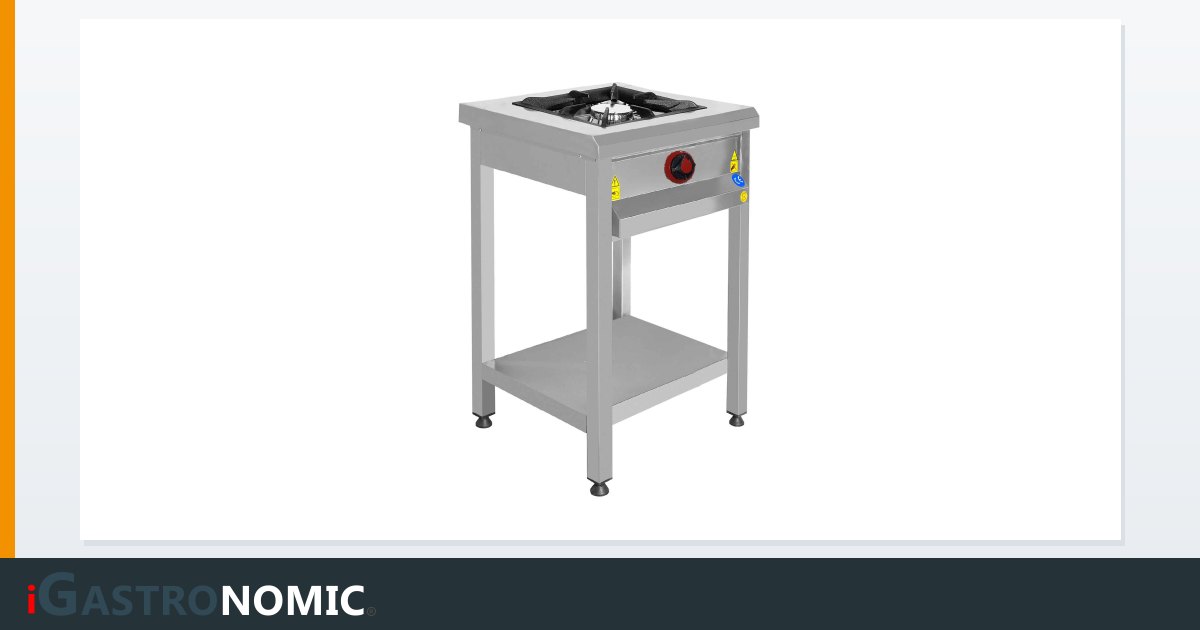
The cooktop is the centre of every kitchen. Gas, electric or induction: the choice depends on the menu, the available connections and your team's habits. Several cooking zones allow different dishes to be prepared in parallel during peak hours.
Gas, electric or induction compared
| Cooktop type | Typical strengths | What to watch out for |
|---|---|---|
| Gas | Instant, clearly visible flame control; very popular with chefs | Gas connection and suitable extraction required |
| Electric | Simple installation, even heat | Slower to respond to temperature changes; check the available connected load |
| Induction | Fast heating, good energy efficiency, easy to clean | Suitable cookware required |
If you need high output in a small space, the gas range with oven offers a solution with six burners and an integrated oven.
Oven and combi steamer
The oven complements the cooktop and should be large enough for several trays or large roasts. A combi steamer combines steaming, baking and grilling in one unit and is therefore especially versatile. In small kitchens it often saves valuable space.
Depending on the available connection, a gas or electric model may be suitable, for example an electric steam oven in GN format.
Selection tips
- Choose appliances with simple operation and good temperature control.
- Pay attention to energy efficiency to reduce operating costs.
- Size the capacity to match the expected guest volume.
Refrigerators and freezers
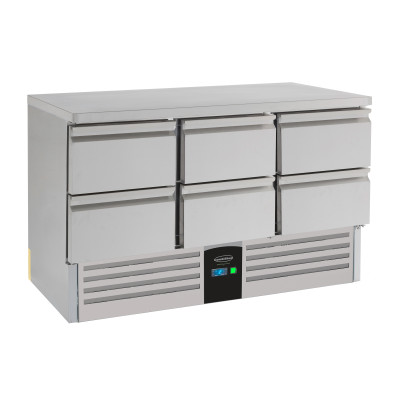
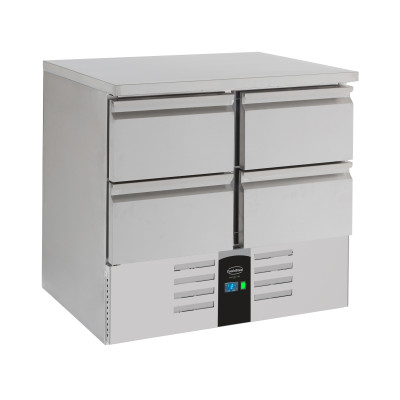
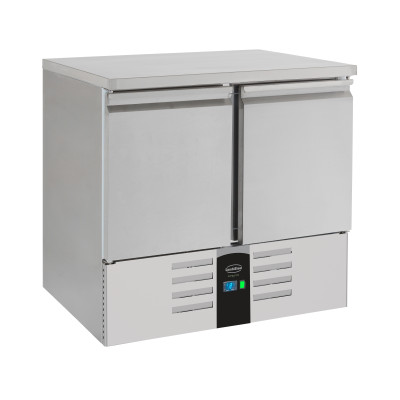
Reliable cooling is essential to keep food fresh and ensure food safety. Depending on the size of the restaurant and the menu, you need different cooling solutions:
- Refrigerators: for fresh ingredients, dairy products, sauces and prepared dishes.
- Freezers: for frozen products, meat and stock.
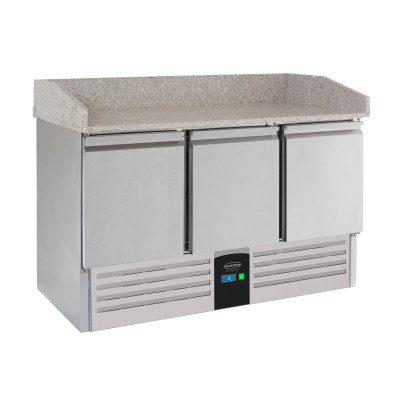
- Salad or beverage coolers: special units for particular foods or drinks, such as a glass-door refrigerator for the service area.
It is important that the units maintain a constant temperature and are easy to clean. Digital temperature displays and alarms for deviations are additional advantages. Typical guideline values are around 2 to 7 °C for chilled storage and −18 °C for frozen storage; binding requirements should be clarified with your local food safety authority.
Work surfaces and cutting boards
Efficient work surfaces are the backbone of every kitchen. They should be robust, hygienic and easy to clean. Stainless steel is the preferred material because it is durable, smooth and non-porous.
In addition, you need separate cutting boards for different food groups, such as meat, vegetables and fish, to avoid cross-contamination. Colour-coded boards help the team keep track and work hygienically.
Kitchen utensils and knives
The right tools make work considerably easier. Invest in high-quality knives that feel comfortable in the hand and stay sharp for a long time. A knife set should include at least a chef's knife, a boning knife, a bread knife and a paring knife.
In addition, these utensils are essential:
- Ladles, spatulas and whisks
- Measuring jugs and scales for precise work
- Sieves, graters and tongs
- Thermometers to check the core temperature of food
Dishwashing station and cleaning supplies
Cleanliness is the top priority in food service. A well-organised dishwashing station with a commercial dishwasher saves time and ensures hygienically clean crockery and cooking utensils.
You also need suitable cleaning agents that are effective and intended for use in food environments. Gloves, brushes and cloths for daily cleaning are part of the setup as well. For appliances such as ovens and grills, there are special oven and grill cleaners.
Storage shelving and containers
Order is everything in a professional kitchen. Sturdy stainless steel shelving provides ample space for ingredients, equipment and supplies. It should be stable and easily accessible.
Transparent, airtight containers keep food fresh and create an overview. Labels with contents and date simplify stock management and help avoid food waste.
Safety equipment and first-aid kit
The safety of your team is a top priority. Make sure your kitchen has the following equipment:
- Fire extinguishers and fire blankets
- Non-slip mats
- First-aid kit for minor injuries
- Protective clothing such as aprons, gloves and hairnets
Regular training in occupational safety and hygiene is recommended to prevent accidents. Clarify which requirements apply to your business with the responsible authorities.
How to approach kitchen planning
- Define the menu and the expected number of guests.
- Check the connections for power, gas, water and extraction.
- Arrange work routes and zones for preparation, cooling, serving and washing up.
- Select appliances based on capacity and energy consumption.
- Add safety and hygiene equipment.
The free 3D kitchen planner helps with the layout. For questions on equipment selection and sizing, you can get personal advice.
Conclusion
Equipping a new restaurant kitchen may seem overwhelming at first, but with good planning and the seven essentials you are well prepared. Cooktop and oven, reliable refrigeration, functional work surfaces, professional utensils, an efficient dishwashing station, well-thought-out storage solutions and comprehensive safety equipment form the basis for a successful food business.
Invest in quality and functionality: your team and your guests will thank you.
FAQ – Frequently asked questions
What does a new restaurant kitchen need at a minimum?
At minimum you need a cooktop and oven, refrigerators and freezers, stainless steel work surfaces, knives and utensils, a way to wash up, storage shelving, and safety equipment such as a fire extinguisher and a first-aid kit. Which appliances exactly and in what size you need depends on the menu, the seating capacity and the kitchen layout. Early planning prevents costly wrong purchases.
Gas, electric or induction: which cooktop suits food service?
Gas cooktops respond instantly and are popular with chefs, but they require a gas connection and suitable extraction. Electric cooktops are simple to install, and induction is considered especially fast and energy-efficient, although it requires suitable cookware. The decisive factors are the available connections, the menu and the budget.
Is a combi steamer worth it for a new restaurant?
A combi steamer is usually worthwhile if you prepare many different dishes and want to save space, since it combines steaming, baking and grilling. In small kitchens it often replaces several individual appliances. Whether the purchase pays off depends on the menu, utilisation and energy costs. A comparison beforehand helps.
How many refrigeration units does a restaurant kitchen need?
That depends on size and menu. Common practice is at least one refrigerator for fresh goods and one freezer for supplies; larger businesses additionally separate raw ingredients, prepared dishes and beverages. Typical guideline values are around 2 to 7 °C for chilled storage and −18 °C for frozen storage. Binding requirements should be clarified with your local food safety authority.