Deutsch
 Türkçe
 Italiano
 Nederlands
 Français
 Español
 Polski
 Čeština
 Svenska
 Português PT
 Русский
 اللغة العربية
 中文
 日本語
 Tiếng Việt
 ภาษาไทย
 Română
 ελληνικά
 Magyar
 Dansk
 Suomi
 Hrvatski
 български език
 Eesti keel
 Latviešu valoda
 Slovenčina
 Slovenščina
 Bosanski
 עברית
 हिन्दी
 Bahasa melayu
 Kiswahili
 Bahasa Indonesia
 Papiamento
 Bokmål
 Lietuvių kalba
 Українська
 српски
 Shqip


 ›
 ›
 ›
 ›
 ›
 ›
 ›
 ›
 ›
 ›
 ›
 ›
 ›
 ›
 ›
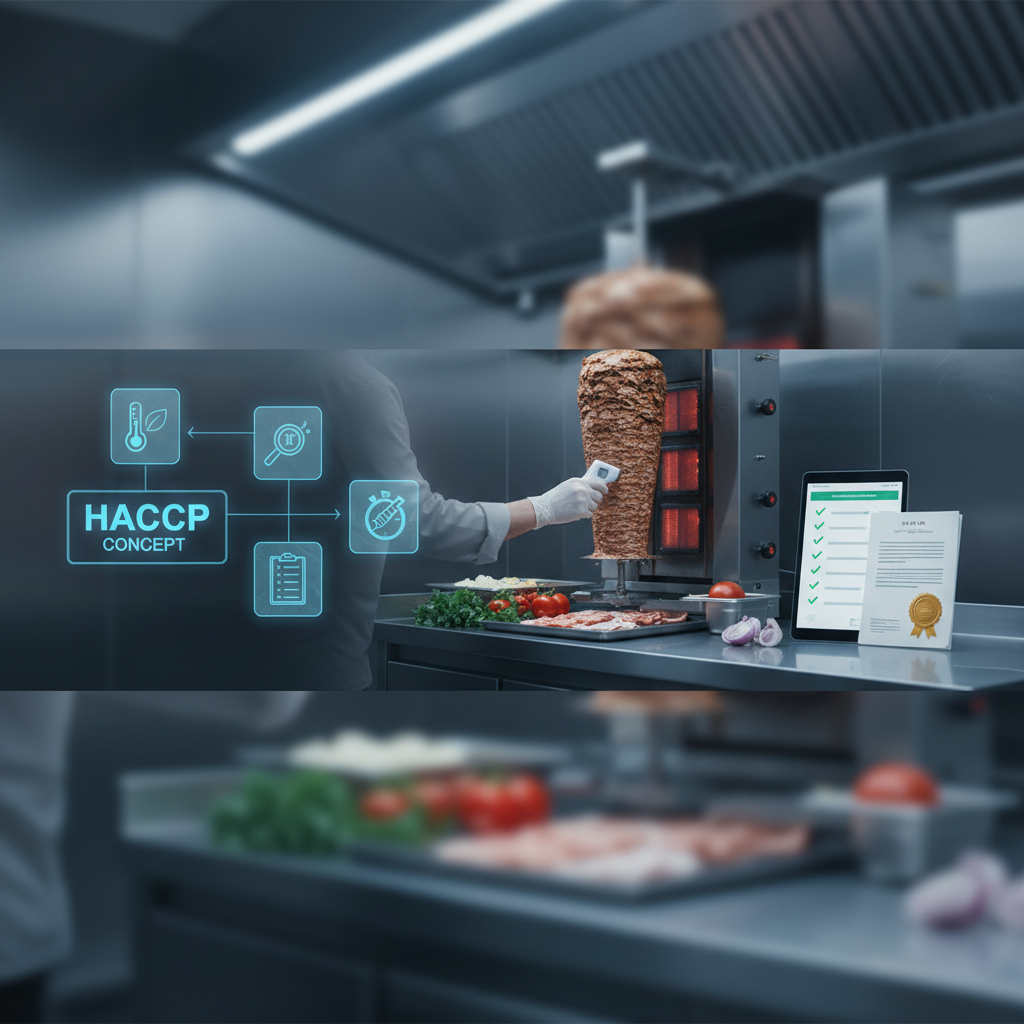
In short: A HACCP concept is mandatory for doner businesses under EU law (Regulation (EC) No 852/2004). You analyze hazards, define critical control points (CCPs) such as cooling and cooking temperatures, monitor them and document everything. This also requires trained staff and regular self-inspection. This way you protect your guests and are well prepared for inspections by the food safety authorities.
Doner kebab is very popular in Germany. Freshly prepared food and high customer demand make hygiene and food safety a core everyday topic. This guide explains what HACCP means, which obligations doner businesses have and how to implement self-inspection in a practical way.
What is the HACCP concept?
HACCP stands for “Hazard Analysis and Critical Control Points.” It is a systematic concept for identifying, assessing and controlling hazards in food production and processing at critical points. The aim is to minimize or eliminate risks to food safety at an early stage.
The system was developed in the 1960s in the context of US space research (NASA) to ensure the safety of astronaut food. Today it is internationally recognized. In the EU, food business operators must establish procedures based on HACCP principles after primary production, including doner businesses.
Why is HACCP particularly important for doner businesses?
Doner businesses process fresh meat, raw vegetables and sauces and prepare hot food. This makes them particularly vulnerable to microbiological risks. Raw and cooked meat, as well as storage at different temperatures, require careful control to prevent contamination and food poisoning.
In addition, doner shops are often busy, which increases the hygiene workload. A working HACCP concept does not only meet legal requirements. It also protects the health of your customers and the good reputation of your business.
Legal foundations for doner businesses
In Germany, food safety and hygiene are regulated, among other things, by the Food and Feed Code (LFGB) and the Food Hygiene Ordinance (LMHV). EU Regulation (EC) No 852/2004 requires food business operators to introduce a HACCP system. The scope may be adapted to the size and type of the business.
For doner businesses, this specifically means:
- Setting up a HACCP concept for self-inspection
- Documenting hygiene measures and checks
- Training staff in hygiene and HACCP
- Regularly reviewing and adapting the concept
Note: This article does not replace legal advice. Binding information about your business is provided by the responsible food safety authority.
The seven basic principles of the HACCP system
The HACCP concept is based on seven basic principles that also apply in doner businesses:
- Hazard analysis: Identify all biological, chemical and physical hazards in the business.
- Determine critical control points (CCP): Define the process steps at which hazards can be prevented, eliminated or reduced to an acceptable level.
- Set critical limits: Define requirements for each CCP, e.g. temperature limits or time specifications.
- Monitor CCPs: Check the critical points regularly to ensure the limits are met.
- Define corrective actions: Determine in advance what happens if the limits are exceeded.
- Verification: Check whether the system is effective and correctly implemented.
- Documentation and records: Keep logs of measures, checks and results.
Typical hazards and CCPs in doner businesses
Doner businesses face various hazards that your HACCP concept must cover.
Biological hazards
- Bacteria such as Salmonella, Listeria or E. coli due to improper storage or inadequate hygiene
- Cross-contamination from raw meat or raw vegetables
- Growth of microorganisms due to incorrect temperatures
Chemical hazards
- Residues from cleaning agents
- Contaminants caused by improper storage
Physical hazards
- Foreign objects such as glass splinters, metal parts or plastic
Key CCPs in doner businesses at a glance
The following table shows typical reference values. Define the binding limits in your own HACCP plan, adapted to your products and processes.
| Control point | Typical reference value | Control | Corrective action (example) |
|---|---|---|---|
| Cold storage of meat and ingredients | 4 °C or below (stricter for some products if needed) | Daily temperature measurement with log | Check goods, discard if necessary, repair refrigeration unit |
| Cooking of meat | At least 75 °C core temperature | Measurement with a probe thermometer | Continue cooking until the limit is reached |
| Hot holding | Commonly cited reference value: from approx. 65 °C | Regular temperature checks | Reheat or discard |
| Raw and cooked food | Consistent separation | Visual checks, work instructions | Remove affected goods, retrain staff |
| Cleaning and disinfection | According to a fixed cleaning schedule | Sign-off in the cleaning log | Repeat cleaning |
| Best-before and use-by dates | No expired goods in use | Checks at goods receipt and during storage | Dispose of expired goods |
Practical tips for implementing the HACCP concept in a doner business
At first glance, a HACCP concept may seem complex, but it can be implemented well with a systematic approach.
Create an individual HACCP plan
Every doner business is different. Therefore, adapt the HACCP plan to your processes. This includes a detailed process description from goods receipt to sale.
Train staff
The entire team must know and understand the hygiene rules and the HACCP concept. Regular training and instructions are mandatory and strengthen awareness of food safety.
Keep documentation and logs
Maintain clear records of temperature checks, cleaning schedules and corrective actions. These documents are crucial during official inspections.
Hygiene management and equipment selection
Create clear cleaning and disinfection schedules for all work areas. Consistently separate raw and cooked food to avoid cross-contamination. Color-coded work tools, such as a HACCP cutting board set, can help. For spit cooking, gyros and doner grills with well-controlled heat provide a foundation for reliably meeting your cooking requirements.
Plan workflows with hygiene in mind
Short paths and separate zones for raw goods, preparation and serving make hygiene easier. You can think through your kitchen in advance with the free 3D kitchen planner.
Review and adapt the concept regularly
The HACCP concept is not a static document. Check its effectiveness regularly and adapt it when operations change, for example with new equipment or recipes, or when new findings emerge.
Self-inspection: your responsibility as a food business operator
Self-inspection is a central component of the HACCP system. As the operator, you are responsible for ensuring that all hygiene and safety measures are followed. Authorities expect you to demonstrate this through a working HACCP concept and corresponding documentation.
Self-inspection includes:
- Regular checks of hygiene standards
- Monitoring of critical control points
- Training and raising awareness among staff
- Keeping records and logs
- Implementing corrective actions in case of deviations
Common challenges and how to overcome them
Many doner businesses face similar problems when implementing a HACCP concept.
Lack of time in a busy routine
Documentation and checks take time. Simple checklists and digital tools reduce the effort and make routines more reliable.
Lack of specialist knowledge
Training and advice from food hygiene specialists or external service providers can resolve uncertainties. The food safety authority is also a possible point of contact.
Staff turnover
Standardized onboarding processes ensure that new employees quickly become familiar with the HACCP concept.
Conclusion
A well-implemented HACCP concept is indispensable for doner businesses. It protects your customers, ensures the quality of your food and meets legal requirements. With systematic hazard analysis, clearly defined control points and consistent self-inspection, you create the basis for a hygienically sound operation.
Invest in training, document carefully and review your concept regularly. When equipping your business, iGastroNomic supports you with equipment for the doner shop. For questions about equipment selection and kitchen planning, personal consultation is available. Open questions about your HACCP concept are best clarified with your responsible food safety authority.
FAQ – Frequently Asked Questions
Is a HACCP concept mandatory for doner businesses?
Yes. Under EU Regulation (EC) No 852/2004, food business operators, including doner businesses, must establish, implement and maintain procedures based on HACCP principles. The scope may be adapted to the size and type of the business. What matters is that you analyze hazards, monitor control points and document everything in a traceable way. Binding information is provided by your responsible food safety authority.
Which temperatures are particularly important in a doner business?
Typical reference values are cold storage at no more than 4 °C, a core temperature of at least 75 °C during cooking and from approx. 65 °C for hot holding. Stricter requirements may apply to certain products such as minced meat or poultry. Define the limits in your HACCP plan, measure regularly with calibrated thermometers and record the values.
How often must staff in a doner business be trained?
New employees should be instructed in hygiene and HACCP before starting work, in addition to the instruction under the German Infection Protection Act (Infektionsschutzgesetz). For refresher training, annual sessions are a common reference, and earlier if processes or equipment change. Record the date, content and participants in writing so you can prove the training during inspections.
What documents does the food inspection require for HACCP?
During inspections, authorities typically expect the written HACCP plan with hazard analysis and CCPs, temperature logs, cleaning and disinfection schedules, training records and records of corrective actions. It is important that the documents are up to date, complete and readily available to all staff. Clarify with your food safety authority which evidence is required in your specific case.