Deutsch
 Türkçe
 Italiano
 Nederlands
 Français
 Español
 Polski
 Čeština
 Svenska
 Português PT
 Русский
 اللغة العربية
 中文
 日本語
 Tiếng Việt
 ภาษาไทย
 Română
 ελληνικά
 Magyar
 Dansk
 Suomi
 Hrvatski
 български език
 Eesti keel
 Latviešu valoda
 Slovenčina
 Slovenščina
 Bosanski
 עברית
 हिन्दी
 Bahasa melayu
 Kiswahili
 Bahasa Indonesia
 Papiamento
 Bokmål
 Lietuvių kalba
 Українська
 српски
 Shqip


 ›
 ›
 ›
 ›
 ›
 ›
 ›
 ›
 ›
 ›
 ›
 ›
 ›
 ›
 ›
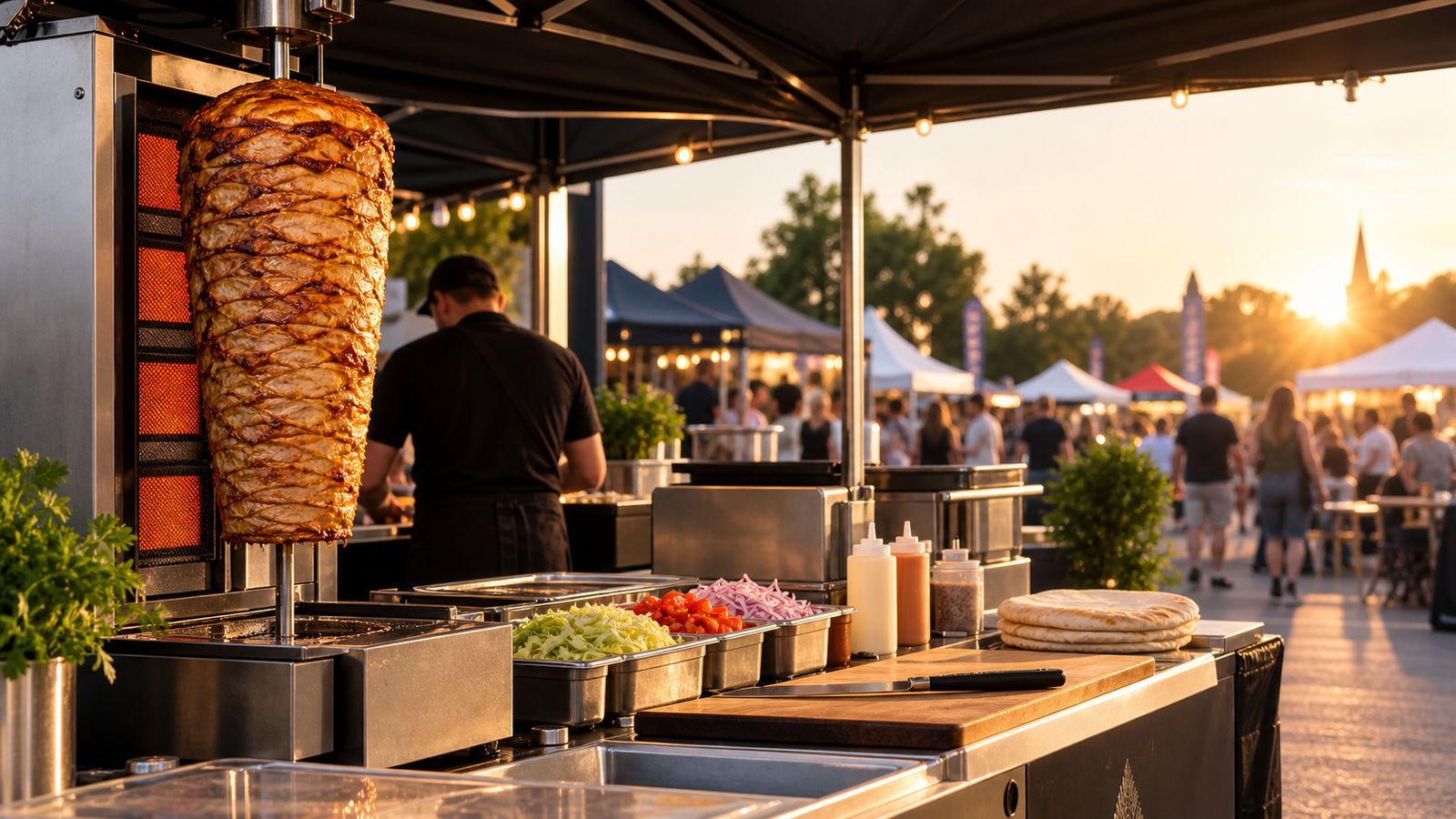
In short: A doner kebab stand at markets and events succeeds with clear planning: a suitable location, cleared permits and mobile equipment with a doner grill, refrigeration, hygiene facilities and a secure power supply. The better the workflows, cold chain and weather protection are thought through, the faster and safer the sales run.
The doner kebab is one of the most popular fast food dishes in Germany. At weekly markets, festivals and events, you can reach a large and changing customer base. This guide shows what matters for a temporary sales point.
Why run a doner kebab stand at markets and events?
At markets and events, you reach many guests who are hungry and open to quick, hot meals. With a mobile or temporary stand, you can respond flexibly to different dates and expand your business.
There are also challenges: you must comply with hygiene regulations, the equipment must be mobile and efficient, and the planning should account for all eventualities, such as weather, power and space conditions.
The right planning: location, permits and concept
Choosing the location
The location has a decisive impact on sales. At markets, a well-frequented spot near other food stands makes sense, because you benefit from the customer density. At festivals and events, being close to entrances, stages or seating areas is ideal.
Permits and legal requirements
Find out which permits you need before you start. The specific requirements depend on the federal state, municipality and event. Typically, they include:
- Business registration for selling food
- Registration as a food business and compliance with food hygiene regulations
- Staff instruction in accordance with the German Infection Protection Act (Infektionsschutzgesetz)
- Depending on the event, special permits or a stall allocation from the organiser
- Fire safety and safety requirements, especially when using gas and electricity
Contact the responsible authority and the organiser early on to clarify all requirements in a binding way.
Concept and menu
Consider which variants you will offer. Alongside the classic doner kebab, vegetarian or vegan alternatives as well as various sauces and side dishes make your menu more attractive. A clear, lean concept speeds up service and sets you apart from the competition.
The right equipment for a doner kebab stand
A professional doner kebab stand needs equipment that is both functional and mobile. These are the most important building blocks.
Doner grill and rotisserie
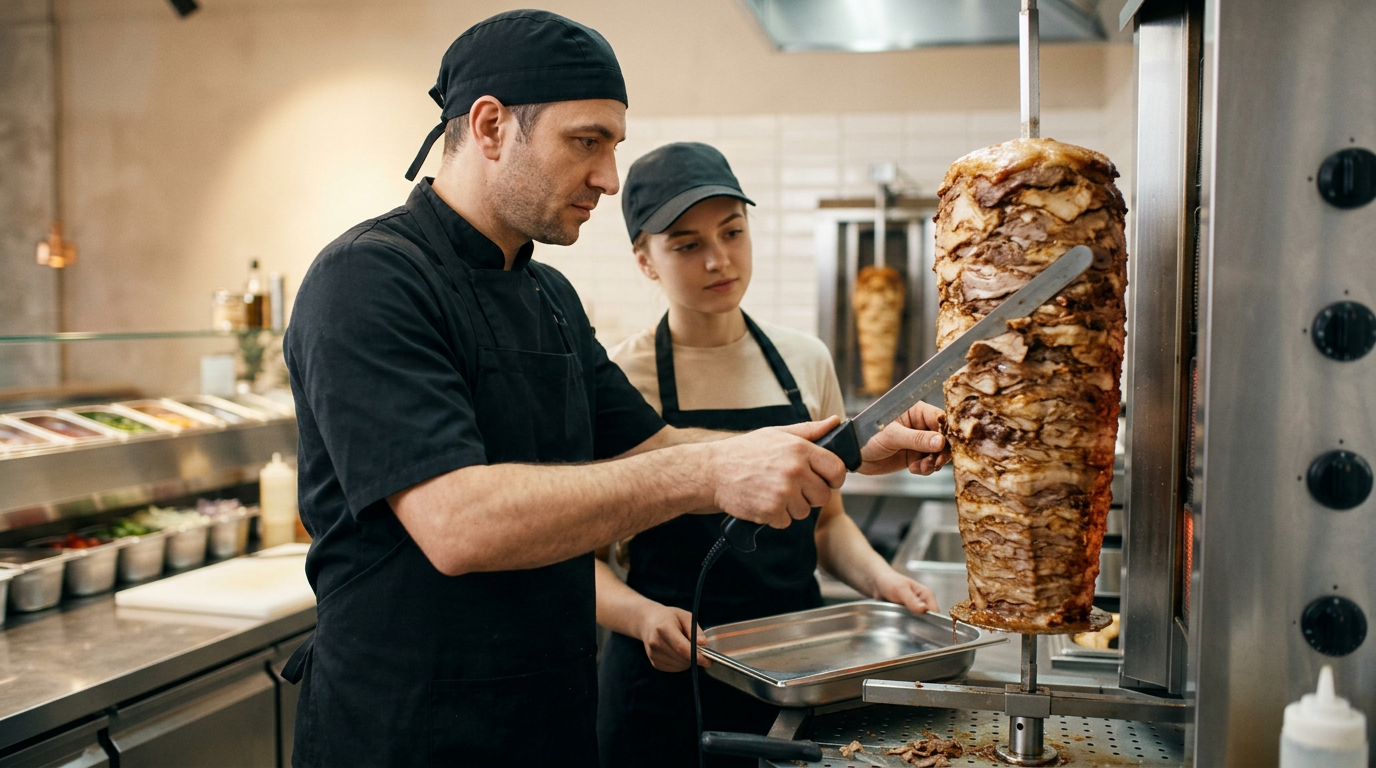
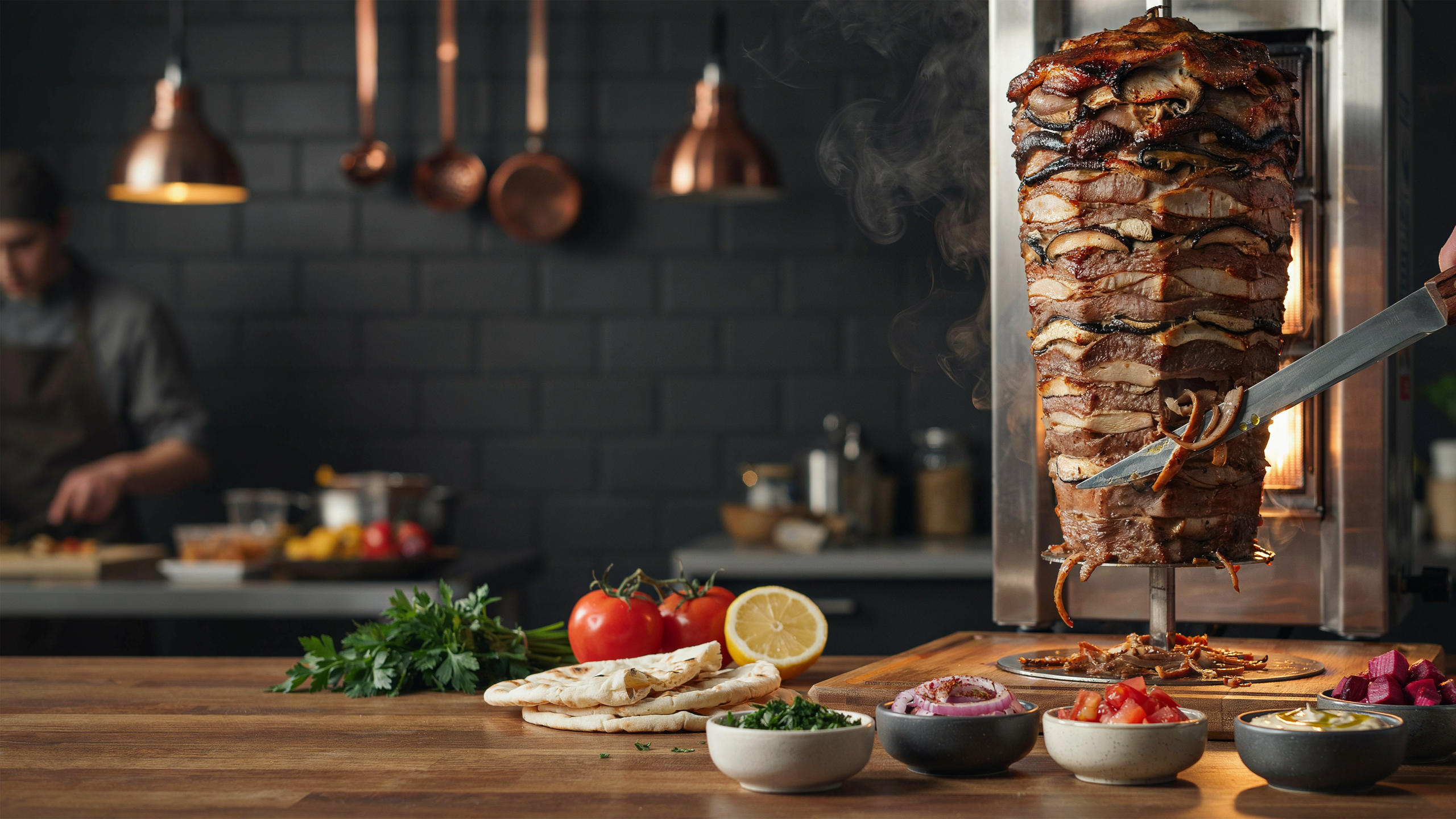
The centrepiece is the doner grill. It should be powerful, easy to operate and easy to clean. Even heat distribution is important so the meat cooks optimally.
In mobile use, gas appliances are often more flexible because they do not depend on the power grid, for example a mobile gas doner grill with 4 burners. Where a suitable power connection is available, an electric doner grill with folding doors may be the simpler solution.
| Criterion | Gas doner grill | Electric doner grill |
|---|---|---|
| Energy source | Liquefied gas from cylinders | Power connection or generator |
| Place of use | Usable even without a power grid | Power with adequate fusing required |
| Preparation | Check gas cylinders, hose and regulator | Clarify power demand and connection type |
| Requirements | Often proof of inspection and safety distances | Electrical safety (e.g. fusing, cables) |
Refrigeration options
Fresh ingredients such as meat, vegetables and sauces must be kept refrigerated at all times. Mobile fridges or refrigerated counters are therefore indispensable. Make sure there is sufficient capacity and easy access so the workflow does not stall.
Work surfaces and shelving
Sufficient work surface is important to prepare doner kebabs quickly and hygienically. Stainless steel worktables are robust, easy to clean and hygienic. Additional shelves for cutlery, napkins and packaging keep things organised.
Cutting tools and knives
A sharp, reliable knife for slicing the meat is essential. Some stands use electric slicers, which make the work easier and faster.
Packaging materials
For takeaway sales, you need suitable packaging such as doner wrap bags, paper trays or boxes. Eco-friendly and sustainable materials are increasingly in demand from guests.
Hygiene equipment
Hand sanitiser, disposable gloves, hygiene wipes and a mobile handwashing station are a must to meet hygiene requirements.
Power supply
Many appliances need electricity, but at markets and events there is often no direct connection. Therefore, plan for a powerful generator or a connection to the organiser's power supply.
Add up the power ratings of all appliances and leave a reserve. Also clarify in advance with the organiser which connection type and capacity are available.
Setting up and designing the doner kebab stand
First impressions count: a clean, appealing stand attracts customers and conveys professionalism.
Design and branding
A consistent design with logo, colours and appealing images makes your stand recognisable. A clearly visible menu with prices is also important.
Ergonomics and workflows
Plan the stand so that workflows are smooth and efficient. The distances between grill, refrigeration, cutting area and serving counter should be short to minimise waiting times. You can test the layout in advance with the free 3D kitchen planner.
Weather protection
Since markets and events mostly take place outdoors, sturdy weather protection is essential. A tent or pavilion protects staff and food from sun, rain and wind.
Staff and training
Friendly, well-trained staff are the flagship of every doner kebab stand. Employees should not only master preparation but also know the hygiene regulations and be trained in dealing with customers.
Marketing and customer loyalty
Marketing is worthwhile even for temporary sales points:
- Social media: Inform your customers in advance about locations and dates.
- Promotions: Special offers or tasting events attract passers-by.
- Customer feedback: Use feedback to optimise your offer.
Hygiene and safety
Complying with hygiene regulations is especially important to prevent food poisoning and to win customers' trust.
This includes regular handwashing, wearing gloves, clean work surfaces and proper food storage. When using gas and electricity, fire protection comes into play, such as a fire extinguisher within easy reach and safe installation.
Conclusion
A doner kebab stand at markets and events can be a profitable business if it is professionally planned and equipped. The right choice of equipment, compliance with hygiene and safety standards and a well-thought-out concept are the keys to success.
With an appealing stand, friendly staff and a tasty menu, you will win many satisfied customers. For help choosing your grill and equipment, the personal consultation from iGastroNomic is available to support you.
FAQ – Frequently Asked Questions
Which permits do I need for a doner kebab stand at a market?
As a rule, you need a business registration, registration as a food business with the responsible authority, staff instruction under the Infection Protection Act and the stall allocation from the organiser. Depending on the federal state and event, special permits and fire safety requirements may also apply. Clarify this early with the local public order office and the food safety authority.
Gas or electric doner grill for mobile use?
Both are possible. A gas grill works independently of the power grid and is often more flexible at locations without a connection, but it requires gas cylinders, safety distances and often proof of inspection. An electric grill is easy to operate but needs a suitably fused power connection or a generator of sufficient size. Ask the organiser what is permitted.
What is the minimum equipment a doner kebab stand needs?
The minimum requirements are a doner grill, refrigeration for meat, vegetables and sauces, stainless steel work surfaces, a knife or electric slicer, packaging, hygiene equipment with handwashing facilities, and a gas or power supply. Add weather protection such as a tent or pavilion, a fire extinguisher and a clearly legible menu with prices and allergen information.
How do I maintain the cold chain at a doner kebab stand?
Use sufficiently sized mobile cooling units, chill goods before transport, and store raw products separately from ready-to-eat ingredients. Check the temperature with a thermometer and record it. As a guideline, around 4 to 7 °C applies depending on the product; your authority's requirements are binding.