Deutsch
 Türkçe
 Italiano
 Nederlands
 Français
 Español
 Polski
 Čeština
 Svenska
 Português PT
 Русский
 اللغة العربية
 中文
 日本語
 Tiếng Việt
 ภาษาไทย
 Română
 ελληνικά
 Magyar
 Dansk
 Suomi
 Hrvatski
 български език
 Eesti keel
 Latviešu valoda
 Slovenčina
 Slovenščina
 Bosanski
 עברית
 हिन्दी
 Bahasa melayu
 Kiswahili
 Bahasa Indonesia
 Papiamento
 Bokmål
 Lietuvių kalba
 Українська
 српски
 Shqip


 ›
 ›
 ›
 ›
 ›
 ›
 ›
 ›
 ›
 ›
 ›
 ›
 ›
 ›
 ›

In short: Quality doner meat becomes tender and flavorful through fresh raw meat with the right fat content, a well-balanced marinade of acid, spices and oil, and a marinating time of about 12 to 24 hours. Add even cooking on the rotisserie and strict hygiene with continuous refrigeration, typically at 0 to 4 degrees Celsius.
Doner kebab has evolved from simple street food into a culinary classic that ranks among the most popular dishes in Germany and many other countries. For restaurateurs, meat quality is therefore the most important selling point.
This guide shows what matters in selection, marinade, preparation and storage – from the raw material to the plate.
The foundation: choosing the right meat
The first and most important step is choosing the raw material. Traditionally, doner meat is made from lamb, beef or poultry. In Germany, veal and chicken are especially popular because they are considered particularly tender and mild.
Quality and origin
Fresh, high-quality meat is the basis. It should come from a controlled origin. Organic or regional labels can additionally provide transparency and sustainability.
The right fat content
A balanced ratio of lean meat and fat is decisive. Fat provides juiciness and flavor. If there is too much, the product feels heavy and greasy.
Comparing meat types
The choice of meat depends on the desired flavor and your target audience:
| Type of meat | Flavor profile | Typical characteristic |
|---|---|---|
| Lamb | Strong, pronounced | Intense aroma, for customers who prefer authentic flavor |
| Beef | Somewhat milder than lamb | Balanced, classic aroma |
| Veal | Mild | Very popular in Germany, considered tender |
| Poultry (chicken) | Mild, light | Especially tender and light, very popular |
Quality criteria for good doner meat
To recognize tender and flavorful doner meat already at goods receipt, restaurateurs should pay attention to these criteria:
- Color: Fresh meat has a vibrant color. Beef is dark red, lamb pink to red, poultry white to pink. Discoloration or gray spots indicate inferior quality or improper storage.
- Smell: The meat should smell fresh and pleasant. An unpleasant or sour smell is a warning sign.
- Texture: A fine, even structure is good. Coarse or stringy meat is rather unsuitable. Good marbling with fat supports tenderness.
- Shelf life: Proper refrigeration and hygienic processing keep the meat fresh longer and maintain its quality.
Marinating – the key to flavor and tenderness
The marinade shapes the taste of doner meat and at the same time ensures tenderness. It consists of a mixture of spices, acids, oils and sometimes enzymes.
Key components of a good doner marinade
- Acid: Lemon juice, yogurt, vinegar or wine loosen the protein structures and make the meat more tender.
- Spices: Typical are paprika, cumin, coriander, garlic, onions, pepper and chili. They give the characteristic aroma.
- Oils and fats: They provide juiciness and carry the flavors of the spices.
- Enzymes: Some marinades contain natural enzymes, for example from papaya or pineapple, which make the meat especially tender.
The right marinating time
As a guideline, plan for at least 12 hours, preferably 24 hours, so the flavors penetrate deeply into the meat. With marinades that are strongly acidic or contain enzymes, test the timing, as excessive exposure can make the texture too soft. Always marinate the meat chilled.
Proper preparation: rotisserie and temperature control
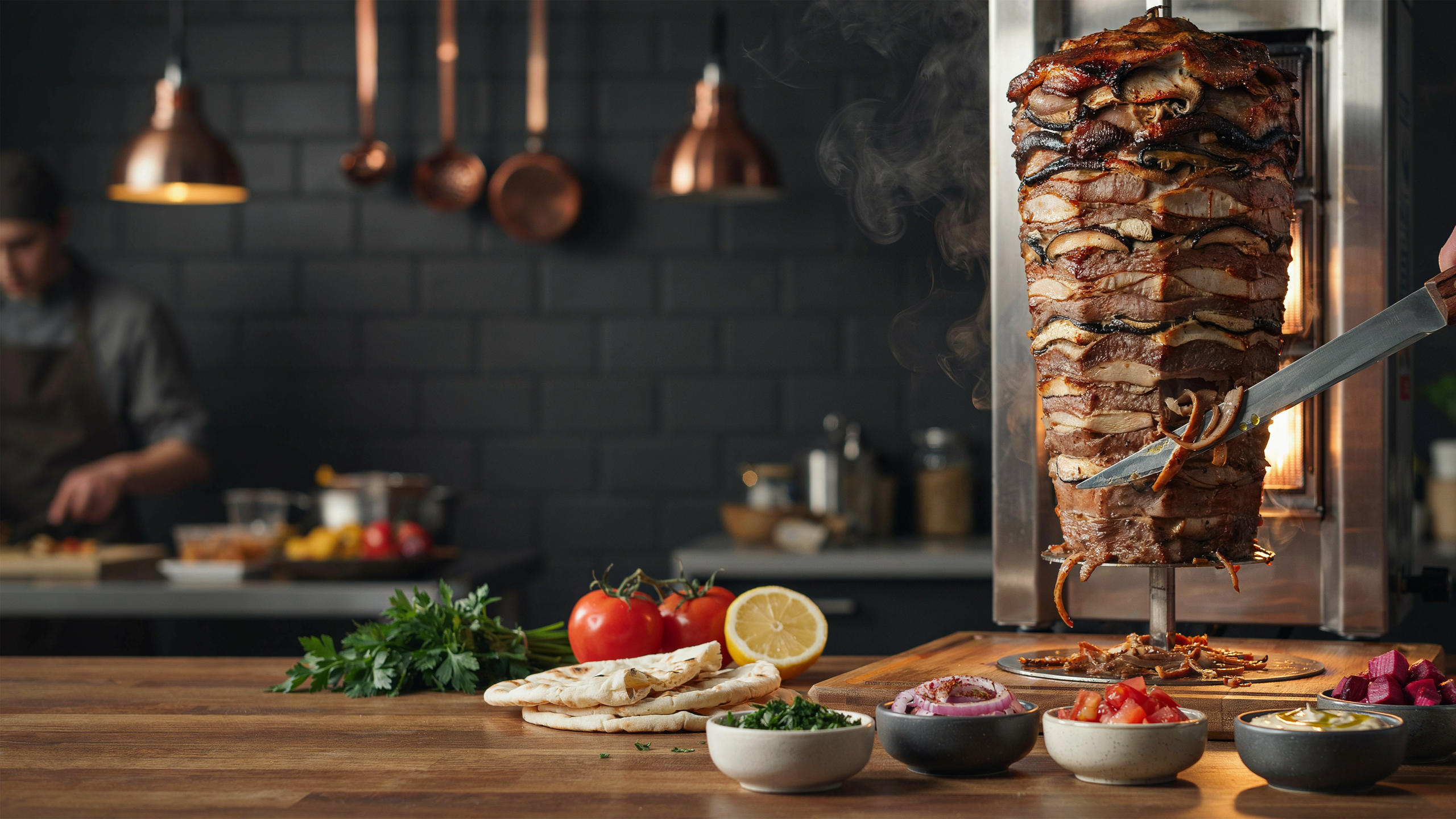
Doner meat is traditionally prepared on a rotisserie. Technique and temperature are decisive for tenderness and flavor.
Layering on the spit
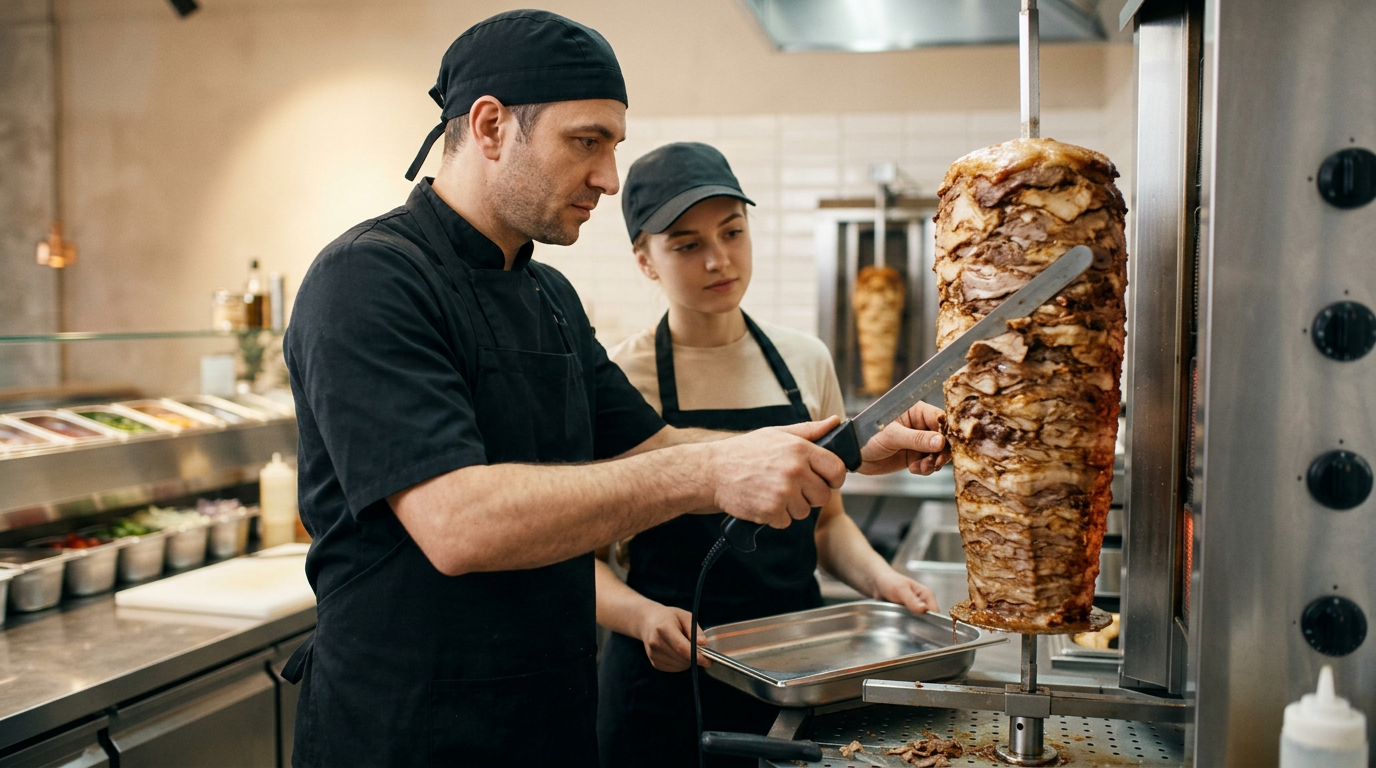
The marinated meat is layered onto the spit in thin slices or strips. Even distribution ensures even cooking.
Temperature and rotation speed
As a typical guideline, a cooking temperature of about 150 to 180 degrees Celsius is cited. Temperatures that are too high char the outside, while temperatures that are too low lead to uneven cooking. Steady rotation ensures even browning and prevents drying out.
The equipment also plays a role: even, easily adjustable heat makes control easier. An overview of gyros and doner grills helps you choose between gas and electric models and the right spit size.
Slicing while it cooks
The meat is sliced thinly during cooking. This keeps the slices juicy and tender, and the next layer can continue cooking.
Hygiene standards and storage
High hygiene standards are essential for restaurateurs to ensure quality. Specific requirements are set out in your hygiene concept, based on the requirements of the food inspection authority.
- Clean work surfaces and equipment: Regular cleaning prevents contamination.
- Correct refrigeration: The meat should typically be stored at 0 to 4 degrees Celsius.
- Avoiding cross-contamination: Raw meat and finished products should be handled separately.
Refrigerated storage directly at the workstation is practical. Refrigerated prep tables under the grill are suitable for this, keeping spits and ingredients within reach and chilled.
Innovations and trends in doner meat production
The doner industry is constantly evolving. New techniques and ingredients help restaurateurs improve their products:
- Alternative proteins: Vegetarian and vegan alternatives to doner meat are gaining importance and open up new flavor experiences.
- Improved marinades: Fermented ingredients or special enzymes can further enhance tenderness and flavor.
- Precise temperature control: Modern rotisseries with digital controls enable even cooking.
Conclusion
Investing in high-quality meat, carefully crafted marinades and professional preparation pays off. Quality doner meat results from the right choice of meat, a well-considered marinade, cooking on the rotisserie and high hygiene standards. By following these points, you can establish yourself in the market over the long term and offer guests an authentic flavor experience.
If you are planning a new doner restaurant or expanding your equipment, the free 3D kitchen planner can help you with the layout. iGastroNomic also offers personal advice: Contact and consultation.
FAQ – Frequently Asked Questions
Which meat is best for doner spits?
Traditionally, lamb, beef, veal and poultry are used. In Germany, veal and chicken are especially popular because they are considered tender and mild. Lamb tastes stronger, beef somewhat milder. What matters most is freshness, controlled origin and a balanced fat content. Choose the type of meat based on the desired flavor and your target audience.
How long should doner meat be marinated?
As a guideline, at least 12 hours, preferably 24 hours, is sensible so that spices and acid penetrate deeply into the meat. With very acidic or enzyme-rich marinades, test the duration, as the meat can otherwise become too soft. Always marinate and store the meat chilled and covered.
At what temperature is doner meat cooked on the rotisserie?
As a typical guideline, about 150 to 180 degrees Celsius is cited. Heat that is too high chars the outside, while heat that is too low leads to uneven cooking. Steady rotation and thin slicing of the cooked layer are also important. The manufacturer's specifications for your equipment and your hygiene concept take precedence.
How should doner meat be stored correctly?
Raw doner meat must be kept refrigerated at all times, typically at 0 to 4 degrees Celsius. Separate raw meat from finished products to avoid cross-contamination, and clean work surfaces and equipment regularly. Set specific temperatures and time limits in your hygiene concept, following the requirements of the food inspection authority.
How can I recognize fresh doner meat?
Fresh meat has a vibrant color: beef dark red, lamb pink to red, poultry white to pink. It smells fresh and pleasant, and its structure is fine and even. Gray spots, discoloration or a sour smell are warning signs. In that case, do not process the product.