Deutsch
 Türkçe
 Italiano
 Nederlands
 Français
 Español
 Polski
 Čeština
 Svenska
 Português PT
 Русский
 اللغة العربية
 中文
 日本語
 Tiếng Việt
 ภาษาไทย
 Română
 ελληνικά
 Magyar
 Dansk
 Suomi
 Hrvatski
 български език
 Eesti keel
 Latviešu valoda
 Slovenčina
 Slovenščina
 Bosanski
 עברית
 हिन्दी
 Bahasa melayu
 Kiswahili
 Bahasa Indonesia
 Papiamento
 Bokmål
 Lietuvių kalba
 Українська
 српски
 Shqip


 ›
 ›
 ›
 ›
 ›
 ›
 ›
 ›
 ›
 ›
 ›
 ›
 ›
 ›
 ›
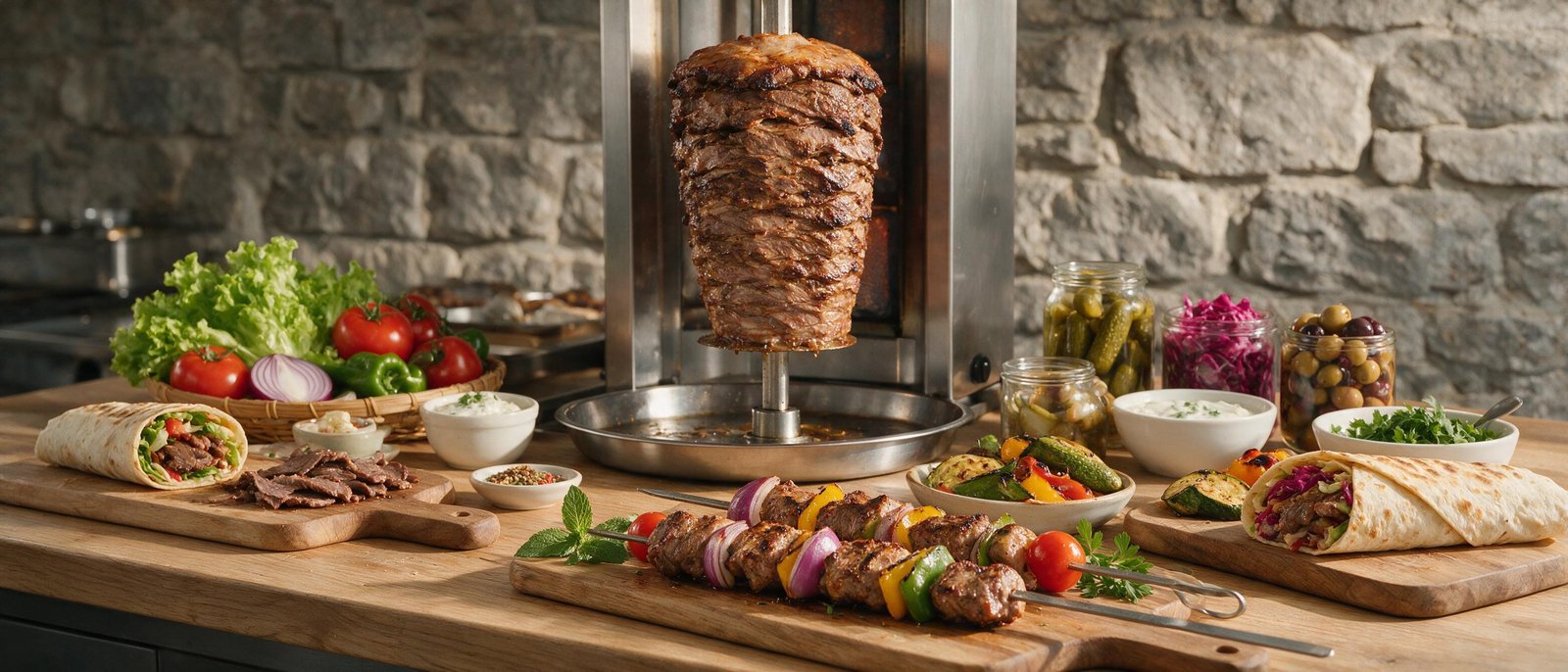
In short: Döner, shawarma and kebab are often treated as synonyms, but they refer to different things: kebab is the umbrella term for grilled meat, döner is the Turkish and shawarma the Arabic variant from the vertical rotisserie. The differences lie mainly in origin, spices and side dishes. Naming your dish correctly avoids misunderstandings and comes across as authentic.
Why the right name on the menu matters
In everyday language, döner, shawarma and kebab are often used as synonyms. In the restaurant business this can lead to wrong expectations, because guests associate each term with a specific preparation and flavour.
A clear menu name meets these expectations, communicates the origin of the dish and shows cultural respect. This guide explains the differences and similarities and helps you choose the right terms.
What is kebab? The umbrella term
The word kebab is usually traced back to Persian (kabab) and roughly means “grilled meat”. In many countries of the Middle East and the Mediterranean it serves as a collective term for various grilled or fried meat preparations.
Kebab variants include, for example, Adana kebab (spiced minced meat on a skewer), shish kebab (pieces of meat on skewers), as well as döner and shawarma.
The essentials about kebab
- Kebab basically refers to grilled or fried meat.
- There are numerous regional variants with different types of meat and spices.
- Kebab is not a single dish but a category.
What is döner? The classic of Turkish origin
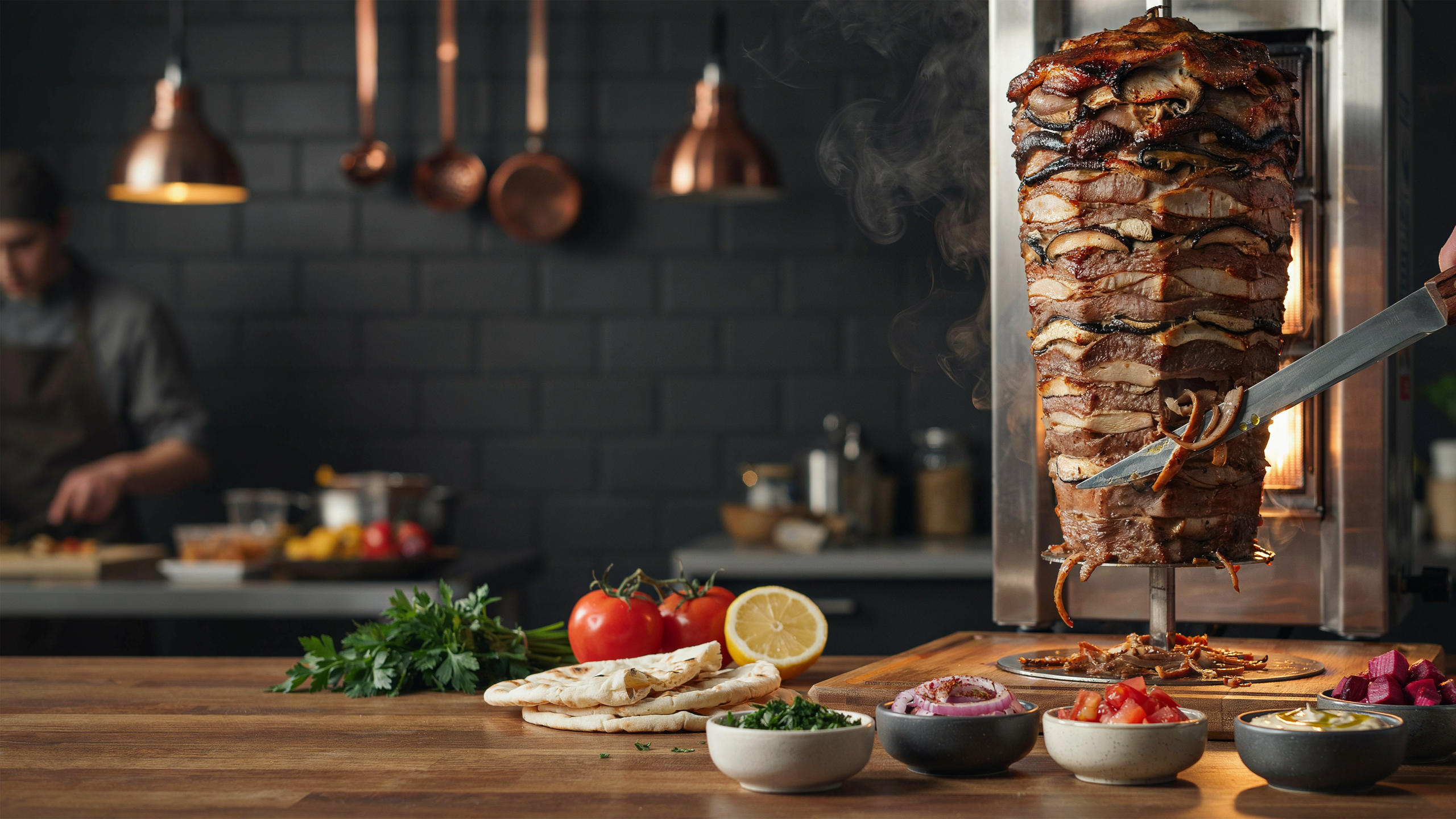
Döner kebab is a special form of kebab that originated in Turkey and became particularly popular in Germany. The word derives from the Turkish verb dönmek (“to turn”) and refers to the rotating meat on the spit.
Classically, thinly sliced, seasoned meat (usually lamb, beef or poultry) is cooked on a vertical rotisserie. It is filled into flatbread (such as pide) or yufka and served with salad, tomatoes, onions, cucumbers and sauces.
Typical features of döner
- Vertical rotisserie with seasoned meat
- Served in flatbread, dürüm or as a plated dish
- Side dishes of fresh salad and sauces such as garlic or yoghurt sauce
- Of Turkish origin, but in Germany it has been developed into its own variant
In Germany, döner is among the most popular fast-food dishes and has developed its own profile through regional adaptations.
What is shawarma? The Arabic relative
Shawarma is a dish that is widely popular in the Arab world. The name is traced back to the Turkish word çevirme, which likewise means “to turn”. The principle is similar to döner: meat is turned and grilled on a vertical spit.
Shawarma is usually prepared with lamb, beef or chicken and marinated with regionally varying spices. It is thinly sliced and often served in pita or flatbread with tahini, hummus, pickled vegetables, salad and sauces.
Typical features of shawarma
- Vertical rotisserie with marinated meat
- Bold seasoning with Arabic spice blends
- Served in pita or flatbread with a variety of side dishes
- Popular in the Arab world and in many Western countries
Döner and shawarma are therefore very similar, but they differ in origin, spices and, in some cases, side dishes.
The main differences at a glance
| Aspect | Döner | Shawarma | Kebab |
|---|---|---|---|
| Origin | Turkey (further developed in Germany) | Arab countries | Persia, Middle East (umbrella term) |
| Meat | Mostly lamb, beef or chicken | Lamb, beef or chicken, often marinated | Various types depending on the variant |
| Preparation | Vertical rotisserie, thinly sliced | Vertical rotisserie, thinly sliced | Grilled, fried or on a skewer |
| Spices | Turkish spices, tend to be milder | Arabic spices, often more intense | Varies widely |
| Serving | Flatbread with salad and sauces | Pita or flatbread with salad, sauces, tahini | Varied (skewer, plate, sandwich) |
Why döner and shawarma are often confused
Döner and shawarma look alike and are prepared in a similar way: both use vertical rotisseries and thinly sliced meat. The main difference lies in origin and spices. In addition, döner has gone through its own development in Germany.
In Western countries, shawarma is often called “Arabic döner”, which adds to the confusion. Restaurant operators should know the differences and communicate them clearly.
How to choose the right menu name
The right name depends on several factors:
- Authenticity: Choose the term that matches the origin and preparation. Name a dish with Turkish character döner, and an Arabic-style variant shawarma.
- Guest expectations: In Germany, “döner” is the most familiar term. If your dish corresponds to the classic döner, this name makes sense.
- Positioning: If you want to present yourself as an authentic Arabic restaurant, “shawarma” is usually the better choice.
- Legal aspects: Avoid misleading names. If in doubt, check labelling and requirements for rotisserie products with your local food control authority.
Examples of correct menu names
- Döner Kebab: Turkish dish with seasoned meat from the vertical spit, served in flatbread with salad and sauces.
- Shawarma: Arabic dish with marinated meat from the vertical spit, served in pita or flatbread with tahini and pickled vegetables.
- Adana Kebab: Turkish kebab made from spiced minced meat, grilled on a horizontal skewer.
- Shish Kebab: Grilled pieces of meat on skewers, often combined with vegetables.
The right equipment for rotisserie dishes
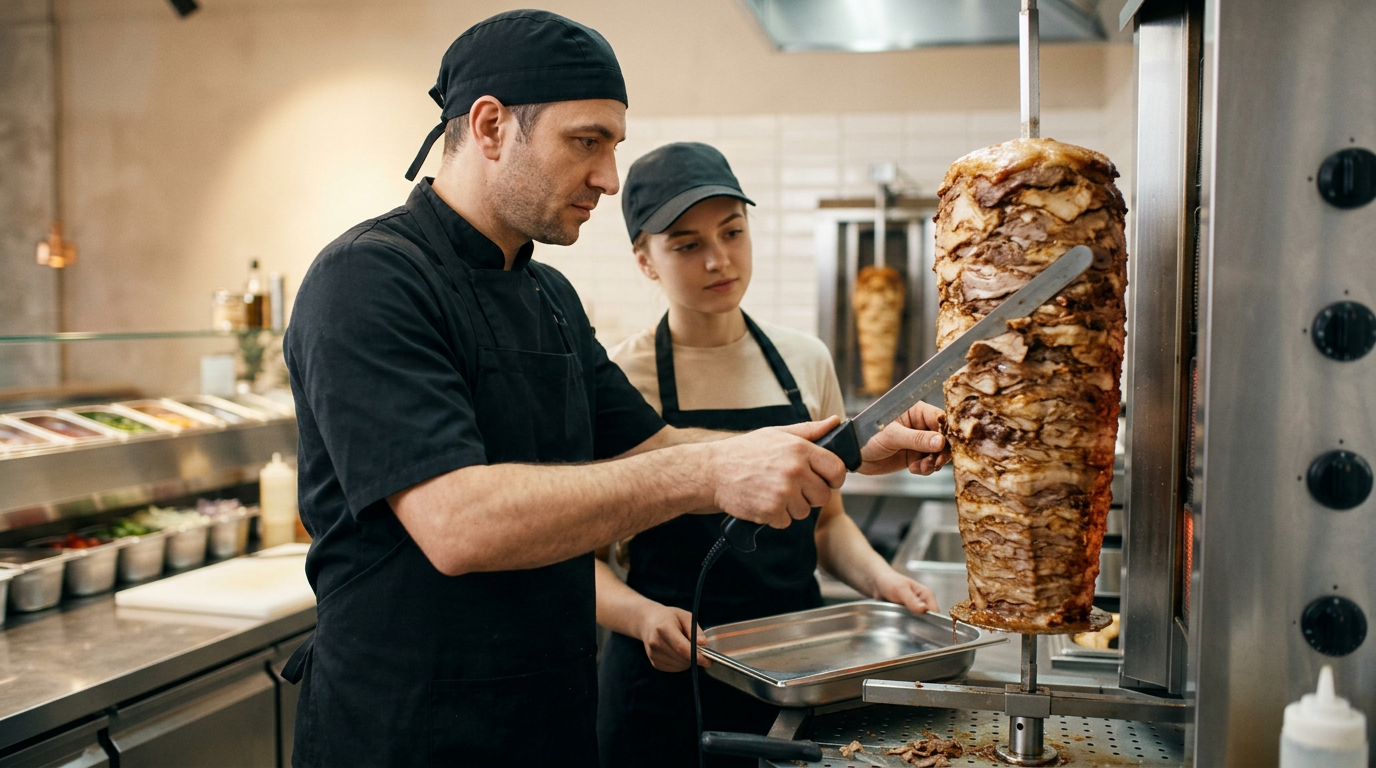
Whether döner or shawarma: the heart of the operation is the vertical rotisserie. Depending on connections, available space and spit size, gyros and döner grills with gas or electric heating are an option.
If you are setting up a takeaway or restaurant from scratch, the section equipment for döner shops offers matching units from one source. The free 3D kitchen planner lets you check the layout of grill, refrigeration and work surfaces in advance. For questions about sizing, a personal consultation is also available.
Tips for implementation in your restaurant
- Staff training: Your team should know the differences and be able to advise guests competently.
- Menu description: Briefly explain on the menu what makes the dish special, such as origin, ingredients and preparation.
- Ingredient quality: Use suitable spices and types of meat so that the taste matches the name.
- Visual communication: Pictures or small info boxes make origin and special features visible.
This is how you achieve a clear positioning, and your guests know exactly what they are ordering.
Conclusion
Döner, shawarma and kebab are closely related but have different origins and preparation methods. Kebab is the umbrella term for grilled meat dishes, döner is the Turkish specialty from the vertical rotisserie, and shawarma is the Arabic variant with its own spices and side dishes.
If you know these differences and communicate them clearly on your menu, you build trust and stand out from the competition through authenticity.
FAQ – Frequently Asked Questions
What is the difference between döner and shawarma?
Both are carved from a vertical rotisserie, but they differ in origin, spices and side dishes. Döner comes from Turkey and has been further developed in Germany, usually served with salad and sauces in flatbread. Shawarma is the Arabic variant, often seasoned more intensely and served in pita with tahini, pickled vegetables or hummus.
Is kebab the same as döner?
No. Kebab is an umbrella term for grilled or fried meat in many variants, such as Adana kebab or shish kebab. Döner kebab is just one of them: meat from the vertical rotisserie. Since guests often say “kebab” when they mean döner, you should clearly name what you offer on the menu.
How do I name my dish correctly on the menu?
Base the name on origin and preparation: Turkish-style meat from the rotisserie is called döner, Arabic-spiced meat with tahini and pickled vegetables is called shawarma. Add a short description with the type of meat, bread and side dishes. This avoids misleading information and sets the right expectations for your guests.
What equipment do I need for döner or shawarma?
The central piece is a rotisserie grill, either gas or electric, matched to spit size and expected daily sales. You also need refrigeration for side dishes and sauces, enough work space and suitable ventilation. Which variant fits depends on connections and space; a kitchen planning service helps with sensible sizing.