Deutsch
 Türkçe
 Italiano
 Nederlands
 Français
 Español
 Polski
 Čeština
 Svenska
 Português PT
 Русский
 اللغة العربية
 中文
 日本語
 Tiếng Việt
 ภาษาไทย
 Română
 ελληνικά
 Magyar
 Dansk
 Suomi
 Hrvatski
 български език
 Eesti keel
 Latviešu valoda
 Slovenčina
 Slovenščina
 Bosanski
 עברית
 हिन्दी
 Bahasa melayu
 Kiswahili
 Bahasa Indonesia
 Papiamento
 Bokmål
 Lietuvių kalba
 Українська
 српски
 Shqip


 ›
 ›
 ›
 ›
 ›
 ›
 ›
 ›
 ›
 ›
 ›
 ›
 ›
 ›
 ›
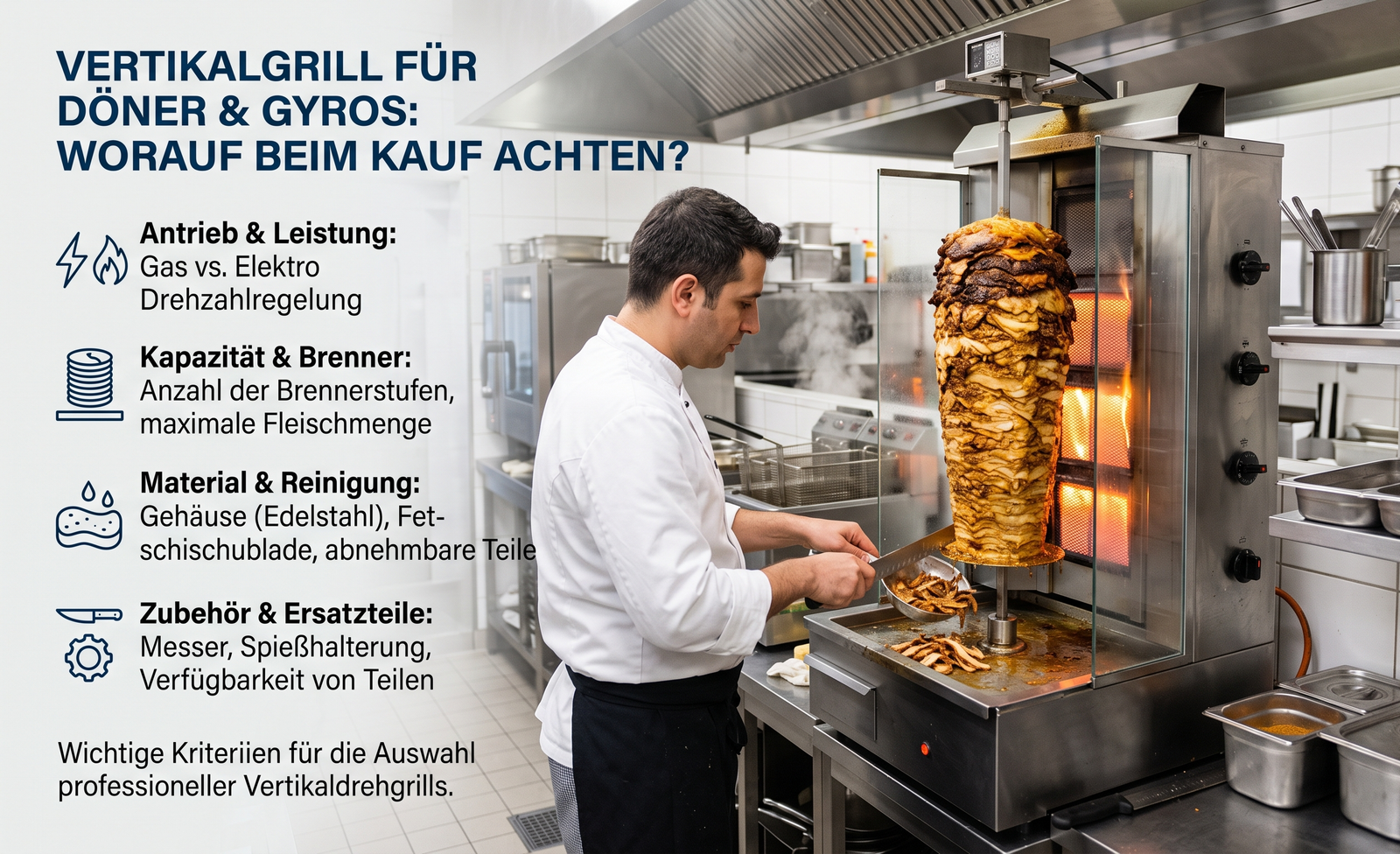
In short: When buying a vertical grill for doner and gyros, the most important factors are the heating type (gas, electric or infrared), capacity, stainless steel construction, safety and easy cleaning. The right size depends on your daily sales volume and the space available in your business. Clarifying these criteria in advance helps you avoid wrong purchases and high operating costs.
The vertical grill is the heart of every doner and gyros operation. Without it, the juicy meat with a crispy outside that you know from kebab shops, restaurants and food trucks would hardly be possible. However, not every appliance suits every business. This guide shows what to look for and how to make the right decision.
What is a vertical grill and how does it work?
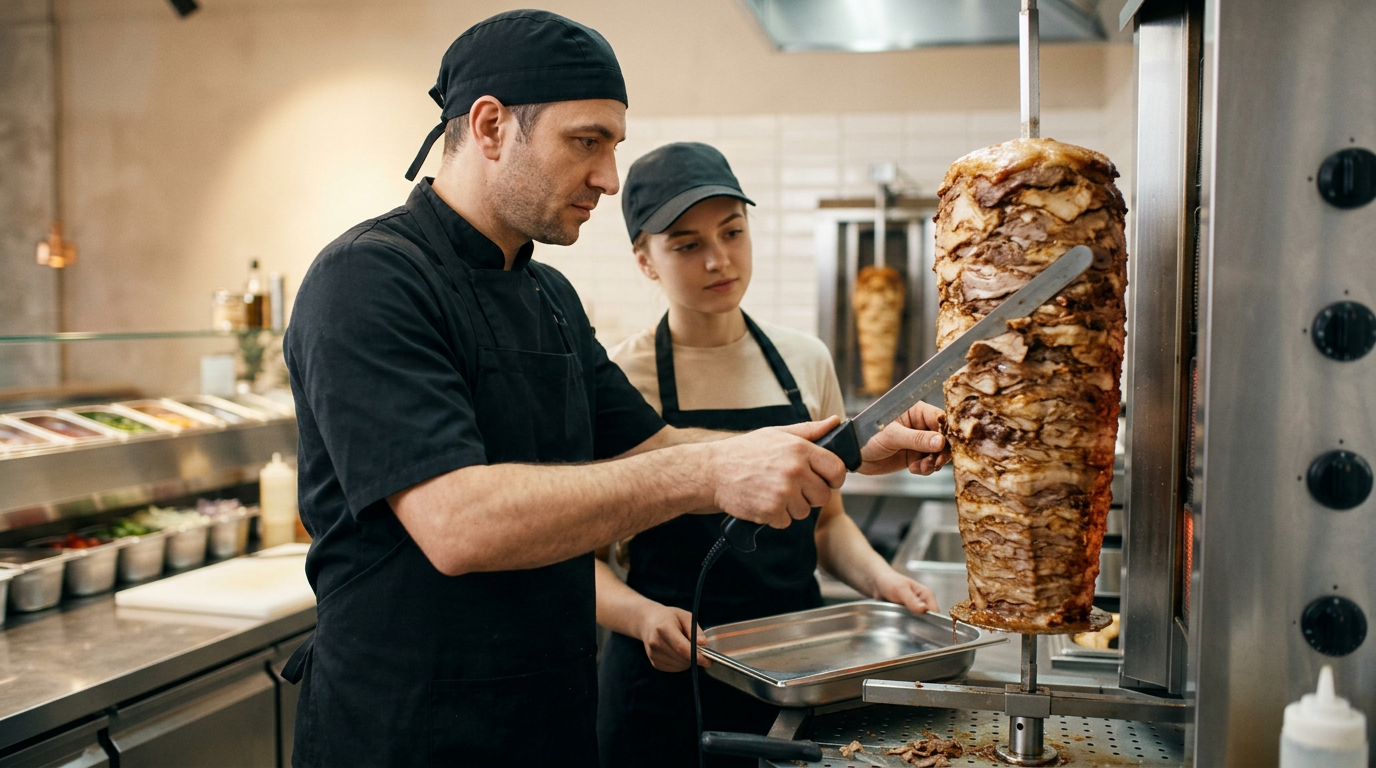
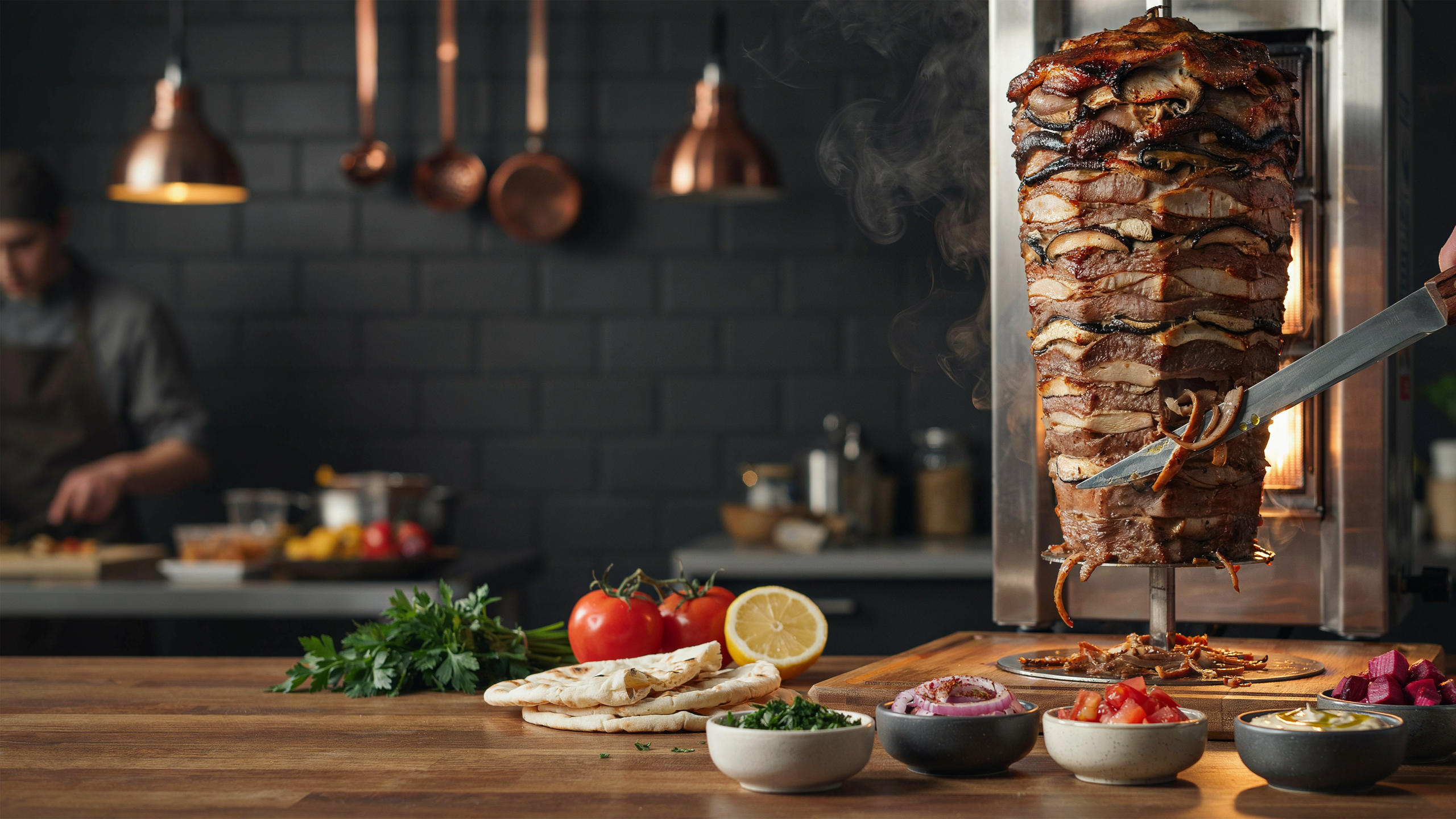
A vertical grill, also called a vertical doner grill, cooks the meat vertically on a rotating skewer. The meat is stacked in layers on the skewer and slowly rotates in front of a heat source, usually a gas or electric heating system. The rotation ensures even cooking and gives the outside a crispy finish.
The cooked meat is then sliced into thin pieces. This creates the familiar doner or gyros slices. The advantages at a glance:
- Gentle and even cooking thanks to rotation
- Crispy crust with a juicy core
- Efficient use of the heat source
- Easy slicing for fast service
Who is a professional vertical grill suitable for?
Vertical grills are suitable for businesses that offer doner, gyros, shawarma or similar dishes. These include:
- Kebab shops and quick-service restaurants
- Food trucks and street food vendors
- Greek and Turkish restaurants
- Catering companies with a Mediterranean menu
- Commercial kitchens and canteens with international cuisine
A professional appliance enables high production capacity, consistent quality and efficient work. For private use, such appliances are usually too large and too expensive. You can find an overview of suitable models in the category Gyros and Doner Grills.
Important buying criteria for vertical doner grills
When buying, you should consider several aspects together. The most important criteria are:
Heating type: gas, electric or infrared?
The heat source affects performance, operating costs and handling. Infrared is a heating technology that is found in both gas and electric appliances.
| Heating type | Advantages | Things to consider |
|---|---|---|
| Gas | Heats up quickly, high heat, precise control, flexible use | Gas connection or gas cylinders required; clarify location and regulations in advance |
| Electric | Well suited for indoor areas and locations without gas approval, usually simple to operate and clean | Stable power supply required, check connection ratings; heating up can be somewhat slower |
| Infrared | Intense, direct heat, particularly crispy surface, even grilling result | Often installed in higher-end appliances; equipment varies by model |
If you want to work with gas, for example, you will find a gas doner grill with 4 burners. For locations without a gas connection, an electric doner grill with 4 burners is a good option. Check in advance whether gas or electricity is permitted at your site, ideally with a qualified technician, your landlord and the responsible authority.
Size and capacity
The size depends on the planned production volume. For small kebab shops or food trucks, a compact grill with a skewer diameter of around 20 to 30 cm is often sufficient. For larger businesses, models with several skewers or larger skewer diameters (up to 40 cm or more) make sense.
The grill should hold enough meat so you can serve demand without constantly restocking. However, it should not be oversized, so that you save space and energy.
Material and workmanship
A professional vertical grill should be made of durable, hygienic and easy-to-clean materials. Stainless steel is the first choice here, as it is corrosion-resistant and meets the requirements of the catering industry.
Also pay attention to solid workmanship, a stable rotation mechanism and heat-resistant components. They ensure a long service life and reliable operation.
Ease of use and cleaning
A good vertical grill is easy to operate. This includes intuitive controls for temperature and rotation as well as an easily accessible heat source.
Cleaning is also important. Grease and meat residues should be easy to remove. Removable parts, smooth surfaces and good accessibility make daily cleaning easier and support hygiene.
Safety
Vertical grills operate at high temperatures, so safety is a central criterion. Look for:
- Stable feet or castors with brakes
- Heat protection and insulated handles
- Automatic shut-off functions in case of overheating or safety devices
- CE marking and compliance with applicable safety standards
Hinged doors or protective panels can also help limit heat and grease splatter in the work area.
Energy efficiency
In professional use, operating costs are an important factor. An energy-efficient vertical grill saves costs in the long term and conserves resources. Look for good insulation and modern heating technology. You can estimate how consumption will affect your business with the energy cost calculator for catering equipment.
Price-performance ratio
Prices for vertical grills vary widely, depending on size, equipment and manufacturer. Very cheap appliances are often less durable and offer less convenience. It is better to invest in a unit that meets your requirements and works reliably over the long term.
Additional features and accessories
Depending on the model, vertical doner grills offer additional functions that make everyday work easier:
- Multiple skewers or burners: Allow grilling different types of meat or larger quantities at the same time.
- Automatic rotation: Ensures even cooking without manual turning.
- Temperature control: Digital or analog controls for precise heat settings.
- Grease collection trays: Make cleaning easier and help prevent grease fires.
- Lighting: Better visibility of the grilled meat, especially in darker environments.
Comparing suppliers: what matters besides the appliance
There are many suppliers of vertical doner grills on the market, and they differ in quality, innovation and service. Rather than focusing only on the brand name, it is worth comparing providers based on clear criteria:
- Technical specifications such as power, meat capacity and dimensions
- Warranty terms and availability of spare parts
- Accessibility and quality of consulting and customer service
- Delivery time and delivery options, including for multiple units or export
- Experiences of other restaurant operators and customer reviews
iGastroNomic offers free advice on equipment selection and kitchen planning. For questions about your business, you can reach us via personal consultation.
Tips for operating and maintaining your vertical grill
To keep your appliance reliable for a long time and deliver good results, these tips will help:
- Regular cleaning: Remove grease and meat residues daily to ensure hygiene and proper function.
- Maintaining the rotation mechanism: Check and care for moving parts regularly, ideally according to the manufacturer's instructions.
- Checking heat sources: For gas appliances, check nozzles and lines for leaks; for electric appliances, check cables and connections. Inspections should be carried out by qualified personnel.
- Meat quality: Use fresh, well-marinated meat for optimal results.
- Temperature control: Maintain the recommended cooking temperature so the meat neither dries out nor burns.
Conclusion
A professional vertical grill is an investment that pays off through quality, efficiency and reliability. Before buying, analyze your needs and consider heating type, size, material, ease of use, safety and energy consumption.
With the right appliance, you can offer your guests freshly grilled, juicy doner or gyros and gain a competitive edge. Compare several models and, if needed, seek advice from experts.
FAQ – Frequently Asked Questions
Gas or electric: which doner grill is better for my kebab shop?
It depends on the location. Gas appliances heat up quickly and are well suited to high utilization, but they require a gas connection or gas cylinders. Electric appliances are often easier to use indoors but need suitable power connections. Check in advance what is permitted and installable at your site.
What size and capacity should a vertical grill have?
Base your choice on your expected daily consumption and the available space. Small kebab shops and food trucks often manage with compact appliances and skewers of about 20 to 30 cm in diameter. Larger businesses benefit from multiple burners or higher meat capacity so that they do not have to restock constantly.
How often does a vertical grill need to be cleaned?
In professional use, you should remove grease and meat residues daily to keep hygiene and function intact. Grease collection trays, removable parts and smooth stainless steel surfaces make this easier. Also follow the manufacturer's cleaning and maintenance instructions as well as your operational hygiene requirements.
What should I look for regarding the safety of a doner grill?
Important features include a stable base or castors with brakes, heat protection, insulated handles and suitable safety devices such as overheating protection. The appliance should carry a CE marking. For gas appliances, regular leak checks by qualified personnel are advisable. Clarify binding requirements for your business with the responsible authorities.