Deutsch
 Türkçe
 Italiano
 Nederlands
 Français
 Español
 Polski
 Čeština
 Svenska
 Português PT
 Русский
 اللغة العربية
 中文
 日本語
 Tiếng Việt
 ภาษาไทย
 Română
 ελληνικά
 Magyar
 Dansk
 Suomi
 Hrvatski
 български език
 Eesti keel
 Latviešu valoda
 Slovenčina
 Slovenščina
 Bosanski
 עברית
 हिन्दी
 Bahasa melayu
 Kiswahili
 Bahasa Indonesia
 Papiamento
 Bokmål
 Lietuvių kalba
 Українська
 српски
 Shqip


 ›
 ›
 ›
 ›
 ›
 ›
 ›
 ›
 ›
 ›
 ›
 ›
 ›
 ›
 ›
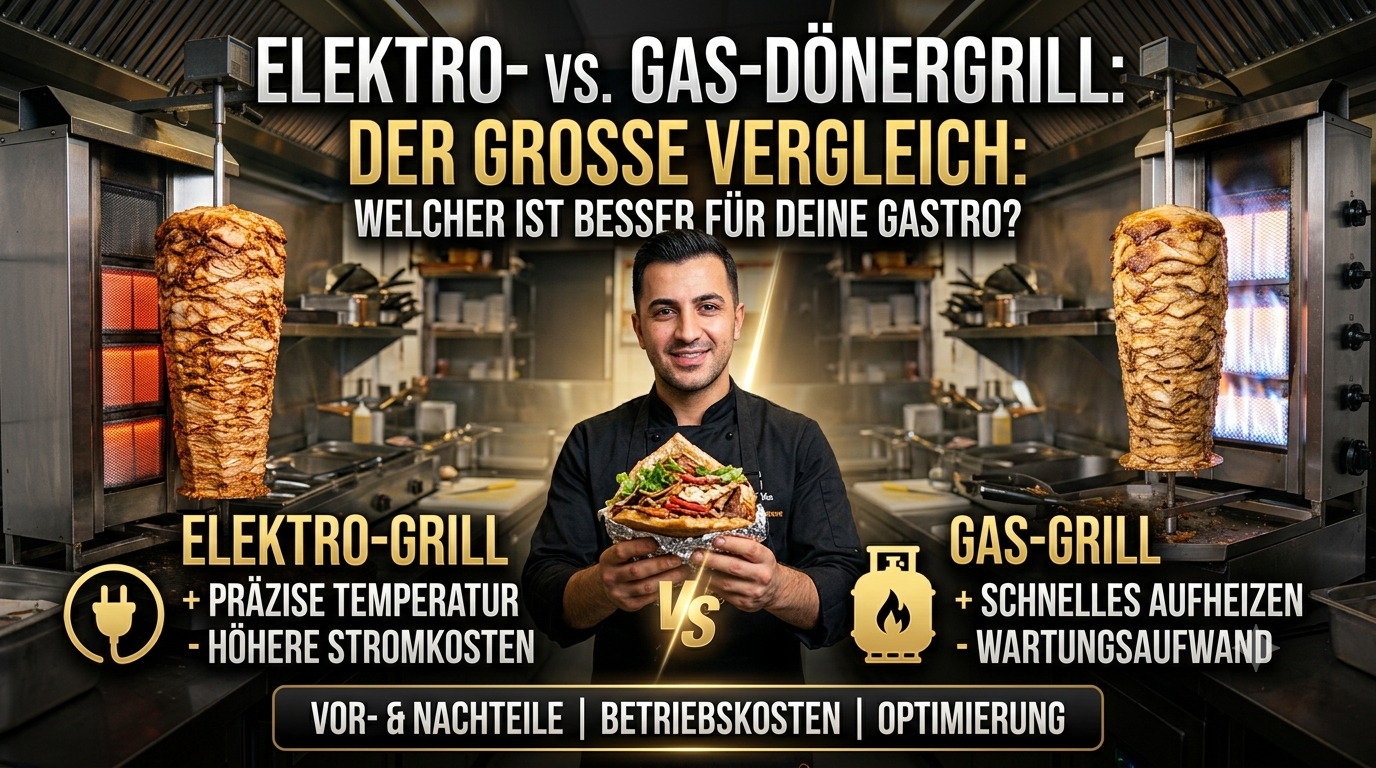
In short: There is no across-the-board winner in the electric vs. gas doner grill comparison. Electric doner grills stand out with precise temperature control, simple installation and lower maintenance effort. Gas doner grills offer intense heat, a typical roasted flavor and often lower energy costs. For snack bars and indoor locations without a gas connection, electric is usually the practical choice; for larger restaurants and catering, gas is often preferred. The key factors are energy prices, location, safety requirements and your standards for taste.
Electric or Gas Doner Grill: What the Decision Involves
The doner grill is the centerpiece of many snack bars, restaurants and catering services that serve authentic doner dishes. The choice of grill type is a significant investment. It affects operating costs, environmental impact, workflows and the quality of the final product.
The focus is on two main types: electric doner grills and gas doner grills. Both have advantages and disadvantages, which we compare objectively below.
Basics of Doner Grill Technology
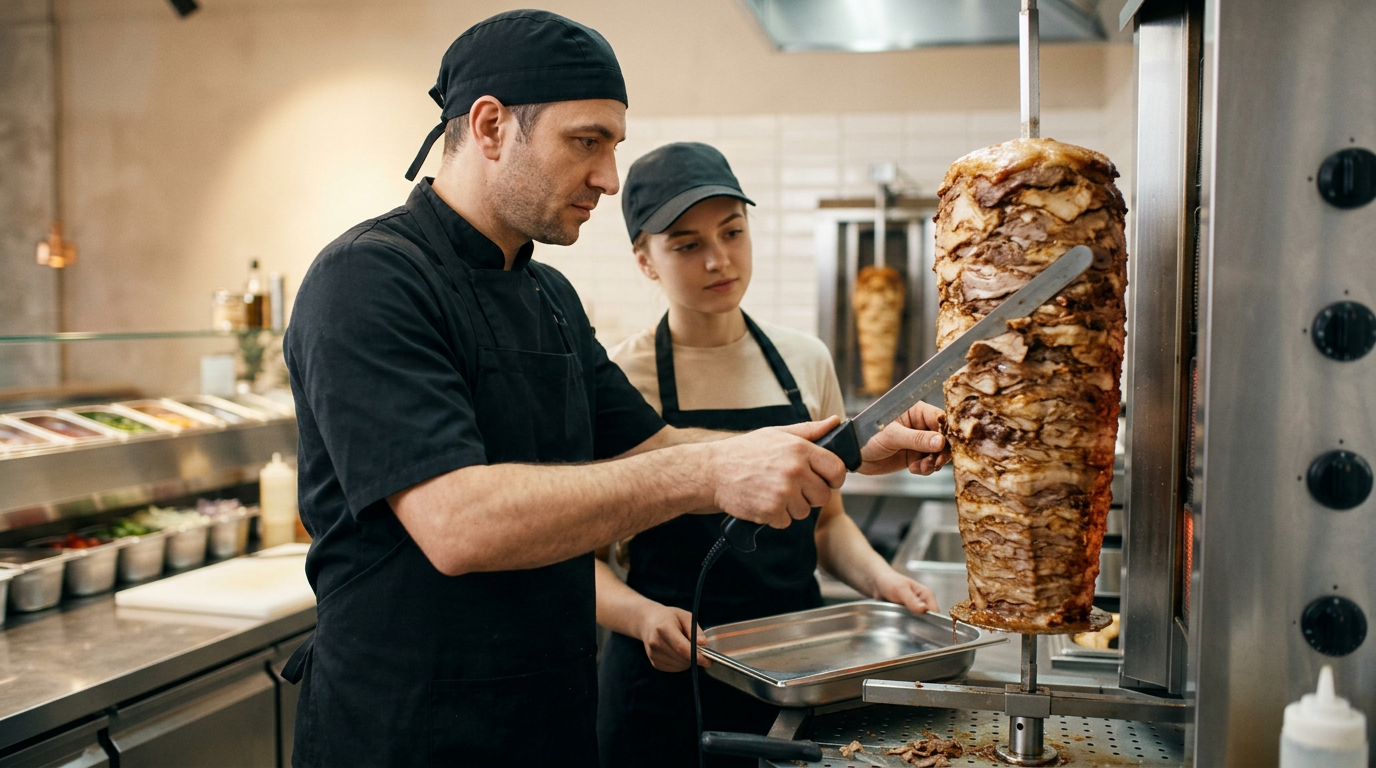
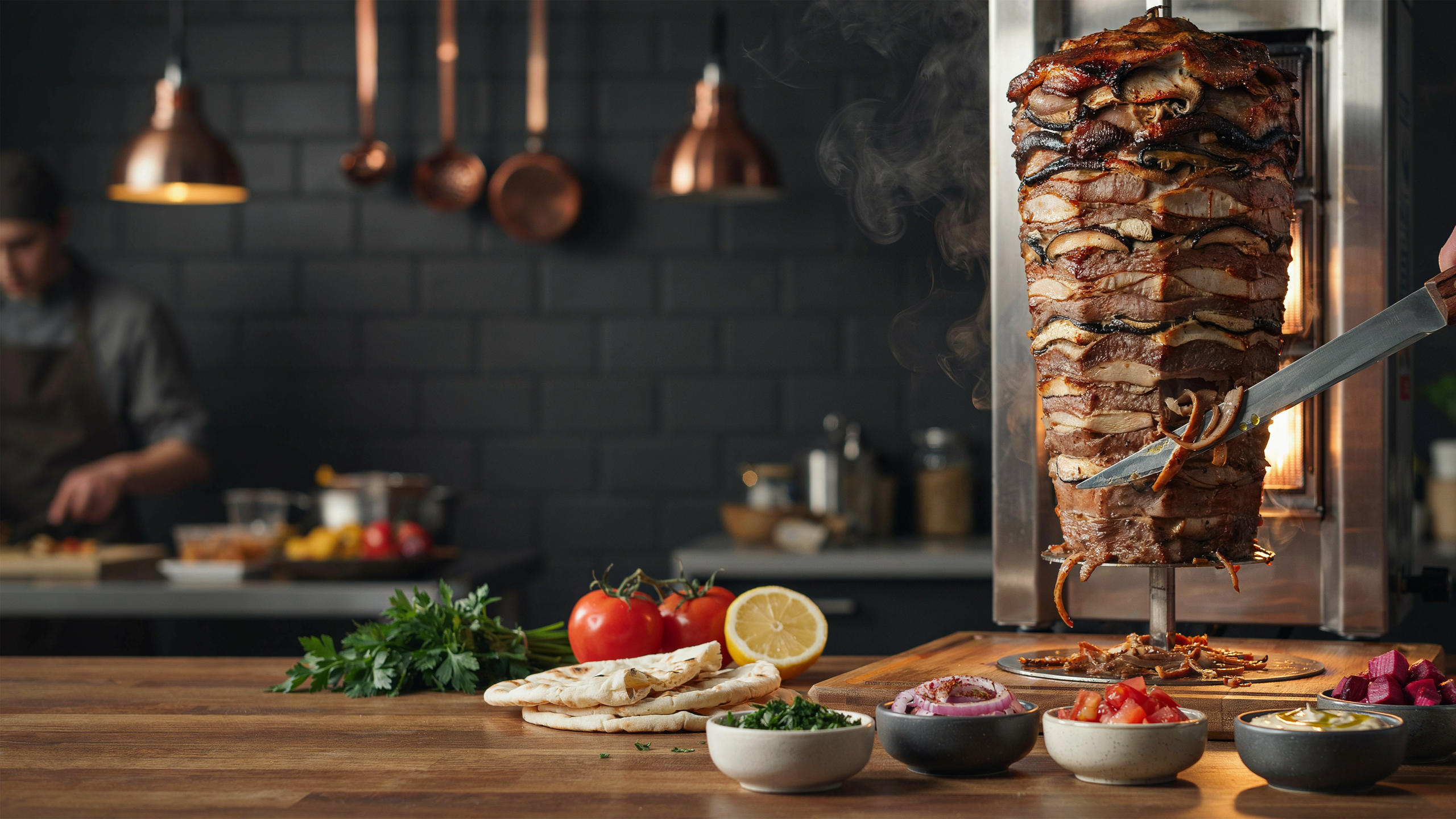
A doner grill essentially consists of a vertically rotating spit on which the meat is stacked. The heat source cooks the meat evenly while it turns. The type of heat source is the main difference between the two types.
- Electric doner grill: Uses electric heating elements, usually located behind a ceramic or quartz glass cover. The heat is released evenly and in a controlled way.
- Gas doner grill: Works with gas burners that produce an open flame and heat the meat directly from the side.
You can find an overview of both designs in our category Gyros and Doner Grills.
Electric vs. Gas Doner Grill at a Glance
| Criterion | Electric Doner Grill | Gas Doner Grill |
|---|---|---|
| Heat and flavor | Even and gentle, less intense roasted flavor | Intense heat, typical roasted flavor with a crust |
| Temperature control | Very precise, constant | Manual via valves, requires practice |
| Readiness for use | Heat available immediately | Flame needs some time to reach optimal operation |
| Operating costs | Depends on electricity prices, often lower maintenance | Gas often cheaper than electricity, but maintenance costs apply |
| Safety | No open flame, lower fire risk | Open flame, regular inspection of the gas system required |
| Installation | A power connection is sufficient | Gas supply must be secured |
| On-site emissions | No direct emissions | CO₂ directly at the point of use |
Efficiency and Performance
Electric Doner Grill
Electric grills offer very precise temperature control. The heating elements reach the desired temperature quickly and hold it steadily. This results in even cooking, which is especially advantageous for delicate types of meat.
Electric grills are also generally ready for use faster, since they require no ignition time. The heat is available immediately, which can speed up the workflow.
Gas Doner Grill
Gas grills deliver strong, intense heat. It creates the typical roasted flavor that many customers appreciate in doner meat. The open flame lightly caramelizes the meat and creates an appetizing crust.
Temperature control is more demanding: the flame is regulated manually, and heat distribution can vary depending on burner position. In addition, a gas grill needs some time before the flame burns optimally.
Operating Costs and Economic Efficiency
Electric Doner Grill
The operating costs of an electric grill depend heavily on electricity prices. In regions with high power costs, operation can become expensive. On the other hand, electric grills are often energy-efficient because they generate heat in a targeted way.
They are also generally lower maintenance, as gas lines or burners do not need regular checks. This can save costs over the long term.
Gas Doner Grill
In many cases, gas is cheaper than electricity, especially liquefied petroleum gas or natural gas. The purchase costs of gas grills are also often lower than those of electric appliances.
These savings are offset by maintenance costs: gas lines, valves and burners must be serviced regularly and checked for safety. Working with gas also requires special safety precautions, which can entail additional training and insurance questions.
To see how both options compare with your tariffs, use the energy cost calculator for commercial equipment.
Environmental Aspects
Electric Doner Grill
Electric grills can be more environmentally friendly, especially if the electricity comes from renewable sources. They produce no direct emissions on site and operate more cleanly.
The ecological footprint depends heavily on the energy source. If the electricity is generated mainly from coal or other fossil fuels, the environmental advantage is smaller.
Gas Doner Grill
Gas grills burn fossil fuels and produce CO₂ emissions directly at the point of use. Liquefied petroleum gas is cleaner than coal or wood, but it remains a fossil fuel.
The environmental impact is therefore usually higher than with electric grills, particularly if the electricity comes from renewable energy. Gas is nevertheless often more efficient than charcoal or open fire.
Ease of Use and Safety
Electric Doner Grill
Electric grills are easy to operate and do not require special training in handling gas. The temperature is usually set precisely using digital or mechanical controls.
Safety is higher because there is no open flame and the fire risk is reduced. Installation is also more straightforward, as only a power connection is needed. An example is the electric doner grill with 4 burners.
Gas Doner Grill
Working with gas requires more caution and experience. Gas lines must be installed safely and checked regularly. Open flames increase the fire risk, especially in cramped kitchens or snack stands.
The temperature is usually regulated manually via valves, which takes some practice to achieve optimal results. One option is the gas doner grill with 4 burners.
Space Requirements and Flexibility
Electric doner grills are often more compact and require only a power connection. They are particularly suitable for indoor spaces where gas lines cannot or may not be installed.
Gas grills offer more flexibility in choosing a location, since they do not necessarily depend on a power connection for heating. However, the spit drive often still requires electricity. In addition, the gas supply must be ensured, which can be difficult in some environments.
Cleaning and Maintenance
Electric Doner Grill
Cleaning is usually easier because there are no gas burners or lines. The heating elements are often easy to access and can be cleaned with suitable cleaning agents.
Routine maintenance is usually limited to checking the electrical components and cleaning the grilling surfaces.
Gas Doner Grill
Gas grills require thorough cleaning of the burners and gas lines, since grease and dirt can impair their function. In addition, safety inspections must be carried out to prevent gas leaks or malfunctions.
Taste and Quality of Doner Meat
Taste is a decisive factor for success. Many enthusiasts prefer meat cooked over an open flame, because it develops a characteristic roasted flavor.
Gas doner grills produce this aroma better, as the direct flame lightly caramelizes the meat and forms a crispy crust.
Electric grills, by contrast, cook evenly and gently. This can be advantageous with finer types of meat or special recipes. The roasted flavor is less intense, but the meat stays juicy and tender.
Tips for Selection and Purchase
- If possible, test both grill types to get a feel for operation and results.
- Consider the availability of service and spare parts in your region.
- Find out about the applicable regulations for gas installations and electrical appliances in your business.
- Plan cleaning and maintenance firmly into your operating routine.
- Take your customers' expectations regarding taste and quality into account.
Our team is happy to support you with selection and kitchen planning: request personal consultation.
Conclusion
The decision between an electric and a gas doner grill depends on several factors that you should match to your business:
- Snack bars and small restaurants: Electric grills are often the better choice. They are easy to operate, low maintenance, require no gas installation and deliver consistent quality, even indoors.
- Larger restaurants and catering: Gas grills offer more flexibility and the typical roasted flavor. However, they come with higher safety requirements and need regular maintenance.
- Environmentally conscious businesses: Electric grills should be preferred, especially if the power comes from renewable sources.
- Cost-conscious operators: Compare local energy prices. Gas can be cheaper, but maintenance and safety costs must be included in the calculation.
There is no clearly "better" grill type. The decision should be based on a careful analysis of requirements, budget, spatial conditions and the product quality you want. This is how you can keep your guests consistently delighted with good doner meat.
FAQ – Frequently Asked Questions
Is an electric or gas doner grill better for a snack bar?
For small snack bars and restaurants with an indoor kitchen, an electric doner grill is often the more practical choice: it is easy to operate, requires no gas installation and needs less maintenance. If you value a strong roasted flavor or do not have a suitable power connection, a gas doner grill may work better. There is no blanket recommendation.
Which doner grill is cheaper to operate?
This depends on local prices. Gas is often cheaper per kilowatt-hour than electricity, and gas appliances are frequently less expensive to purchase. On the other side are the costs for maintenance, safety inspections and installation. Electric appliances operate efficiently and need less maintenance. A calculation with your own tariffs will provide clarity.
Does doner from a gas grill taste better?
Many guests appreciate the roasted flavor created by the open flame of a gas doner grill, because the meat lightly caramelizes and forms a crust. Electric doner grills cook more evenly and gently; the flavor is less intense, but the meat stays juicy and tender. Which taste is better is ultimately a matter of preference and depends on your recipe and customers.
What do I need to consider when operating a gas doner grill?
Gas systems should be installed by a qualified specialist and inspected regularly for leaks and proper function. Which requirements, acceptance tests or insurance conditions apply to your business depends on the location and the type of gas supply. Clarify this with a qualified specialist and the responsible authority before purchasing; we cannot provide binding legal advice.
Which doner grill is suitable for catering?
For catering, a gas doner grill is often attractive if no power connection is available and a gas supply can be secured. However, observe the safety requirements at the event location. Electric models are suitable if sufficient power capacity is available on site. Check the venue, gas cylinder storage and transport in advance before making a decision.