Deutsch
 Türkçe
 Italiano
 Nederlands
 Français
 Español
 Polski
 Čeština
 Svenska
 Português PT
 Русский
 اللغة العربية
 中文
 日本語
 Tiếng Việt
 ภาษาไทย
 Română
 ελληνικά
 Magyar
 Dansk
 Suomi
 Hrvatski
 български език
 Eesti keel
 Latviešu valoda
 Slovenčina
 Slovenščina
 Bosanski
 עברית
 हिन्दी
 Bahasa melayu
 Kiswahili
 Bahasa Indonesia
 Papiamento
 Bokmål
 Lietuvių kalba
 Українська
 српски
 Shqip


 ›
 ›
 ›
 ›
 ›
 ›
 ›
 ›
 ›
 ›
 ›
 ›
 ›
 ›
 ›
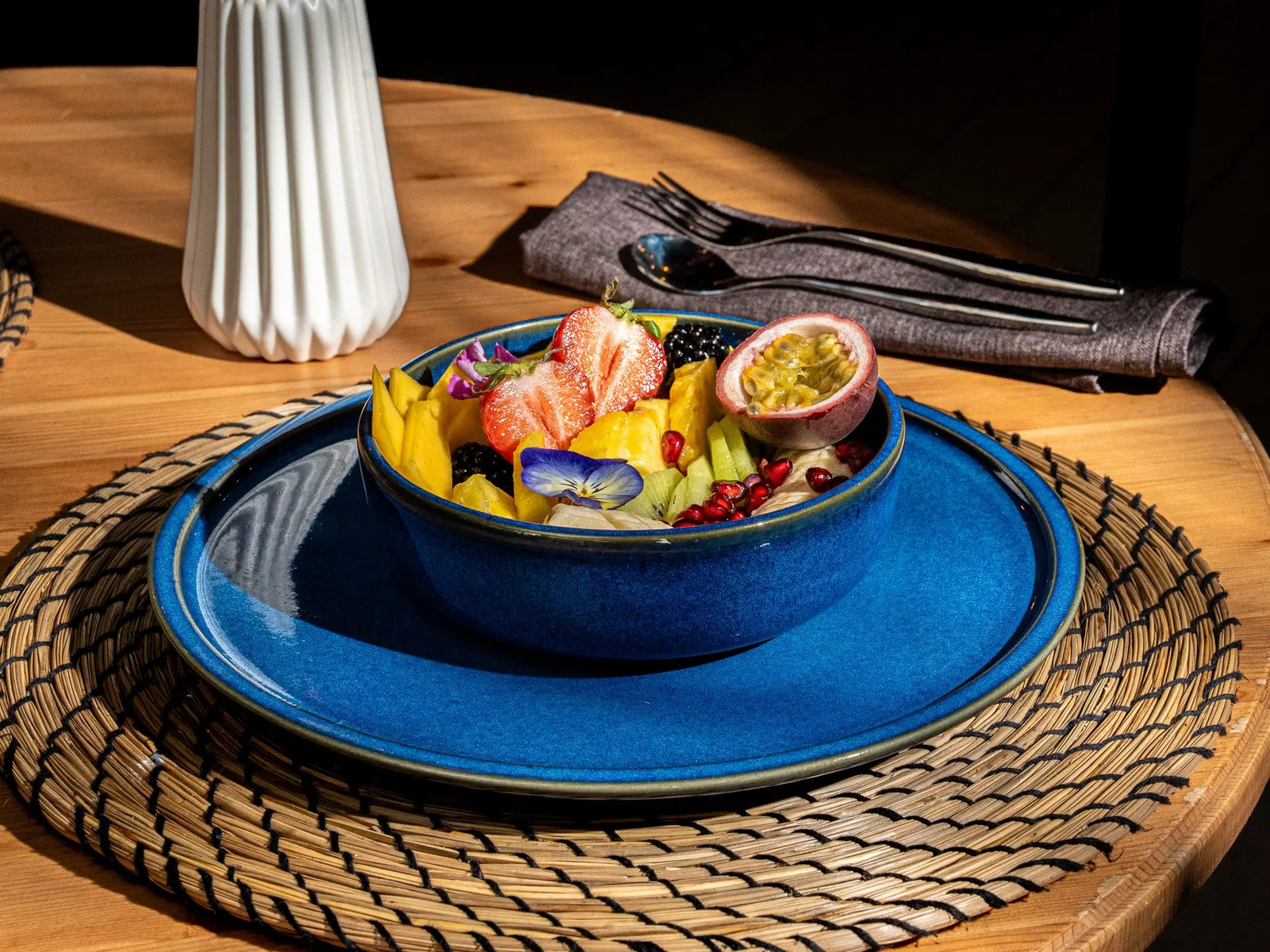
In short: Commercial tableware made from high-quality hotel china pays off, because it is edge-impact resistant, hygienic and designed for commercial dishwashers. If you pay attention to stable edges, stackable shapes and a range you can reorder, you will lower breakage rates and the cost per cover over the long term. This guide shows which restaurant plates and bowls make sense for which concept.
The eye eats first – in modern foodservice this matters more than ever. Behind the scenes, however, restaurant tableware has to deliver far more than good looks. It must withstand knocks, survive countless wash cycles and make stacking and storage easier.
What makes good commercial tableware
With professional tableware, the difference between good and poor quality becomes clear quickly. Hotel china is developed specifically for the demands of commercial kitchens and front-of-house service. Check these properties when you buy:
Edge impact resistance and body density
Thanks to special firing processes and a dense body, professional porcelain is far more resistant to chipping than household tableware. The edge in particular is under constant stress in daily service. Many ranges also come with a multi-year guarantee against edge chipping; the exact terms vary by range and should be checked before purchase.
Heat resistance and hygiene
Good hotel china withstands strong temperature changes, for example from warming through to plating. The closed, low-porosity glaze is easy to clean and holds up to aggressive detergents and the high temperatures of commercial dishwashers. For decorated pieces and metallic glazes, it is worth checking the care instructions.
Design for every concept
Whether classic white, simple Nordic style or a rustic handmade look in stoneware style: the tableware is the stage for your dishes and shapes the overall impression of your concept. You will find a wide selection in the category Hotel porcelain for foodservice.
Restaurant plates and bowls for your concept
Which shape suits which use? The overview below helps you choose; afterwards we look at the individual types of plates and bowls in more detail.
| Tableware type | Typical use | Operational benefit |
|---|---|---|
| Flat plate (approx. 26–31 cm) | Main courses, creative plating | Large presentation surface |
| Compartment plate | Tasting menus, tapas, serving components separately | Order on the plate, distinctive look |
| Deep plate | Soup, pasta, starters, bowls | Keeps food warm longer, centres the ingredients |
| Bowls (e.g. approx. 10 cm) | Side dishes, sauces, dips | Stackable, versatile |
Flat restaurant plates: the canvas for main courses
Flat plates offer the space needed for creative plating. A handcrafted, slightly rustic look is on trend, combined with the hardness of professional porcelain. With diameters around 30 cm, even generous main courses can be presented impressively.
- Large sets in handmade look: Hand-painted, sturdy plates suit bowl food and sharing concepts well and are suitable for everyday restaurant service.
- Compartment plates: Ideal for tasting menus and tapas when you want to serve components separately.
- Textured surfaces: For a refined, modern look, for example flat plates with a cobblestone pattern in a larger set are a good choice.
Deep plates and pasta plates
A deep plate centres the ingredients visually and is indispensable for soups, pasta or creative starters. Thanks to its shape, the food often stays warm for longer.
- Deep plates with a rim: Timeless elegance for fine dining and classic high-end gastronomy.
- Speckled glazes: Set bold accents, for example for sushi and appetisers, and are both eye-catching and durable.
- Deep plates with a straight rim: Modern geometry; matching flat plates from the same range can serve as a lid for the deep plate.
- Extra-deep shapes: For pasta, stews and bowls, extra-deep porcelain plates are a good option.
Bowls and supplementary pieces
No service is complete without matching additions. In everyday foodservice, stackability is the main priority here.
- Hand-painted bowl sets: Ideal for side dishes and sauces in a handmade look.
- Classic porcelain bowls (approx. 10.5 cm): The sturdy all-rounder for continuous daily use.
How to reduce breakage and follow-up costs
The purchase is only part of the equation. How the tableware is handled in daily operations also determines how long it lasts.
- Choose a consistent range so that individual pieces can be reordered without problems.
- Use suitable dishwasher racks and reliable washing technology, such as an under-counter commercial dishwasher, and make sure detergents are dosed correctly.
- Stack only up to the recommended height and store plates with sufficient spacing.
- Train dishwashing and service staff in careful handling.
Conclusion
Those who buy cheap in foodservice often end up paying twice: high wear, scratches in the glaze and constant breakage drive operating costs up. Professional porcelain combines aesthetics with industrial durability and is therefore an investment in the profitability of your business. If you have questions about putting together your service or would like a quote for larger order volumes, our team is happy to help with personal advice.
FAQ – Frequently Asked Questions
Which tableware is best for foodservice?
Hotel china is the most suitable choice for foodservice: it has a dense body, a robust glaze and reinforced edges. You should also check that the range is dishwasher-safe, stackable and available for reordering. For busy operations, choose simple shapes with a sturdy rim, as these are less prone to chipping and can be stored in a space-saving way.
What plate sizes are common in foodservice?
For main courses, flat plates with a diameter of roughly 26 to 31 cm are common; large presentation plates around 30 cm offer more space for plating. For starters and desserts, 18 to 22 cm is often sufficient. Deep plates for pasta or soup are typically 22 to 28 cm. These are guideline values – what matters most is your concept, portion size and the space available in the storage shelves and dishwasher.
Is hotel china dishwasher-safe?
Generally yes: professional porcelain is designed for commercial dishwashers with high temperatures and alkaline detergents. Nevertheless, check the manufacturer's information, especially for decorated pieces, metallic glazes and hand-painted surfaces. Suitable racks and correctly dosed detergents further reduce breakage and glaze wear.
How can I reduce breakage with commercial tableware?
Choose tableware with reinforced edges, use suitable dishwasher racks and stack only up to the recommended height. Train dishwashing and service staff in handling, store plates on shelves with sufficient spacing and avoid thermal shocks beyond the manufacturer's specifications. A consistent range also makes it easier to replace individual pieces.
Can I order commercial tableware in larger quantities?
Yes. iGastroNomic also supplies commercial tableware in larger quantities, worldwide on request and up to complete containers. For a quote and help putting together your service, you can request free advice. It is best to tell us your concept, the quantities you need and the delivery location.