Deutsch
 Türkçe
 Italiano
 Nederlands
 Français
 Español
 Polski
 Čeština
 Svenska
 Português PT
 Русский
 اللغة العربية
 中文
 日本語
 Tiếng Việt
 ภาษาไทย
 Română
 ελληνικά
 Magyar
 Dansk
 Suomi
 Hrvatski
 български език
 Eesti keel
 Latviešu valoda
 Slovenčina
 Slovenščina
 Bosanski
 עברית
 हिन्दी
 Bahasa melayu
 Kiswahili
 Bahasa Indonesia
 Papiamento
 Bokmål
 Lietuvių kalba
 Українська
 српски
 Shqip


 ›
 ›
 ›
 ›
 ›
 ›
 ›
 ›
 ›
 ›
 ›
 ›
 ›
 ›
 ›
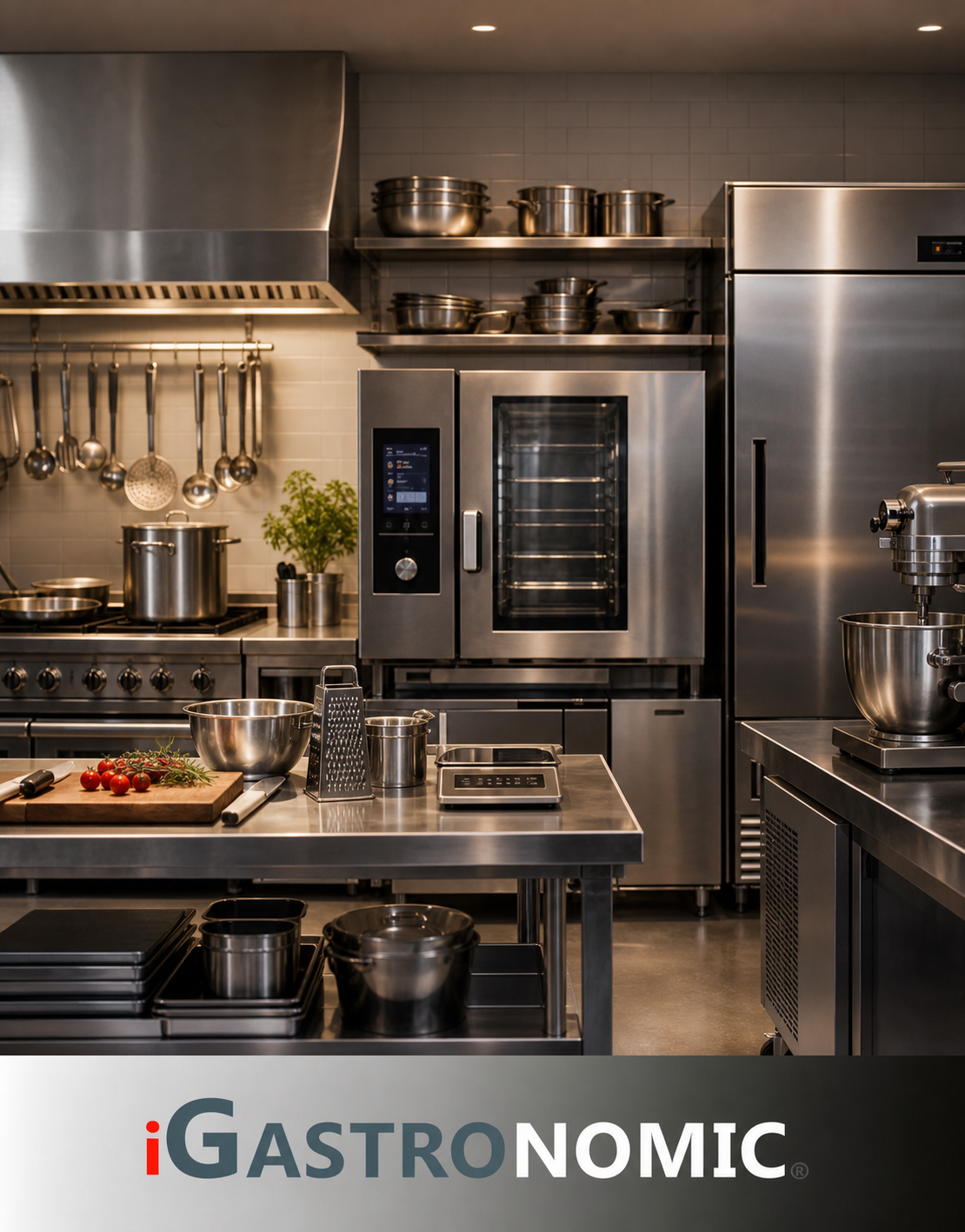
In short: The most important kitchen equipment for a restaurant includes a range, oven or combi steamer, refrigeration and freezers, a commercial dishwasher, stainless steel work tables and an extractor hood. Fryers, salamanders, food processors or sous vide units are supplementary appliances that depend on your menu concept. Planning quality, space requirements and workflows from the start helps you avoid costly wrong purchases.
Why choosing kitchen equipment matters so much
Opening a restaurant involves many decisions. One of the most important is: which kitchen equipment is necessary for the commercial kitchen to run smoothly? The right setup affects efficiency, quality and ultimately the success of your business.
In a professional kitchen, it is not only about good food, but also about preparing it quickly, hygienically and cost-effectively. Suitable equipment optimizes workflows, relieves the staff and ensures consistent food quality.
On the other hand, an incorrectly chosen or unnecessary appliance wastes space, causes unnecessary costs and disrupts the workflow. Therefore, choose your kitchen equipment carefully and align it with the needs of your restaurant.
Basic equipment: the indispensable kitchen appliances
Regardless of the concept, there are appliances that must not be missing in any professional kitchen. They form the foundation for an efficient commercial kitchen.
Range and oven
The range is the heart of every kitchen. Whether gas, electric or induction, the choice depends on the menu, personal preferences and the existing infrastructure. Several cooking zones make it possible to prepare different dishes at the same time. A six-burner gas range with integrated oven is an example of a high-performance solution for continuous operation.
| Range type | Typical strengths | What to check |
|---|---|---|
| Gas | Direct, quickly adjustable heat; widely used in professional kitchens | Clarify gas connection, extraction and safety requirements in advance |
| Electric | Robust, uncomplicated, even heat distribution | Check suitable power connections and connected load |
| Induction | Energy-efficient, fast response, less heat released into the room | Induction-compatible cookware and sufficient electrical installation |
The oven complements the range and is indispensable for baking, roasting and gratinating. For restaurants, a combi steamer or convection oven that combines many cooking methods in one appliance is recommended. An electric convection/steam oven in gastronorm format is a typical choice for this.
Refrigeration
Fresh ingredients are key in the food service industry. Refrigerators and freezers store food safely and hygienically. As a rough guide, refrigeration is typically a few degrees above zero, while freezing is around −18 °C. Depending on the size of your business, you will need different solutions:
- Refrigerators: for fresh ingredients, sauces and prepared dishes. A glass-door refrigerator is suitable, for example, for drinks and quick access in the service area.
- Freezers: for frozen products and stock storage.
- Refrigerated counters: for presentation and quick access to ingredients.
Dishwasher
A powerful commercial dishwasher cleans dishes, cutlery and cooking utensils quickly and hygienically. In the commercial kitchen, it saves time and effort and is therefore a real efficiency factor.
Work tables and cutting boards
Sturdy stainless steel work tables provide enough space for food preparation. Cutting boards in different sizes and colors support hygiene and help prevent cross-contamination.
Extractor hood
The extractor hood removes steam, smoke and odors and ensures good air quality. It is important for hygiene, safety and the well-being of staff. Have ventilation and exhaust systems professionally planned and check the regulations applicable to your location.
Supplementary kitchen equipment for greater efficiency
Depending on the type and size of your restaurant, additional appliances can improve workflows and enhance food quality.
Food processors and mixers
Food processors make it easier to knead dough, stir sauces or chop ingredients. A powerful blender is particularly helpful when smoothies, soups or purées are on the menu.
Fryer
If you offer fried dishes, you need a fryer. It enables fast and even frying of fries, snacks or fish.
Salamander or grill
A salamander is suitable for gratinating, browning and quick finishing. A grill is versatile, especially in restaurants serving meat or fish dishes.
Sous vide units
The sous vide cooking method is gaining importance in the food service industry. Food is cooked gently and precisely in vacuum-sealed bags, resulting in tender and aromatic results.
Vacuum sealer
A vacuum sealer keeps food fresh for longer and prepares it for sous vide cooking. It is a useful addition, but not a must for every kitchen.
Individual selection: tailored to your concept
Every restaurant is different – from the menu to the kitchen space to the staff. Therefore, always align your kitchen equipment with your needs.
Menu and food concept
An Italian restaurant requires different equipment than a sushi restaurant or a pizzeria. Think carefully about which preparation methods dominate your menu, and choose the equipment accordingly.
| Concept | Typical additional equipment (examples) |
|---|---|
| Pizzeria | Pizza oven, dough mixer, refrigerated prep table |
| Steak and grill restaurant | Grill, salamander, combi steamer |
| Snack bar and quick-service restaurant | Fryer, griddle plate, refrigerator |
| Sushi and seafood restaurant | Rice cooker, refrigerated display case, vacuum sealer |
| Bistro with soups and purées | Blender, food processor, combi steamer |
Kitchen space and room layout
Not every kitchen offers a lot of space. If space is limited, pay attention to compact and multifunctional equipment. With a free 3D kitchen planner, you can test walking routes and equipment positions in advance.
Staff and workflows
The number of kitchen staff and how workflows are organized determine which equipment makes sense. The clearer the stations are separated, the more efficiently the team works.
Budget planning: quality over quantity
Kitchen equipment is an investment that should be well planned. Professional appliances are generally more durable, more powerful and often more energy-efficient. Inexpensive entry-level appliances save money in the short term, but often cause higher follow-up costs due to repairs or replacement purchases.
Create a priority list and invest first in the most important appliances. Expand your equipment step by step as your business grows. At iGastroNomic, you receive personal advice and free kitchen planning, by phone at +49 (0) 6135 7040 450.
Care and maintenance of kitchen equipment
To ensure your kitchen equipment works reliably for a long time, regular cleaning and maintenance are essential. Clean the appliances according to the manufacturer's instructions, carry out inspections and replace wear parts in good time.
Schedule fixed cleaning intervals, for example for grease filters, seals and refrigeration units. This keeps hygiene, performance and service life consistently at a high level.
Conclusion
Choosing the right kitchen equipment is one of the most important decisions when opening or modernizing a restaurant. A well-considered basic setup of range, oven, refrigeration, dishwasher and work tables forms the basis for smooth operations.
Supplementary appliances such as food processors, fryers or sous vide units make sense depending on the menu and concept. Align your selection with individual needs, focus on quality and plan space, budget and maintenance from the very beginning.
FAQ – Frequently Asked Questions
What kitchen equipment does a restaurant need at minimum?
At minimum, a restaurant needs a range with oven or combi steamer, refrigerators and freezers, a commercial dishwasher, stainless steel work tables with cutting boards and an extractor hood. These appliances cover preparation, storage, cleaning and ventilation. Fryers, salamanders, food processors or sous vide units are added depending on the menu. This way, you start with a solid foundation and expand as needed.
Gas, electric or induction – which range is better for food service?
Gas offers direct, quickly adjustable heat and is standard in many professional kitchens. Induction works energy-efficiently, heats up quickly and keeps the kitchen cooler, but requires induction-compatible cookware and a suitable power connection. Electric is robust and uncomplicated. What matters most are your menu, the existing connections and your operating costs – have the infrastructure checked in advance.
Is a combi steamer worthwhile in a restaurant?
A combi steamer is worthwhile in most restaurants with a varied menu, because it combines baking, roasting, steaming and regenerating in one appliance. It saves space, relieves the staff and delivers reproducible results. For a very small menu or a tight budget, a simple convection oven may be sufficient at first. Also check connected loads and water quality.
How do I plan the budget for kitchen equipment?
Create a priority list: first range, oven, refrigeration, dishwasher and work tables, later additional equipment. Choose durable professional appliances rather than cheap entry-level models, because otherwise repairs and replacements become expensive. Also consider energy consumption, installation, ventilation and maintenance. Free kitchen planning helps avoid wrong purchases and distribute the budget realistically.
When is a sous vide unit worthwhile in food service?
Sous vide is worthwhile if you want to cook meat, fish or vegetables very precisely and evenly, or prepare dishes in advance, for example for banquets or large quantities. Cooking in vacuum-sealed bags at a controlled temperature delivers reproducible results. For small menus without such dishes, it is usually not a requirement. A vacuum sealer is a useful complement to this method.