Deutsch
 Türkçe
 Italiano
 Nederlands
 Français
 Español
 Polski
 Čeština
 Svenska
 Português PT
 Русский
 اللغة العربية
 中文
 日本語
 Tiếng Việt
 ภาษาไทย
 Română
 ελληνικά
 Magyar
 Dansk
 Suomi
 Hrvatski
 български език
 Eesti keel
 Latviešu valoda
 Slovenčina
 Slovenščina
 Bosanski
 עברית
 हिन्दी
 Bahasa melayu
 Kiswahili
 Bahasa Indonesia
 Papiamento
 Bokmål
 Lietuvių kalba
 Українська
 српски
 Shqip


 ›
 ›
 ›
 ›
 ›
 ›
 ›
 ›
 ›
 ›
 ›
 ›
 ›
 ›
 ›
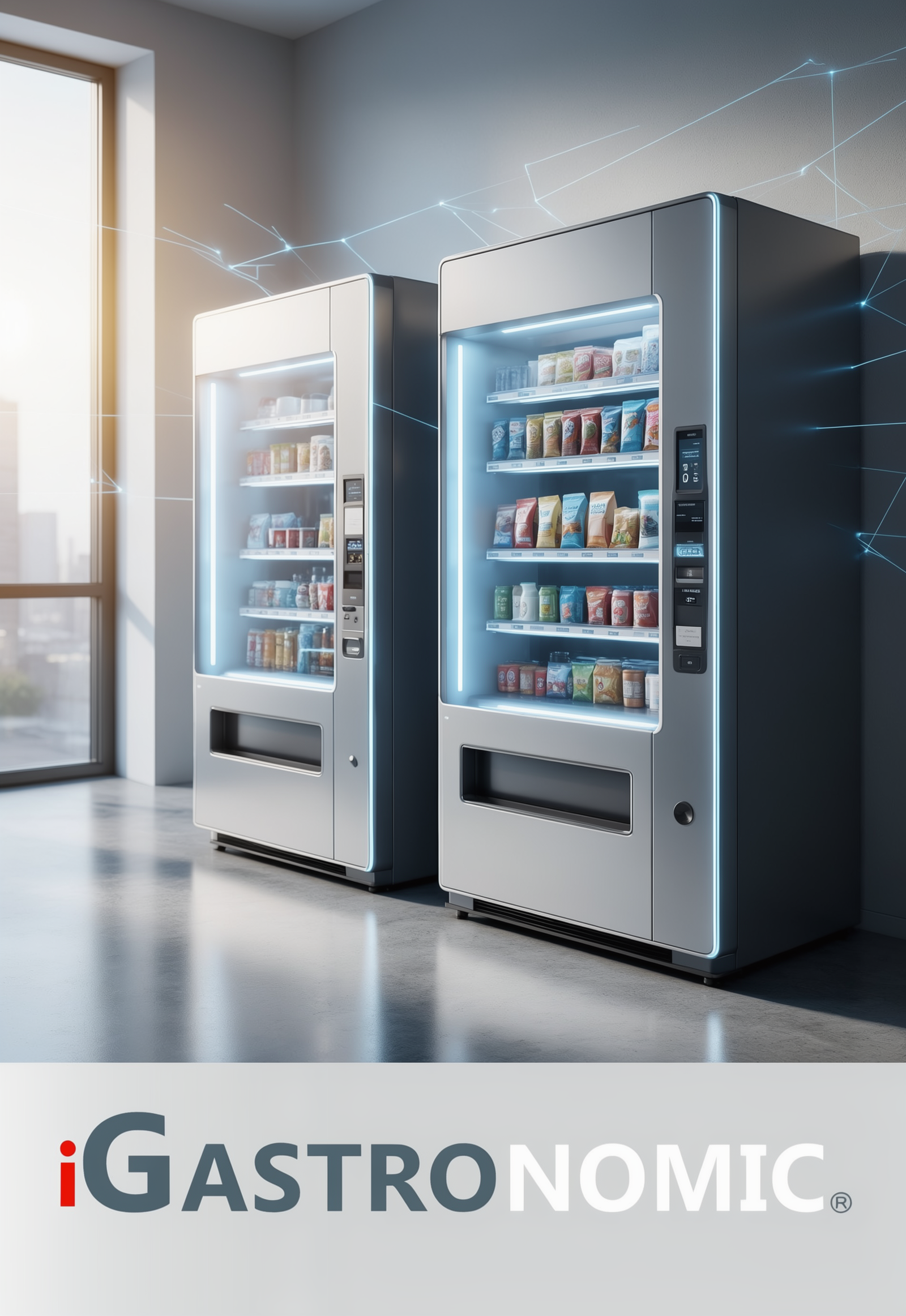
In short: Vending machines sell goods or services around the clock without sales staff. Modern units offer contactless payment, touchscreens, refrigeration and connectivity via IoT. For foodservice businesses, they are a useful addition for offering snacks, drinks and fresh products even outside opening hours.
What Are Vending Machines?
Vending machines are automated dispensing units that release goods or services in exchange for payment. No human seller is required. Classically, they are known as snack or drink machines.
The range has since become much broader. There are machines for fresh food, electronics, cosmetics and hygiene products, and in some countries also for medicines.
History of Vending Machines
The idea of automated sales is very old. The inventor Hero of Alexandria described, in the 1st century AD, a device that dispensed holy water after a coin was inserted.
In the 19th and 20th centuries, vending machines then spread through modern societies. In Germany and other European countries, they became popular above all in train stations, schools and offices.
Digitalisation, card payment and networking have greatly increased the importance of vending machines in recent years.
Overview of Vending Machine Types
Vending machines differ greatly in design and product range. The table shows the most important types:
| Type | Typical product range | Special feature |
|---|---|---|
| Snack and drink machines | Sweets, crisps, coffee, soft drinks, water | The classic, often with coin and card payment |
| Fresh food machines | Sandwiches, fruit, salads | Usually refrigerated; the cold chain must be observed |
| Electronics and tech machines | Headphones, charging cables, power banks | Frequently found at airports and train stations |
| Medical machines | First-aid items, hygiene products | Check legal requirements for each product and country |
| Cosmetics and care machines | Make-up, skincare, shaving products | Compact design for many locations |
| Specialty machines | Books, flowers, wine, clothing | For special target groups and occasions |
For foodservice businesses, a snack vending machine and machines for specialty ranges are of particular interest, for example a wine vending machine for selling wine outside opening hours.
Technological Innovations in Vending Machines
Digitalisation has driven development considerably. These are the most important innovations:
- Contactless payment systems: Card payment, mobile payment via smartphone and QR codes are increasingly replacing coins and banknotes.
- Touchscreen operation: Intuitive interfaces make product selection easier and provide additional information, for example on ingredients.
- Artificial intelligence (AI): AI can make product recommendations and analyse stock levels.
- IoT connectivity: Networked machines automatically report sales figures, faults and restocking needs to the operator.
- Sustainability: Energy-efficient refrigeration, more environmentally friendly packaging and recycling options are gaining importance.
Benefits of Vending Machines
Vending machines offer several advantages for operators and customers:
- 24/7 availability: Sales are possible outside regular business hours.
- Convenience: Purchases are quick, with no queue and no service staff required.
- Small footprint: Machines need little space and can be placed in many locations.
- Cost efficiency: Lower staffing requirements and automated processes can reduce operating costs.
- Varied offering: The product range extends from snacks to high-tech products.
Challenges and Criticism
Despite these advantages, operators should plan for the following points:
- Technical faults: Machines can fail, or payment may not work. Regular maintenance is important.
- Vandalism and theft: Especially at public locations, there is a higher risk of damage.
- Limited product range: Compared with a shop, the assortment is restricted.
- Sustainability: Packaging waste and energy consumption are areas where improvement is needed. The energy cost calculator for commercial catering equipment can help you estimate electricity costs in advance.
Vending Machines in Foodservice
Places of Use and Opportunities
In foodservice, vending machines are a fast alternative or addition to a traditional snack bar or café. Machines offering fresh snacks, coffee or hot meals are popular above all in office buildings, train stations and universities.
Restaurants, hotels and bakeries can also use them to extend their offering outside opening hours.
Personalised Offers
Some modern machines offer menus tailored to dietary preferences or allergies. Customers can thus quickly purchase healthy and varied meals.
Refrigeration as a Key Factor
For fresh food, reliable refrigeration and an unbroken cold chain are essential. Suitable equipment can be found in the category retail refrigeration. You should clarify food law requirements with the responsible authority before starting.
Future Trends in Vending Machines
The following developments are emerging for 2026 and the years ahead:
- Integration of AI: Machines analyse purchasing behaviour and adjust the offering dynamically.
- Virtual and augmented reality: Interactive product presentations at the machine are conceivable.
- More sustainable machines: Environmentally friendlier materials, efficient technology and energy sources are moving more into focus.
- Personalisation: Customer profiles enable individual recommendations and discounts.
- Multifunctional machines: Vending machine, information point and service centre are combined in one device.
Conclusion
Vending machines are far more than snack dispensers. They are an established part of the modern retail landscape and offer many advantages to consumers and operators. With card payment, networking and a growing range of products, their importance will continue to increase.
For foodservice businesses, getting started is worthwhile when location, product range, refrigeration and maintenance are well planned. When selecting suitable equipment, the personal consultation offered by iGastroNomic can help.
FAQ – Frequently Asked Questions
What are vending machines and how do they work?
Vending machines are dispensing units that release goods against payment without staff. The customer selects a product via buttons or touchscreen, pays in cash, by card or by smartphone, and the machine delivers the product through a dispensing mechanism. Networked units also report sales, stock levels and faults to the operator.
Which vending machines are suitable for foodservice businesses?
Snack, drink and refrigerated fresh food machines are particularly suitable, for example for sandwiches, salads or desserts. Specialty machines, for instance for wine, can also complement the offering outside opening hours. Location, target group, refrigeration needs, payment methods and the applicable food and youth protection rules are decisive.
Which payment methods should a modern vending machine offer?
Common options are card payment by chip or contactless, as well as mobile payment via smartphone and, in some cases, QR code payment. Cash can remain useful depending on location and target group, but it means more maintenance effort. Plan for at least one contactless option so guests can pay quickly and without coins.
What should foodservice businesses consider when setting up a vending machine?
Important factors are a location with high footfall and a power connection, sufficient space and reliable refrigeration for fresh products. You should also schedule refilling, cleaning, maintenance and hygiene in advance and check legal requirements and insurance. Electricity costs can be estimated beforehand with an energy cost calculator.