Deutsch
 Türkçe
 Italiano
 Nederlands
 Français
 Español
 Polski
 Čeština
 Svenska
 Português PT
 Русский
 اللغة العربية
 中文
 日本語
 Tiếng Việt
 ภาษาไทย
 Română
 ελληνικά
 Magyar
 Dansk
 Suomi
 Hrvatski
 български език
 Eesti keel
 Latviešu valoda
 Slovenčina
 Slovenščina
 Bosanski
 עברית
 हिन्दी
 Bahasa melayu
 Kiswahili
 Bahasa Indonesia
 Papiamento
 Bokmål
 Lietuvių kalba
 Українська
 српски
 Shqip


 ›
 ›
 ›
 ›
 ›
 ›
 ›
 ›
 ›
 ›
 ›
 ›
 ›
 ›
 ›
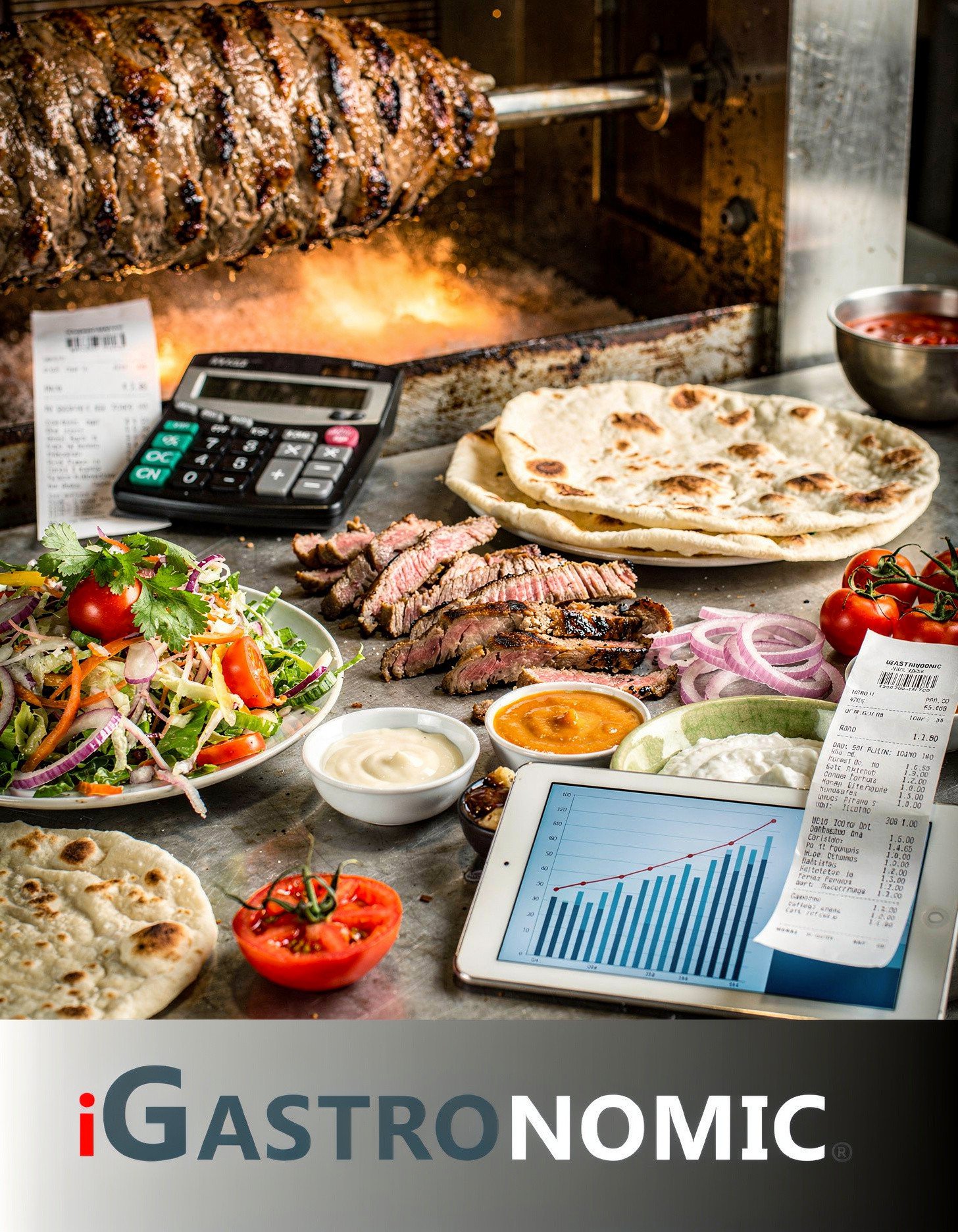
In short: To calculate costs and profits in your restaurant, determine the food cost, the proportional staff and overhead costs, and the waste for each dish, then derive the selling price from these figures. A free online calculator takes over this calculation work and shows which dishes really generate profit. This way, you optimise your menu based on figures rather than gut feeling.
As a restaurant owner, you know how important it is to keep an eye on the costs and profits of every dish. Only then will your business remain profitable in the long term. However, costing food and beverages is often more complex than it first appears: Which ingredients cost how much? Which staff and overhead costs do you need to include? And which dishes actually bring in good sales?
In this guide, we show you how to build your costing step by step. We also introduce the free calculator from iGastroNomic, which lets you carry out the calculation quickly and improve your menu based on the results.
Why is calculating costs and profits in a restaurant so important?
The restaurant industry is a highly competitive market with often tight margins. Many businesses run into trouble because they misjudge their costs or set selling prices too low. An accurate calculation answers these questions:
- Which ingredients cost how much?
- What are the total costs per dish?
- How much profit remains per dish sold?
- Which dishes are particularly profitable, and which hardly are?
- How can the menu be adjusted to increase sales?
Without this information, sound decisions are hardly possible. You risk offering popular dishes that barely earn anything, or setting prices so low that every sale loses money.
Which costs belong in food costing?
Costing is more than a question of ingredient prices. Many restaurateurs use rules of thumb that quickly become inaccurate. You should take these components into account:
| Cost type | What is included? | What to watch out for |
|---|---|---|
| Food cost | All ingredients of a dish | Purchase quantity rather than plate quantity, current prices |
| Staff costs | Preparation, service, cleaning | Realistic time required per dish |
| Overheads | Rent, electricity, water, cleaning, marketing and other fixed costs | Allocate proportionally across the dishes |
| Losses and waste | Spoiled or unsold food | Plan for it as a surcharge |
| Pricing | Market prices, competition, target group, positioning | Balance target margin and guest expectations |
Recording food cost correctly
Food cost includes all ingredients, including oil, spices and garnish. Calculate with the quantity you actually have to purchase, because trimming and cooking losses increase the cost per portion. As a rough guide, food cost in many businesses is around a quarter to a third of net sales. However, it varies greatly depending on the concept.
Including staff and overheads proportionally
Staff costs arise not only in cooking but also in service and cleaning. Paths and workflows in the kitchen also affect the time required. Our free 3D kitchen planner can help you with the layout.
Overheads also include the energy consumption of your equipment. You can estimate how high it is with the energy cost calculator for commercial kitchen equipment.
Calculation step by step
This is how to proceed for each dish:
- Record the ingredients with quantity and current purchase price.
- Add the proportional staff costs for preparation.
- Allocate overheads proportionally to each dish.
- Plan a surcharge for losses and waste.
- Determine the net selling price from the cost price and the desired profit margin.
- Add the applicable VAT and compare the price with the market and competition.
It is best to clarify with your tax advisor which tax rate applies to your food and beverages.
The free calculator from iGastroNomic
The calculator is a free online tool developed specifically for restaurateurs. It takes the relevant cost factors into account and quickly delivers meaningful results.
What you can calculate with the calculator
- Record the cost of every ingredient precisely
- Include staff and overhead costs proportionally
- Account for losses and waste
- Determine the optimal selling price
- Calculate profit margins for each dish
- Optimise menu planning based on the data
How it works
Operation is simple and intuitive. You enter the ingredients of your dish with quantity and price and add the proportional staff costs for preparation. You can also include overheads per dish to get a realistic cost base.
The calculator automatically determines the total costs and shows which selling price you should set to achieve your desired profit margin. This way, you can see at a glance which dishes are worthwhile and where you need to make improvements.
The advantages at a glance
- Time saving: Less effort required for costing.
- Accuracy: Precise calculations help avoid miscalculations.
- Transparency: You see exactly where your costs lie.
- Optimisation: You identify which dishes are particularly profitable.
- Flexibility: The calculator is free and available online at any time.
Practical example: Which dishes really bring in good sales?
Imagine a small bistro that wants to know which dishes are most profitable. The owner enters the ingredients and costs for two dishes into the calculator:
- Dish A: Pasta with tomato sauce and Parmesan
- Dish B: Grilled chicken with vegetables and rice
The result: Dish A is cheaper to produce but, due to its low selling price, achieves only a small profit margin. Dish B has higher costs, but it can be sold at a higher price and generates more profit overall.
With these insights, you can adjust your menu. You can keep Dish A as an affordable entry-level option, focus more on the more profitable dishes, or optimise portion sizes and prices. What matters is the absolute profit per dish sold, not just the percentage.
Calculator, pocket calculator or Excel: which is better?
Many restaurateurs calculate with a pocket calculator or spreadsheets. This works, but it is often confusing and prone to errors. A calculator tailored to the restaurant industry brings the important cost components together in one place.
| Criterion | Pocket calculator / Excel | Online restaurant calculator |
|---|---|---|
| Clarity | Often confusing with many dishes | Guided input per dish |
| Susceptibility to errors | Higher, for example due to formula errors | Automatic calculation |
| Cost factors | Must be built in manually | Ingredients, staff, operations and waste taken into account |
| Result | Separate analysis required | Selling price and profit margin directly visible |
This way, costing does not become a tedious obligation but a tool for your business success.
Tips for optimal use
- Use current prices: Update ingredient prices regularly so that your costing remains realistic.
- Estimate staff costs realistically: Take into account the actual preparation time of your team.
- Allocate overheads proportionally: Spread your fixed costs across the dishes.
- Account for losses: Plan for waste and spoilage to avoid surprises.
- Review regularly: Recalculate your dishes again and again to respond to market changes.
If you need support with equipping your kitchen or planning workflows, you can reach us through personal consultation.
Conclusion
Accurately calculating costs and profits is one of the most important tasks in the restaurant business. If you know your numbers, you can specifically optimise your menu and operate profitably in the long term. A free calculator saves time, avoids errors and makes decisions about prices and the menu transparent.
Try the calculator from iGastroNomic, find out which dishes really deliver good returns in your restaurant, and set your prices on a solid basis.
FAQ – Frequently Asked Questions
How do I calculate the selling price of a dish in a restaurant?
Add food cost, proportional staff costs, proportional overheads and a buffer for waste to the cost price. Then apply the desired profit margin to get the net price. Finally, add the applicable VAT to arrive at the gross price on the menu. A calculator automates these steps and shows the price for your target margin.
What belongs to food cost?
Food cost includes all food and beverages that end up in a dish, each based on the actual quantity and purchase price. This also includes small items such as oil, spices and garnish. Important: calculate with the quantity you have to purchase, not just the plate quantity, because trimming and cooking losses increase costs.
How often should I recalculate my dishes?
Review your costing regularly, at least whenever suppliers make a significant price change and whenever you change the menu. Many businesses also check their figures at fixed intervals, for example quarterly. This way, you spot early when rising purchasing, energy or staff costs are squeezing your margin.
Is the calculator really free?
Yes, the calculator is free and can be used online at any time. You enter ingredients with quantity and price as well as proportional staff and overhead costs, and receive total costs and a suggested selling price for your desired profit margin. You therefore need neither additional software nor spreadsheet skills to cost your dishes.
Why is a cheap dish not automatically profitable?
A dish with low food cost can still earn little if the selling price is low or preparation ties up a lot of staff time. What matters is the absolute profit per dish sold, meaning what remains after deducting all costs, as well as how often it is ordered. A complete calculation makes this visible.