Deutsch
 Türkçe
 Italiano
 Nederlands
 Français
 Español
 Polski
 Čeština
 Svenska
 Português PT
 Русский
 اللغة العربية
 中文
 日本語
 Tiếng Việt
 ภาษาไทย
 Română
 ελληνικά
 Magyar
 Dansk
 Suomi
 Hrvatski
 български език
 Eesti keel
 Latviešu valoda
 Slovenčina
 Slovenščina
 Bosanski
 עברית
 हिन्दी
 Bahasa melayu
 Kiswahili
 Bahasa Indonesia
 Papiamento
 Bokmål
 Lietuvių kalba
 Українська
 српски
 Shqip


 ›
 ›
 ›
 ›
 ›
 ›
 ›
 ›
 ›
 ›
 ›
 ›
 ›
 ›
 ›
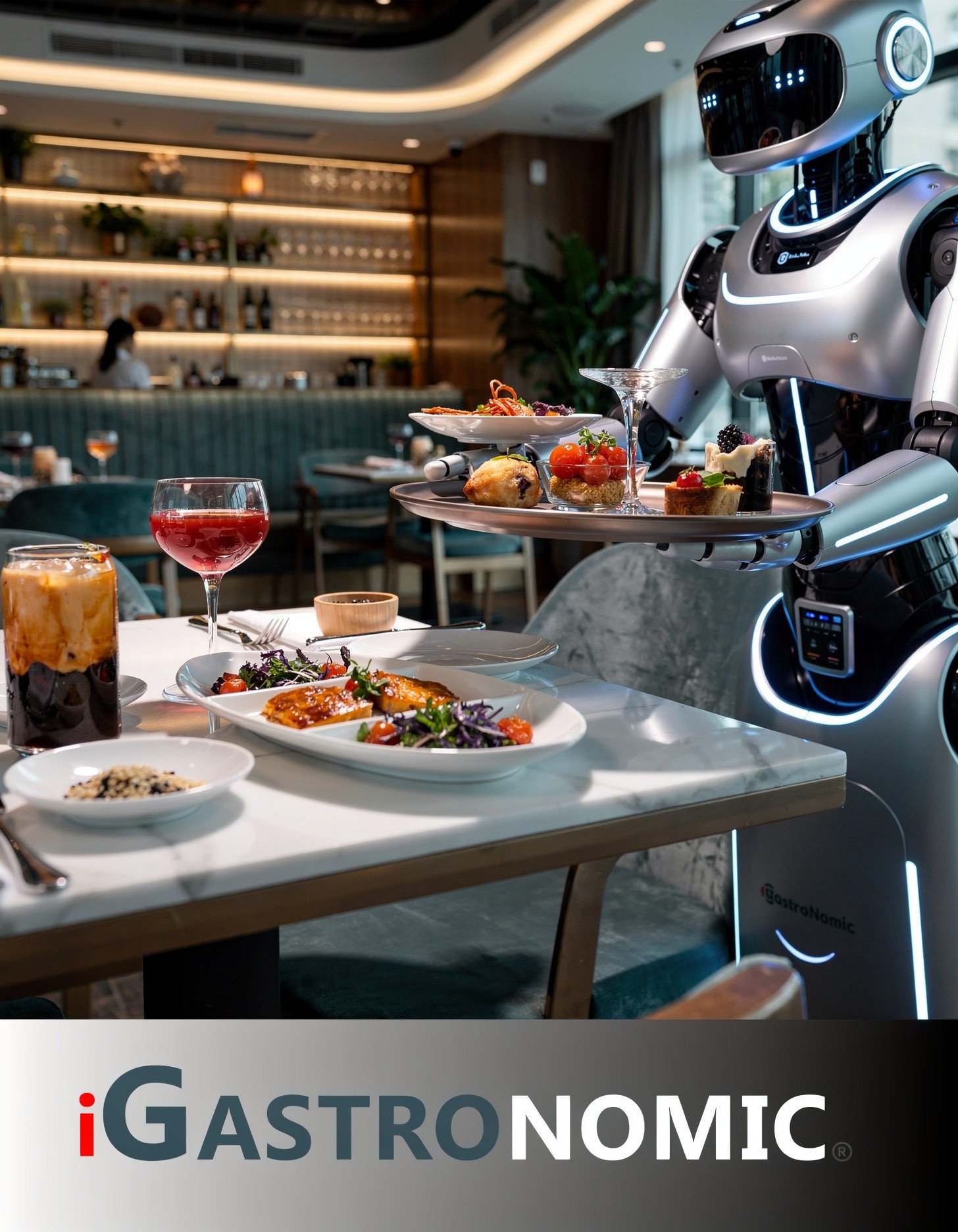
In short: A service robot for restaurants is an autonomous vehicle that brings food and drinks to the table, clears dishes and assists guests. It does not replace staff. Instead, it takes over walking routes and physically demanding routine tasks. This gives your team more time for advice and guest interaction, especially when skilled staff are hard to find.
Service Robots in Restaurants: Why the Topic Matters
The industry is under pressure: a shortage of skilled staff, high expectations for service quality and growing guest demands meet limited personnel resources. Service robots are therefore becoming increasingly important in restaurants, hotels and cafés. They are not a substitute for hospitality skills, but a tool for making operations more efficient.
What Is a Service Robot for Restaurants and Hotels?
Service robots are autonomous robots that perform service tasks in restaurants and hotels. They deliver food and drinks, clear tables or serve as mobile information points. With sensors and intelligent navigation, they move safely through the dining room and interact in a friendly way with guests and staff.
The Robot as a Hospitality Assistant
Modern models stand out with attractive design and versatile functions. They can serve food, provide guests with information or escort them to their table. Thanks to simple operation and adaptability to different room layouts, they suit many types of businesses. Entry-level options include the iG Service Robot for Restaurants or the entire service robot category.
Technical Features and Functions
Equipment varies by model. Typical features include:
- Autonomous navigation: Lidar sensors and cameras detect obstacles so the robot can move safely through the dining room.
- Interactive operation: A touchscreen and, depending on the model, voice control enable simple handling.
- Modular design: Different configurations, such as shelving or cooling compartments, allow adaptation to your requirements.
- Battery operation: Runtime is designed for service operations. Check the manufacturer's specifications for runtime and charging time for your application.
- System integration: Depending on the model, interfaces to POS systems and ordering platforms are possible.
Benefits for Restaurants and Hotels
Using a service robot can bring several benefits:
- Greater efficiency: The robot handles repetitive trips, so staff can focus on guest care.
- Relief on costs: Less walking and fewer errors in the workflow can ease staffing demands. Whether it pays off depends on your business.
- Better guest experience: Fast, consistent service is perceived positively by many guests.
- Innovative image: Modern technology helps you stand out from the competition.
- Flexibility: The robot can be adapted to different business sizes and types.
Use Cases at a Glance
| Business type | Typical tasks | Benefit |
|---|---|---|
| Restaurant | Delivering food and drinks, clearing tables | Shorter walking routes, more time for guests |
| Hotel | Information service, transport tasks depending on the model | Relief for reception and room service |
| Café and bar | Serving snacks and drinks, supporting orders | Fast service during peak demand |
| Events and catering | Mobile service unit for guest care | Consistent service for large groups |
Integration into Daily Operations
It is essential to view the robot as a support tool, not a replacement. It takes over monotonous and physically demanding tasks, while employees focus on advice and personal service. This can improve the working atmosphere and team satisfaction.
Tips for a Smooth Start
- Train staff: The team should know how to operate the robot, set destinations and handle malfunctions.
- Inform guests: A short notice encourages acceptance and curiosity.
- Customize: Routes, table points and equipment should match your business. The free 3D kitchen planner can help with route planning.
- Maintain regularly: Servicing and cleaning the sensors ensure trouble-free operation.
Sustainability and Energy
Many service robots run on batteries and are designed for energy-efficient operation. Optimized route planning shortens distances and can limit energy consumption. Actual consumption figures vary by model and application.
Practical Experience
Businesses often report that guests appreciate the modern atmosphere and that staff are relieved of routine tasks. Success depends on room layout, occupancy and a well-planned introduction. A realistic trial in your own business is therefore worthwhile.
Technological Development
The technology continues to evolve: future models will bring better artificial intelligence, more interaction options and greater flexibility. Integration with voice assistants and networking with smart building technology are also promising prospects. Regular software updates keep the devices up to date.
Conclusion
In 2026, service robots are a practical addition for restaurants and hotels. They improve workflows, relieve the team and can enhance the guest experience. If you carefully plan routes, training and maintenance, you lay the groundwork for a modern, guest-oriented business. iGastroNomic supports you in selection and planning with personal consultation.
FAQ – Frequently Asked Questions
Does a service robot replace service staff?
No, a service robot does not replace service staff but relieves them. It handles walking tasks such as bringing food and drinks or clearing tables, while employees take care of advice, order taking, guest interaction and recommendations. Especially during staff shortages, this leaves more time for what guests personally value. You should clearly define the division of tasks with your team in advance.
How do service robots find their way through the dining room?
During setup, service robots create a digital map of the dining room and define destinations such as table numbers. In operation, they orient themselves using sensors and cameras, detect obstacles such as people or chairs, and either steer around them or stop. Sufficiently wide aisles and clear paths are important so the robot can operate reliably.
Which businesses benefit most from a service robot?
A service robot is particularly useful in businesses with long walking distances, high guest volumes or spacious dining areas, such as larger restaurants, hotels with breakfast buffets or event venues. In very small or narrow establishments, the benefit is often smaller. Whether the investment pays off depends on room layout, staffing situation and occupancy. We are happy to advise you on this.
What preparation does deployment in a business require?
Before starting, check travel routes and aisle widths, ensure Wi-Fi coverage where the model requires it, define destinations and train your team. Guests should also know what the robot is doing. A trial phase during quiet hours helps optimize routes. In addition, plan regular maintenance and cleaning of the sensors.