Vegetable Cutters for Restaurants and Commercial Kitchens
A vegetable cutter saves considerable time in kitchens with high cutting volumes and ensures uniform portions. Whether salads, raw vegetables, preparation for fries, or tomatoes for burgers and sandwiches: those who process large quantities every day benefit from a commercial vegetable cutting machine that works precisely and reliably. The iGastroNomic range features three models for restaurants, snack bars and commercial kitchens, which you can compare directly.
Applications in Commercial Kitchens
A vegetable cutter for restaurants pays off wherever similar cuts are needed on a regular basis. Typical applications include:
- Snack bar: tomatoes, cucumbers and onions for burgers, doner and wraps
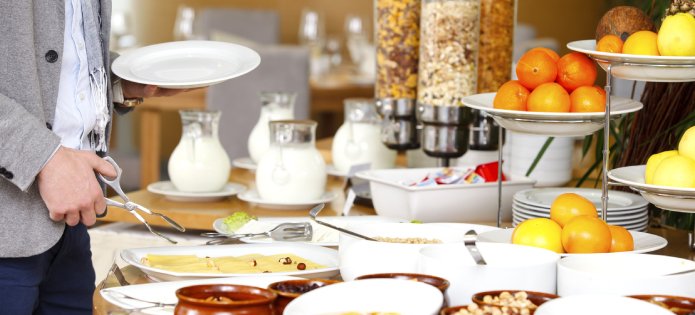
- Restaurant and hotel: raw vegetables, salad garnishes and buffet preparation
- Canteen and caterer: large vegetable quantities for pre-production
- Bakery and delicatessen: uniform slices for toppings and fillings
Vegetable Cutting Machine or Tomato Slicer?
For high volumes, a vegetable cutting machine with cutting discs that allows different cut shapes is the right choice. For tomatoes and other soft fruit with a delicate structure, a tomato slicer with a removable blade is the suitable option. Removable blades make cleaning and blade changes easier in daily operation. Whether you need one device or a combination of both depends on your daily volume and the cut shapes you require.
What Professionals Look for When Buying
- Daily volume: Plan for peak times, not average values.
- Cut shapes: Check whether slices, cubes or sticks are needed in your kitchen.
- Footprint: Device size and power connection must suit the available worktop space.
- Cleaning: Disassemblable parts significantly shorten cleaning time.
- Build quality: Continuous operation requires robust materials and stable mountings.
Cleaning, Maintenance and Safe Operation
After each use, blades, cutting discs and holders should be removed and thoroughly cleaned, as vegetable residue and juice encourage bacteria growth. Sharp blades cut more cleanly and protect the produce, while dull blades crush cells and shorten shelf life. Only operate the vegetable cutter with the safety guard and food pusher, never with your fingers in the feed area. Train your staff regularly in handling and cleaning.
Why Buy from iGastroNomic?
iGastroNomic is both manufacturer and wholesaler, headquartered in Nackenheim, with delivery across Europe. Trade customers receive B2B net prices and benefit from personal advice by phone and WhatsApp on cutting performance, equipment or the right vegetable cutter for your business. Use the comparison list above to evaluate the models side by side.
Frequently asked questions
Which vegetable cutter is suitable for a snack bar kitchen?
For snack bars, devices that cut tomatoes, cucumbers and onions quickly and evenly are the most useful. The decisive factor is your daily volume during peak times. A tomato slicer complements a vegetable cutting machine if you process many soft fruits.
What is the difference between a vegetable cutting machine and a tomato slicer?
A vegetable cutting machine is designed for larger quantities and different cut shapes, usually with interchangeable cutting discs. A tomato slicer works with a fixed blade and is particularly suited to tomatoes and other soft fruit. For many businesses, a combination of both devices is practical.
How do I properly clean a vegetable cutter in a commercial kitchen?
After each use, remove the blades, discs and holders and clean all parts thoroughly. Vegetable residue and juice should be removed completely to prevent bacteria growth. Make sure all parts are completely dry before reassembly.
Can I buy commercial vegetable cutters from iGastroNomic?
Yes, iGastroNomic supplies vegetable cutters to restaurants, snack bars, hotels, canteens and caterers. Trade customers receive B2B net prices. For questions about equipment and use, the team is available by phone and WhatsApp.
Which vegetables can be processed with a vegetable cutter?
Typical examples are cucumbers, tomatoes, onions, carrots, celery and potatoes, depending on the cut shape and device. Hard vegetables generally require sharp blades and stable mountings. Before buying, it is worth reviewing your typical vegetable range.

 Deutsch
 Türkçe
 Italiano
 Nederlands
 Français
 Español
 Polski
 Čeština
 Svenska
 Português PT
 Русский
 اللغة العربية
 中文
 日本語
 Tiếng Việt
 ภาษาไทย
 Română
 ελληνικά
 Magyar
 Dansk
 Suomi
 Hrvatski
 български език
 Eesti keel
 Latviešu valoda
 Slovenčina
 Slovenščina
 Bosanski
 עברית
 हिन्दी
 Bahasa melayu
 Kiswahili
 Bahasa Indonesia
 Papiamento
 Bokmål
 Lietuvių kalba
 Українська
 српски
 Shqip









 ›
 ›
 ›
 ›
 ›
 ›
 ›
 ›
 ›
 ›
 ›
 ›
 ›
 ›
 ›


