Cooking Lines for Commercial Kitchens: An Overview of Cooking Stations
A cooking line brings the core cooking stations of a professional kitchen together in a coordinated layout: cooking kettles, grill modules and work cabinets for preparation and storage. Whether you are looking for a commercial cooking line for a snack bar, hotel kitchen or staff canteen, organising cooking processes and workflows efficiently calls for modular cooking lines rather than individual appliances. iGastroNomic offers commercial customers a broad selection.
Typical Applications
Cooking lines are suited to businesses with high throughput and fixed workflows. Typical locations include:
Restaurants and hotel kitchens with à la carte and buffet service
Caterers and contract catering with large volumes
Snack bars and grill restaurants focusing on grilled dishes
Staff canteens and bakeries requiring large-scale cooking equipment
Variants: Tilting Kettles, Charcoal Grills and Work Cabinets
The range includes tilting kettles for soups, sauces and large batches, charcoal grill modules for grilled dishes with a roasted flavour, and work cabinets for storage and worktop space. Tilting kettles with indirect heating heat the contents more evenly and gently, as the heat does not come into direct contact with the food. For the energy source, you can choose between gas and electric, depending on the connections available on site. Grill modules differ in the number of zones and configuration as single, double or triple units. Work cabinets are available with doors or open, and complement the cooking stations.
What Professionals Look for When Buying
Energy source: gas or electric, depending on connections, extraction situation and energy costs
Module width and layout: plan single, double or triple units to suit the available floor space
Capacity: size the kettle volume to actual daily requirements, not peak demand
Equipment: choose doors or open shelving depending on your hygiene and storage concept
Zoning on the grill: more zones allow different heat levels to be used at the same time
Cleaning, Maintenance and Safe Operation
Daily cleaning after service extends the service life and ensures hygiene. Remove grease deposits from grill grates and cooking kettles as soon as possible after use, before they become baked on. For gas appliances, connections and burners should be inspected by a qualified technician at regular intervals. For charcoal grills, empty the ash pan and grate regularly so that airflow is not restricted.
Why Buy from iGastroNomic
iGastroNomic is both manufacturer and wholesaler. Commercial customers benefit from B2B net prices, a wide selection and personal advice by phone and WhatsApp, for example when planning a complete cooking line. We deliver throughout Europe from our company headquarters in Nackenheim.
Frequently asked questions
What is a cooking line in commercial kitchens?
A cooking line is a connected arrangement of cooking stations such as cooking kettles, grill modules and work cabinets in a professional kitchen. It enables divided tasks and planned workflows at high throughput. Restaurants, hotel kitchens, snack bars and caterers in particular rely on such modular systems.
What are the advantages of a tilting kettle in a commercial kitchen?
A tilting kettle allows large quantities to be emptied quickly and in a controlled way, for example soups, sauces or stews. Indirect heating ensures more even heating and reduces the risk of scorching. In canteens and catering operations in particular, this saves time when transferring and portioning food.
Gas or electric: which is the better choice for a cooking line?
The right energy source depends primarily on the existing connections, the extraction situation and the energy costs at your site. Gas appliances often deliver high output and fast temperature control, but require suitable installations. Electric appliances are often easier to connect in many kitchens. A consultation before purchase can help you decide.
What is a charcoal grill within a cooking line suitable for?
A charcoal grill in a cooking line is suitable for grilled dishes that should have a typical roasted flavour, such as meat, fish or vegetables. Multi-zone models allow different heat levels to be used at the same time. Such modules are particularly common in grill restaurants, snack bars and hotel kitchens with a focus on grilling.
Does iGastroNomic also deliver cooking lines abroad?
Yes, iGastroNomic delivers cooking lines and other commercial kitchen equipment throughout Europe. Commercial customers receive B2B net prices and personal advice by phone or WhatsApp. For coordination regarding your location and kitchen planning, you can contact the team directly.
Cooking Lines for Catering & Commercial Kitchens
Cooking lines are modular stainless steel kitchen blocks that combine tilting kettles, grill modules and work cabinets into one continuous cooking line. They are designed for restaurants, hotels, staff canteens and commercial kitchens that prepare large volumes. When buying, the key factors are the energy type (gas or 400 V electric), kettle capacity, number of grill zones and the 90 cm depth.
Cooking lines for catering: applications
A cooking line for catering is suitable wherever soups, sauces, stews, side dishes and grilled dishes are produced in large quantities. Typical applications are commercial kitchens, hotel kitchens, staff canteens, catering businesses, butcher shops with a lunch service and high-throughput restaurants. The modules stand in a row and save walking distances, because preparation, cooking and holding are located directly next to each other.
If you are planning a new kitchen, iGastroNomic offers catering equipment that can be expanded step by step. Start with a tilting kettle and a work cabinet and add further units later without rebuilding the line.
Tilting kettle: indirectly heated, gas or electric
The tilting kettle is the heart of many cooking lines. In our range you will find gas-heated tilting kettles in 120 l, 160 l and 550 l as well as electric tilting kettles for 400 V in 160 l and 220 l. All models listed work indirectly: the heat reaches the kettle via a heating jacket, not directly on the kettle base. The food is therefore less likely to burn, and you can heat delicate dishes such as sauces, pudding or milk-based dishes more gently.
The kettle tilts for convenient emptying, which makes filling containers and cleaning easier. Choose the capacity according to the largest portion quantity per batch. A 120 l or 160 l kettle suits medium-sized businesses, while a 550 l tilting kettle is intended for production in large-scale kitchens.
The variants at a glance
The following table shows the modules of the premium cooking line with 90 cm depth and their typical use.
Module
Version
Typical use
Tilting kettle
120 l, 160 l, 550 l, indirect, gas
Soups, sauces, stews in commercial kitchens
Tilting kettle
160 l, 220 l, indirect, electric 400 V
Kitchens without gas connection, canteens
Grill module (gas)
1 zone, single unit
Small grill station, addition to the line
Grill module (gas)
3 zones or 8 zones, triple unit
High grilling demand, steakhouse, catering
Work cabinet
Single, double, triple unit, open or with doors
Storage and work surface between the appliances
Gas grill modules with multiple zones
The premium grill modules run on gas and are available as a single unit with 1 zone and as a triple unit with 3 or 8 zones. Multiple zones allow you to grill meat, fish and vegetables at the same time under different conditions. For businesses with a heavy grill operation, the triple unit with 8 zones makes sense; for smaller stations, the 1-zone unit is sufficient.
Plan the gas connection and extraction early. Adequate hood extraction over the entire line is essential for safe and comfortable kitchen operation.
Work cabinets: storage between the appliances
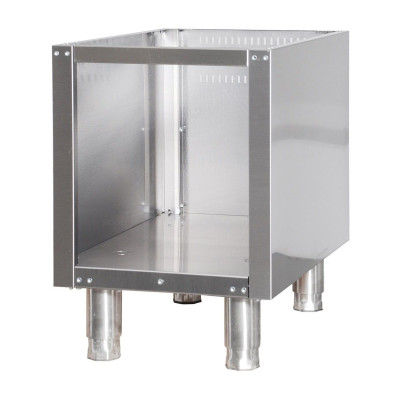
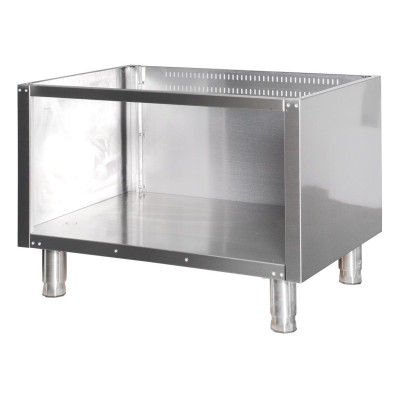
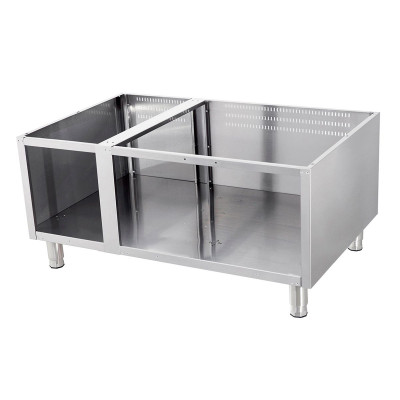
The premium work cabinet connects the appliances and provides storage and work surface. It is available as a single unit, double unit and triple unit, each with 90 cm depth, either open or with doors. The open version allows quick access to pots, GN containers and pans. The version with doors keeps accessories protected and gives the line a tidy appearance.
Choose the width so that it matches the neighbouring modules. This creates a continuous front without gaps, where dirt hardly accumulates.
Material, hygiene and care
Cooking lines are made of robust stainless steel. The material is heat-resistant, easy to clean and meets the hygiene requirements of commercial catering. Clean kettles, grill surfaces and cabinets after each use with suitable stainless steel cleaners and soft cloths. Avoid abrasive agents so that the surface stays smooth.
Have gas appliances inspected regularly by a specialist company. On tilting kettles, check the tilting mechanism and the seals. If you plan your catering equipment for the long term, good maintenance saves repairs and downtime.
Delivery across Germany, Austria, Switzerland and Europe
iGastroNomic delivers cooking lines quickly and reliably throughout Germany, to Austria, Switzerland and other European countries. Heavy equipment is packed securely and delivered by freight carrier. Before ordering, check floor space, door widths and gas and power connections so that installation runs smoothly.

 Deutsch
 Türkçe
 Italiano
 Nederlands
 Français
 Español
 Polski
 Čeština
 Svenska
 Português PT
 Русский
 اللغة العربية
 中文
 日本語
 Tiếng Việt
 ภาษาไทย
 Română
 ελληνικά
 Magyar
 Dansk
 Suomi
 Hrvatski
 български език
 Eesti keel
 Latviešu valoda
 Slovenčina
 Slovenščina
 Bosanski
 עברית
 हिन्दी
 Bahasa melayu
 Kiswahili
 Bahasa Indonesia
 Papiamento
 Bokmål
 Lietuvių kalba
 Українська
 српски
 Shqip









 ›
 ›
 ›
 ›
 ›
 ›
 ›
 ›
 ›
 ›
 ›
 ›
 ›
 ›
 ›