Knives for Foodservice: Buy Professional Kitchen Knives for Commercial Use
Whether in a restaurant, snack bar, hotel, canteen, bakery or catering business: in professional kitchen operations, the right foodservice knives determine working speed, hygiene and portion accuracy. This category includes over 130 items of foodservice knives, from quick peeling to precise decorative cuts. All products are designed for commercial use and can be ordered directly from iGastroNomic as wholesale goods.
Applications in the Commercial Kitchen
Requirements for commercial kitchen knives vary considerably depending on the type of operation:
Restaurants and hotels: preparing meat, fish, vegetables and herbs during ongoing service
Snack bars and quick-service restaurants: many identical cuts in a short time
Canteens and caterers: large volumes, frequent peeling and portioning
Bakeries with sales counter: cutting bread and pastries, filling and decorating
The Most Important Knife Types at a Glance
Chef's knives and kitchen knives: all-rounders for vegetables, herbs and meat
Meat knives: for breaking down and trimming larger cuts of meat
Bread knives: serrated blade for bread and pastries without crushing
Paring knives and vegetable knives: precise work on fruit and vegetables
Tomato knives and utility knives: serrated edge for soft foods and versatile use
Steak and pizza knives: for table and pass
Garnishing knives and decorating knives: for fine garnishes and decorations
Waiter's knives: tool for service and wine service
What Professionals Look for When Buying
For daily use, the quality of the blade matters most. Stainless steel with good sharpenability keeps the edge sharp for longer. The blade length should suit the task: long blades for large pieces, short ones for precise work. Also pay attention to the balance between blade and handle, as it affects fatigue during long shifts. A non-slip, easy-to-clean handle is just as important in hygiene-sensitive areas as the blade itself.
Cleaning, Maintenance and Safe Operation
Knives last longest when they are properly maintained. Hand washing with warm water and neutral detergent protects blade and handle; always observe the manufacturer's instructions regarding dishwashers. Dry knives immediately after cleaning to prevent stains and corrosion. Use suitable cutting boards to protect the edge, and sharpen regularly. Colour-coded knives help separate allergen and food groups cleanly.
Why Buy from iGastroNomic
iGastroNomic is a manufacturer and wholesaler of foodservice and commercial kitchen equipment and offers you:
B2B net prices for trade customers
A wide selection of knives for every kitchen area
Personal advice by phone and WhatsApp if you are looking for the right knife type for your business
Delivery across Europe
In-house manufacturing and wholesale from one source
Frequently asked questions
Which knife is the best all-rounder for foodservice use?
A chef's knife or kitchen knife with a medium blade length covers most tasks in the kitchen, such as vegetables, herbs and meat. For businesses with a broad menu, a paring knife for fine work is a useful addition. The choice ultimately depends on the menu and the way you work.
How often should foodservice knives be sharpened?
Sharpening intervals depend on the intensity of use and the food being cut. In busy kitchens, knives should be honed daily and sharpened at regular intervals. A sharp blade works more safely and is gentler on the food.
Are foodservice knives dishwasher-safe?
Many professional knives are best washed by hand, as aggressive detergents and high temperatures can damage blades and handles. In any case, follow the care instructions for the specific item. After washing, knives should be dried immediately.
Which knife do I need for bread and baked goods?
For bread, rolls and pastries, a bread knife with a serrated blade is ideal, as it cuts through the crust without crushing the crumb. For filled rolls or cakes, a shorter utility knife can be a useful complement.
Does iGastroNomic also deliver foodservice knives abroad?
Yes, iGastroNomic delivers to commercial customers across Europe. For questions about ordering and choosing the right product, our team is available to help personally by phone or WhatsApp.
Knives for Catering and Butcher Shops
Professional knives for catering are cutting tools built for daily heavy use in restaurants, butcher shops, bakeries, snack bars and commercial kitchens. The range extends from the butcher's knife through the chef's knife and bread knife to the long doner knife. When buying, consider blade length, intended use, a non-slip handle and whether the knife can be cleaned hygienically.
Professional Knives for Restaurants, Butchers and Snack Bars
In commercial kitchens, knives are subjected to far greater stress than in a home kitchen. If you cut up meat, slice vegetables or portion bread every day, you need commercial kitchen knives with a sturdy blade, a secure grip and consistent cutting performance. Our range covers the typical work areas: butcher knives for meat processing, chef's knives for the hot and cold kitchen, a wide bread knife for the bakery and doner knives for the kebab spit.
Typical areas of use include restaurants and hotels, butcher shops and meat counters, doner and grill snack bars, canteens, catering and bakeries. If you are reorganising your knife equipment as part of your catering supplies, do not rely on a single all-purpose knife. Instead, plan the right blade shape and length for each workstation.
Butcher's Knives No. 1 to No. 4
Butcher's knives and butcher knives are available in four graduated sizes. The numbering corresponds to the blade length: No. 1 with 14.5 cm, No. 2 with 16.5 cm, No. 3 with 19 cm and No. 4 with 21 cm. Short blades are suitable for precise trimming, boning and deboning smaller cuts. Medium lengths are the all-rounders for cutting and portioning. The long blades handle larger pieces of meat in a single stroke.
The range offers this design in two colour variants: with a red or a black handle. The blade geometry is identical, so you can choose according to your operating concept. If several staff members use the same workstation, you can use the colours to assign knives to particular stations.
Chef's Knives and Bread Knives Compared
The chef's knife is the all-purpose tool of the kitchen. It is available with blade lengths of 19 cm, 21 cm and 23 cm. The 19 cm blade is manoeuvrable and suits smaller hands and fine cutting tasks. With 21 cm you get the classic standard for vegetables, herbs and meat. The 23 cm version is the first choice for large quantities, for example in commercial kitchens or catering.
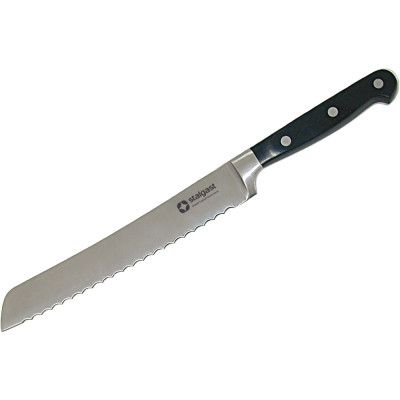
The bread knife with a 22.5 cm blade has a wide blade and serrated edge. This allows crusts to be cut cleanly without squashing the crumb. It is suitable not only for bread, but also for bread rolls, baguettes, cakes and gateaux.
Knife type
Blade length
Typical use
Butcher's knife / butcher knife No. 1
14.5 cm
Trimming, deboning, fine cuts
Butcher's knife / butcher knife No. 2
16.5 cm
Cutting and portioning
Butcher's knife / butcher knife No. 3 and No. 4
19 cm and 21 cm
Larger pieces of meat, long cuts
Chef's knife
19 cm, 21 cm, 23 cm
Vegetables, herbs, meat, all-purpose use
Wide bread knife
22.5 cm
Bread, bread rolls, cakes
Doner knife
50 cm and 55 cm
Slicing meat from the doner spit
Doner Knives for the Kebab Spit
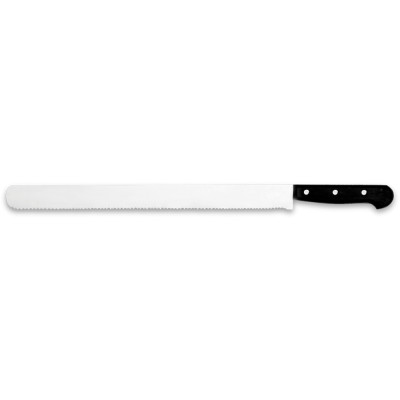
A doner knife differs considerably from all other kitchen knives. At 50 cm or 55 cm in length, it is designed to slice meat from the spit in thin, even strips. The shorter version is lighter to handle and suits smaller spits. The longer blade is useful for large doner spits in continuous operation in a doner snack bar.
Look for a secure, non-slip handle, because fat and heat from the grill quickly make hands slippery. A well-sharpened doner knife shortens portioning time and ensures a uniform cut for every portion.
Material, Hygiene and Colour Coding
High-quality professional knives are made of rust-resistant stainless steel, which withstands moisture, acids and fat. The plastic handle is smooth, has few joints and is easy to clean, which is an important point in a HACCP-compliant kitchen. Coloured handles in red or black help keep the workstation organised, because knives can be clearly assigned.
Separation is especially important when handling raw meat. A dedicated knife for meat, and another for vegetables and bread, reduces the risk of cross-contamination. If you structure your catering supplies range clearly, your staff will find daily work easier and self-inspection simpler.
Care, Sharpening and Storage
A sharp knife is safer than a blunt one, because less force is needed and it is less likely to slip. Sharpen your knives regularly with a sharpening steel or whetstone, and have heavily used blades professionally re-ground at intervals. Clean knives by hand after use, dry them immediately and avoid placing them in sinks, where they can be damaged or cause injuries to staff.
Store knives in a knife block, on a magnetic strip or in a knife roll, not loose in drawers. This protects the cutting edge and prevents injuries. A serrated bread knife requires less maintenance, but should only be sharpened with suitable tools.
Delivery Throughout Germany, Austria, Switzerland and Europe
At iGastroNomic you order your knives on a trade basis and receive them with fast, reliable delivery throughout Germany, to Austria, Switzerland and across Europe. Whether you need a single knife for the butcher shop or a complete equipment package for a new kitchen, we support restaurateurs, hoteliers, butchers, bakers and canteen operators with matching accessories from one source.

 Deutsch
 Türkçe
 Italiano
 Nederlands
 Français
 Español
 Polski
 Čeština
 Svenska
 Português PT
 Русский
 اللغة العربية
 中文
 日本語
 Tiếng Việt
 ภาษาไทย
 Română
 ελληνικά
 Magyar
 Dansk
 Suomi
 Hrvatski
 български език
 Eesti keel
 Latviešu valoda
 Slovenčina
 Slovenščina
 Bosanski
 עברית
 हिन्दी
 Bahasa melayu
 Kiswahili
 Bahasa Indonesia
 Papiamento
 Bokmål
 Lietuvių kalba
 Українська
 српски
 Shqip









 ›
 ›
 ›
 ›
 ›
 ›
 ›
 ›
 ›
 ›
 ›
 ›
 ›
 ›
 ›