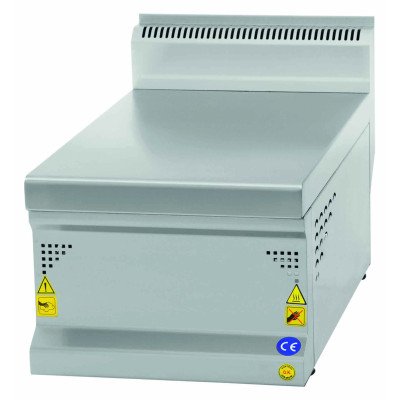
A Neutral Cabinet 600 is a module without built-in appliance technology. It offers storage, worktop space or an addition to a work line. Restaurateurs use neutral cabinets for foodservice to design kitchen lines modularly, close gaps and sensibly complement appliances such as ranges, fryers or sinks. In the iGastroNomic range, you will find the neutral cabinet in several widths so you can implement your kitchen layout precisely.
Applications in Foodservice
Neutral cabinets are used wherever worktops and base units are required:
Restaurant and hotel kitchens with a fixed work line
Snack bars and quick-service restaurants with compact stations
Canteens and caterers with changing equipment needs
Bakeries and patisseries for storage under worktops
Planning Widths and Combinations Correctly
First plan the available floor space and the connection points, then the number of modules. A narrower unit suits corners and leftover spaces, while a wider one suits continuous work lines. Where possible, combine modules from one product line so that depths and heights match and the front presents a uniform appearance.
What Professionals Look for When Buying
Material: Robust, easy-to-clean surfaces are essential for commercial use.
Depth and height: Match the dimensions to existing worktops and appliances.
Feet: Adjustable feet make precise levelling and cleaning underneath easier.
Interior layout: Consider how you will accommodate pots, GN containers or stored goods.
Connection: Check compatibility with your existing kitchen equipment.
Cleaning, Maintenance and Operation
Neutral cabinets come into daily contact with food and cleaning agents. For this reason, pay attention to smooth, closed surfaces and easily accessible corners. Clean the surfaces with warm water and a mild detergent, then wipe them dry. Avoid steel wool, aggressive chlorine-based cleaners and abrasive pads. Check the feet regularly so that no moisture or dirt collects there.
Why Buy from iGastroNomic
As a manufacturer and wholesaler, iGastroNomic offers a wide selection of foodservice and commercial kitchen equipment. Business customers receive B2B net prices. Our team provides personal advice by phone or WhatsApp to help you choose the right modules for your kitchen. We deliver throughout Europe. If you want to buy neutral cabinets commercially, we will support you with planning and compatibility.
Frequently asked questions
What is a neutral cabinet in a commercial kitchen?
A neutral cabinet is a kitchen module without built-in appliance technology. It serves as a base unit with storage or worktop space and can be inserted into a work line. Restaurateurs use it to design kitchen lines modularly and flexibly.
What is a neutral cabinet used for in foodservice?
Neutral cabinets provide storage and worktop space where no appliances are needed. Typical locations include restaurant and hotel kitchens, canteens, snack bars and bakeries. They fill gaps in the work line and complement appliances such as ranges or sinks.
How do I choose the right width for a neutral cabinet?
First measure the available floor space and the connection points. Narrower modules suit corners and leftover spaces, while wider variants are suitable for continuous work lines. Where possible, combine modules from one product line so that heights and depths match.
How do I clean neutral cabinets in a commercial kitchen correctly?
Clean the surfaces with warm water and a mild detergent, then wipe them dry. Do not use steel wool, aggressive chlorine-based cleaners or abrasive pads, as these can damage the surface. Also check the feet and the area underneath regularly.
Can I buy neutral cabinets commercially from iGastroNomic?
Yes, iGastroNomic supplies business customers such as restaurants, hotels, canteens and caterers with B2B net prices. Personal advice is available by phone or WhatsApp. We deliver throughout Europe.
Neutral Unit 600 for Commercial Cooking Lines
The Neutral Unit 600 is a module without heating function for modular cooking lines in professional kitchens. It provides worktop space, shelving or storage between the range, fryer, grill and other equipment. When buying, width, design and height matching the rest of the equipment line are what count.
Neutral Unit: Role in the Cooking Line
A neutral unit (also called a neutral element or neutral module) takes on tasks that no heating appliance can perform in the kitchen. It offers a worktop for setting down pans, GN containers and ingredients directly next to the heat source. This saves steps and makes workflows at the pass clearer.
In addition, the unit separates appliances with different heat output. This allows a fryer to stand next to a range without the zones overlapping. If you are planning a cooking line, use neutral modules deliberately as a filler piece, work surface or end section of the line.
Applications in Restaurants and Commercial Kitchens
The unit is suitable wherever appliances are arranged in a row and worktop space is limited. Typical applications include:
Restaurant and hotel kitchen with a multi-stage kitchen workflow
Staff canteen and commercial kitchen with long equipment rows
Snack bar and quick-service restaurant with limited floor space
Catering, butcher and bakery kitchens with a hot section
For these businesses, a solid intermediate module makes more sense than loose tables. Together with the neighboring appliances, it forms a closed front that is easy to clean.
Which Width Is Right? 400 mm or 600 mm
The category includes versions with a width of 400 mm and 600 mm. The Neutral Unit 600 mm offers more usable surface. It is suitable as a full workstation between two heating appliances or as a shelf for larger GN containers. The narrower Neutral Unit 400 mm is the right solution when only a small gap needs to be closed or when the overall width of the line is limited.
Measure the available floor space before buying and check the dimensions of the neighboring appliances. The height and depth of the unit should match the existing equipment row so that worktops finish flush.
Variant
Typical Use
Feature
Neutral Unit 400 mm
Narrow gap between two appliances, small kitchens
Space-saving, compact shelf area
Neutral Unit 600 mm
Workstation next to range, grill or fryer
Larger worktop, room for containers
As an intermediate module
Separating appliances with different heat output
More distance, better overview
As the end of the line
End of the cooking line, shelf for accessories
Clean appearance, additional floor space
Material and Hygiene
Stainless steel modules are the standard for continuous use in the kitchen. The material is robust, heat-resistant and easy to maintain with common cleaning agents. Smooth surfaces and few joints make cleaning after service easier and support HACCP-compliant hygiene.
Pay attention to clean edges, stable workmanship and a suitable installation. For appliances that adjoin directly, the connection should be tight so that food residue does not collect in gaps.
Planning: Connection and Installation
The neutral unit has no electrical, gas or water connection and can therefore be placed flexibly in the kitchen. It is important that it matches the design and series of the other appliances. Plan the sequence so that hot and cold work steps are sensibly separated. The distance between the heat source and the work surface should suit your workflow.
If you are expanding your range of catering equipment for the kitchen, plan neutral modules in from the start. This prevents later gaps or makeshift solutions in the cooking line.
Cleaning and Maintenance
Clean the surface daily with a soft cloth and a mild cleaner. Always wipe in the grain direction of the stainless steel to avoid scratches. Avoid abrasive agents and steel wool, as these can damage the surface and promote corrosion. Regularly check stability and the connection to the neighboring appliances.
Delivery in Germany, Austria, Switzerland and Europe
iGastroNomic delivers neutral modules and other catering supplies quickly and reliably to all of Germany, Austria, Switzerland and throughout Europe. Commercial customers from restaurants, hotels, butchers, bakeries and canteens receive professional kitchen equipment for new openings, refurbishments or expansion of the cooking line.

 Deutsch
 Türkçe
 Italiano
 Nederlands
 Français
 Español
 Polski
 Čeština
 Svenska
 Português PT
 Русский
 اللغة العربية
 中文
 日本語
 Tiếng Việt
 ภาษาไทย
 Română
 ελληνικά
 Magyar
 Dansk
 Suomi
 Hrvatski
 български език
 Eesti keel
 Latviešu valoda
 Slovenčina
 Slovenščina
 Bosanski
 עברית
 हिन्दी
 Bahasa melayu
 Kiswahili
 Bahasa Indonesia
 Papiamento
 Bokmål
 Lietuvių kalba
 Українська
 српски
 Shqip









 ›
 ›
 ›
 ›
 ›
 ›
 ›
 ›
 ›
 ›
 ›
 ›
 ›
 ›
 ›