Shock Freezers for Commercial Kitchens: Buy Professional Equipment from iGastroNomic
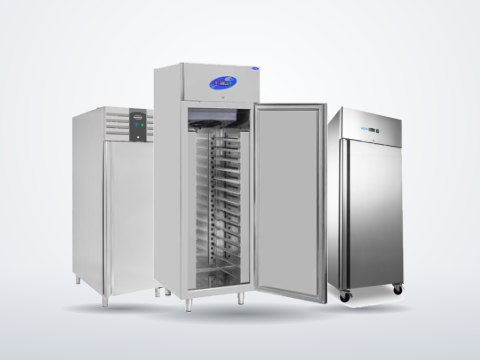
A shock freezer, also known in the trade as a blast chiller, cools cooked or fresh food down to the intended storage temperature within a short time. Anyone preparing food in larger quantities shortens the time spent in the critical temperature range, protects quality and gains better planning reliability. The category shock freezers for commercial kitchens includes units for professional use in kitchens with varying daily requirements.
Applications in the Commercial Kitchen
Shock freezers are widely used in restaurants, hotels, canteens, caterers, butcher shops and bakeries. Typical applications include:
- Cooling sauces, soups, stocks and cooked meat dishes
- Pre-production of components such as doughs, desserts or side dishes for later use
- Freezing portions for event and catering orders, provided the unit is designed for this
- Relieving the refrigeration cells, as warm goods no longer raise the temperature of existing stock
Variants by Capacity and GN Loading
The units differ mainly in their loading capacity. GN containers (gastronorm containers) determine how much can be processed at the same time. Models for 2 x 2/3 GN plus 1 x 1/2 GN suit businesses with manageable requirements. The variants for 3 x 1/1 GN and 5 x 1/1 GN cover the daily needs of medium-sized kitchens. For high throughput in large kitchens or catering businesses, the model for 10 x 1/1 GN is intended. The decisive question is: how many containers do you need at peak times, not on average?
What Professionals Look For When Buying
Before purchasing, check the fit with your existing GN containers, the space required in the kitchen and accessibility for operation and cleaning. Also clarify the connection requirements at your site before ordering. Consider whether you need pure blast chilling or additionally freezing, and check the range of functions in the respective data sheet.
- Suitable GN sizes for your containers
- Capacity in relation to peak load
- Installation area and unobstructed access
- Connection requirements at the site
- Desired range of functions
Cleaning, Maintenance and Safe Operation
Portion food into shallow containers so it cools evenly and quickly. Do not load the chamber beyond the intended capacity, so that air circulation is maintained. Clean the interior, seals and drainage areas regularly and in line with the manufacturer's instructions. A clean chamber is the basis for hygienic operation and a long service life.
Why Buy from iGastroNomic
iGastroNomic combines in-house manufacturing and wholesale. Business customers receive B2B net prices and benefit from a wide selection. When choosing the right model, our team supports you personally by phone and WhatsApp. We deliver throughout Europe, shipping from our company headquarters in Nackenheim.
Frequently asked questions
What is the difference between a shock freezer and a blast chiller?
Both terms are often used interchangeably in the trade. What matters is which function the specific unit offers: cooling only or additionally freezing. Therefore, always check the range of functions in the data sheet before buying.
Which size do I need for my foodservice business?
The size depends on the quantity that must be cooled at the same time during peak times, not on the daily average. The GN container specification, such as 3 x 1/1 GN or 10 x 1/1 GN, shows how many containers can be loaded at once. Also plan a reserve for catering and events.
Will my existing GN containers fit every model?
Compatibility results from the GN specification in the product name. Compare this specification with your existing containers. If you are unsure, our advisory team can confirm compatibility in advance by phone or WhatsApp.
Can I buy shock freezers for commercial use at net prices?
Yes, iGastroNomic is geared towards commercial purchasing. Business customers receive B2B net prices for restaurants, hotels, canteens and caterers. Contact us for personal advice on the right unit size.
How do I clean a shock freezer properly?
Clean the interior, seals and drainage areas regularly and follow the manufacturer's instructions. Use suitable, food-safe cleaning agents and dry the chamber thoroughly afterwards. This keeps operation hygienic and the unit durable.

 Deutsch
 Türkçe
 Italiano
 Nederlands
 Français
 Español
 Polski
 Čeština
 Svenska
 Português PT
 Русский
 اللغة العربية
 中文
 日本語
 Tiếng Việt
 ภาษาไทย
 Română
 ελληνικά
 Magyar
 Dansk
 Suomi
 Hrvatski
 български език
 Eesti keel
 Latviešu valoda
 Slovenčina
 Slovenščina
 Bosanski
 עברית
 हिन्दी
 Bahasa melayu
 Kiswahili
 Bahasa Indonesia
 Papiamento
 Bokmål
 Lietuvių kalba
 Українська
 српски
 Shqip









 ›
 ›
 ›
 ›
 ›
 ›
 ›
 ›
 ›
 ›
 ›
 ›
 ›
 ›
 ›


