
 Deutsch
 Türkçe
 Italiano

.jpg)
.jpg)
.jpg)
.jpg)
.jpg)
.jpg)
.jpg)
.jpg)
.jpg)
.jpg)

.jpg)

.jpg)
.jpg)
.jpg)
.jpg)
.jpg)
.jpg)
.jpg)
.jpg)
.jpg)
.jpg)



.jpg)
.jpg)
.jpg)
.jpg)
.jpg)
.jpg)
.jpg)
.jpg)
.jpg)



.jpg)
.jpg)

.jpg)
.jpg)
.jpg)
.jpg)


.jpg)

.png)
.jpg)
.jpg)
 (200 x 136 px) (5).png)
.png)

More and more restaurateurs and resourceful entrepreneurs are discovering the enormous potential of pizza vending...
-
 Cooking Appliances
add remove
Cooking Appliances
add remove -
-
Pizza & Grill
add remove
-
-
Refrigeration
add remove
-
-
Combi Steamer
add remove
-
-
Kitchen Appliances
add remove
-
-
Rinsing & Cleaning
add remove
-
-
Retail Refrigeration
add remove
-
-
Cafe & Ice Cream
add remove
-
-
Smart-Gastro
add remove
-
-
Event- & Cateringmöbel
-
Cooking Appliances
add remove
-
-
Pizza & Grill
add remove
-
-
Refrigeration
add remove
-
-
Combi Steamer
add remove
-
-
Kitchen Appliances
add remove
-
-
Rinsing & Cleaning
add remove
-
-
Retail Refrigeration
add remove
-
-
Cafe & Ice Cream
add remove
-
-
Smart-Gastro
add remove
-
-
Event- & Cateringmöbel


Call us:
+49 (0) 6135 7040 450Latest posts
-
 The Ultimate Guide: Pizza Vending Machines – Earnings, Costs & Experiences in the 24/7Read more
 -
 Döner vs. Shawarma vs. Kebab: Understanding the Terms and Differences for Your Food BusinessRead more
Are you confused about the difference between Döner, Shawarma, and Kebab? These popular meat dishes, often seen on...
-
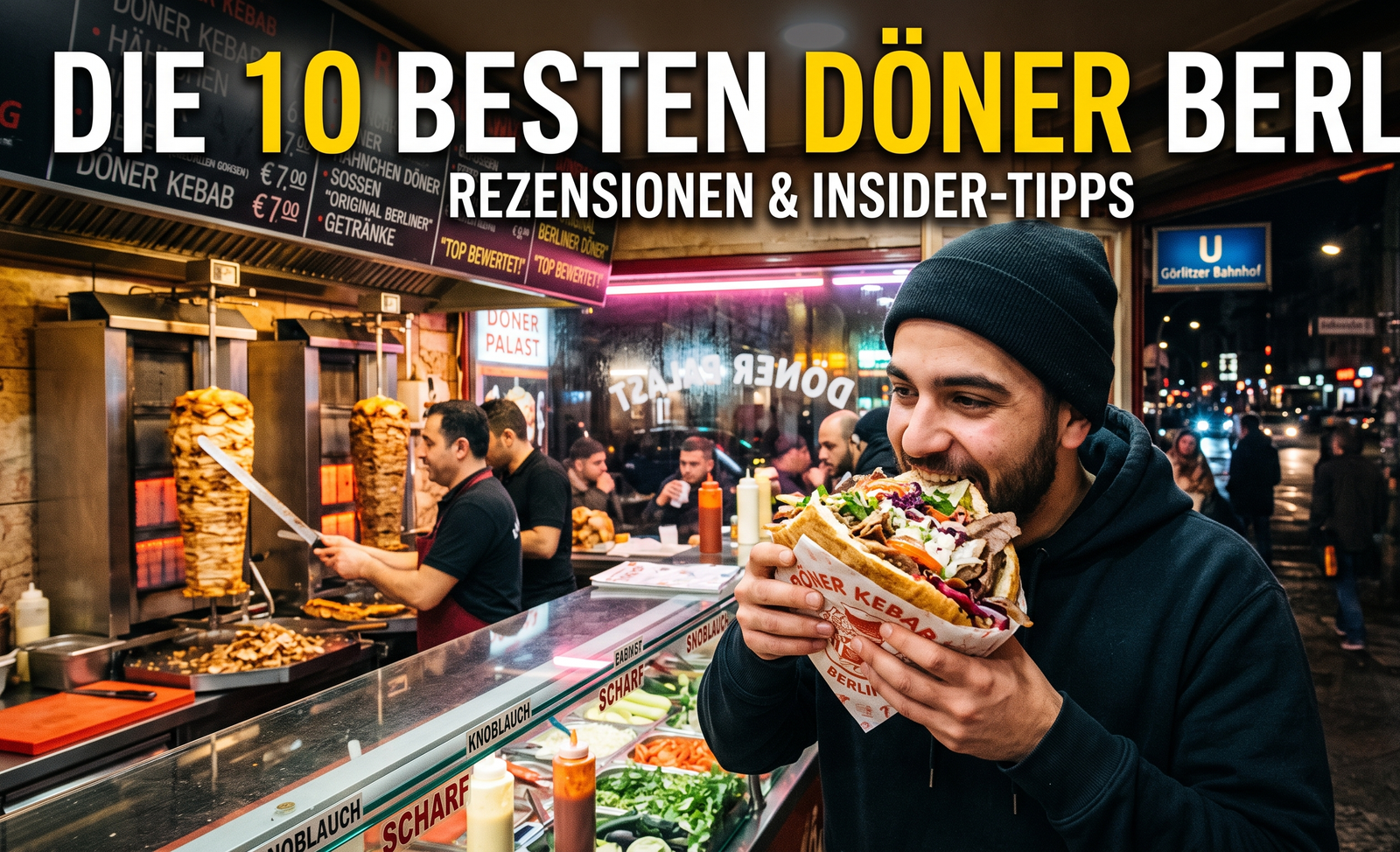 The 10 Best Döner Kebabs in Berlin (2026): The Ultimate Ranking Based on Real Customer ReviewsRead more
Berlin is the undisputed döner capital of the world. But with over 1,000 shops, the question arises: Which one is...
-
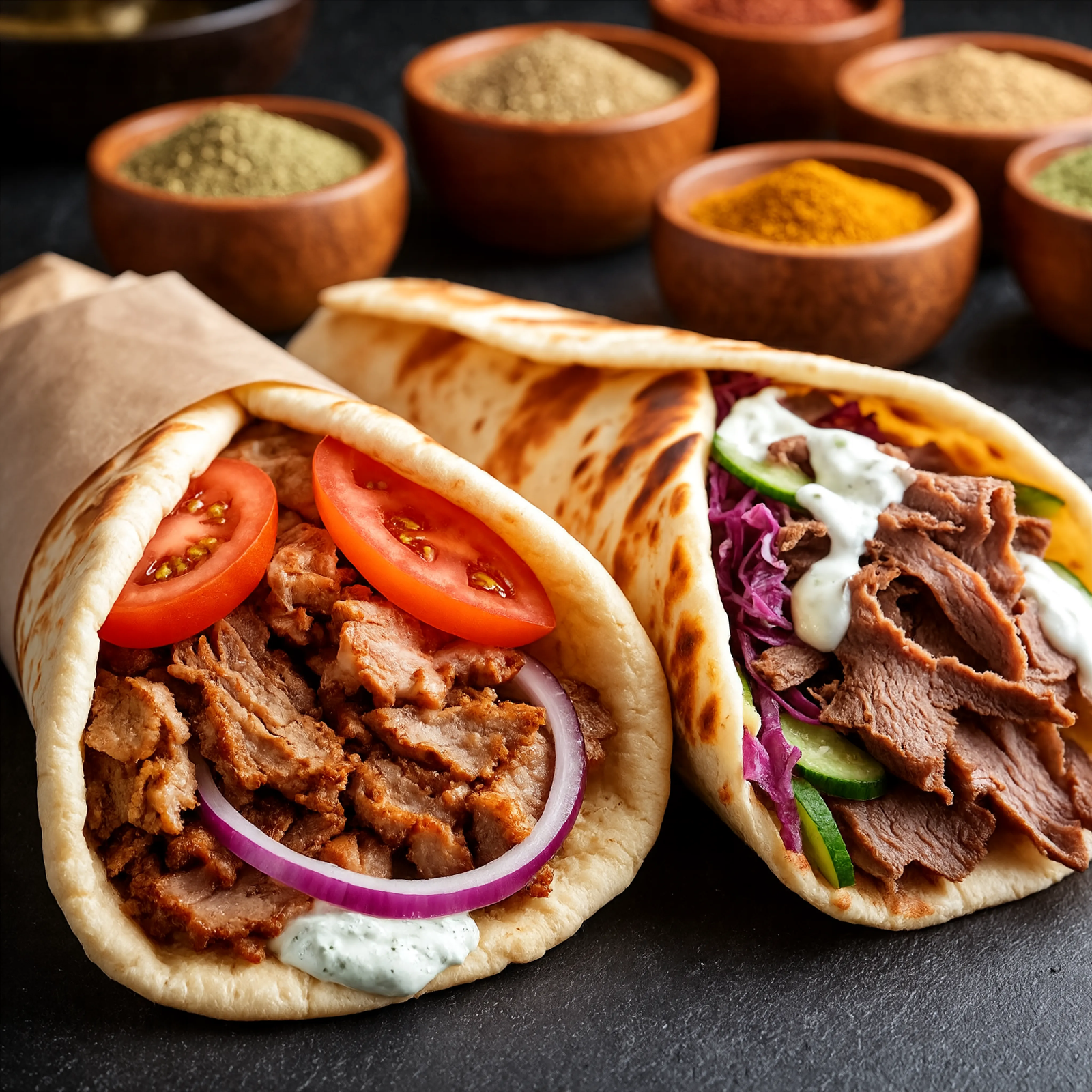 Gyros vs. Döner: Understanding the Differences in Preparation, Seasoning, and Meat Selection for Your MenuRead more
Gyros and Döner are two iconic Mediterranean dishes often confused due to their similar appearance and cooking style....
-
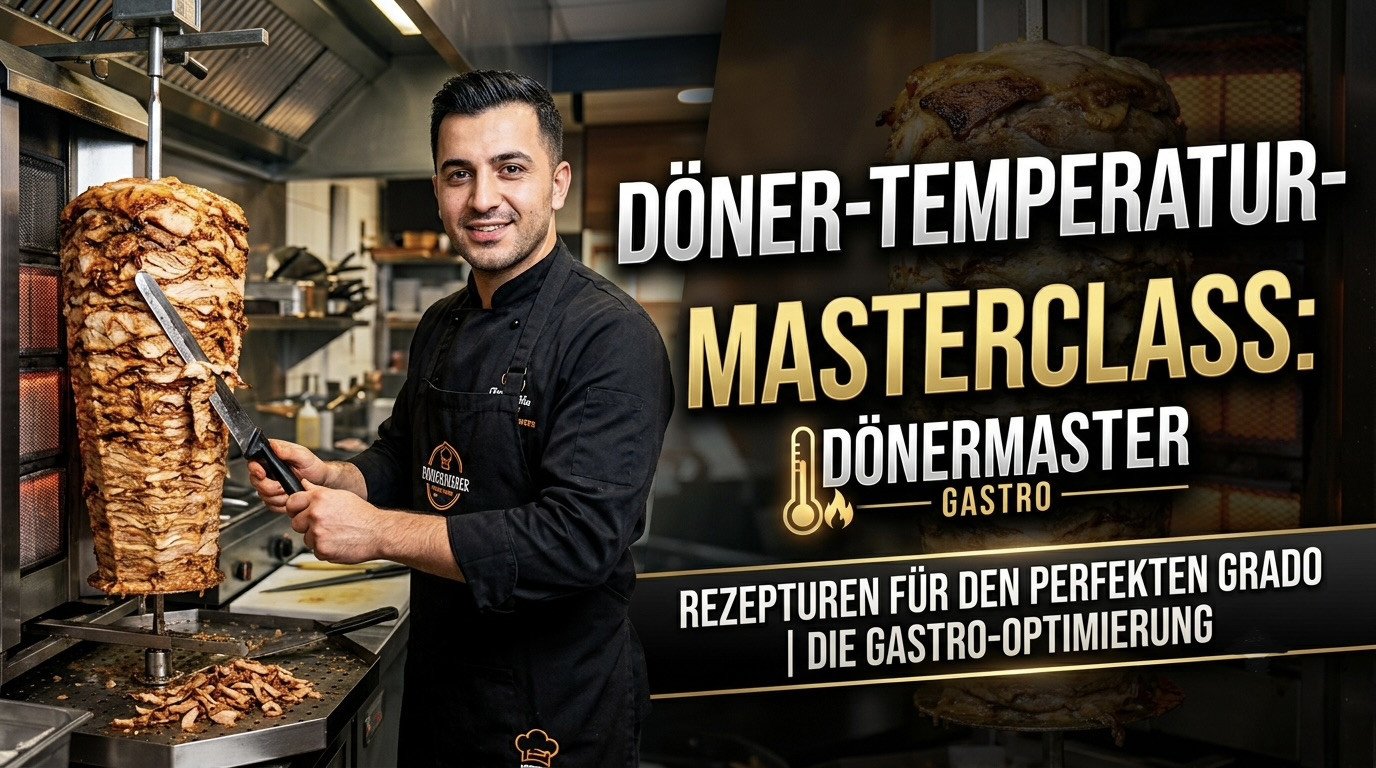 Welche Temperatur braucht ein Dönergrill? Richtwerte für die Gastronomie → Optimale Garzeiten und Temperaturen für perfekte ErgebnisseRead more
Der Dönergrill ist das Herzstück jeder Döner-Gastronomie. Die richtige Temperatur am Grill entscheidet maßgeblich...
-
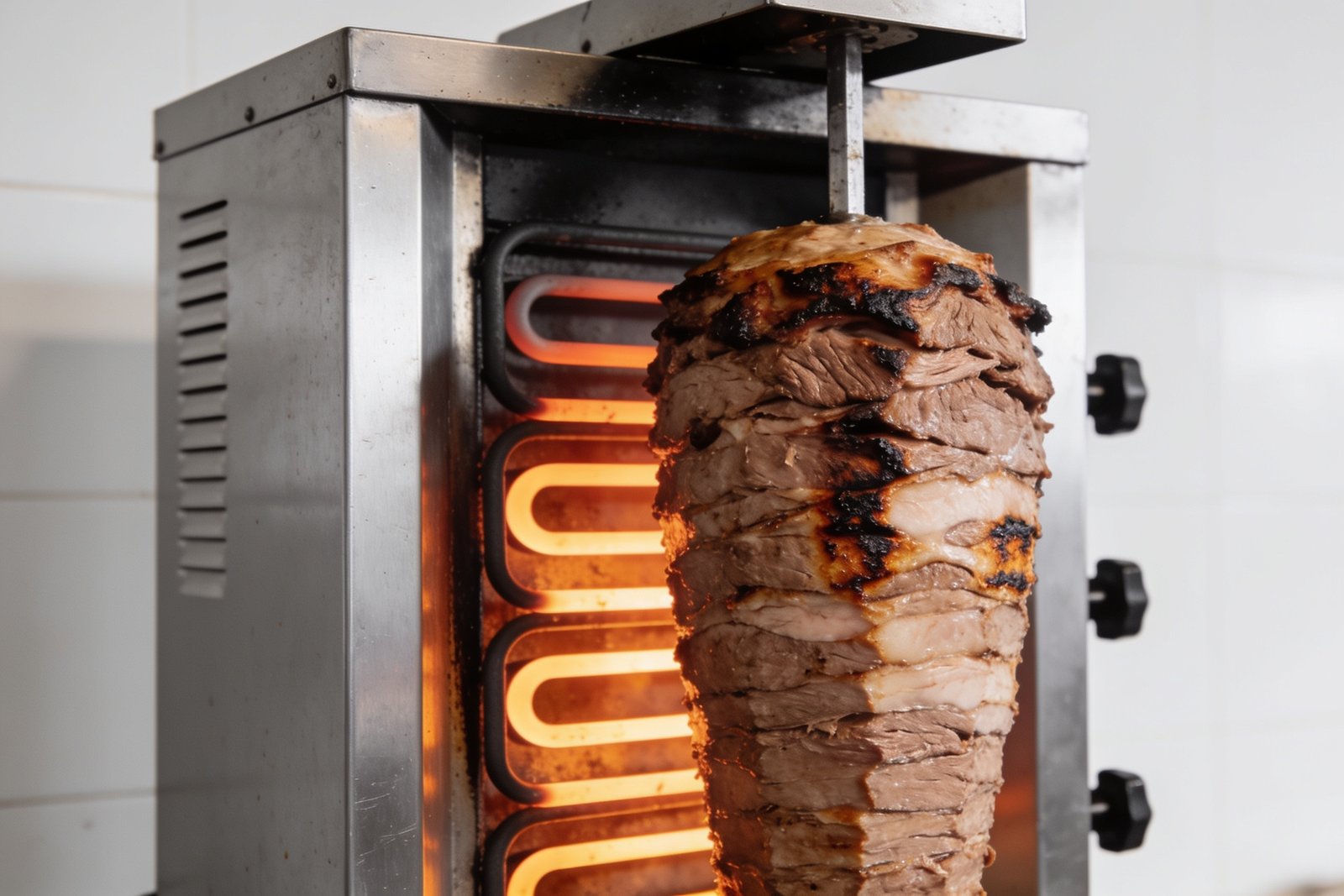 Döner Grill Heating Unevenly? Troubleshooting & Solutions → Recognize and Professionally Fix Common Device ProblemsRead more
Is your Döner grill heating unevenly? This can lead to poorly cooked meat and frustrated customers. In this guide, we...
-
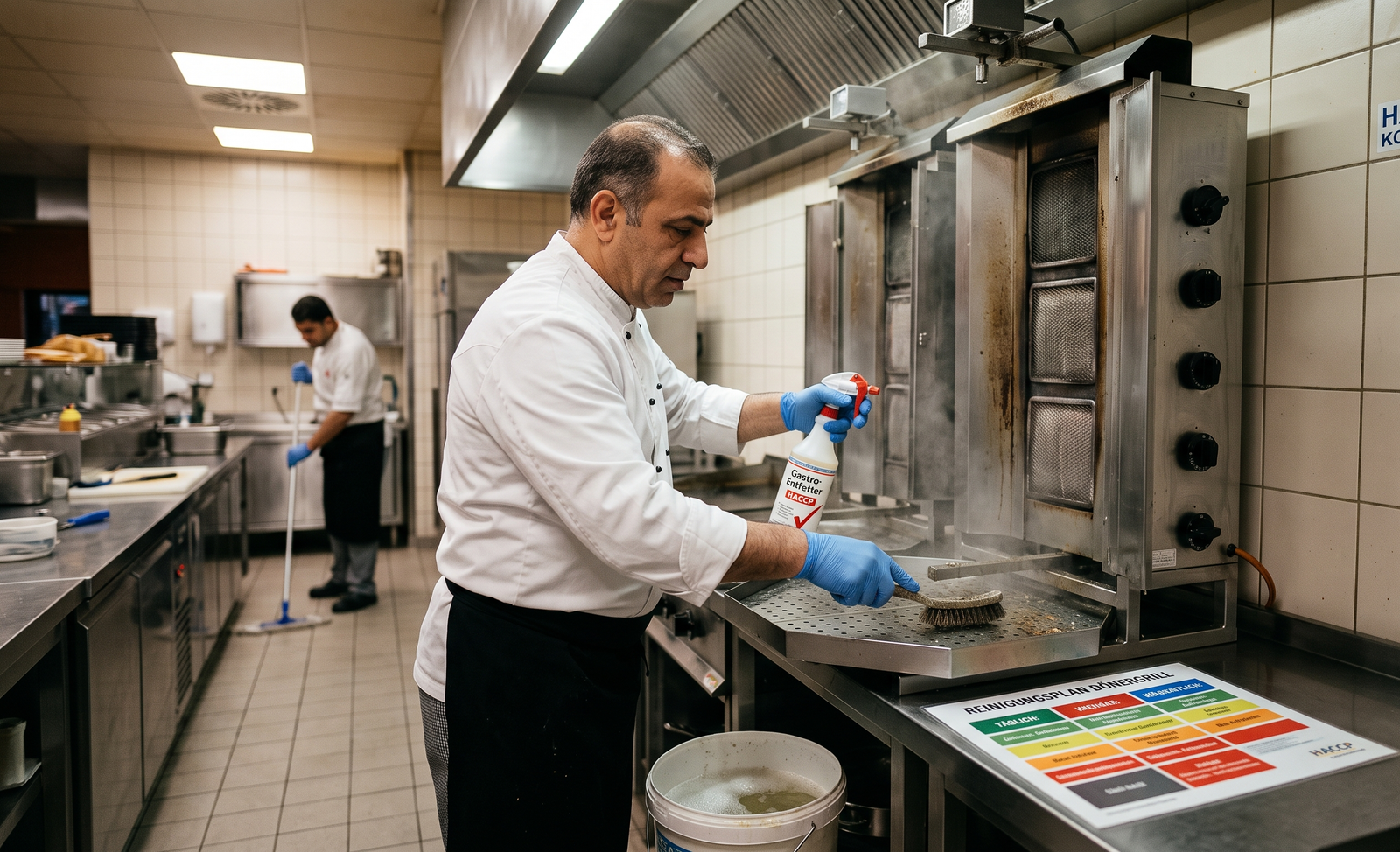 Proper Cleaning of Döner Grills: Care & Hygiene in Gastronomy → Equipment Cleaning According to HACCP Guidelines and Food Hygiene Regulations (LMHV)Read more
The Döner grill is a staple in many gastronomy businesses, and proper cleaning is essential to maintain hygiene and...
-
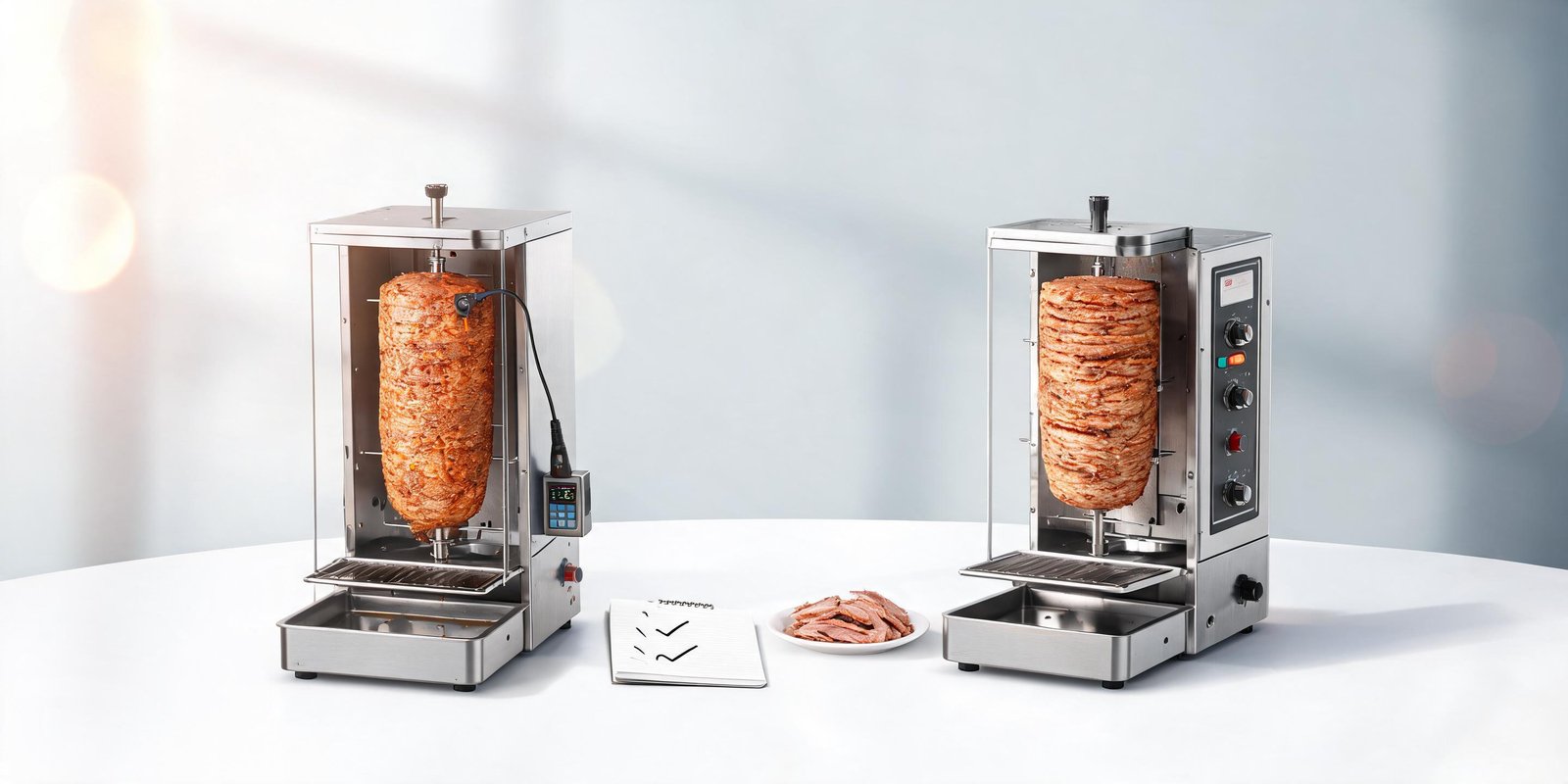 Commercial Döner Grill Tests & Reviews Overview → Make Informed Purchase Decisions with Current Product ComparisonsRead more
Choosing the right commercial Döner grill is essential for any food business specializing in this popular dish. This...
-
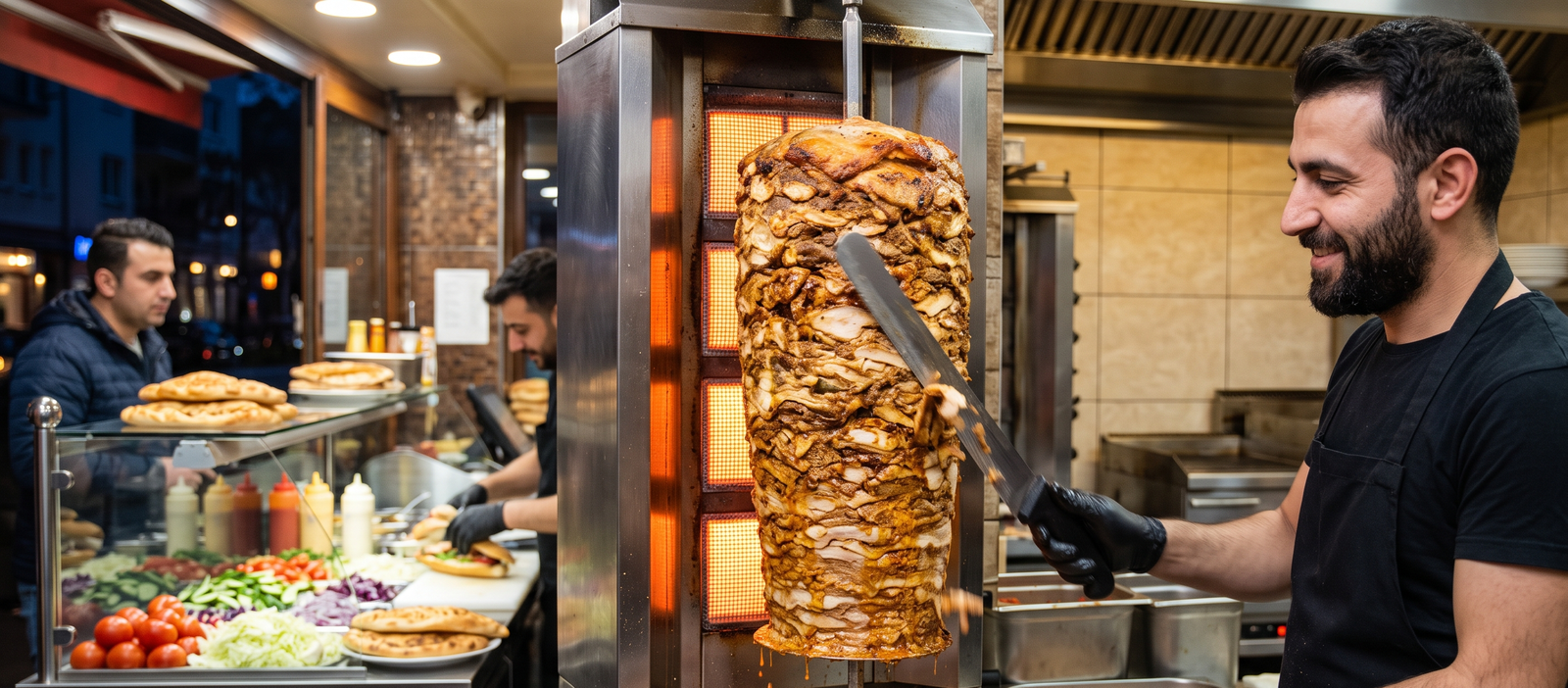 Why Is Döner Meat Grilled Vertically? Technology & Advantages Explained → The Functionality of the Vertical Grill and Its Benefits for the Gastronomy IndustryRead more
Döner kebab is famous worldwide for its juicy, flavorful meat cooked on a vertical spit. But why is the meat grilled...
-
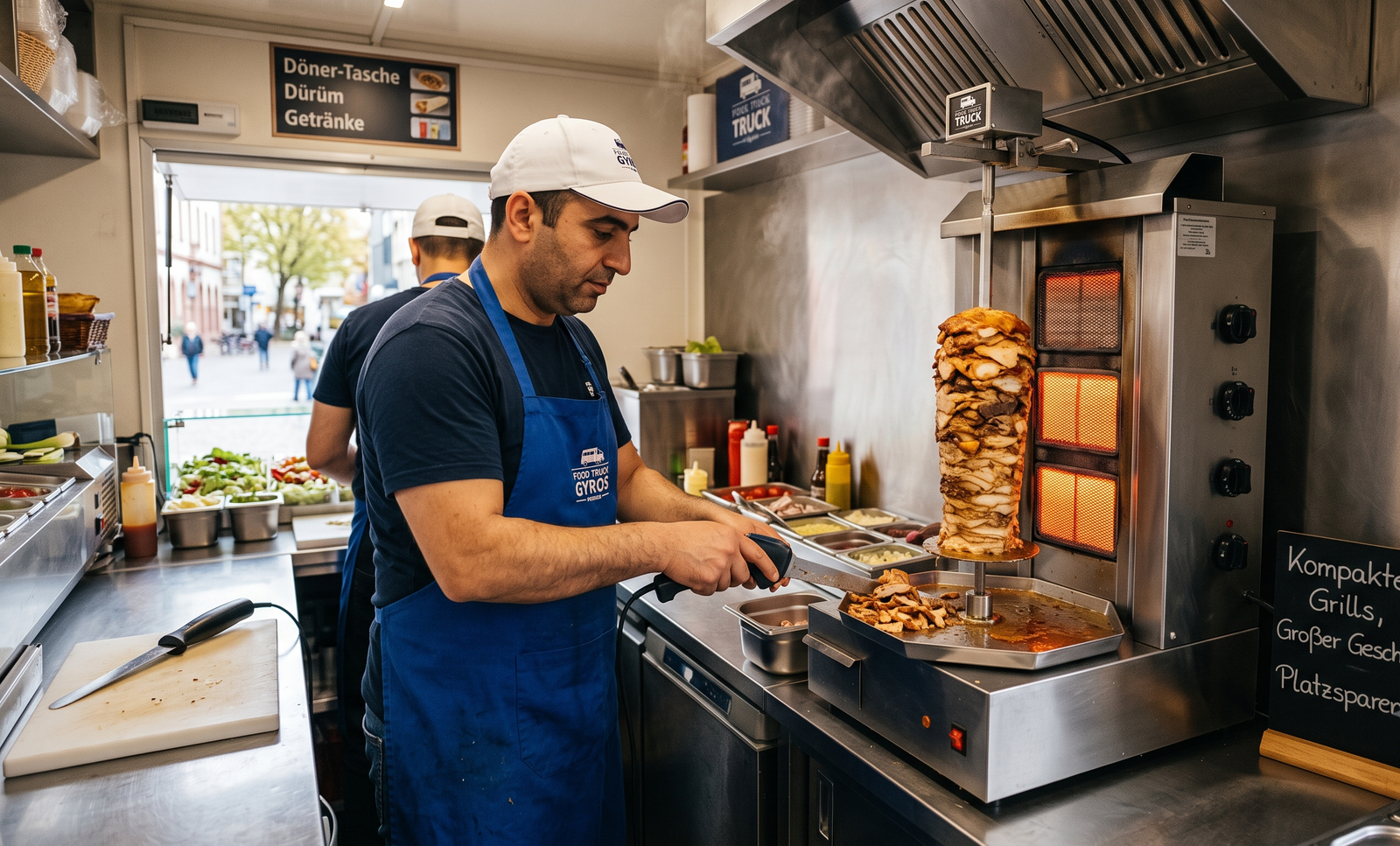 Compact Döner Grills for Small Snack Bars & Food Trucks → Space-Saving Solutions for Limited SpacesRead more
Small snack bars and food trucks often struggle with limited space, making it challenging to accommodate large...
Blog categories
Search in blog
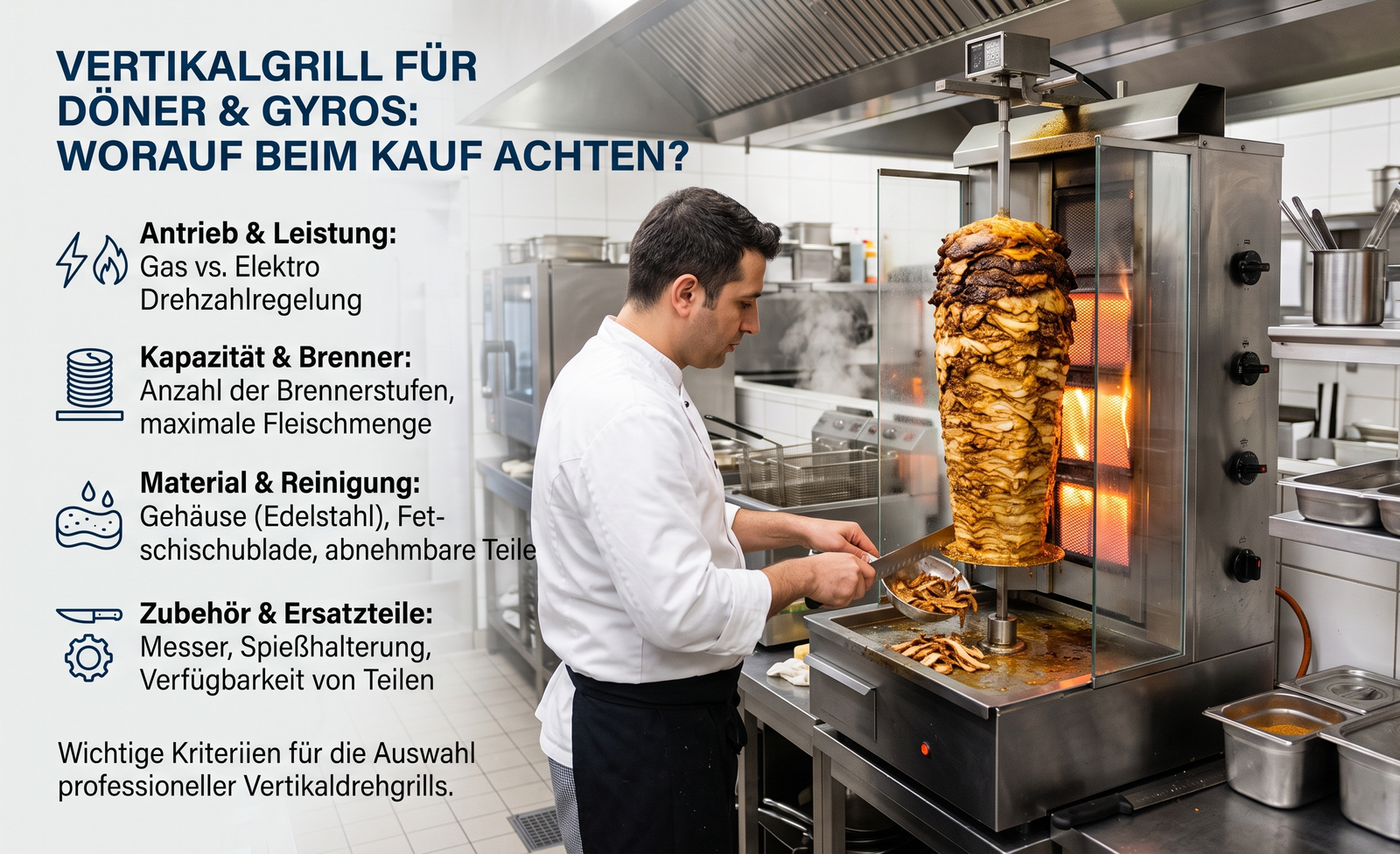
Vertical Grill for Döner & Gyros: Key Criteria for Choosing a Professional Vertical Rotisserie
Vertical Grill for Döner & Gyros: What to Consider When Buying – Important Criteria for Selecting Professional Vertical Rotisseries
The art of preparing authentic Döner and Gyros lies not only in the choice of meat and spices but also in the equipment used to cook it. A vertical grill, also known as a vertical rotisserie or vertical broiler, is the heart of every Döner or Gyros stand and restaurant. Choosing the right vertical grill can significantly impact the quality, efficiency, and profitability of your business.
In this comprehensive guide, we will explore the most important factors to consider when purchasing a professional vertical grill for Döner and Gyros. Whether you are starting a new venture or upgrading your equipment, understanding these criteria will help you make an informed decision.
What is a Vertical Grill for Döner & Gyros?
A vertical grill is a specialized cooking appliance designed to cook meat stacked on a vertical skewer. The meat slowly rotates in front of a heat source, typically infrared burners or gas flames, allowing the outer layers to cook evenly and develop a crispy, flavorful crust. As the outer meat is sliced off for serving, the inner layers continue to cook, ensuring a continuous supply of freshly grilled meat.
This method is iconic for Döner kebabs, Gyros, Shawarma, and other similar dishes. Vertical grills come in various sizes, power sources, and configurations, tailored for different business needs.
Why Choosing the Right Vertical Grill Matters
Investing in a high-quality vertical grill is crucial for several reasons:
- Food Quality: Consistent heat distribution ensures perfectly cooked meat with the right texture and flavor.
- Efficiency: Faster cooking times and easy meat rotation help serve customers quickly, especially during peak hours.
- Durability: Professional grills are built to withstand daily heavy use, reducing downtime and maintenance costs.
- Safety: Proper design minimizes fire risks and ensures operator safety.
- Energy Consumption: Efficient grills save on gas or electricity bills, improving profitability.
Key Criteria to Consider When Buying a Professional Vertical Grill
1. Heating Technology
The heating source is one of the most critical aspects of a vertical grill. The two main types are:
- Gas-powered vertical grills: These use natural gas or propane to generate flames or infrared heat. They are popular due to their strong heat output and quick temperature control. Gas grills often provide a traditional flavor profile and are widely used in commercial settings.
- Electric vertical grills: These use electric heating elements, often infrared, to cook the meat. Electric grills are easier to install, especially in locations without gas access, and offer precise temperature control. They are also considered cleaner and sometimes safer due to the absence of open flames.
Tip: Choose a heating technology that suits your location, energy costs, and flavor preferences. Some models combine both for flexibility.
2. Size and Capacity
The size of the vertical grill should match your business volume. Consider:
- Height and width: Taller grills can accommodate larger meat cones, allowing for longer cooking cycles and less frequent refilling.
- Number of skewers: Some grills come with multiple skewers, enabling you to cook different types of meat simultaneously or increase output.
- Meat cone diameter: Larger diameters mean more meat capacity but may require more power to cook evenly.
For small to medium-sized businesses, a single skewer grill with a height of around 80-120 cm is common. Larger operations may require multiple skewers or industrial-sized units.
3. Heat Distribution and Control
Uniform heat distribution is essential to avoid undercooked or burnt spots. Look for grills with:
- Adjustable burners or heating elements to control the intensity and position of heat.
- Infrared technology, which provides consistent and efficient heat transfer.
- Rotating mechanisms that ensure even exposure of meat to heat.
Some advanced models feature thermostats and digital controls for precise temperature management.
4. Construction Quality and Materials
Professional vertical grills must be robust and hygienic. Key points include:
- Material: Stainless steel is the preferred choice due to its durability, corrosion resistance, and ease of cleaning.
- Build quality: Welded joints, sturdy frames, and quality components extend the lifespan of the grill.
- Ease of cleaning: Removable drip trays, grease collection systems, and smooth surfaces help maintain hygiene and reduce labor.
5. Safety Features
Safety is paramount in commercial kitchens. Look for grills with:
- Flame failure devices that automatically shut off gas if the flame goes out.
- Heat shields and protective covers to prevent burns.
- Stable bases and secure skewer holders to avoid accidents.
- Compliance with local safety standards and certifications.
6. Energy Efficiency
Energy costs can significantly affect your operating expenses. Consider grills that:
- Use infrared burners, which are more efficient than traditional open flames.
- Have good insulation to minimize heat loss.
- Offer adjustable heat settings to optimize fuel consumption.
7. Ease of Use and Maintenance
Look for features that simplify daily operations, such as:
- Simple ignition systems (electric ignition or pilot lights).
- Easy-to-remove parts for cleaning.
- Clear instructions and accessible controls.
- Availability of replacement parts and technical support.
8. Additional Features
Some vertical grills come with extras that can enhance your workflow and product quality:
- Built-in warming trays or shelves for cooked meat.
- Integrated cutting boards or meat slicers.
- Rotisserie speed control for different cooking styles.
- Lighting inside the grill for better visibility.
Popular Brands and Models
While many manufacturers produce vertical grills, some brands are known for their quality and innovation. Examples include:
- Starfood: Known for durable gas and electric vertical grills with excellent heat distribution.
- Hendi: Offers a range of electric vertical grills suitable for small to medium businesses.
- Fimar: Italian brand with professional-grade grills featuring multiple skewers and advanced controls.
- Royal Catering: Provides affordable options with solid construction for startups.
Always check reviews and request demonstrations if possible before purchasing.
Installation and Space Considerations
Before buying, assess your location for:
- Space: Vertical grills require enough room for installation, operation, and maintenance. Consider height clearance and ventilation.
- Ventilation: Proper exhaust systems are necessary to remove smoke and odors.
- Power supply: Ensure your site supports the grill’s energy requirements (gas connection or electrical capacity).
Price and Budget
Vertical grills vary widely in price, from a few hundred to several thousand dollars. While budget is important, prioritize quality and features that match your business needs. Cheaper grills may save money upfront but could lead to higher maintenance costs or poor cooking results.
Summary: How to Choose the Perfect Vertical Grill for Your Döner & Gyros Business
Choosing the right vertical grill involves balancing several factors:
- Heating type: Gas or electric depending on your setup and preferences.
- Size and capacity: Match to your expected volume and menu variety.
- Heat control: Ensure even cooking and flexibility.
- Build quality: Durable, hygienic materials and construction.
- Safety: Certified features to protect staff and customers.
- Energy efficiency: To keep operational costs low.
- Ease of use and maintenance: For smooth daily operations.
By carefully considering these criteria, you can select a vertical grill that not only produces delicious Döner and Gyros but also supports your business’s growth and reputation.
Additional Tips for Operating Your Vertical Grill
- Preheat properly: Allow the grill to reach the desired temperature before placing the meat.
- Regular cleaning: Clean drip trays and surfaces daily to avoid grease buildup and contamination.
- Monitor rotation speed: Adjust rotation to ensure even cooking without drying out the meat.
- Use quality meat: The grill can only do so much—start with good cuts for the best results.
Conclusion
The vertical grill is an indispensable tool for any Döner or Gyros business. Investing time and resources into selecting the right professional vertical rotisserie will pay off in the form of better food quality, efficient operations, and satisfied customers. Remember to evaluate your specific needs, space, and budget, and don’t hesitate to consult with suppliers or industry experts to find the perfect match.
With the right vertical grill, your Döner and Gyros stand will be ready to serve delicious, authentic dishes that keep customers coming back for more.
Related posts
-
 More Than Just Fast Food - All You Need to Know
System Gastronomy: Learn more about this exciting business model. From Fast Food to Casual Dining - we explain...Read more
More Than Just Fast Food - All You Need to Know
System Gastronomy: Learn more about this exciting business model. From Fast Food to Casual Dining - we explain...Read more -
 The 10 Most Expensive Restaurants in the World
When it comes to fine dining and luxurious culinary experiences, some restaurants around the globe capture attention...Read more
The 10 Most Expensive Restaurants in the World
When it comes to fine dining and luxurious culinary experiences, some restaurants around the globe capture attention...Read more -
 Which Restaurant Makes the Most Revenue? A Deep Dive into the World of Gastronomy
Who are the revenue giants in the gastronomy industry? We reveal the top players and analyze why they are so...Read more
Which Restaurant Makes the Most Revenue? A Deep Dive into the World of Gastronomy
Who are the revenue giants in the gastronomy industry? We reveal the top players and analyze why they are so...Read more -
 Boost Your Restaurant's Revenue with Pergolas and Louvered Roofs
Ever wondered how to make your restaurant more appealing and increase your sales? The answer might be simpler than...Read more
Boost Your Restaurant's Revenue with Pergolas and Louvered Roofs
Ever wondered how to make your restaurant more appealing and increase your sales? The answer might be simpler than...Read more -
 The World of Döner: From Traditional Recipes to the Best Döner Spots Worldwide
Learn how to make authentic Yaprak Döner, discover the best döner spots in Germany and worldwide, and explore the...Read more
The World of Döner: From Traditional Recipes to the Best Döner Spots Worldwide
Learn how to make authentic Yaprak Döner, discover the best döner spots in Germany and worldwide, and explore the...Read more
Leave a comment