Deutsch
 Türkçe
 Italiano
 Nederlands
 Français
 Español
 Polski
 Čeština
 Svenska
 Português PT
 Русский
 اللغة العربية
 中文
 日本語
 Tiếng Việt
 ภาษาไทย
 Română
 ελληνικά
 Magyar
 Dansk
 Suomi
 Hrvatski
 български език
 Eesti keel
 Latviešu valoda
 Slovenčina
 Slovenščina
 Bosanski
 עברית
 हिन्दी
 Bahasa melayu
 Kiswahili
 Bahasa Indonesia
 Papiamento
 Bokmål
 Lietuvių kalba
 Українська
 српски
 Shqip


 ›
 ›
 ›
 ›
 ›
 ›
 ›
 ›
 ›
 ›
 ›
 ›
 ›
 ›
 ›
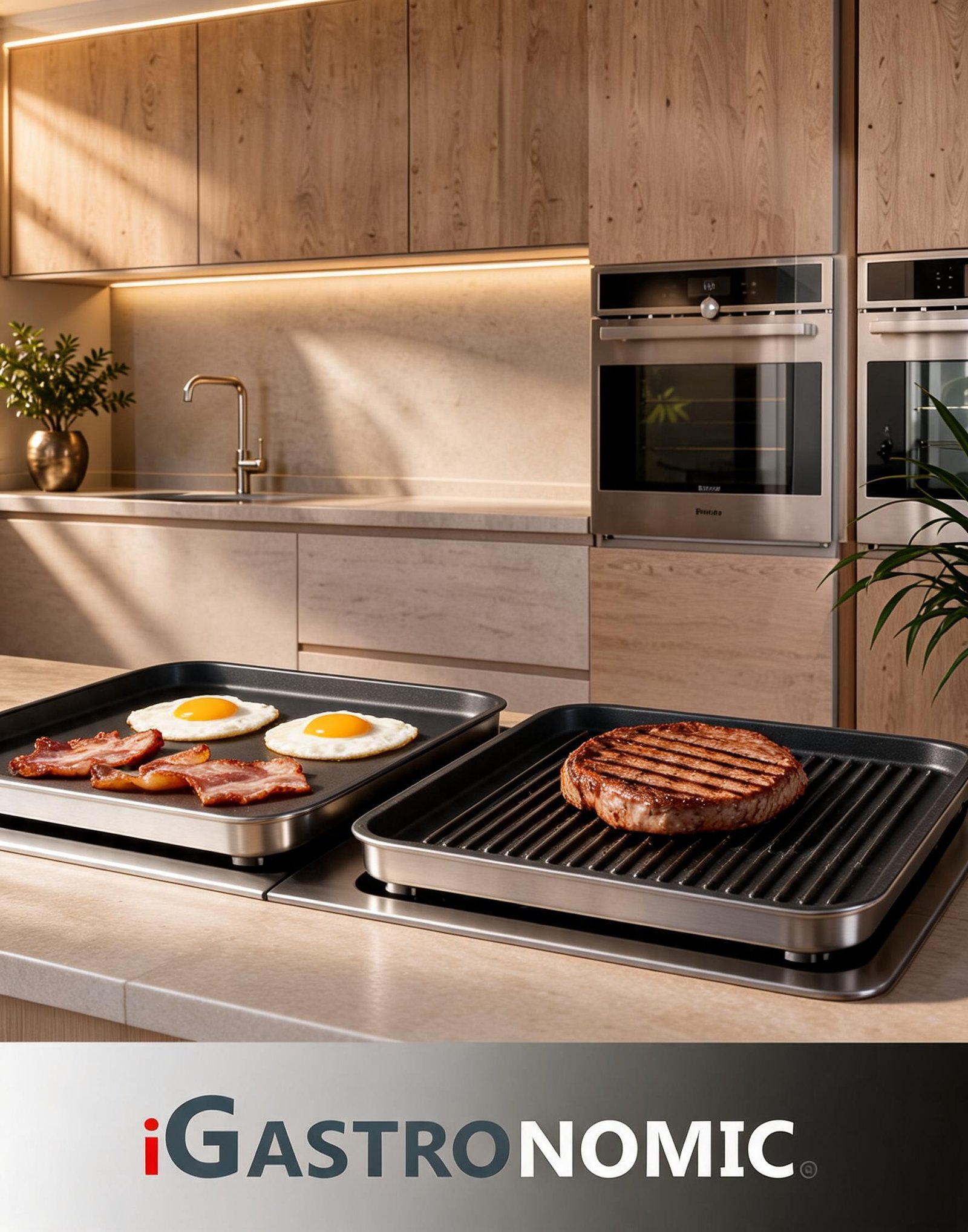
In short: For most foodservice operators, the smooth plate is the more flexible choice with a flat-top grill, as it works for meat, fish, vegetables, eggs and pancakes and is quicker to clean. The ribbed plate is worth it mainly when grill marks on steaks, burgers or vegetables are part of the concept. If you need both, a half-ribbed plate offers a practical combination.
Smooth or ribbed flat-top: What's the difference?
A flat-top grill (also called a fry-top or griddle) is a large, flat metal plate on which food is cooked directly on the hot surface. In professional kitchens, it is available as a countertop unit or as a built-in or under-counter unit, heated by gas or electricity. It is also used in private homes, but its main application is in restaurants, snack bars, bistros and catering.
The plate comes in two basic designs: smooth (Italian liscio) and ribbed (rigato). The smooth version offers a completely even cooking surface. The ribbed version has parallel grooves that transfer a grill pattern onto the food and collect fat.
Comparison: smooth and ribbed griddle plates at a glance
| Criterion | Smooth plate (Liscio) | Ribbed plate (Rigato) |
|---|---|---|
| Surface | Completely flat | Parallel grooves |
| Appearance of food | Even browning | Typical grill marks |
| Fat and liquid | Stays on the surface, food sits in it | Collects in the grooves, food sits above it |
| Suitable for | Eggs, pancakes, fish, burgers, small vegetables | Steaks, burgers, chicken, firm vegetables |
| Cleaning | Quick and easy | More labor-intensive due to the grooves |
| Versatility | Very high | Rather limited |
Smooth griddle plate (Liscio): Features, advantages, disadvantages
Features
- Flat cooking surface: The surface has no recesses or grooves.
- Material: Common materials are steel (often chrome-plated), stainless steel or cast iron with good heat distribution.
- Broad range of uses: Suitable for frying, searing and for eggs, pancakes or crêpes.
Advantages
- Easy cleaning: Without grooves, food residue cannot get stuck, and the surface can be scraped down quickly.
- Versatility: Meat, vegetables, fish and dough products can be prepared on the same surface.
- Even heat distribution: The flat surface ensures consistent contact and even browning.
Disadvantages
- No grill marks: The visual effect of the classic grill pattern is missing.
- Fat stays on the surface: Released fat spreads across the plate, which can be undesirable for some dishes.
You'll find a wide selection in our category smooth griddles.
Ribbed griddle plate (Rigato): Features, advantages, disadvantages
Features
- Grooved surface: Parallel grooves create the typical grill pattern.
- Material: Stainless steel, chrome-plated steel or cast iron with good heat conduction are also common here.
- Fat collection: Fat and liquid collect in the grooves instead of pooling under the food.
Advantages
- Classic grill pattern: Steaks, burger patties and vegetables get the desired grill marks.
- Lower-fat cooking: Food sits less in its own fat, so dishes often appear lighter.
- Intense roasting flavors: The food browns more strongly at the contact points and forms a crispy crust.
Disadvantages
- More labor-intensive cleaning: Fat and food residue collect in the grooves and must be removed thoroughly.
- Less versatile: The plate is hardly suitable for pancakes, eggs or batters that need a flat surface.
Which plate suits which dishes?
The decision depends mainly on your menu.
The smooth plate is ideal for:
- Pancakes, crêpes, omelets and fried eggs: The flat surface allows even cooking.
- Fish and delicate foods: The food is less likely to fall apart.
- Finely chopped vegetables, onions, rice or noodle dishes: Nothing falls into grooves.
- Dishes with some liquid or sauce: The surface keeps them together.
- Burgers and breakfast items: The smooth plate is especially practical at high throughput.
The ribbed plate is ideal for:
- Steaks, burgers and meat: Grill marks provide the typical look and a crispy texture.
- Firm vegetables: Bell peppers, zucchini or eggplant in thick slices get a clear grill pattern.
- Lower-fat grilling: Fat runs into the grooves and sits less under the food.
- Grill concepts: If the grill look is part of your offering, the ribbed plate is the first choice.
Half-ribbed plates and combination solutions
If you need both cooking styles, you don't have to choose. Half-ribbed plates offer a smooth and a ribbed zone on one unit. For example, you can fry eggs and onions on the smooth side while grilling steaks on the ribbed side at the same time.
One example is the half-ribbed griddle plate as a double unit. Alternatively, many businesses place two separate units side by side if space and budget allow.
Material and heat conduction
Regardless of the surface, the material plays an important role. Cast iron stores and distributes heat very well but requires more care, such as seasoning and regular oiling. Stainless steel is easier to maintain and rust-resistant, but often conducts heat less well than cast iron.
In foodservice, steel plates with a chrome surface are also widespread, as they scrape clean easily. Some manufacturers combine materials or use coatings to get the benefits of both. Besides the material, also pay attention to plate thickness, heating output and zone layout.
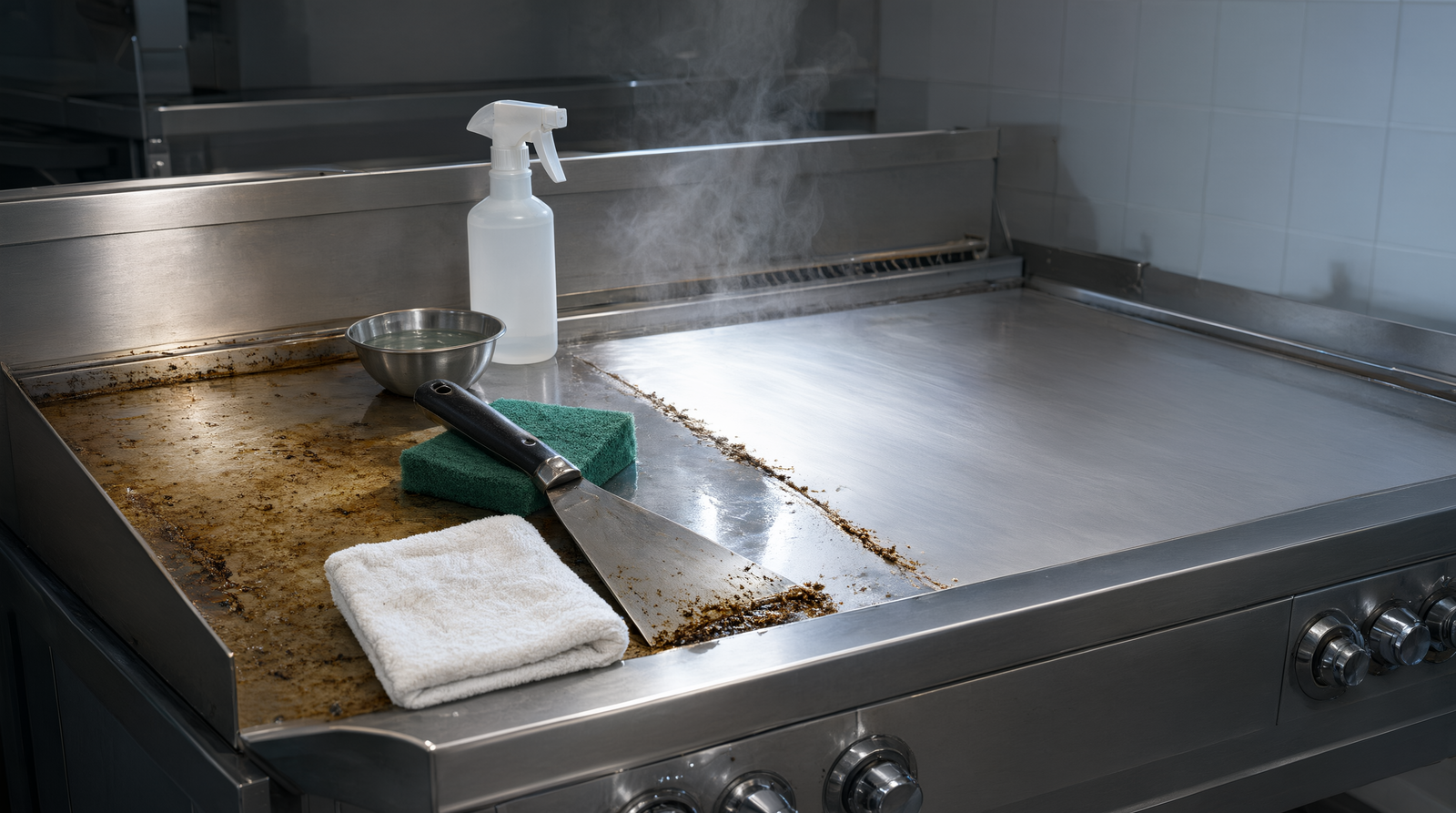
Cleaning and care
When it comes to cleaning, the smooth plate has the advantage: it can be cleaned faster and with less effort. With a ribbed plate, the grooves must be carefully freed of fat and food residue, which takes more time. Factor this into your workflow planning and closing times.
Regardless of the type, clean the plate after every use. This extends its service life and supports kitchen hygiene. With cast iron, regular oiling prevents rust. Always follow the care instructions for your specific appliance.
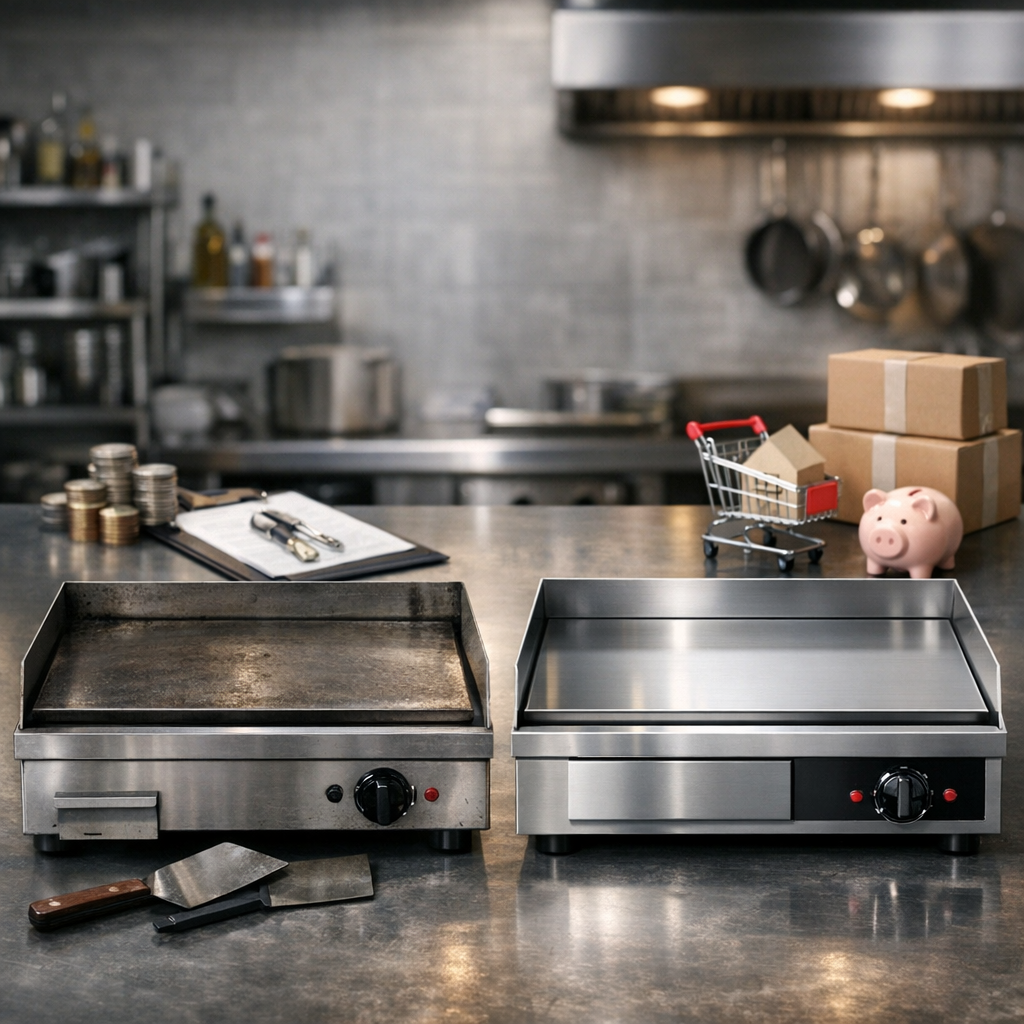
Costs and cost-effectiveness
The cost of a flat-top grill depends on size, material, heating type and design. Smooth and ribbed versions are usually in a similar price range, while plates made of high-quality cast iron or with a special surface are generally somewhat more expensive. Therefore, base your decision more on intended use and menu than on the purchase price.
Energy consumption also matters, especially for large plates with high output. You can use the energy cost calculator for commercial appliances to estimate the running costs for gas or electric models.
Tips for using your flat-top
- Preheat the plate thoroughly before cooking so that the results are even.
- Use suitable tools such as spatulas and scrapers to avoid damaging the surface.
- Clean the plate right after cooking so that nothing gets stuck.
- Oil the plate as needed, especially cast iron, to prevent rust.
- Plan separate zones for different doneness levels and ingredients to avoid flavor transfer and cross-contamination.
Conclusion
Whether you choose a smooth or ribbed griddle plate depends on your menu and workflows. If you cook versatilely, prepare delicate or liquid foods and value easy cleaning, the smooth plate serves you better. If you mainly serve meat and firm vegetables with a grill look, go for the ribbed plate.
Many professionals opt for a half-ribbed plate or for both variants. At iGastroNomic, you can get personal advice on this. You can also use the free 3D kitchen planner to check how the unit fits into your kitchen.
FAQ – Frequently Asked Questions
Is a smooth or ribbed flat-top better for foodservice?
For most operations, the smooth plate is the more flexible choice. It covers breakfast, burgers, fish, vegetables and pancakes and is quicker to clean. A ribbed or half-ribbed plate is worth it if grill marks on steaks, burgers or vegetables are part of your concept and you offer these dishes regularly.
Can you fry eggs and pancakes on a ribbed plate?
Only to a very limited extent. Liquid batter and eggs run into the grooves, stick more and are hard to flip. A smooth surface is better suited for such dishes. If you need both, you can choose a half-ribbed plate, which combines a smooth and a ribbed zone on one unit.
How do you clean a ribbed flat-top properly?
Remove food residue and fat after service while the plate is still warm but no longer glowing hot. Use suitable scrapers and brushes for the grooves and direct the fat into the grease tray. Only use cleaners and tools that the manufacturer has approved for the plate material.
Which material is better: cast iron or stainless steel?
Cast iron stores heat very well and distributes it evenly, but needs regular care such as oiling against rust. Stainless steel is easier to maintain and rust-resistant, but usually conducts heat less well. Chrome-plated steel plates are also widespread in professional kitchens. The best choice depends on operating duration, maintenance effort and your menu.