
 Deutsch
 Türkçe
 Italiano

.jpg)
.jpg)
.jpg)
.jpg)
.jpg)
.jpg)
.jpg)
.jpg)
.jpg)
.jpg)

.jpg)

.jpg)
.jpg)
.jpg)
.jpg)
.jpg)
.jpg)
.jpg)
.jpg)
.jpg)
.jpg)



.jpg)
.jpg)
.jpg)
.jpg)
.jpg)
.jpg)
.jpg)
.jpg)
.jpg)



.jpg)
.jpg)

.jpg)
.jpg)
.jpg)
.jpg)


.jpg)

.png)
.jpg)
.jpg)
 (200 x 136 px) (5).png)
.png)

More and more restaurateurs and resourceful entrepreneurs are discovering the enormous potential of pizza vending...
-
 Cooking Appliances
add remove
Cooking Appliances
add remove -
-
Pizza & Grill
add remove
-
-
Refrigeration
add remove
-
-
Combi Steamer
add remove
-
-
Kitchen Appliances
add remove
-
-
Rinsing & Cleaning
add remove
-
-
Retail Refrigeration
add remove
-
-
Cafe & Ice Cream
add remove
-
-
Smart-Gastro
add remove
-
-
Event- & Cateringmöbel
-
Cooking Appliances
add remove
-
-
Pizza & Grill
add remove
-
-
Refrigeration
add remove
-
-
Combi Steamer
add remove
-
-
Kitchen Appliances
add remove
-
-
Rinsing & Cleaning
add remove
-
-
Retail Refrigeration
add remove
-
-
Cafe & Ice Cream
add remove
-
-
Smart-Gastro
add remove
-
-
Event- & Cateringmöbel


Call us:
+49 (0) 6135 7040 450Latest posts
-
 The Ultimate Guide: Pizza Vending Machines – Earnings, Costs & Experiences in the 24/7Read more
 -
 Döner vs. Shawarma vs. Kebab: Understanding the Terms and Differences for Your Food BusinessRead more
Are you confused about the difference between Döner, Shawarma, and Kebab? These popular meat dishes, often seen on...
-
 The 10 Best Döner Kebabs in Berlin (2026): The Ultimate Ranking Based on Real Customer ReviewsRead more
Berlin is the undisputed döner capital of the world. But with over 1,000 shops, the question arises: Which one is...
-
 Gyros vs. Döner: Understanding the Differences in Preparation, Seasoning, and Meat Selection for Your MenuRead more
Gyros and Döner are two iconic Mediterranean dishes often confused due to their similar appearance and cooking style....
-
 Welche Temperatur braucht ein Dönergrill? Richtwerte für die Gastronomie → Optimale Garzeiten und Temperaturen für perfekte ErgebnisseRead more
Der Dönergrill ist das Herzstück jeder Döner-Gastronomie. Die richtige Temperatur am Grill entscheidet maßgeblich...
-
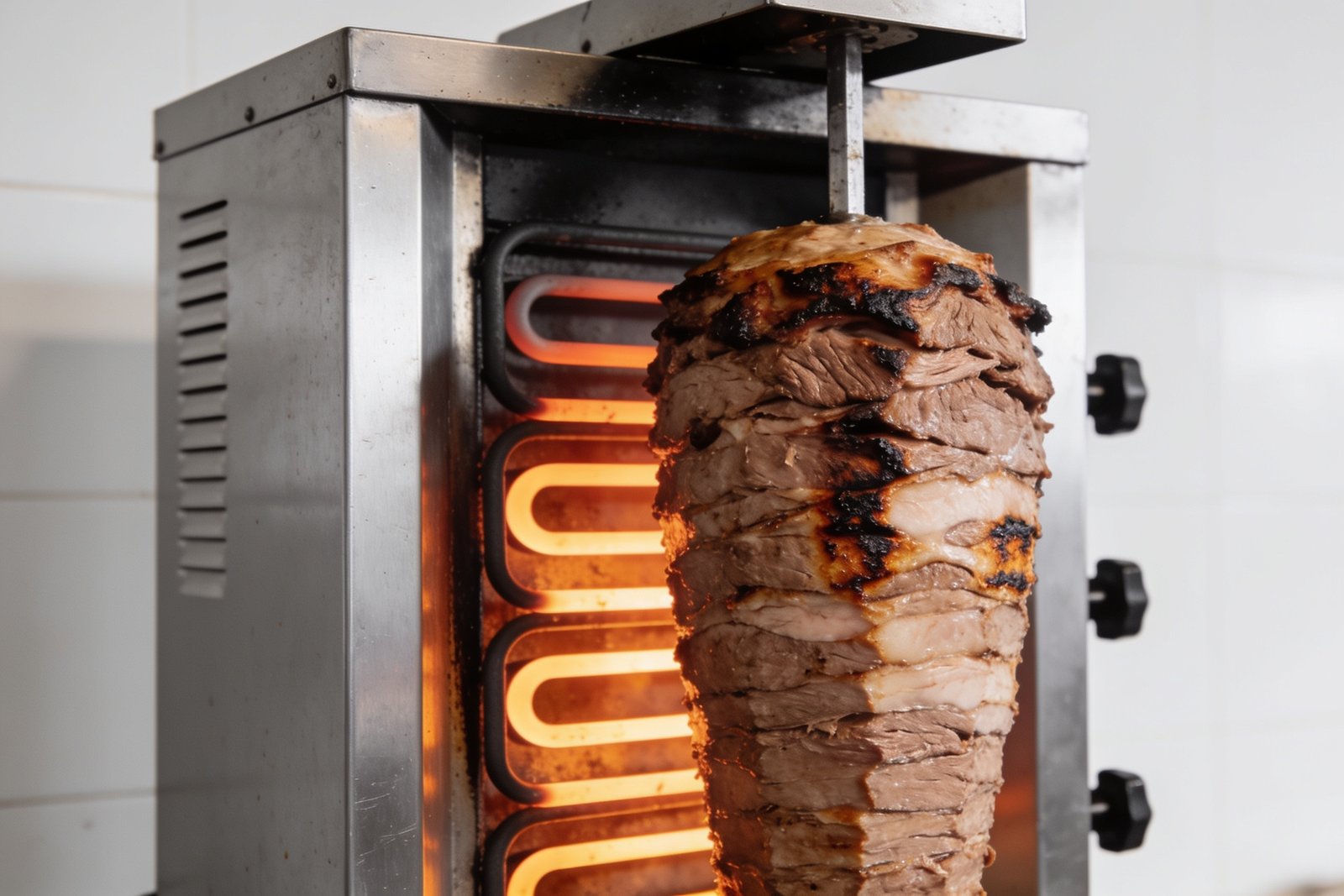 Döner Grill Heating Unevenly? Troubleshooting & Solutions → Recognize and Professionally Fix Common Device ProblemsRead more
Is your Döner grill heating unevenly? This can lead to poorly cooked meat and frustrated customers. In this guide, we...
-
 Proper Cleaning of Döner Grills: Care & Hygiene in Gastronomy → Equipment Cleaning According to HACCP Guidelines and Food Hygiene Regulations (LMHV)Read more
The Döner grill is a staple in many gastronomy businesses, and proper cleaning is essential to maintain hygiene and...
-
 Commercial Döner Grill Tests & Reviews Overview → Make Informed Purchase Decisions with Current Product ComparisonsRead more
Choosing the right commercial Döner grill is essential for any food business specializing in this popular dish. This...
-
 Why Is Döner Meat Grilled Vertically? Technology & Advantages Explained → The Functionality of the Vertical Grill and Its Benefits for the Gastronomy IndustryRead more
Döner kebab is famous worldwide for its juicy, flavorful meat cooked on a vertical spit. But why is the meat grilled...
-
 Compact Döner Grills for Small Snack Bars & Food Trucks → Space-Saving Solutions for Limited SpacesRead more
Small snack bars and food trucks often struggle with limited space, making it challenging to accommodate large...
Blog categories
Search in blog

Understanding Supply Chains and Equipment Costs: A Comprehensive Guide
Understanding Supply Chains and Equipment Costs: A Comprehensive Guide
In today’s fast-paced global economy, businesses face numerous challenges in managing their operations efficiently. Two critical aspects that often determine the success or failure of a company are its supply chains and equipment costs. These two elements are deeply interconnected and play a pivotal role in ensuring smooth production, timely delivery, and overall profitability.
What Are Supply Chains?
A supply chain is a network of organizations, people, activities, information, and resources involved in producing and delivering a product or service to the end customer. It encompasses everything from sourcing raw materials to manufacturing, warehousing, distribution, and final delivery.
Effective supply chain management (SCM) aims to optimize these processes to reduce costs, improve speed, and enhance quality. With globalization, supply chains have become more complex, often spanning multiple countries and involving numerous suppliers.
Key Components of a Supply Chain
- Suppliers: Provide raw materials or components.
- Manufacturers: Convert raw materials into finished products.
- Warehousing: Storage of goods before distribution.
- Distribution: Transportation of goods to retailers or customers.
- Retailers & Customers: The final point of sale and consumption.
The Role of Equipment in Supply Chains
Equipment is the backbone of any production and logistics process within a supply chain. It includes machinery used in manufacturing, vehicles for transportation, storage facilities, and technology systems that monitor and control operations.
Investing in the right equipment can significantly impact the efficiency and cost-effectiveness of a supply chain. Conversely, outdated or inappropriate equipment can lead to delays, higher maintenance costs, and reduced product quality.
Types of Equipment in Supply Chains
- Manufacturing Machinery: Machines that produce or assemble products.
- Material Handling Equipment: Forklifts, conveyors, pallet jacks used in warehouses.
- Transportation Vehicles: Trucks, ships, planes that move goods.
- Storage Systems: Racks, bins, cold storage units.
- Information Technology: Software and hardware for inventory management, tracking, and communication.
Understanding Equipment Costs
Equipment costs are a significant part of a company’s capital expenditure and operational expenses. These costs can be broadly categorized into:
- Acquisition Costs: Purchase price, installation, and commissioning.
- Operating Costs: Energy consumption, labor, and consumables.
- Maintenance Costs: Regular servicing, repairs, and spare parts.
- Depreciation: The reduction in equipment value over time.
- Disposal Costs: Costs related to decommissioning or replacing equipment.
Understanding and managing these costs is crucial for budgeting and ensuring a good return on investment.
How Equipment Costs Affect Supply Chain Efficiency
Equipment costs directly influence the operational efficiency of a supply chain. Here’s how:
1. Capital Investment Decisions
Choosing the right equipment involves balancing upfront costs with long-term benefits. For example, investing in automated machinery may have a high acquisition cost but can reduce labor expenses and increase throughput.
2. Maintenance and Downtime
Poorly maintained equipment can cause unexpected breakdowns, leading to production halts and delayed shipments. These disruptions can ripple through the supply chain, affecting suppliers and customers alike.
3. Energy Efficiency
Modern equipment often offers better energy efficiency, which reduces operating costs and environmental impact. This is increasingly important as companies strive for sustainability.
4. Flexibility and Scalability
Equipment that can be easily adapted or scaled helps businesses respond quickly to market changes, such as fluctuating demand or new product lines.
Strategies to Optimize Supply Chains and Equipment Costs
Businesses can adopt several strategies to manage supply chains and equipment costs effectively:
1. Conducting Total Cost of Ownership (TCO) Analysis
TCO analysis helps companies understand the full cost of equipment over its lifecycle, not just the purchase price. This includes maintenance, energy, training, and disposal costs.
2. Implementing Preventive Maintenance Programs
Regular maintenance reduces the risk of breakdowns and extends equipment life, improving reliability and lowering unexpected expenses.
3. Leveraging Technology and Automation
Using advanced technologies such as IoT sensors, AI, and robotics can enhance equipment monitoring, predictive maintenance, and process automation.
4. Supplier Collaboration and Integration
Working closely with suppliers can improve visibility across the supply chain, enabling better planning and reducing inventory and equipment idle time.
5. Investing in Training and Skill Development
Well-trained personnel can operate and maintain equipment more effectively, reducing errors and wear-and-tear.
Challenges in Managing Lieferantenketten (Supply Chains) and Equipment Costs
Despite best efforts, companies face several challenges:
- Global Disruptions: Events like pandemics, geopolitical tensions, or natural disasters can interrupt supply chains and affect equipment availability.
- Cost Volatility: Fluctuations in raw material prices, energy costs, and currency exchange rates impact equipment and supply chain expenses.
- Technological Obsolescence: Rapid technological advancements can make equipment outdated quickly, requiring frequent upgrades.
- Complex Supplier Networks: Managing multiple suppliers across regions increases complexity and risk.
Case Study: Optimizing Equipment Costs in a Manufacturing Supply Chain
Consider a mid-sized electronics manufacturer facing rising equipment maintenance costs and frequent production delays. By conducting a thorough TCO analysis, they identified several aging machines with high downtime and energy consumption.
The company decided to invest in newer, energy-efficient automated assembly lines. They also implemented an IoT-based predictive maintenance system that alerted technicians before failures occurred. Supplier collaboration was enhanced through a shared digital platform, improving inventory visibility.
Within a year, the manufacturer reduced equipment-related downtime by 40%, cut energy costs by 25%, and improved on-time delivery rates. The initial investment paid off through increased productivity and customer satisfaction.
Future Trends in Supply Chains and Equipment Management
Looking ahead, several trends will shape how businesses manage supply chains and equipment costs:
- Digital Twins: Virtual replicas of physical equipment and supply chains will enable real-time monitoring and simulation.
- Artificial Intelligence: AI will enhance demand forecasting, maintenance scheduling, and decision-making.
- Sustainability Focus: Green technologies and circular economy principles will drive equipment design and supply chain practices.
- Resilient Supply Chains: Companies will build more flexible and diversified supply networks to mitigate risks.
- Advanced Robotics: Increased automation will improve precision and reduce labor costs.
Conclusion
Supply chains and equipment costs are deeply intertwined aspects of modern business operations. Understanding their relationship and managing them strategically can lead to significant cost savings, improved efficiency, and competitive advantage.
By investing in the right equipment, maintaining it properly, and optimizing supply chain processes, companies can navigate the complexities of today’s market and prepare for future challenges. Embracing technology, fostering collaboration, and focusing on sustainability will be key to success in this dynamic landscape.
Whether you are a small business owner or a supply chain professional, keeping these principles in mind will help you make informed decisions that drive growth and resilience.
Posted in:
Tips & Tricks
Related posts
-
 More Than Just Fast Food - All You Need to Know
System Gastronomy: Learn more about this exciting business model. From Fast Food to Casual Dining - we explain...Read more
More Than Just Fast Food - All You Need to Know
System Gastronomy: Learn more about this exciting business model. From Fast Food to Casual Dining - we explain...Read more -
 The 10 Most Expensive Restaurants in the World
When it comes to fine dining and luxurious culinary experiences, some restaurants around the globe capture attention...Read more
The 10 Most Expensive Restaurants in the World
When it comes to fine dining and luxurious culinary experiences, some restaurants around the globe capture attention...Read more -
 Which Restaurant Makes the Most Revenue? A Deep Dive into the World of Gastronomy
Who are the revenue giants in the gastronomy industry? We reveal the top players and analyze why they are so...Read more
Which Restaurant Makes the Most Revenue? A Deep Dive into the World of Gastronomy
Who are the revenue giants in the gastronomy industry? We reveal the top players and analyze why they are so...Read more -
 Boost Your Restaurant's Revenue with Pergolas and Louvered Roofs
Ever wondered how to make your restaurant more appealing and increase your sales? The answer might be simpler than...Read more
Boost Your Restaurant's Revenue with Pergolas and Louvered Roofs
Ever wondered how to make your restaurant more appealing and increase your sales? The answer might be simpler than...Read more -
 The World of Döner: From Traditional Recipes to the Best Döner Spots Worldwide
Learn how to make authentic Yaprak Döner, discover the best döner spots in Germany and worldwide, and explore the...Read more
The World of Döner: From Traditional Recipes to the Best Döner Spots Worldwide
Learn how to make authentic Yaprak Döner, discover the best döner spots in Germany and worldwide, and explore the...Read more
Leave a comment