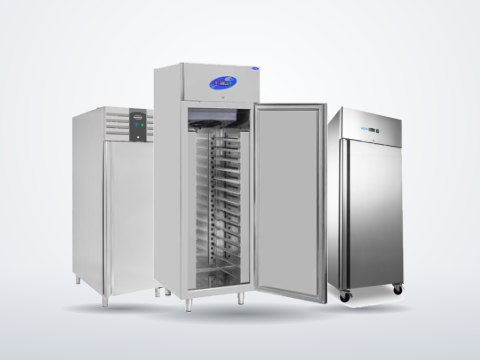
Usaldusväärne külmutus on iga suurköögi süda. Uurige, mis on oluline – ja leidke sobivad seadmed.

  • EnergiatõhusSeadmed kuni energiaklassini A+
  • Tugev ja vastupidavTöökindel ka kõrgetel temperatuuridel
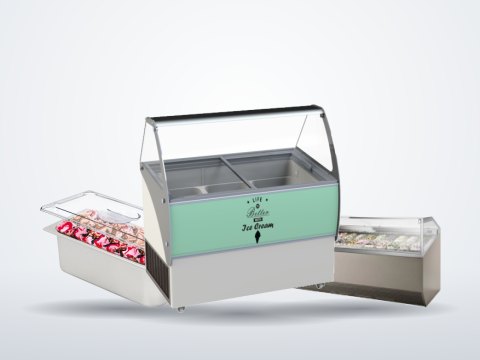
  • Lai valikKülmkapid, letid ja vitriinid
Igastronomic

Cooling technology for the highest demands

Energy efficiency class A+

Cooling Pleasure Without Compromise. With iGastroNomic, experience the refrigeration technology at its finest. Our A+ energy efficiency class refrigerators offer not only outstanding cooling performance but also a long lifespan. Our devices have won customer's trust not only in Germany or other European countries, but also in African countries, where they function reliably even under extreme conditions. Our customers appreciate the robustness and durability of our refrigerators, which guarantee constant cooling even at high outside temperatures.

How does refrigeration technology work? A brief overview

Refrigeration technology is essentially based on a cycle in which a special refrigerant absorbs and releases heat to generate cold. This process is used in refrigerators, air conditioners, and many other devices.

The refrigeration cycle in simple terms:

  • Evaporation: The liquid refrigerant is directed to an area with low pressure. There it evaporates and absorbs heat from its surroundings (e.g., from the inside of the refrigerator). This leads to cooling of the interior.
  • Compression: The gaseous refrigerant is sucked in by a compressor and compressed. This significantly increases its temperature.
  • Condensation: The hot, gaseous refrigerant releases its heat to the environment (e.g., to the room air behind the refrigerator). It then condenses back into a liquid.
  • Expansion: The liquid refrigerant is passed through an expansion device (e.g., a capillary tube). This greatly reduces its pressure, leading to further cooling. The cold, liquid refrigerant then returns to the evaporator, and the cycle begins anew.

Why is the refrigerant changed?

  • Heat absorption: Through evaporation, the refrigerant can absorb large amounts of heat without its temperature rising significantly.
  • Heat release: When condensing, the refrigerant releases the absorbed heat.
  • Cycle: The constant change between liquid and gaseous states creates a continuous cooling process.

Important components in a refrigeration system:

  • Evaporator: Here the refrigerant evaporates and absorbs heat.
  • Compressor: It increases the pressure and temperature of the refrigerant.
  • Condenser: Here the refrigerant condenses and releases heat.
  • Expansion device: It reduces the pressure of the refrigerant.

Additional aspects:

  • Refrigerant: There are various refrigerants that differ in their properties. Modern refrigerants are often more environmentally friendly.
  • Energy efficiency: Modern refrigerators are very energy-efficient and consume little electricity.
  • Control: The cooling capacity is controlled by thermostats or electronic controls.

Korduma kippuvad küsimused

Kuidas külmkapp töötab?

Aurustis neelab külmaaine siseruumist soojust. Kompressor surub selle kokku ja kondensaatoris annab see soojuse väliskeskkonda.

Mis vahe on ventilaatoriga ja staatilisel jahutusel?

Ventilaatoriga jahutuse korral jaotab ventilaator külma ühtlaselt – ideaalne sageli avatavatele professionaalsetele külmkappidele. Staatiline jahutus töötab ilma ventilaatorita ja kuivatab toitu vähem.

Kui sageli tuleks professionaalset külmkappi puhastada?

Puhastage ukse tihendeid ja kondensaatorit regulaarselt, ideaaljuhul iga kolme kuu tagant. Nii kestab seade kauem ja tarbib vähem elektrit.